Blog
 Public
- 24 Sep, 2026
Meta VR Glasses: A 100-Gram Headset with a Separate Compute Puck
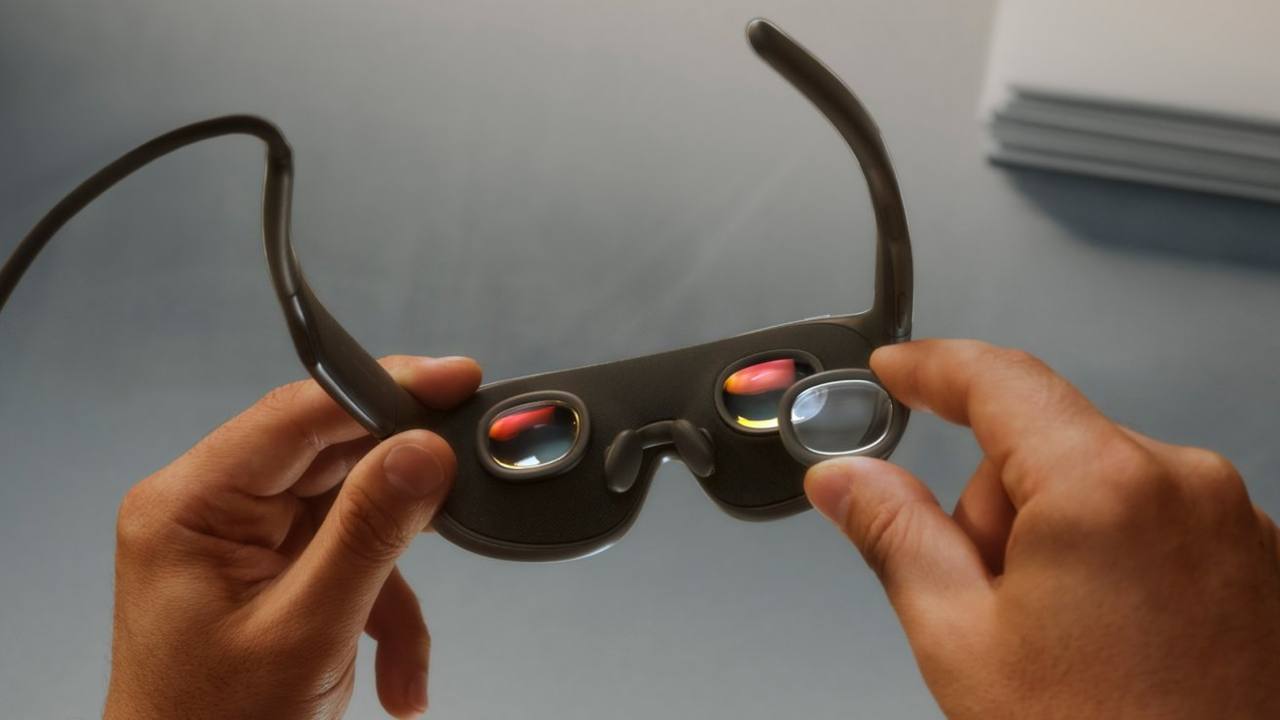
Meta has unveiled Meta VR Glasses, a device the company calls the start of a new era for virtual reality. Launching in Spring 2027, the headset weighs roughly 100 grams and packs a cinema, a workspace, and a console into a glasses-like form factor. There are no straps or heavy hardware on the face: open sides and a passthrough camera keep the wearer aware of their surroundings, whether watching a full movie or working on a private screen during a long flight.The lightweight design comes from a two-part system. The glasses themselves handle sensors and the display, while a magnesium alloy frame provides rigidity, strength, and cooling. A separate puck, connected by an optical tether, handles compute, battery, and storage, and clips to a pocket or bag. The result is a headset five times lighter than Meta Quest 3.The display is a 5K Infinite Display built on micro-OLED panels, rated at 37 pixels per degree for sharp, legible text. Ultra-compact pancake lenses built specifically for the device deliver cinema-grade clarity in a glasses-size package. Dolby Vision drives ultra-vivid color and contrast, while Dolby Atmos spatial audio is integrated directly into the frames.Meta AI is embedded in the operating system, so users can play a movie, open apps, adjust the workspace, or search using voice, eye tracking, and natural hand gestures, with no controllers required. The headset runs on Qualcomm's Snapdragon Reality Elite processor for fast load times and high efficiency. The puck's battery lasts up to three hours of continuous high-resolution playback and supports 45W fast charging.For gaming and productivity, Meta VR Glasses support more than 75 gesture-only titles at launch, full access to the entire Quest catalog, and Touch Plus controller compatibility. Xbox Cloud Gaming streams hundreds of games over a Bluetooth gamepad, and users can connect a Mac or Windows PC wirelessly or over USB-C. Any table becomes a surface keyboard and touchpad, with full-color passthrough keeping the real keyboard and desk visible while you work.Meta VR Glasses go on sale in Spring 2027 for $1,299.99. The platform also introduces Hologram, a photorealistic real-time digital version of the user for hands-free video calls. Spatial audio places the caller's voice in 3D space, and the feature works across calling apps from WhatsApp to Zoom.
- Public
- 24 Sep, 2026
Rendering and Animating Hundreds of Thousands of Blocks with RenderMeshPrimitives
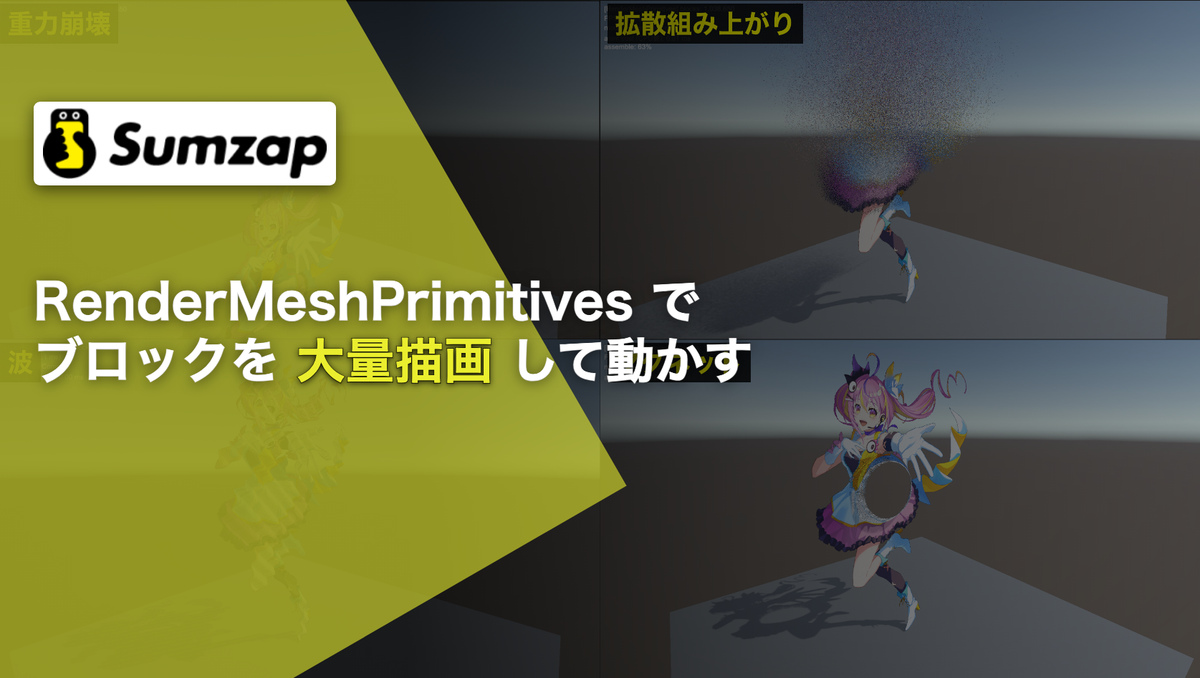
An image can be broken into a huge array of colored blocks using Graphics.RenderMeshPrimitives, then animated into waves, assemblies, repulsion, and collapses at playable frame rates. The approach starts by turning a source texture into a list of per-block position and color data. A horizontal block count is set gridWidthand the vertical count is derived from the image aspect ratio, so the source pixels are down-sampled at even intervals, while fully transparent and near-black pixels are skipped as background.Each block is stored in a struct PixelBlock with the fields float3 position and float4 color, matching the HLSL layout exactly. In Awake method texture.GetPixels32 reads the source image, and the loop for maps each grid cell to a source pixel by grid coordinates, offsetting positions so that the grid center lands on the origin. Color bytes are divided by 255 to convert them into 0-1 values. A first naive pass creates one GameObject per block with a shared mesh, material, and MaterialPropertyBlock, but at around 100,000 blocks everything collapses to 6 FPS, because each object adds draw commands and component overhead.The fix is Graphics.RenderMeshPrimitives an API purpose-built for drawing the same mesh many times. Instance data is uploaded once into a GraphicsBuffer (GraphicsBuffer.Target.Structured, sizeof(float) * 7 per element), then SetData(blocks) transfers the whole array from the CPU to the GPU in a single call. The stride argument must match the size of the HLSL struct and has to be updated whenever the fields change. A single call to Graphics.RenderMeshPrimitives(renderParams, cubeMesh, 0, blocks.Length) renders everything while the shader pulls position and color by SV_InstanceID. worldBounds must be large enough to contain all blocks: too small hides blocks and too large defeats culling; the buffer should be released in OnDisable, to avoid leaks.At roughly 100,000 blocks, the GameObject version climbed to 54,525 draw calls and about 6 FPS, while the RenderMeshPrimitives version stayed at 42 draw calls for the whole scene and reached 700-865 FPS. Scaling up about tenfold to 1.04 million blocks kept draw calls at 42 and held the frame rate around 435 FPS; the figures are taken from Unity's Statistics window. Because the displacement is read from the buffer on the GPU side and the CPU issues just one draw command, the cost stays low even as the block count grows.Animation follows two paths depending on whether the previous frame's state is needed. Motion defined purely by time runs entirely in the vertex shader: a wave adds sin along Z using _WaveAmplitude, _WaveFrequency and _WaveSpeed, while an assembly effect interpolates from a scattered position to the home position, driven by the value _Progress. Scatter directions come from GenerateHashedRandomFloat keyed by instance ID, so they are deterministic and require no stored state, while start thresholds shifted by height make the image rise from the bottom.For motions that carry velocity or position across frames, a compute shader is used. The magnet effect stores current positions in a read-write buffer and repels blocks near the cursor, then every frame lerps positions toward their targets before drawing the update. The gravity collapse integrates velocity every frame into a BlockState, bouncing on landing with _Restitution and sleeping when speed drops below _SleepThreshold; _DeltaTime is clamped to 1/30 of a second to avoid integration blowups, and rest positions are precomputed from per-column density.

- Public
- 24 Sep, 2026
DLSS 5 brings 3D-Guided Neural Rendering to game developers
DLSS 5 introduces 3D-Guided Neural Rendering, a new final stage that extends the graphics pipeline as a neural-rendering pass. It uses the engine's rendered frame, including artist-authored geometry, textures, and lighting buffers, as an unyielding foundation. The engine frame defines what must remain, while developers direct what may change. Using frame color and motion vectors, the model adds lifelike lighting and material detail while preserving scene structure, character identity, and artistic intent.Built specifically for real-time 3D rendering, DLSS 5 delivers deterministic, temporally stable output. It operates on a strict one-frame-in, one-frame-out model with game-engine motion vectors, keeping results consistent as players move. The compact, specialized model runs locally on a single GeForce RTX 50 Series GPU at up to 4K resolution.Figure 1. DLSS 5 is trained to preserve artistic intent, maintaining character identity, scene and lighting semantics, and frame compositionDLSS 5 is available now in NBA 2K27, developed by Visual Concepts and published by 2K, on all GeForce RTX 50 Series desktop and laptop GPUs. GeForce NOW Ultimate members can also experience the technology when streaming from NVIDIA-operated servers powered by GeForce RTX 5080 GPUs in the cloud. Visual Concepts uses overall tone and style controls plus a per-pixel uplift control mask to fine-tune character detail while respecting player likenesses. In NBA 2K27, DLSS 5 preserves scanned facial geometry while enhancing skin subsurface scattering, light transmission through hair and ears, and contact shadows.Beyond DLSS 5, the announcement covers updates to NVIDIA ACE and the RTX Kit. NVIDIA ACE expands the speech pipeline and inference framework for building conversational in-game characters, with the NVIDIA In-Game Inferencing (NVIGI) SDK providing in-process C++ execution for deploying local AI models alongside game graphics. RTX Mega Geometry SDK has been updated to 2.0, adding support for streaming continuous level-of-detail clusters for high-density meshes, demonstrated in a newly released textured glTF version of Zorah. RTX Mega Geometry is coming soon to Gears of War: E-Day.
- Public
- 22 Sep, 2026
Unity Simulation Pro Launches in Early Access for Robotics
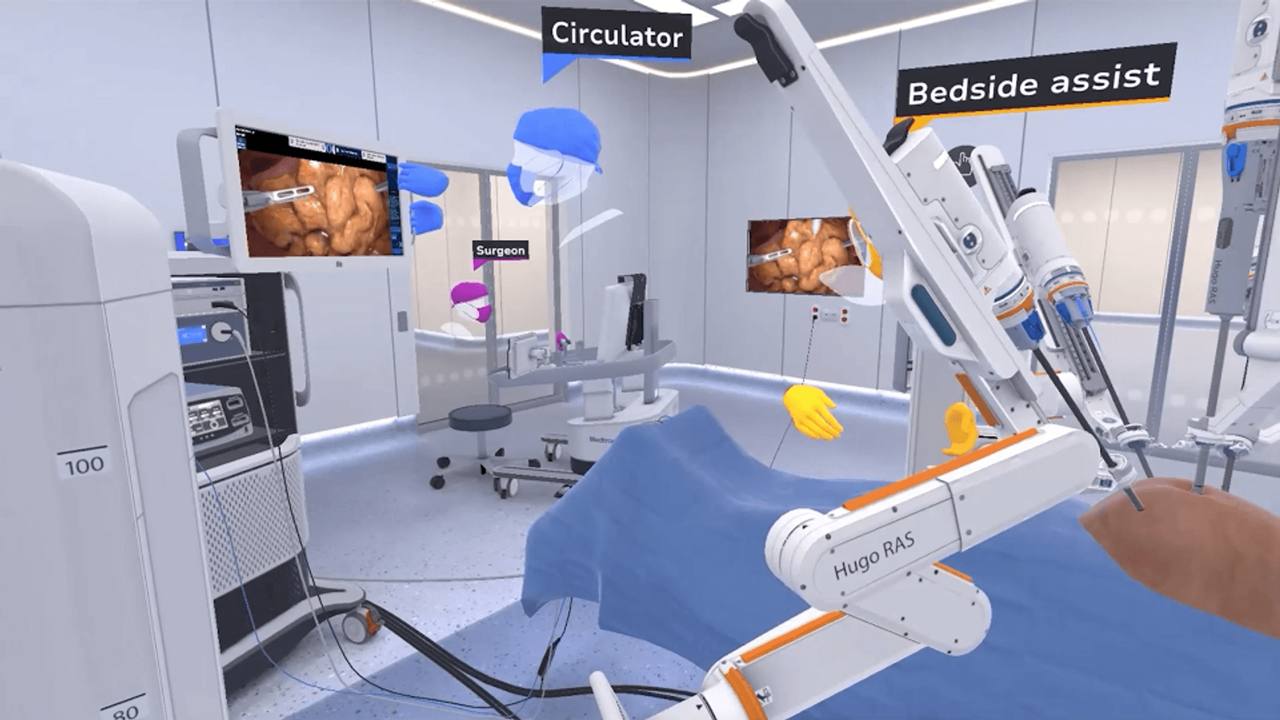
Unity has launched Unity Simulation Pro in Early Access, a robotics simulation package aimed at teams building and validating robotics systems. The package is compatible with Unity 6.3 and newer, and it requires a Unity Industry license. The goal is to consolidate capabilities that teams previously had to assemble on their own: rebuilding a robot's physical description by hand, writing sensors from scratch, and maintaining integrations with open standards such as ROS. By packaging all of this into one supported toolkit, Unity Simulation Pro is meant to reduce time spent on simulation infrastructure so teams can focus on validating the robotics systems themselves.The package covers a wide range of use cases: sensor simulation, robot training, and virtual commissioning. Unity frames it as a foundation for moving robots from the lab to the real world, built on real-time rendering, accurate physics, and sensor simulation. Early adopters highlight different applications. TIER IV used its Unity-based simulator AWSIM to test, validate, and optimize Autoware autonomous driving software. AWSIM scenarios can demand eight or more cameras running simultaneously, which standard optimization techniques could not handle. The team instead built specialized optimizations: staggered rendering across cameras to flatten frame spikes, time-scale controls to allocate more resources per frame, asset optimization, and the flexibility to use different rendering pipelines within a single project, balancing accuracy against frame rate.TIER IV also relied on the Unity job system and built-in Physics to hold real-time performance across vehicle, traffic, and pedestrian simulation. For hardware-in-the-loop testing, the team analyzed raw sensor packets and reproduced equivalent output from Unity. This allowed camera sensor setups to be tested in the loop before deployment to a physical test vehicle, cutting physical test vehicle hours and on-road testing cost. The Korea Institute of Industrial Technology (KITECH), meanwhile, built a digital twin of a metal casting plant from point cloud scans to generate training data for AI that understands human-robot proximity on a manufacturing floor. The team layered physics, sensor, and simulation systems on top, used a sensor rig with custom components matching the real rig so every observation shared one simulation clock, and leveraged Articulation Body components to replay recorded joint trajectories with inertia and contact computed together.That physical fidelity let KITECH automatically generate over 100,000 pre-labeled training frames in 14 weeks. This avoided the need to manually stage dangerous proximity scenarios on an active factory floor while supporting reliable sim-to-real transfer. Medtronic built a data-logging and playback pipeline in Unity around a digital twin of its Hugo robotic-assisted surgery system, capturing 195 procedures across five global sites. The recordings became a reusable dataset: engineers could load a recorded procedure, scrub through it, isolate a moment, and inspect it from any angle. The same data also fed deterministic replays used to train new AI models and inform the design of next-generation devices.Unity says it is especially interested in teams running robot validation, sensor testing, or synthetic data generation at scale across manufacturing, logistics, warehousing, and advanced robotics sectors. The development team is inviting feedback on Unity Discussions.
- Public
- 22 Sep, 2026
NVIDIA Isaac ROS 5.0 Brings Agentic Workflows and ROS Lyrical Support to Robotics Development
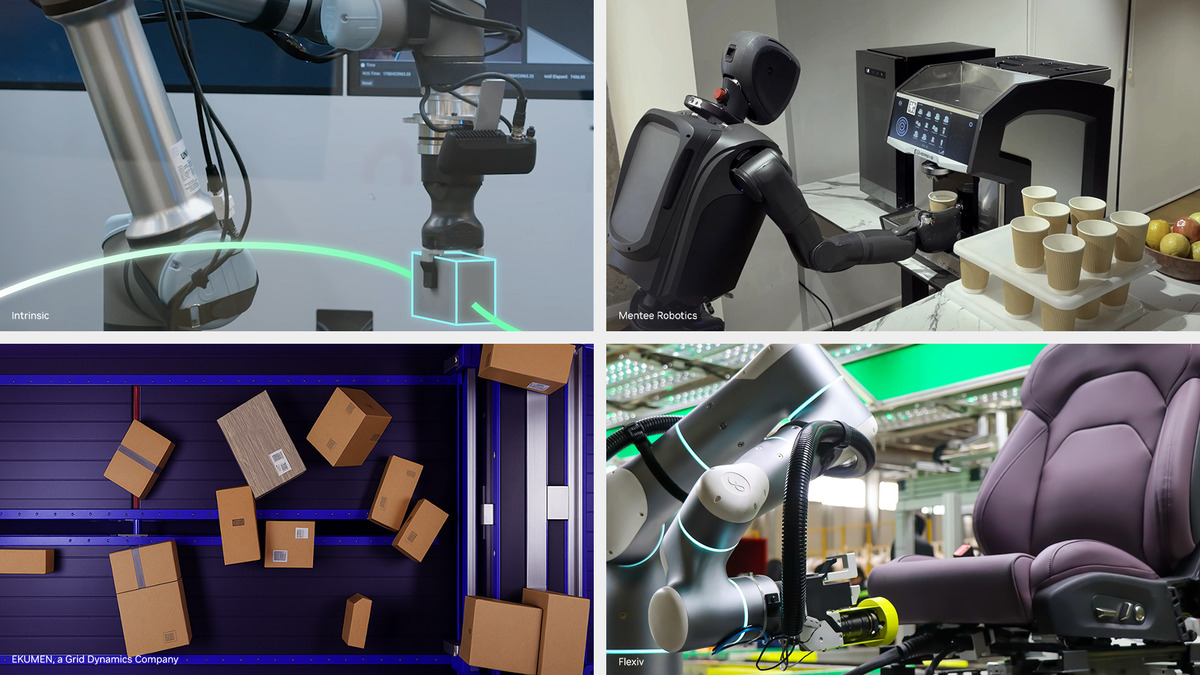
NVIDIA has released Isaac ROS 5.0, a collection of GPU-accelerated packages built on the open source ROS framework. The announcement was made at the ROSCon conference in Toronto. The release is aimed at a broad developer audience: it brings NVIDIA accelerated computing, physical AI models, and production-ready libraries to nearly 1.3 million ROS users, allowing developers to build high-performance robotics applications using free open source tools.A central theme of the update is agentic development: AI agents now take part in building robots. Isaac ROS 5.0 introduces reusable "skills" for setup and manipulation that both developers and AI agents can use, plus agent-ready documentation, which makes the tools and workflows easier for AI to understand. The idea is to turn developer intent into working applications faster by automating repetitive tasks and helping navigate complex codebases.Several of these skills go beyond simple coding assistance. A new FoundationStereo fine-tuning skill lets an AI agent adapt a stereo perception model to a developer's specific cameras, environment, and application. FoundationPose, a foundation model for object pose estimation and tracking, now ships with an agent-ready inference library that lets robots perceive and track object position and orientation up to 5.5x faster. The pick-and-place skill, which links detection, depth estimation, and pose output, is also available as a standalone skill for agents.Platform-wise, Isaac ROS 5.0 adds support for ROS Lyrical and Ubuntu 24.04, giving developers a path to the latest ROS platform while keeping GPU acceleration. NVIDIA worked with the Open Source Robotics Alliance to contribute a standard data-handling interface to ROS Lyrical so that robotics software runs efficiently across different hardware, including GPUs, with CUDA as the working example. Compute support scales from the entry-level Jetson Orin Nano up to high-performance Jetson Thor devices.Intrinsic uses FoundationPose for seamless object recognition in its Open Machine Tending Solution.The ecosystem is already extending this agentic approach. Intrinsic's Open Machine Tending Solution, part of the newly released Intrinsic Core, includes built-in FoundationPose compatibility for out-of-the-box object registration, tracking, and pose estimation, reducing the need for rigid physical fixtures. Other partners include Seed Studio's reBot Arm, Magna, Prefix.dev's Pixi package manager, Foxglove, Flexiv's Rizon 4, Ekumen, Ouster's Stereolabs ZED cameras, Mentee Robotics' MenteeBot, Universal Robots' AI Accelerator SDK, ROBOTIS, FieldAI, and Noble Machines. Ekumen, for example, uses isaac_ros_cumotion on a GPU to map a collision-free path for a warehouse arm in roughly 2 to 5 milliseconds.Isaac ROS 5.0 is available now and is free and open source, with details and getting-started guidance on GitHub.
- Public
- 21 Sep, 2026
Meta to launch camera-free smart glasses amid growing privacy backlash
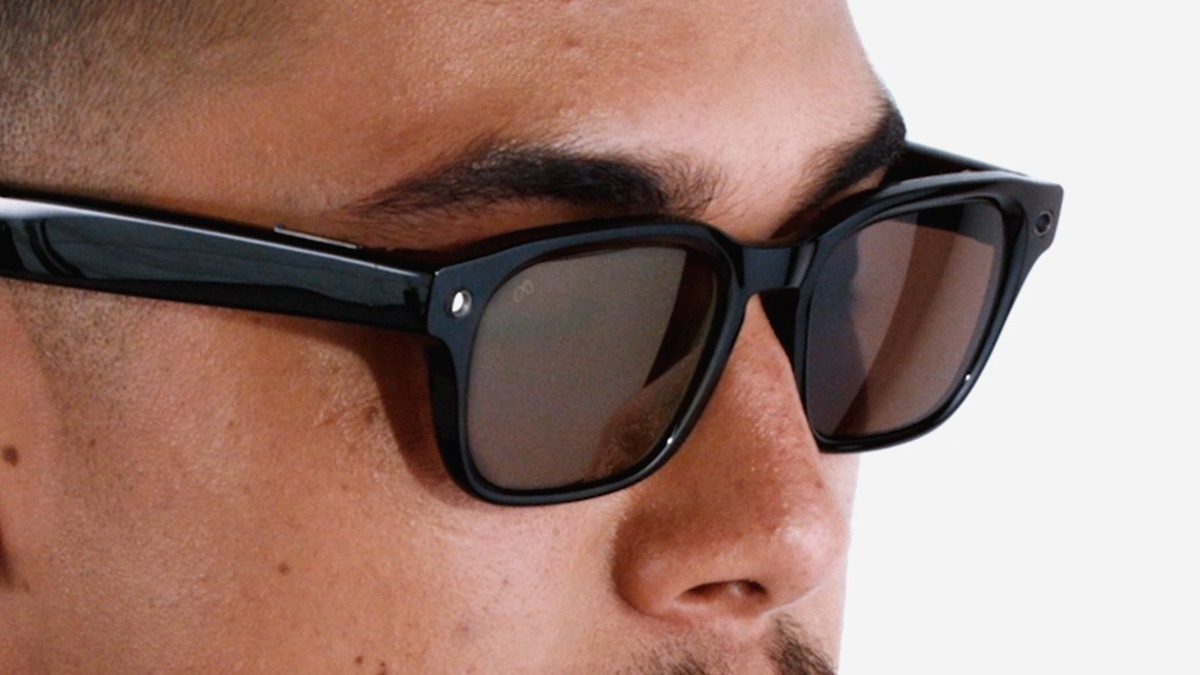
Meta is preparing to launch a new line of smart glasses that drop the camera entirely, according to a report from The Information. The glasses would still include microphones and speakers, but the physical button that on current models starts video recording would instead trigger a conversation with the Meta AI chatbot, or with Muse, the company's recently released AI agent. The shift removes the imaging hardware that has made the existing form factor controversial.Every current Meta smart glasses model has a white LED at the end of one temple: it flashes when a photo is taken and pulses while video is recording. Except for the discontinued 2021 Ray-Ban Stories, all models refuse to record if the light is covered, using an ambient light sensor built into the LED. The problem is that many people still don't know camera-equipped glasses exist at all, so the indicator is easy to miss outdoors in daylight. That blind spot has let bad actors record bystanders without their consent or knowledge.A secondary market has even emerged for physically disassembling the glasses to remove the LED. Meta has responded with firmware updates that disable the camera when tampering is detected, but this remains a cat-and-mouse contest with hardware hackers. The company claims fewer than 0.1% of units sold have been tampered with, which still amounts to roughly ten thousand devices, given that Meta and its partner EssilorLuxottica have now sold over ten million units. The covert recording, used for social content, personal perversion, or occasionally to film police, has driven calls to ban the device outright, and critics have branded the glasses "creepy."Without cameras, Meta argues, the new models can adopt a sleeker design with slimmer temples and look more like ordinary eyewear. They should also reach a lower price point and appeal to buyers who value comfort or simply don't want to face the social stigma of being "the person with a camera." The tradeoff is clear: with no vision, the built-in AI can no longer see what the wearer sees, which limits its usefulness. The same report adds that Meta may also demo its next-generation headset with full-body Codec Avatars at Connect.
- Public
- 21 Sep, 2026
Acute Immersive: White-Label visionOS Apps for Immersive Video
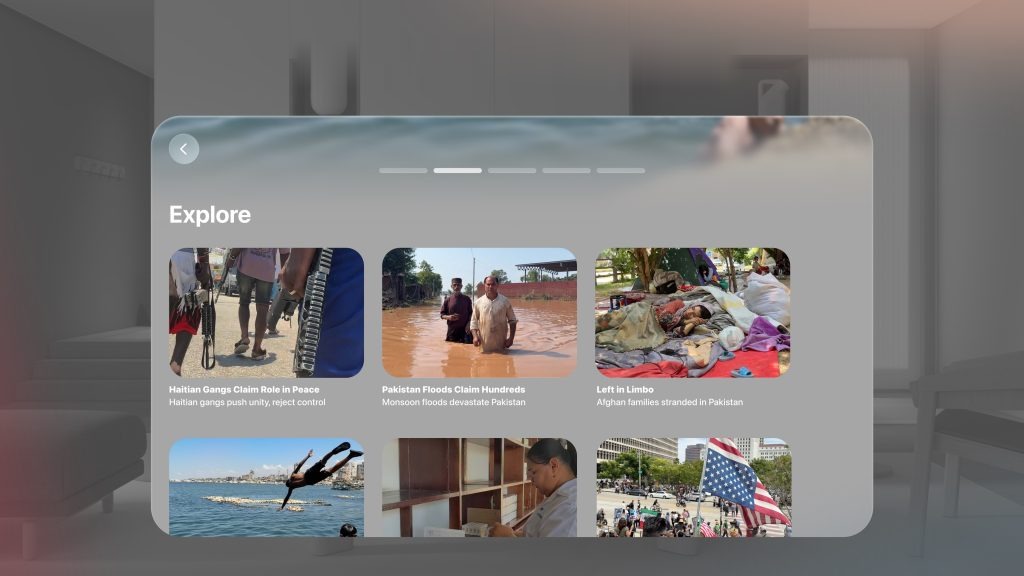
Acute Immersive is a publishing platform that lets businesses run their own immersive video destination on Apple Vision Pro instead of relying on shared apps like Apple TV, Amplium, Fovii, or Theatre. Since launching last year, it has helped bring the 2026 Apple Design Award winner for Social Impact, Primary: News in Depth, and Blue Frog Immersive to market. A companion Acute Pro app was built for private content reviews. The team plans to broaden reach with upcoming Android XR support, including XREAL Aura glasses.The platform produces semi-custom white-label immersive video apps, with a backend covering publishing, monetization, and analytics. It focuses primarily on content shot with Blackmagic's URSA Cine Immersive camera, while also supporting standard 16:9 video, 3D movies, mono or stereo 180 and 360 video, and Spatial Video captured on iPhone. Studios that prefer making stories over managing an app can either rely on other distribution platforms or publish directly, keeping full control over user experience, pricing, and access to analytics.App preview screenshot courtesy of Acute ImmersivePublishing is straightforward: users upload and organize files into playlists, review immersive video in-headset, add titles and thumbnails, and release new content without submitting a new app version. For audience management, the platform supports push notifications for new uploads and exposes viewer behavior data to guide content decisions and engagement. Marketing metrics include traffic attribution through deep links, thumbnail conversion, and conversion tracking from deep-link clicks through to video playback, which is useful for refining creative, targeting and acquisition tactics.Monetization is left to each client, with individual videos, bundles or subscriptions all possible, and curation clients can strike their own licensing deals with content owners. Pricing is layered: a licensing fee covers app clients, bandwidth is billed separately, and customizations are handled for a service fee. As immersive video gets cheaper to produce, this offers a way to move more brand and lifestyle content into a still-limited library of accessible immersive video.

- Public
- 20 Sep, 2026
Kacey Musgraves' "Middle of Nowhere" shows how good immersive music can be on Quest
"Kacey Musgraves Middle of Nowhere: An Immersive Experience" is a made-for-VR concert filmed at Billy Bob's Texas in Fort Worth. Meta says the production was built from the ground up for stereoscopic 3D VR180, with staging, choreography, lighting and camera placement all designed around a person watching in a headset. The 49-minute experience moves through several areas of the venue rather than just filming a conventional concert from a few different seats. It was produced and creatively directed by Untold Studios, with MediaMonks and 7 Cinematics co-producing, and shot using Blackmagic URSA cameras.The experience opens with Musgraves arriving on horseback before moving inside the honky-tonk. From the first song, "Dry Spell," the cameras place the viewer very close to Musgraves and her band. At times you're standing on the floor looking slightly up toward the stage with the audience around you; another camera sits farther back behind the crowd, and one is placed onstage between the keyboard player and drummer. The camera positions aren't numerous, but the venue setup means there really don't need to be.Musgraves spends a good amount of time performing toward the camera, at times only a few feet away and appearing to sing almost directly to the viewer. The view then cuts back into the crowd, alternating between the feeling of being another person in the room and the sensation of getting a private concert. Later, as people fill the dance floor, Musgraves and an accordion player walk out among them while the camera moves backward, putting the viewer right in the middle of the crowd.The stereoscopic presentation is excellent on Quest 3, with natural depth, correctly sized people and no noticeable eye strain. The 4K quality setting over hotel Wi-Fi still looked impressively clear, and the audio mix came through loud, clear and well mixed. Roughly halfway through, the experience moves into the dirt-floored rodeo inside Billy Bob's, a building dating back to 1910. Musgraves sits on the bleachers between two guitarists, and the viewer is positioned directly in front of the trio, close enough to feel like sitting with them as they talk and play.The set closes by returning to the way it began: Musgraves leaves Billy Bob's in the back of a pickup truck, with the viewer riding along from a camera in the truck bed. The format proves itself as a way to discover a new artist, with the clear use case for VR strengthened by lighter headsets and higher-resolution displays now emerging. The experience is available now on Meta Quest through the Meta Quest TV app.
- Public
- 20 Sep, 2026
Meta may showcase the Phoenix headset at Connect 2026 with full-body Codec Avatars
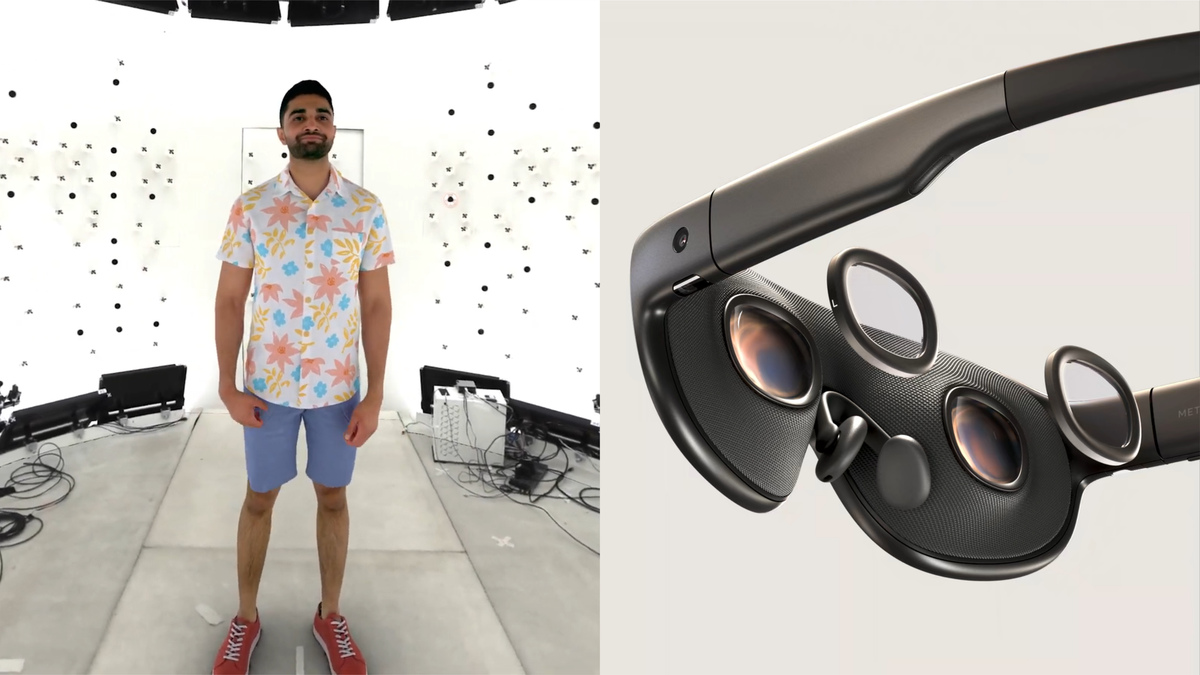
Multiple reputable outlets have reported that Meta is building a premium, ultralight, open-periphery headset with a tethered compute puck, aimed at the same high-end tier as Meta Quest Pro but in a much sleeker form factor. The project and its underlying layers have surfaced under the codenames Phoenix, Stanley, and Loma. Official visuals of the device were also discovered in Horizon OS firmware earlier this month, after UploadVR published an extensive report on it in August.Now The Information reports that Meta could showcase Phoenix during the Connect 2026 keynote next to a "full-body, photorealistic hologram call experience" built on Codec Avatars. The report describes Phoenix as a "productivity and entertainment tool" made up of glasses and a puck, which Meta wants to market for virtual screens and watching films. It also labels the device "augmented reality glasses," though other reporting indicates Phoenix is technically a glasses-like Passthrough VR (Mixed Reality) headset operating on the same principle as Quest 3 and 3S. Some firmware strings even call the device "VR Glasses," but that terminology is non-final.Strings found in the Prescription Lens firmware package for HorizonOS.The report claims that earlier this month CEO Mark Zuckerberg and CTO Andrew Bosworth reviewed the company's work on hologram-like video calls. Meta has since decided to show "a full-body, photorealistic hologram call experience during a live Phoenix demo in the keynote speech at Connect next week, with Bosworth appearing as the hologram," assuming plans hold. That experience would be powered by Codec Avatars, Meta's long-running research effort for photorealistic spatial telepresence via Face Tracking sensors on VR/MR headsets and eventually glasses. It is broadly similar to Personas on visionOS and Likeness on Android XR.Smali files referencing Holograms, found in the Horizon OS Social Platform package.Meta has iterated on this work for years; the best-known example is Mark Zuckerberg's VR interview with Lex Fridman, where both used prototype photorealistic Codec Avatars. Those versions were captured with a specialized rig and rendered on high-end computers, but Meta has since shown ways to generate Codec Avatars from sparse photos and to run them on mobile-class hardware like Quest 3. Earlier this year the company published a paper, "Large-scale Codec Avatars: The Unreasonable Effectiveness of Large-scale Avatar Pretraining," describing a model that generates full-body Codec Avatars from limited input and drives them via inward-facing and SLAM sensors on a headset.As of August 2026, Meta's plans for Codec Avatars increasingly center on video calls and telepresence for social experiences across its family of apps, with the name Hologram heavily tied to this direction. Several Horizon OS packages contain what appear to be sub-frameworks for a broader "Hologram Calling" system, including extensive references to Codec Avatars. Strings in the Meta AI mobile app for Smart Glasses and other wearables also describe setting up a "Hologram" avatar, hinting at a possible consumer-facing name. Meta Connect 2026 runs September 23-24 and will showcase the company's "latest breakthroughs in AI technologies, AI glasses and VR."Strings referencing Holograms, found in builds of the Meta AI mobile app from August 2026.
- Public
- 20 Sep, 2026
visionOS 27 is out for Apple Vision Pro: Siri AI assistant, held object tracking, and new APIs for tracked accessories
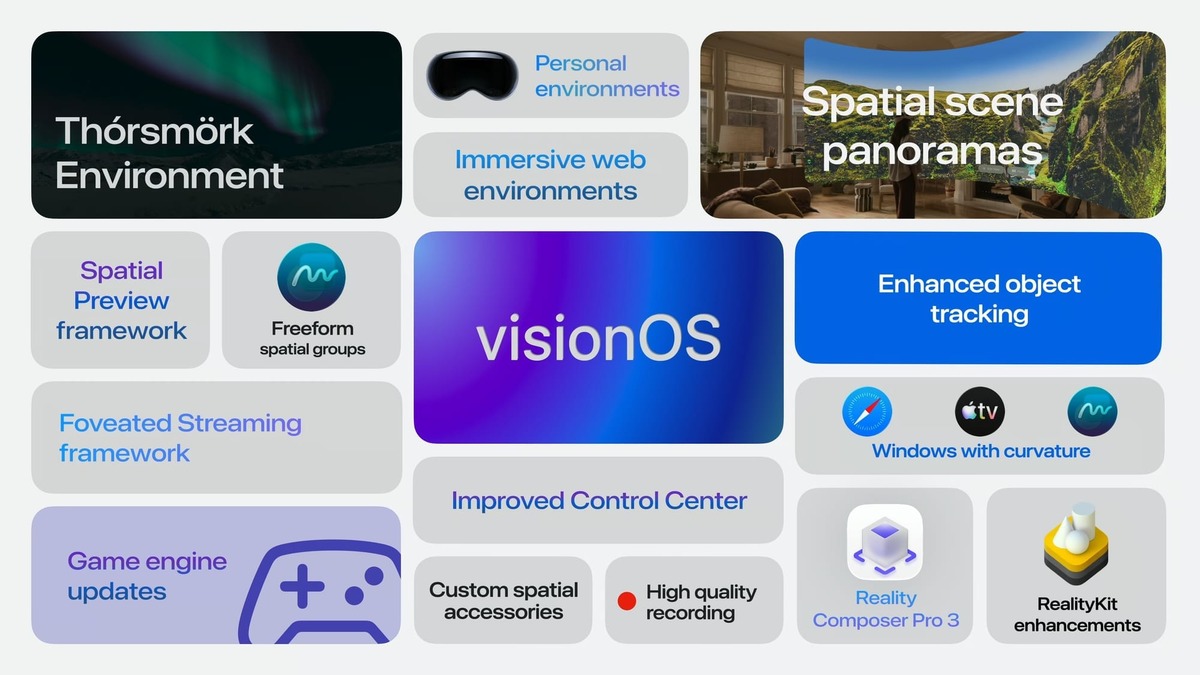
Apple has rolled out visionOS 27, the fourth major operating system release for Vision Pro headsets. It is available on both M2 and M5 models. Despite arriving with little fanfare, it is one of the largest updates to date. The headline addition is Siri AI, Apple's LLM-powered overhaul of its assistant, now rolling out in beta. Access requires joining a waitlist in the visionOS Settings; Apple says wait times vary, and once access is granted, the feature begins downloading automatically. Siri AI currently works only in English, with both the device language and the Siri language set to the same supported English option.Siri AI is backed by Apple's next-generation Foundation Models, which the company co-developed with Google and based on its Gemini models. As with Apple Intelligence generally, some tasks run on a small on-device model, while more complex work is handed off to Apple's Private Cloud Compute. On visionOS, Siri AI appears as an orb anchored in space that you can pin to a fixed spot in the room; to start speaking, you simply look at it, with no need to say "Siri." It also supports Visual Intelligence for asking about your physical and virtual surroundings, and Siri AI ships as a dedicated preinstalled app with conversation history.visionOS 27 reference tracked accessories from DFRobot and MikroE.For developers, visionOS 27 adds a high-frame-rate object tracking mode suited to moving and held objects. Apple does not state the update rate, but early reports suggest roughly 30Hz. For held objects, Apple strongly recommends the new Extended Training mode, which greatly improves tracking but "significantly" increases training time: one developer reported around 18 hours to train a fish toy. Optical tracking runs at 90Hz and is fused with the object's IMU accelerometer and gyroscope data. The update also opens the tracked-accessory path: previously Sony and Logitech had hardcoded support for PS VR2 Sense controllers and the Muse stylus, which use infrared LED constellations.The Thórsmörk environment in visionOS 27.visionOS 27 adds APIs that let any company build its own IR LED tracked accessories, similar to how SteamVR "Lighthouse" accessories work on PC. DFRobot and MikroE have announced reference hardware and developer kits, with the DFRobot hardware available to purchase now. Elsewhere, a new High Quality Recording option captures up to 3 minutes of unfoveated 4K footage entirely on the headset, no Mac required. This is a long-requested feature for showing off visionOS content. visionOS 27 also introduces an Iceland's Thórsmörk valley environment, the 10th virtual environment, with a nighttime aurora borealis variant.The new visionOS 27 Control Center.Other improvements target app developers and workflows. When connected via Mac Virtual Display, macOS 27 adds an API to spawn a 3D object on visionOS for preview, with built-in Preview.app support; edits made on the headset are reflected on the macOS side, and SharePlay is supported for collaborative editing with Personas. Xcode 27 adds a Device Hub app so developers can remotely launch demos instead of guiding guests through gaze-and-pinch. visionOS 27 also adds curved windows in Safari, Freeform, and Apple TV Multiview, though that remains a private first-party API, plus accessory widgets, Safari Web Environments via a requestImmersive() API, and faster Wi-Fi connection after boot.
- Public
- 19 Sep, 2026
Optimizing Deep Rock Galactic: Survivor for Mobile
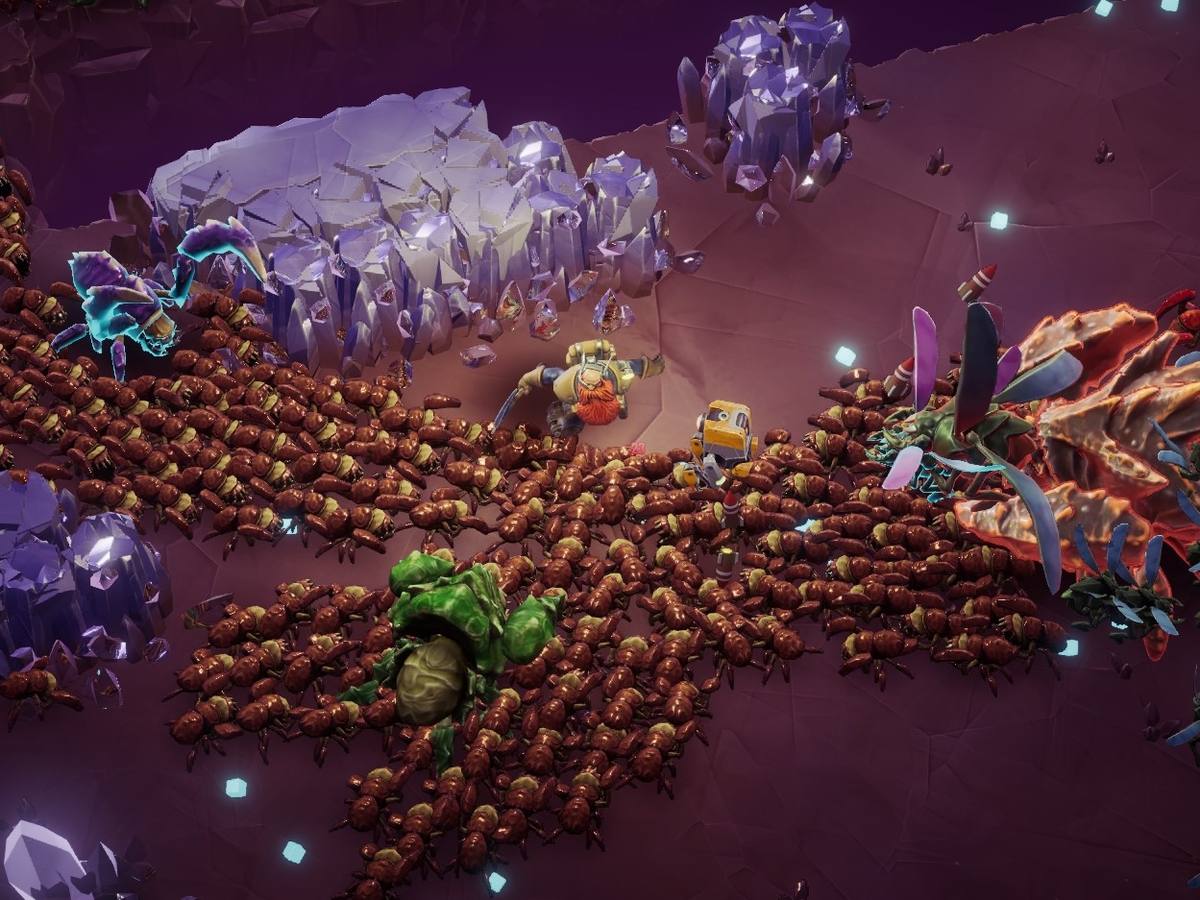
Bringing Deep Rock Galactic: Survivor to mobile meant taking a bullet-heaven PC game and making it run on hardware with a fraction of the GPU, CPU, and memory budget. The port was handled by Piktiv while the PC branch was still in active development, and the teams diverged enough that the merge ran one way only: from PC into mobile, never back. That split gave Piktiv the freedom to be destructive with the original systems, tearing apart established approaches and rebuilding them around a very different set of optimization goals. The core constraint was memory: nearly every target device carried 4 GB of RAM, except one iPad with only 3 GB. On that device the team had roughly 1,850 MB to work with, and going over meant a crash.The performance work focused on the systems whose cost scales with enemy count. Damage numbers were originally GameObjects using TextMesh Pro, but generating a text mesh for a thousand enemies at once became a bottleneck. The fix was a standard Unity particle system with a spritesheet holding the digits 0 through 9. Pathfinding moved off the built-in NavMesh system, which struggles when thousands of agents each do their own pathfinding, and onto a flow-field approach where cost scales with area size rather than agent count. Physics queries were optimized with a KD-tree for spatial lookups, such as finding every enemy in a grenade's blast radius, though that required frequent rebuilds as enemies moved. Enemy rendering replaced roughly a thousand skinned mesh renderers with baked vertex animation: each keyframe is stored in a texture and played back by a GPU shader, cutting CPU cost to nearly zero and enabling GPU instancing on a single shared mesh and material.The deeper technical details explain how these replacements work. The flow field inverts the cost model of pathfinding: a grid is laid over the level, and starting from the goal, tiles draw arrows pointing toward already-arrowed neighbors until the whole field is covered. The cost then depends on the area covered, not the number of agents, and it can be limited further by computing a bounding box around all enemies plus the player and only updating inside that region. The KD-tree divides space recursively so a point-and-radius query can quickly return everything inside it, standing in for heavier physics queries. These systems fed into a chain of Burst jobs, 10 to 15 dependencies long, that move all enemies outside the regular physics system, which significantly raised the frame-rate floor.Addressables were central to fitting the 3 GB iPad limit. Because the game never shows more than one biome at a time, Piktiv broke out biome-specific graphical assets and settings so they load only when needed. The tradeoff is that Addressables introduce asynchronous behavior into previously synchronous code, and rebuilding a system to be async can be a major architectural challenge, but here it was the right fit. Testing relied on an automated measurement system running six scenarios across all biomes: a baseline with the player idle, a thousand enemies approaching, or 500 enemies plus automatically firing weapons. CPU, GPU, and memory were measured throughout, and the Unity Profiler drove early CPU audits. One scenario that spawned about 4,000 blue pickup cubes over ten seconds was a serious hit before optimization, after which it became unmeasurable. Level geometry, procedurally built from individual objects, was also batched with custom draw commands since the fixed top-down camera makes the visible box easy to compute.For teams considering a similar port, the takeaways are less about any single trick than about data layout and collaboration between systems. Shuffling data in and out of components gets expensive when thousands of entities run every frame, so keeping everything in native containers and passing those same containers through the whole pipeline pays off. And a game that should have used ECS or the Data-Oriented Technology Stack doesn't need a full rewrite: this project leaned on the Burst compiler and native data types without converting the whole game. Deep Rock Galactic: Survivor is available on Steam, Xbox, the App Store, and Google Play.