Blog

 Public
- 18 Nov, 2026
Revopoint MIRACO 2: A Portable 3D Scanner with Gaussian Splatting and Scan-to-CAD
Revopoint will launch MIRACO 2 on Kickstarter on November 18, 2026. It is a portable all-in-one 3D scanner that handles small mechanical components, detailed objects, people, sculptures and larger physical spaces. The 960-gram handheld device computes depth, processes point clouds, shows scan previews and supports basic editing on its own. It is powered by an eight-core CPU and a six-core NPU. The scanner works in three configurations. In Standalone Mode, scanning, previewing, processing and adjustment are done on a six-inch 2K AMOLED touchscreen. In Wireless PC Mode, the scanner connects to a workstation over Wi-Fi 6, while Wired PC Mode uses USB-C 3.0 for a stable, performance-focused workflow. With a GPU-powered PC, Multi-Line Laser scanning reaches up to 120 frames per second. A limited number of Super Early Bird pledges start at $1,425, with savings of up to 38%.The scanner has six modes for different sizes, materials, levels of detail and environments. A 34-Line Blue Cross Laser covers larger surface areas, and a 15-Line Parallel Laser targets fine details. A Single-Line Blue Laser handles narrow gaps and recessed geometry. Full-Field HD captures detail without slower precision-laser passes, and VCSEL Rapid suits larger subjects. Hybrid HD pairs detailed capture with dependable tracking at up to 10 million points per second. Single-frame accuracy in Multi-Line Laser Mode reaches 0.02 mm. Reflective metals, dark objects, intricate structures and human bodies are listed among the supported subjects. The recommended minimum scan volume is 10 × 10 × 10 mm. With the optional Photogrammetric Metrology Kit, the maximum grows to 5 × 5 × 5 meters. When connected to a PC, the laser modes support markerless tracking of textured objects.Raw point clouds usually need to be fused, cleaned up, compared, or reconstructed before they become useful for design, manufacturing, or inspection. Revopoint targets this stage with Revo Agents, an agent-powered 3D reality ecosystem. Instead of manual step-by-step processing, it is driven by natural-language commands. The planned workflow includes real-time point-cloud fusion, automated Scan-to-CAD conversion, and Scan-to-Inspection tolerance analysis. For example, a user could ask the system to turn a specific part of a scan into CAD geometry. A scan could also be compared against a reference model to find dimensional differences. The aim is to cut repetitive work between capture and engineering. Human validation of CAD geometry, tolerances, and inspection results still matters.For game development, VFX, XR, digital preservation, and visualization, MIRACO 2 uses a dual RGB camera system. A 2MP near-field camera handles nearby subjects, and a 50MP far-field camera captures larger objects and environments. Connected to a PC, the device supports physically scaled 3D Gaussian Splatting. It exports .splat models at one-to-one scale with real-world dimensions for XR experiences, spatial documentation, and digital twins. 3DGS preserves real spaces in full visual detail without rebuilding them as polygons. Conventional polygon meshes remain necessary for editing, animation, simulation, and game production. AI Segmentation removes unwanted environmental points, and AI Cropping isolates subjects for further processing.The same device can support several workflows. A designer could rebuild prototype components in CAD, and a quality control team could check a manufactured part against its reference model. A VFX artist could capture an object for production, and an XR creator could preserve a location as a scaled Gaussian Splat. MIRACO 2 is rated for indoor and outdoor use in ambient light up to 100,000 lux. Its 10,000mAh battery lasts about three hours and supports 65W fast charging. Two configurations will be offered: 16GB of RAM with 256GB of storage, or 32GB of RAM with 512GB of storage.

- Public
- 18 Nov, 2026
Daviator accelerates VASP on NVIDIA GPUs: batched k-point calculations and mixed precision
Training machine learning interatomic potentials (MLIPs) requires tens to hundreds of millions of DFT calculations of energies, forces, and stresses. Most often they are produced with VASP, the dominant plane-wave DFT code. These workloads typically use small unit cells and dense k-point grids, which leave GPUs underused. VASP's OpenACC port handles k-points sequentially, so for small systems hundreds of tiny kernels are launched at every step, and launch overhead eats up all the time. A single-atom iron system with 752 k-points ran 8x slower on GPU than on CPU, and researchers had to route jobs by size by hand. FP64 is also stagnating: FP64 throughput has held flat across Hopper, Blackwell, and Rubin, while FP32 keeps growing. The RTX PRO 6000 has a 64:1 FP32:FP64 ratio.Figure 1. Comparison of FP64 and FP32 performance on various NVIDIA GPUsDaviator is an NVIDIA library of GPU kernels that replaces per-k-point loops with batched operations. It is built around a batched Davidson eigensolver using batched FFTs, GEMMs, and custom kernels. Fewer launches push SM occupancy toward saturation, and data stays in GPU memory. VASP keeps the SCF loop, mixing, symmetry, and I/O, while Daviator plugs in at well-defined call boundaries. It is enabled through the NVIDIA ALCHEMI VASP microservice with LDAVIATOR=True in INCAR and intercepts the Davidson solver (ALGO = Normal). Existing input files need no changes. The example is a single Fe atom with ISPIN = 2, NBANDS = 12, PREC = Accurate, and a Gamma-centered 30x30x30 mesh.Some kernels are specialized for batch sizes and may compile on first use. Therefore, job scripts should set CUDA_CACHE_PATH to fast storage such as /tmp/cudacache rather than $HOME, and set CUDA_CACHE_DISABLE=0. Runs launch as usual, e.g. mpirun -np 1 vasp_std. For now only a single node is supported; multi-node support, vasp_ncl, and vasp_gam are planned. The baselines were VASP 6.6.0 on CPU and with OpenACC on H100/H200 and B200. One iron atom runs more than 2x faster than on CPU, LiFePO4 with r2SCAN sees a 22x Davidson speedup, and 64-atom Bi-doped GaAs cuts time by more than 85%. Even 348 atoms with one k-point run faster, so jobs no longer need to be routed by size. Projected dataset workloads show time-to-solution up to 22x faster and cost up to 75% lower than on CPU.Figure 2. Comparison of standard VASP OpenACC v6.6.0, VASP OpenACC (OpenMP/MPS) with two tuned parameters (the number of MPI processes and OpenMP threads), and VASP with Daviator support: execution timeBatched Daviator still runs in FP64, and a mixed precision Davidson solver is hard to build. If you move kernels to FP32 and compare the result against FP64, you only learn "pass" or "fail". Meanwhile, soft failures such as energy drift, wrong convergence, or diverging MD trajectories can look entirely plausible. So the approach uses a generic floating-point type with a configurable number of mantissa and exponent bits. With it, each kernel's minimum required precision is found, and a decision is made: move it to FP32, rework it, or keep it as an FP64 "island". Results depend on the input and the threshold. Instrumentation should also cover dependencies and math functions, and the slow instrumented runs can be parallelized across HPC resources. Implementation starts with FP64↔FP32 conversions around the hot path and type-configurable kernels, and then the FP64 regions are shrunk from iteration to iteration.Figure 3. Required number of mantissa and exponent bits for an instrumented reduction kernel, measured using an implementation of the described analysis process based on VerificarloThe Verificarlo-based analysis showed that FFTs, Hamiltonian application, and orbital updates can be moved to FP32. The subspace eigenvalue problem, energies, convergence measures, and the tall-skinny GEMMs used to build the subspace matrices stayed in FP64. These Rayleigh-Ritz GEMMs feed a sensitive eigensolver, so a split-k algorithm is used: dot products are computed in FP32 chunks, and the final summation is done in FP64. VASP's EDIFF threshold defaults to 10-4 eV and can go down to 10-6 eV and lower, while FP32 offers about 7 significant digits. The mixed solver converges to 10-4-10-6 eV depending on the input, and below the FP32 noise floor the calculation continues in FP64. On GaAsBi-64, FP32 gives a 2x speedup at EDIFF = 10-5 eV, and FP32→FP64 at 10-8 eV runs 1.5x faster than pure FP64.Figure 5. a) Naive GEMM for tall-skinny matrices: dot products produce long sums in FP32, and FP64 is required to reach the target accuracy; b) Mixed precision algorithm that performs small GEMMs in FP32 with final accumulation in FP64On H100 and H200, where FP64 Tensor Cores match FP32 throughput, the gains are marginal. On the RTX PRO 6000, however, the FP32 Davidson solver runs 3x-7x faster, and the whole calculation roughly 2x faster. Mixed precision is enabled with the LDAVIATOR_MIXED_PRECISION parameter (0 means FP64). Each ionic step starts with data stored in FP32 until DAVIATOR_EDIFF_FP32 or DAVIATOR_SWITCH_TO_FP64_AFTER_STEP is reached; 10-4-10-5 suits most inputs. The example sets EDIFF = 5e-07, LDAVIATOR = True, LDAVIATOR_MIXED_PRECISION = True, DAVIATOR_SWITCH_TO_FP64_AFTER_STEP = -2, and DAVIATOR_EDIFF_FP32 = 5e-05. A VASP license is required, and Daviator with mixed precision will run on any NVIDIA GPU through the ALCHEMI VASP microservice.Figure 4. Memory layout of typical floating-point number formats

- Public
- 18 Nov, 2026
Apple Names 45 Finalists for the 2026 App Store Awards
Apple has announced 45 finalists for this year's App Store Awards. They were chosen by App Store editors around the world for user experience, design, technical innovation and cultural impact. The shortlist covers apps and games for iPhone, iPad, Mac, Apple Vision Pro, Apple Watch, Apple TV and Apple Arcade, plus a separate Cultural Impact category. Winners will be revealed in the coming weeks. App Store vice president Carson Oliver highlighted games built around imaginative worlds and shared play, as well as apps that help people learn new skills and support their communities.On iPhone, the app finalists are ElevenReader, which reads text aloud in natural-sounding AI voices, (Not Boring) Camera, which turns the phone into a customizable old-school film camera, and Raylie, a personalized companion for flights. The iPhone game nominees are BALL x PIT, DAVE THE DIVER and Gambonanza, which bends the rules of chess. iPad apps include Cosmos, Kiddopia and Mockup, a tool for designing websites and apps, while iPad games are Aniimo, Arknights: Endfield and Where Winds Meet.The Mac shortlist features Paste, Things 3 and Ulysses, with Big Walk, Blue Prince and Crimson Desert competing for Mac game. Apple Arcade finalists are Perchang World, PowerWash Simulator and Pusheen's Place. On Apple Watch, Bevel turns fitness data into insights, Moonlitt tracks lunar events and StressWatch reports real-time stress levels. Apple TV nominees are Case Solved: The London Files, Letterboxd and Pocket Casts.For spatial computing, Apple Vision Pro app finalists are Adobe Premiere, which offers video editing on an expansive spatial canvas, MLB, streaming baseball from a behind-home-plate view, and Museas, which turns a living room into an art gallery. Vision Pro game finalists are Cueva de las Manos with light-and-shadow puzzles, Ping Pong Club for table tennis, and Spatial Ops, which stages first-person battles inside the player's home.The Cultural Impact category is the largest. Its apps are Brilliant for math and science, chilli for climate-focused political action, Hearing Buddy for people who are deaf or hard of hearing, Karrot for neighborhood circular economies, setlog for more authentic social media, and Unedo for learning Spanish through culture. Its games are and Roger, Consume Me, which deals with eating disorders, PancitoMerge celebrating Mexican cuisine, Sago Mini Jinja's Garden for family play, Spilled! about cleaning polluted waterways, and the cozy Tiny Bookshop.
- Public
- 18 Nov, 2026
Playtesting your first game: a working loop for solo creators and anyone making games with AI
A playtest is simple: someone who didn't make the game plays it while its creator watches, and the game changes based on what that observation reveals. No team, budget or programming background is required. What it takes is a playable build, one or two clear questions, and a handful of people other than the creator. The method applies equally to traditional development and to games shaped with an AI game maker such as Unity Spark.Testing covers two separate jobs. One is technical: nothing freezes, buttons keep responding, there are no stutters and no way to fall out of the world. Much of that can be checked alone. The other is human: do players understand what to do, and does the game feel as intended? That part needs outsiders, because the creator can never experience the game for the first time and unconsciously fills in gaps. Timing matters as well. Start once the core action works, even with placeholder art and no sound. If players will mostly jump, test jumping; if they will match tiles, test matching. Feedback on a confusing core is cheap to act on early and expensive after levels, menus and story have been built around it.Before each session, write down one or two questions that can be answered just by watching. Will players figure out jumping without hints? Will they head toward the exit as the level intends? Will the first enemy feel fair on a first try? Does the opening create the intended mood? Is it clear whether the player won or lost? Sessions without a goal tend to produce vague feedback. Build the test build around these questions: typically 15-30 minutes of play, only what is being tested, and a main action that doesn't crash. A short objective screen or a couple of lines of instructions keep testers from stalling before the part that matters. Working beats looking pretty.Before inviting anyone, try to break the game yourself by playing as extreme player types. The cautious player avoids all risk: if they win easily, the challenge isn't working. The all-in player hammers one strategy: if it always wins, the other options need rebalancing. The random player acts without thinking: if a skill-based game can be beaten that way, it has a flaw. The wanderer ignores the goal for a minute to see whether the game still makes sense without it, and the button masher presses everything at once to find out what gets stuck. A simple log with the date, what was tested and what was noticed will help you see patterns later.Friends and family are fine for a start, but they are often too kind. Mix frequent and rare gamers, people with different needs, and people who have and haven't heard of the game. In early rounds, three to five testers are usually enough to surface the most common problems, though that is a rough guide, not a rule. Several small rounds beat one big one, and each distinct audience deserves a few testers. You can find more people on forums and chat servers where players expect early games: post a short version, say what feedback you need, reply, and consider a small thank-you, such as a line in the credits. Sessions can be live, via screen share or in person, which shows every moment of hesitation. They can also be recorded, which lets you reach more people than one calendar allows, but you need clear instructions and permission to share clips. Either way, don't help: confusion is the data. Ask testers to think aloud, then pose three to five targeted open questions like "What was the first moment you felt lost?" instead of "What did you think?" or a one-to-five rating.If one player struggles with something, that's an opinion; if three stumble the same way, it's a problem. Give the most weight to repeated observations, and park one-off taste comments unless they match your own instincts. Testers are good at locating problems but not always right about fixes, so their suggestions are clues, not instructions. Every big change needs a retest, since a fix can shift a problem elsewhere. With an AI tool the process is the same. Unity Spark works in the browser, starts from text prompts, uses artist-created assets from the Unity Asset Store, requires no code and is heading into closed beta soon. Observations become specific changes, which are applied one at a time and then tested again.

- Public
- 18 Nov, 2026
Crayola and Beekeeper's Naturals ad combines 2D animation in the style of children's crayon drawings with 3D products
A commercial for Beekeeper's Naturals and Crayola combines 2D and 3D elements to recreate the naïve, warm look of children's crayon drawings. The campaign was meant to feel imaginative, fun and colorful, as if it came straight out of a kid's drawing session.Cel animator André Dias handled nearly all of the 2D work: animation, rigging, cleanup, character design and compositing. Jean Carvalho did the storyboarding, and Nuno Leal and André Ruivo built the 3D assets. The client allowed full creative freedom, and the team chose a crayon-style art direction.The work spanned three tools. Original artwork was drawn in Krita, rough animation was blocked out in Adobe Animate, and the final animation was polished in Moho. Moho's textured brushes and its built-in line boil tool gave the frames a hand-drawn look with a slight tremble, and there was no need to redraw each line by hand.The Crayola pencils and Beekeeper's Naturals lollipops were modeled and rendered in 3D, then composited into the drawn scenes. This blend of 2D and 3D shows how imagination and reality intertwine, which is exactly the state a child's mind constantly lives in.

- Public
- 18 Nov, 2026
Apple's split-and-scale method increases the detail of 3D latents at inference without retraining
Apple machine learning researchers have introduced split-and-scale, a technique for increasing the capacity of latent 3D representations at inference time while keeping training costs manageable. Latent representations already encode 3D scenes compactly and underpin powerful 3D generative models. However, they struggle to preserve the fine details of complex objects because the latents can only hold so much information.The obvious fix has serious drawbacks. Increasing latent capacity during training is computationally expensive and often impossible within memory limits. Adding more latents at inference does not help either, because the model fails to make effective use of the extra capacity.The method relies on one key property. When a 3D scene is represented as a continuous function of 3D coordinates, a single pretrained tokenizer can be applied at inference to arbitrarily small sub-regions of that scene. Each sub-region receives the same latent capacity as a whole scene would, so the same budget is spent on a smaller spatial extent. As a result, the model captures far more detail, and no retraining is needed.The team ran extensive ablations to measure the trade-offs between compute, memory, latent capacity, and reconstruction quality. The results show that this inference-time scaling reaches quality on par with much larger models that exceed the memory of a single GPU. The approach also works for generation: an autoregressive 3D generator trained on split-and-scale representations performs competitively with state-of-the-art baselines. This suggests a practical way to generate more detailed 3D assets on modest hardware.
- Public
- 18 Nov, 2026
App Store Taxes and Prices: Botswana, Rwanda, the New SaaS Attribute, and California Sales Tax
Apple is adjusting taxes and prices on the App Store, which supports 43 currencies across 175 storefronts. Such changes follow shifts in tax regulations or foreign exchange rates. To keep prices for apps and In-App Purchases consistent across storefronts, Apple relies on public exchange rate data from sources like The Wall Street Journal or Bloomberg. Exhibit B of the Paid Applications Agreement will be updated to show that Apple now collects and remits applicable taxes in Botswana and Rwanda.A new "Software as a Service (SaaS)" attribute is available for the App Store Software, Software Training Material, Dating, and Boosting tax categories. Developers can review and update it in the Pricing and Availability section of Apps in App Store Connect. Starting January 1, 2027, SaaS, App Store Software, Software Training Material, Dating, and Boosting apps become subject to sales and use tax in California. US storefront prices are shown without tax, so displayed prices and developer proceeds stay the same, but the total customers pay may increase.On December 3, 2026, prices for apps and In-App Purchases will change in Botswana, Colombia, Egypt, Rwanda, and Türkiye, taking the new VAT into account. The exception is when one of these countries is selected as the base storefront. In that case, prices there will stay fixed, while prices in the other storefronts will be updated to remain equalized with the selected base price.Auto-renewable subscriptions will not be affected in any region. Prices in storefronts where they are managed manually will also remain unchanged. The upcoming changes are already visible in App Store Connect, and prices of apps, In-App Purchases, and subscriptions can be changed at any time.

- Public
- 17 Nov, 2026
Falling Leaves: a free Blender add-on that generates, scatters, and animates autumn leaves
Guillaume Bissieres has released Falling Leaves, a free Blender add-on for building autumn scenes. It generates fallen leaves, scatters and animates them, and adds wind effects. The add-on configures leaf generation and physics automatically, so all that's left for the user is to adjust the leaf count, size, swaying motion, and other parameters.The default leaves can be replaced with custom models or with images that have transparent backgrounds. The add-on automatically extracts leaf outlines from such images and turns them into meshes with UVs and materials. For placing leaves on the ground, there are three different Geometry Nodes setups. The tool can also build large leaf piles and generate ground wind, which pushes leaves along a surface such as a road instead of twirling them through the air. Wind strength can be set to anything from subtle to dramatic.Simulation settings can be saved and reused to recreate the same effect in other scenes. Falling Leaves is also designed to work alongside Leaf Gen, a separate tool from the same developer for procedural leaf creation and retopology.

- Public
- 17 Nov, 2026
Apple's N50 smart glasses: hardware reportedly finalized, with Siri set to be the gateway to apps
Apple's smart glasses, codenamed N50, are expected to debut at WWDC next June, and much of their hardware is now reportedly finalized. According to a new Bloomberg report, Apple is building the device's software story around Siri. The voice assistant will act as the main interface to third-party iPhone apps rather than serving only as a built-in helper.The plan is to let users book restaurants, order coffee, call rideshares and buy tickets by voice, with Siri routing those requests to apps already installed on the phone. Apple reportedly intends to make it easier for developers to expose such functions from their existing iPhone apps to Siri. The bet is on the current App Store ecosystem, not on a new class of glasses-native software. Third-party apps will not run on the N50 directly. The glasses will also work only with relatively recent iPhones and will not support Android.Ray-Ban Meta glasses | Courtesy of EssilorLuxottica, MetaOn the hardware side, the prototypes are said to be slightly thinner than Meta's second-generation Ray-Ban smart glasses. The cameras are flush-mounted and have privacy indicators. The glasses use a proprietary magnetic charging connector. They run a "pared-down" version of visionOS 28 on a custom processor derived from Apple Watch chips. This fits Apple's recently stated commitment to visionOS, which now appears to be expanding beyond headsets.The competitive pressure comes mostly from AI, where Siri lags well behind rivals. Meta's glasses lean on its Muse AI. Google's Gemini will power upcoming Android XR glasses from Gentle Monster and Warby Parker. All of these work with both iOS and Android. Even with Meta's early lead, the category is still young.Courtesy of Warby ParkerToday's glasses without a display look more like a step toward a price point that works for mass-market buyers than the final form of the device. The longer-term goal appears to be glasses with a display and, eventually, AR glasses that can be worn all day. Such platforms would likely support a more diverse app ecosystem, which would help solve the "killer app" problem. Platform holders would also get recurring revenue rather than only income from the sale of the hardware itself.

- Public
- 17 Nov, 2026
Organic Zombie Web: A Generator of Creepy Organic Webs in Blender Built with Geometry Nodes
Organic Zombie Web is a new Blender tool built with Geometry Nodes. It creates thick, slimy webs that look like living tissue. These webs suit post-apocalyptic and horror environments and can cover almost any surface. The generator was created by Deepak Kushwaha, who usually works on sci-fi projects such as a functional portal and a cyberpunk lab. The tool is publicly available for download.There are no simulations here: everything is built on mathematical operations. As a result, the generator is lightweight and designed to run in real time. It ships with its own materials, but they can be swapped for custom ones so the web matches the look of a project. Once the result is final, it can be converted into a regular mesh.Under the hood, the generator is organized into multiple layers, all built around three components: Web, Surface, and Subject. The first layer connects the surface to the subject and stretches a web between them. The second attaches additional webs to existing ones, making the structure more complex and random. The third takes the generated surface and builds yet another web layer on it to add detail. Shape and distribution are controlled with curves, Set Position, Sample Nearest Surface, and other nodes.Veins can be added to the web to give it a living look, as if it were threaded with veins and arteries. Their color, noise, and other properties are adjustable. An instancing system scatters extra details across the web. This can be a single object, such as spheres, egg-like shapes, or mushroom-like growths, or an entire collection with multiple variations. The distribution of instances is adjustable as well.General controls include thickness, width, density, randomness, and sag, as well as how far the web hangs down and how much noise distorts its shape. Together these parameters produce a wide range of results, from sparse individual strands to dense, overgrown masses.
- Public
- 17 Nov, 2026
NVIDIA Unveils Rubin HPC GPU with More Than 50,000 CUDA Cores for Agent-Driven Simulation
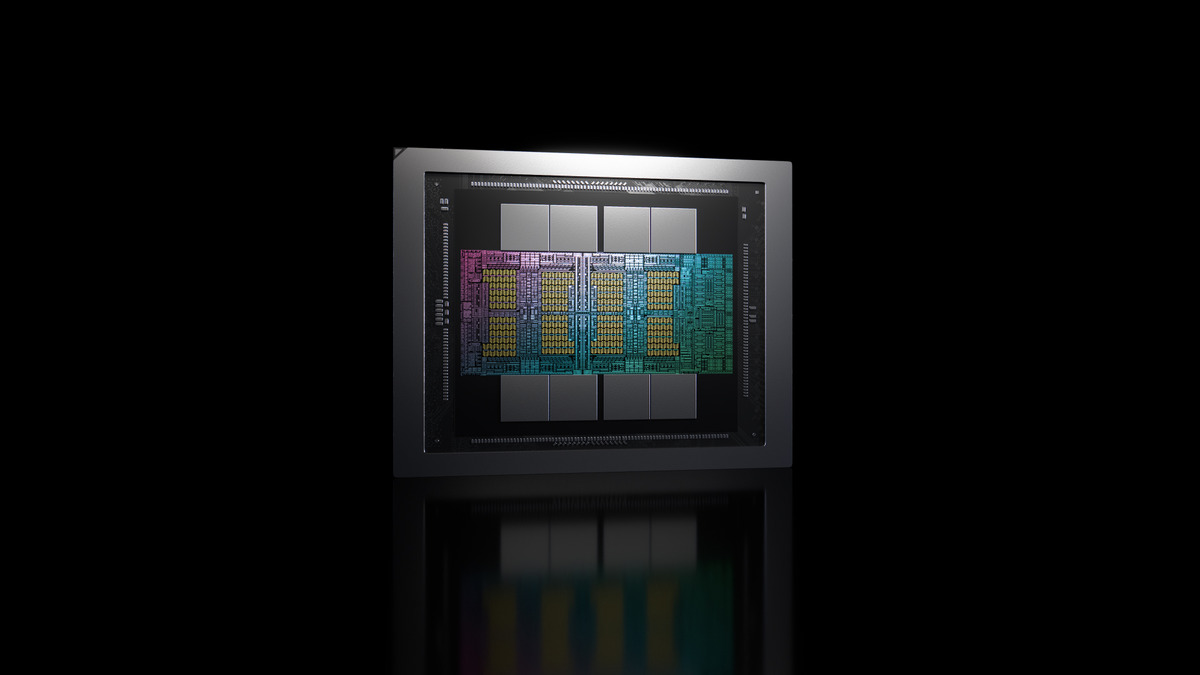
At SC26, NVIDIA introduced Rubin HPC, a new GPU within the Vera Rubin platform. It is designed for simulation and data processing in science, engineering and analytics. The chip targets a pattern that is increasingly common in research and industry: AI agents propose candidate materials, molecules and designs, then use simulations to evaluate them and decide what to try next. More candidates mean more simulation demand, and Rubin HPC is meant to absorb that load.On the hardware side, Rubin HPC sets a record for the number of CUDA cores: there are more than 50,000 on a single GPU. A new sparse data acceleration feature is meant to keep those cores from sitting idle without data, while seventh-generation NVLink speeds up communication between GPUs. Overall, the architecture is balanced: data bandwidth scales together with compute power, rather than simply adding more and more arithmetic units.That balance suits a common shape of scientific workloads. Climate models, engineering simulations, genomic analysis and financial risk calculations typically work the same way: a program reaches into a huge dataset, pulls a few scattered values, computes a result and repeats this at enormous scale. When the cores are kept fed with data, they compute instead of waiting. This speeds up recurring operations such as sparse matrix operations, stencil computations, sorting and reductions.On the software side, NVIDIA positions its CUDA-X libraries as a growing set of optimized algorithm implementations that agents can call, including those most relevant to simulation and analytics. Paired with Rubin HPC, they are intended to shorten the "hypothesis, simulation, refinement" loop, so teams can pick next steps sooner and direct lab work toward the most promising candidates. Ian Buck, NVIDIA's vice president of hyperscale and high-performance computing, framed it simply: faster simulation means faster discovery. Rubin HPC is expected to be available in 2028.