NVIDIA Isaac ROS 5.0 Brings Agentic Workflows and ROS Lyrical Support to Robotics Development
 Public
- 22 Sep, 2026
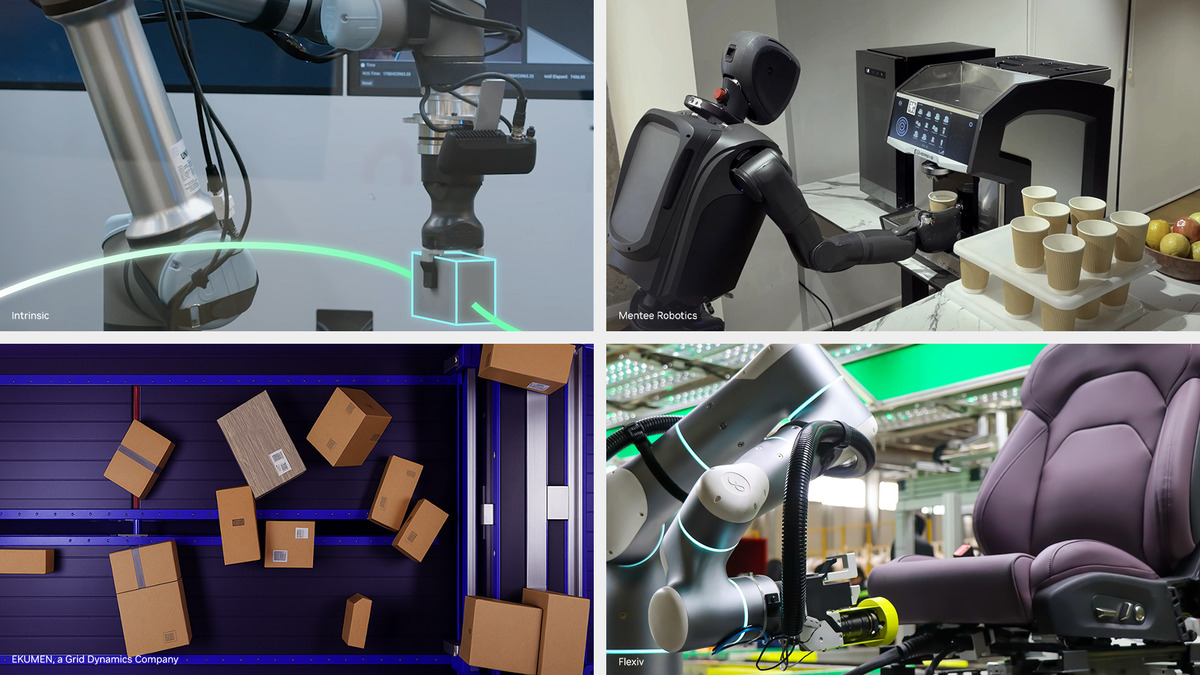
NVIDIA has released Isaac ROS 5.0, a collection of GPU-accelerated packages built on the open source ROS framework. The announcement was made at the ROSCon conference in Toronto. The release is aimed at a broad developer audience: it brings NVIDIA accelerated computing, physical AI models, and production-ready libraries to nearly 1.3 million ROS users, allowing developers to build high-performance robotics applications using free open source tools.
A central theme of the update is agentic development: AI agents now take part in building robots. Isaac ROS 5.0 introduces reusable "skills" for setup and manipulation that both developers and AI agents can use, plus agent-ready documentation, which makes the tools and workflows easier for AI to understand. The idea is to turn developer intent into working applications faster by automating repetitive tasks and helping navigate complex codebases.
Several of these skills go beyond simple coding assistance. A new FoundationStereo fine-tuning skill lets an AI agent adapt a stereo perception model to a developer's specific cameras, environment, and application. FoundationPose, a foundation model for object pose estimation and tracking, now ships with an agent-ready inference library that lets robots perceive and track object position and orientation up to 5.5x faster. The pick-and-place skill, which links detection, depth estimation, and pose output, is also available as a standalone skill for agents.
Platform-wise, Isaac ROS 5.0 adds support for ROS Lyrical and Ubuntu 24.04, giving developers a path to the latest ROS platform while keeping GPU acceleration. NVIDIA worked with the Open Source Robotics Alliance to contribute a standard data-handling interface to ROS Lyrical so that robotics software runs efficiently across different hardware, including GPUs, with CUDA as the working example. Compute support scales from the entry-level Jetson Orin Nano up to high-performance Jetson Thor devices.
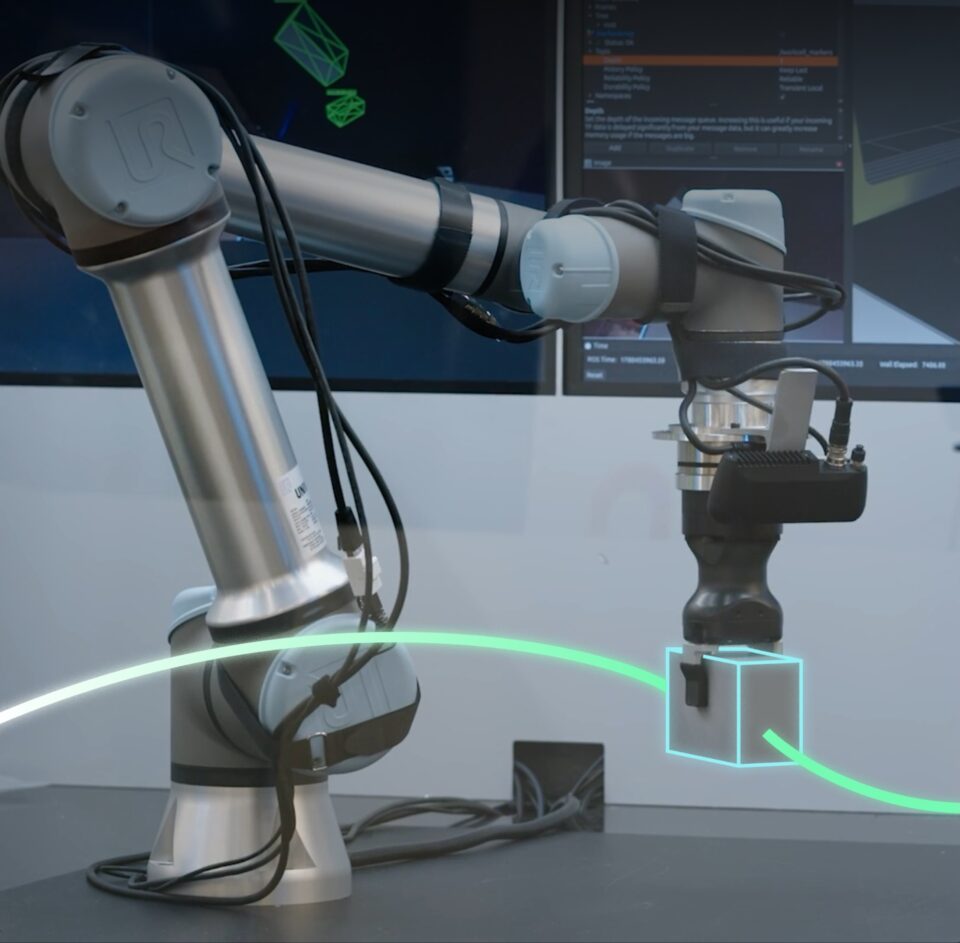
The ecosystem is already extending this agentic approach. Intrinsic's Open Machine Tending Solution, part of the newly released Intrinsic Core, includes built-in FoundationPose compatibility for out-of-the-box object registration, tracking, and pose estimation, reducing the need for rigid physical fixtures. Other partners include Seed Studio's reBot Arm, Magna, Prefix.dev's Pixi package manager, Foxglove, Flexiv's Rizon 4, Ekumen, Ouster's Stereolabs ZED cameras, Mentee Robotics' MenteeBot, Universal Robots' AI Accelerator SDK, ROBOTIS, FieldAI, and Noble Machines. Ekumen, for example, uses isaac_ros_cumotion on a GPU to map a collision-free path for a warehouse arm in roughly 2 to 5 milliseconds.
Isaac ROS 5.0 is available now and is free and open source, with details and getting-started guidance on GitHub.