Blog
 Public
- 27 Sep, 2026
Meta Ray-Ban Display goes international: online ordering and Hologram calling
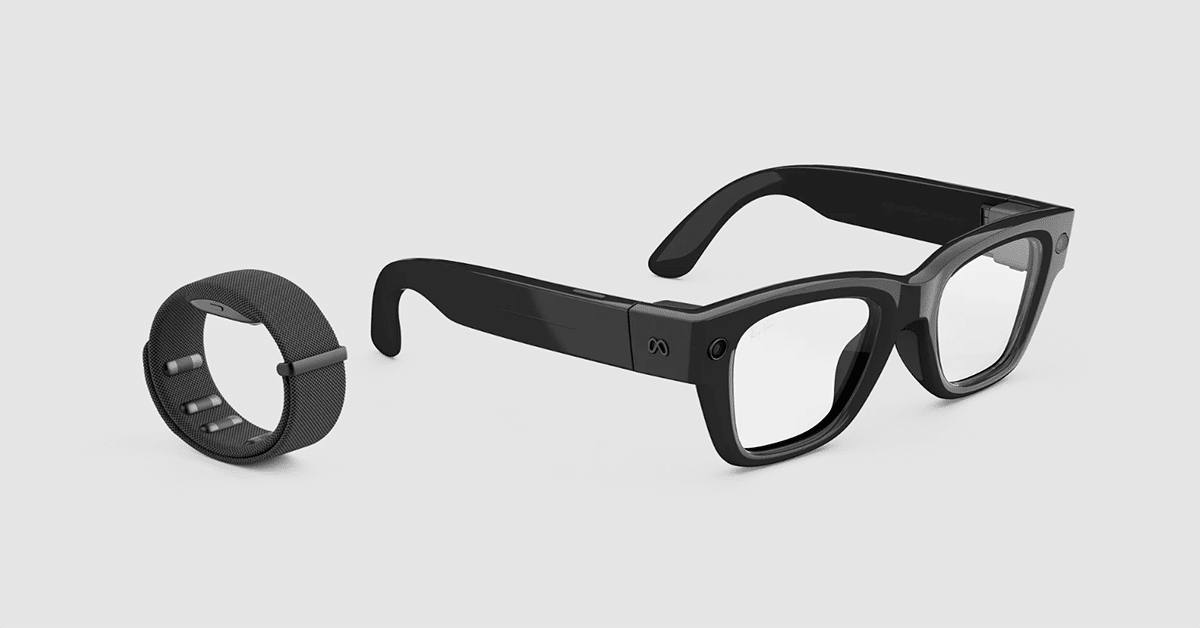
Meta Ray-Ban Display has been locked to the US since it launched last year, but at Connect 2026 the company confirmed that the $800 smart glasses are expanding to international markets starting today. The device pairs a single waveguide display in the right eye with an EMG-powered "Neural" wristband that enables surprisingly low-key UI control. Until now the glasses were sold only through physical retail, because Meta pushed buyers through an in-person fitting to pick the right size.Courtesy of MetaThe rollout spans Canada, the UK, France, Italy, and Germany. For the first time, online ordering is available: it launches today in the US, Canada, and the UK, starting at £749 and CA$1,149 respectively. In France, Italy, and Germany, Meta is taking online pre-orders today at €899, with availability set for October 13th. Prescription lenses can now be ordered through meta.com in the US and Canada, while select retail locations in the UK, France, and Italy support prescription add-ons.Meta is also broadening the platform itself. Navigation and transit maps are being expanded, and developer support is growing so users can try experiences built by the community, though no timing was given for either. The most significant addition is Hologram calling, which records a short self-capture in the Meta AI mobile app to generate a photorealistic digital avatar for face-to-digital-face calls.Because Ray-Ban Display has no eye or facial tracking, Holograms are driven entirely by voice: the model infers facial expression from what you say and how you say it. The feature is slated to roll out in Early Access on WhatsApp for US users later this fall.
- Public
- 27 Sep, 2026
Payday: Aces High open VR playtest to take place on October 19
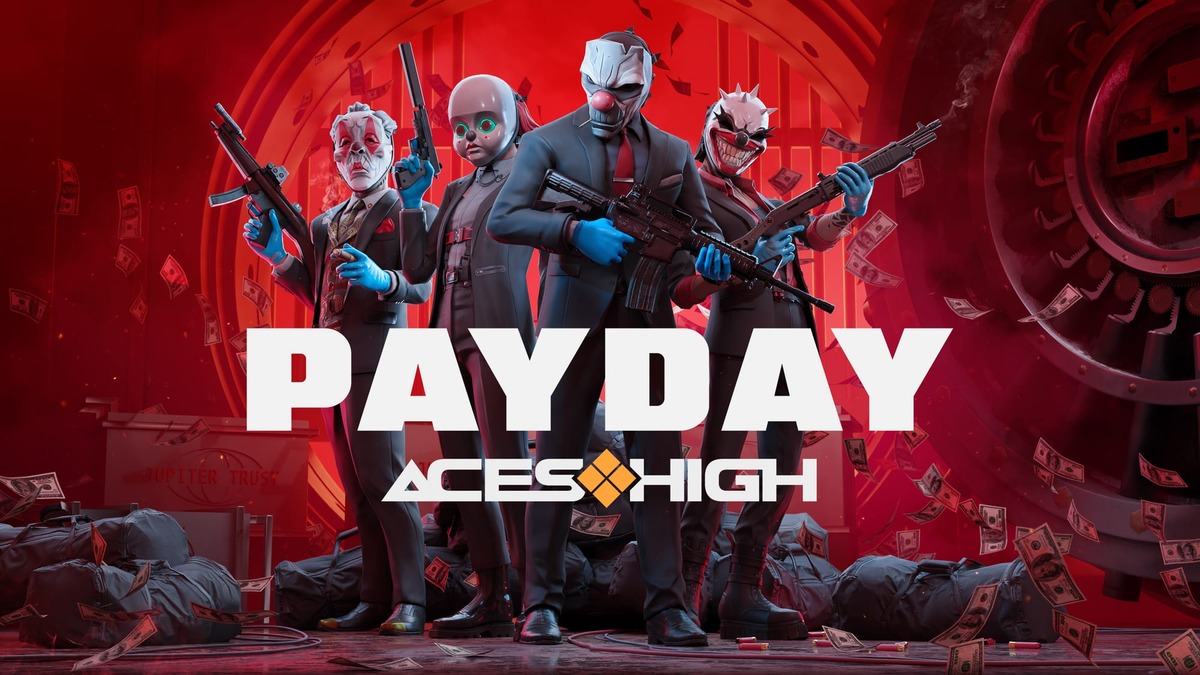
Fast Travel Games is holding an open playtest for its co-op VR heist shooter Payday: Aces High on October 19, open to both Quest and Steam players. Everyone who joins will receive an exclusive Kitty Mask as a participation reward.The October 19 build will let players test two heists, expanding on the earlier August preview, which was limited to the base tutorial and first heist.At full launch, the game will ship with six heists, with more slated to arrive before the end of 2026.

- Public
- 27 Sep, 2026
Supernatural returns to Quest this fall and will get enhancements for Meta VR Glasses
Supernatural, the VR fitness app Meta bought and later placed in maintenance mode, is back as an independent company now called Supernatural Health. Meta confirmed at Connect that the relaunched app launches this fall, supported on Meta Quest headsets and the newly announced Meta VR Glasses. Supernatural Health says it will be a "day one title" on the glasses.Visual improvements to the Flow exercise mode.The lightweight Meta VR Glasses allow a jump in visual quality. Supernatural Health describes "real destinations rendered at a fidelity that wasn't possible until now, coaches who feel like they're exercising right in front of you, and hardware so light the only thing you feel is the workout." Meta VP of Product Management Angela Chang noted the glasses offer optional light blockers for more immersion and a rear strap, similar to "croakies", to secure them during vigorous exercise.A key concern for the existing community is handled: Supernatural Health says all user statistics transfer from the Supernatural Legacy app, with "every point, streak, and badge intact." The new app should feel similar to the old one, but adds higher-definition environments, workouts, and music, plus a slate of improvements shipping this year and beyond. Visual design updates are already visible in the Flow exercise mode, adding color to the previously mostly black-and-white target and bat palette.A new "hands-free" exercise mode may signal hand tracking in Supernatural for the first time, enabling controller-free workouts. The app can be wishlisted now in the Meta Quest store. Subscriptions run $19.99 monthly or $199.99 annually, and a discounted "founding member" rate of $180 for the first year is available by registering on the Supernatural Health website before launch.

- Public
- 27 Sep, 2026
Meta unveils Open Season, the first immersive VR series with Draymond Green
Meta unveiled Open Season at Meta Connect 2026, the first entry in its original content slate Meta Presents. The series follows four-time NBA champion Draymond Green as he sits down with sports psychologist Dr. Carrie Hastings during the 2025-2026 season to work through what is actually going on, both on and off the court. Produced by Skydance Sports, Green's production company The New Media, and Meta, the project combines sports storytelling with an intimate format.The series was shot exclusively in VR in stereoscopic 180° immersive video using BlackMagic URSA cameras, placing viewers in the room with Green and Hastings for raw, unscripted conversations. The format delivers a sense of presence and proximity impossible on flat screens. Over the season, Green works with Hastings through real moments of struggle and triumph with the Golden State Warriors, addressing his emotional play, technical fouls, ejections, and suspensions while confronting the stigma around seeking therapy.Open Season premieres September 29 on the TV app on Meta Quest.
- Public
- 26 Sep, 2026
How RUST LTD Built a Deep Firearms Simulation for H3VR2
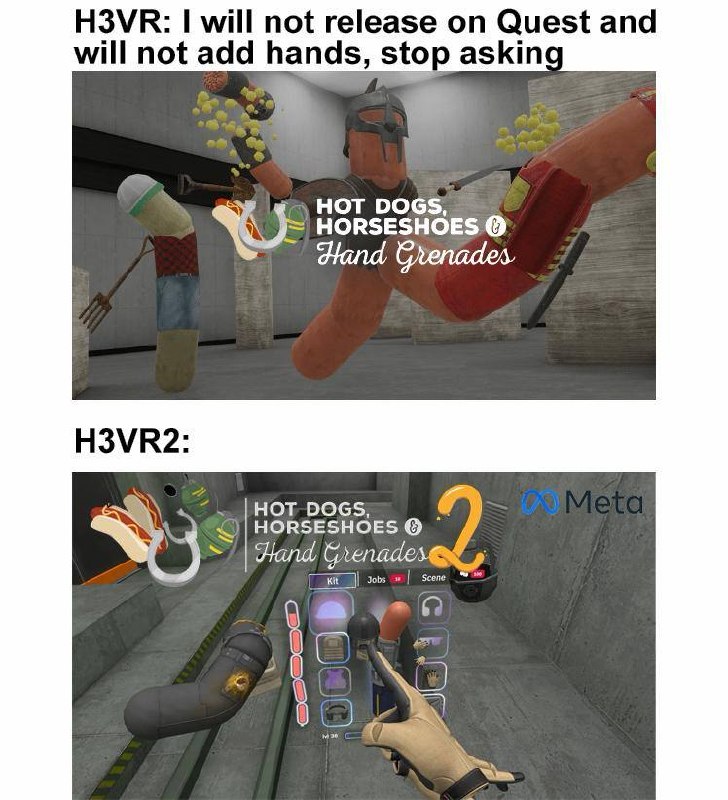
Hot Dogs, Horseshoes & Hand Grenades 2 (H3VR2) is a standalone VR physics firearms sandbox built around an extraction roguelike mode called Facility, alongside a Challenges Range and the sandbox collection itself. Rather than porting the original game, RUST LTD chose a ground-up rewrite, opening a fresh Unity project instead of carrying forward a decade of technical and design debt. The team spent nearly six months on pure architecture and tooling before beginning full content production, reasoning that systems had to scale to a five- or ten-year pipeline of content additions, and grew to more than twenty people working across five time zones.The simulation is built around feeding in real-world data. The team starts with classical research, actual books and technical documentation, then constructs models that converge the real data toward behavior that reads as realistic while still working in game. With hundreds of guns, cartridges, and materials planned, this systematic approach pays off downstream: adding a new cartridge means looking up projectile mass and cartridge characteristics instead of inventing a magic gameplay number. In practice the work approaches real gunsmithing, with values such as spring constants, component masses, and cartridge pressure-curve data entered directly, and a firearm cycles incorrectly if one of those values is wrong.NVIDIA PhysX is used only for a restrained slice of the stack. Because game physics engines struggle with tiny components moving inside a local reference frame while the parent object is carried or thrown, the internal firearm components run in bespoke simulations that effectively live in their own universes, with forces and impulses translated back to the larger game space. At the game-space level, physics is used more directly, with the Sosig characters operating as perpetual physics ragdolls. At the small scale, component simulation is custom; at the other end, ballistics and much of the agent system run on a separate layer built with ECS for Unity and Burst.ECS and Burst let the team spawn huge numbers of ballistic entities for firearms, explosions, and other systems, which raised fidelity rather than just meeting the original target. That enables smaller sub-step sampling for more accurate collision, better air-resistance modeling, and higher-fidelity penetration as projectiles move between materials. Performance was treated as a first-class concern from the start: the core simulation runs on ECS and Burst for the CPU, while sophisticated gun models consume much of the frame budget, forcing polygon count, texture memory, bandwidth, and environment structure to stay lean.The move to Unity 6.3 was a step change compared to the original. Beyond quality-of-life gains like nested prefabs, the most impactful updates were SRP Batcher performance, shader compilation improvements, and on-tile post-processing. Shader compilation shrank large uber shaders on disk, and on-tile post-processing let the team remove a hand-written HDR tone-mapping pass that had previously been baked into shaders because a separate post-effect blit was too costly on standalone VR hardware. General Editor stability also mattered, since the project pushes a large amount of custom tooling.Maintaining hundreds of mechanically distinct weapons relies on powerful Inspector tooling and data-driven authoring. Custom inspectors are calculation-, validation-, and analysis-centric tools built specifically around firearms, and the assets themselves become the single source of truth for configuration. Odin Inspector is central to this: it lets every programmer write custom inspectors with minimal work and hides the roughly 95-98% of a firearm's configurable surface that is irrelevant to any given gun. Technie Collider Creator 2 also saved hundreds or even thousands of hours of authoring physics hulls by preferring primitives and using convex meshes only where necessary.
- Public
- 26 Sep, 2026
Just Hoops 2.0 adds hand-tracked shooting modes, mixed reality for trick shots, and new accessibility options
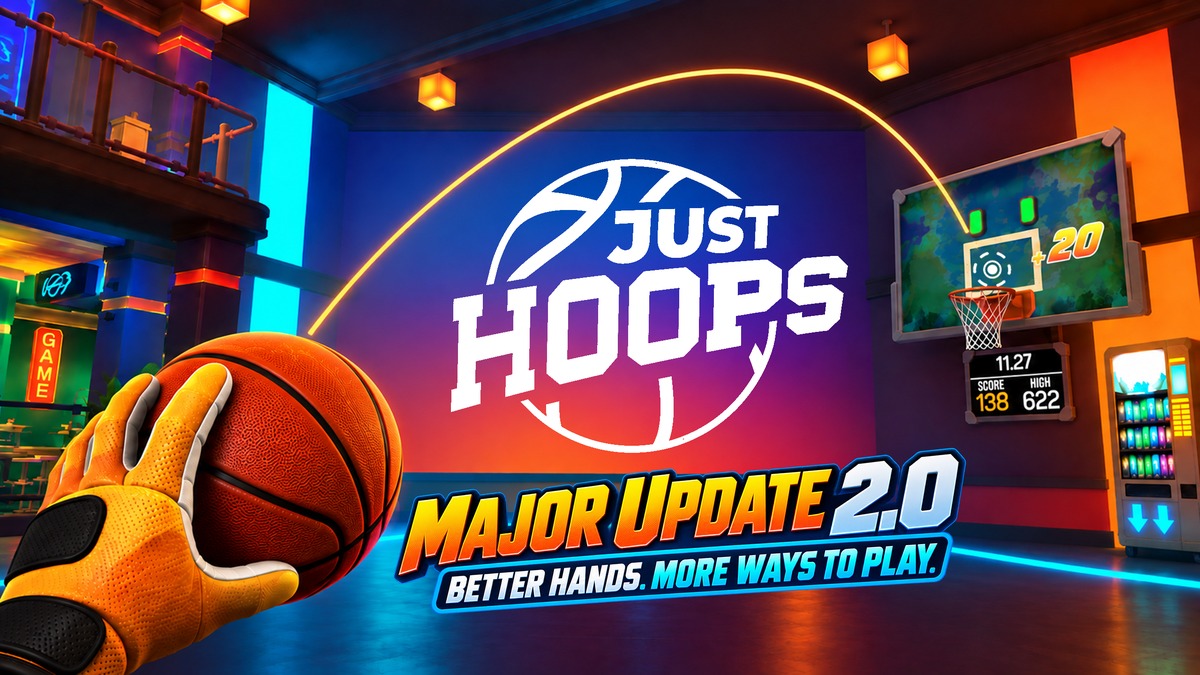
Just Hoops has shipped its 2.0 update alongside Meta Connect, centering the release on hand tracking and more accessible ways to play. Developer Realcast built the update over the past year using player feedback, with added support from Meta. At launch it is confirmed for the Quest release; whether any of the new features arrive on the Steam version is, at the time of writing, unknown.The headline addition is controller-free shooting, split into two methods aimed at a wider range of players. In Natural Shot, you reach out, grab the ball with your real hands, and physically throw it at the hoop. Because throwing objects in VR can be unreliable, the game layers optional assists on top, and its scoring system grants up to eight points per basket depending on those assists, rewarding players who invest time in learning to shoot unassisted. Pointer Shot is the simpler, more relaxed alternative: you aim with your hand and fire with a basic gesture. It suits casual or noncompetitive play and seated sessions, and it awards two points per basket. Multiplayer carries both styles forward through online matchmaking or a private room holding up to four players.Trickshots mode turns the player's real environment into a mixed-reality playground: you can place hoops and obstacles around the room to design your own shots. Zen Mode removes the timer entirely, so you can practice and explore levels at your own pace, without the pressure of score or time.Beyond shooting, the update introduces a clearer path to unlocking new levels, series, and challenges, giving newcomers more guidance and returning players fresh goals. It also adds a 1970s-inspired retro environment in keeping with the game's arcade identity, more dynamic levels, updated tutorials, and a redesigned menu. Just Hoops 2.0 is available now on Quest.
- Public
- 25 Sep, 2026
Adobe acquires Topaz Labs and adds its AI upscaling and enhancement models to Firefly and Creative Cloud
Adobe has completed its acquisition of Topaz Labs, the specialist in AI-based image and video enhancement. The company says the deal will expand its video and image model offerings with state-of-the-art AI enhancement models across Adobe Firefly, Firefly Services and Creative Cloud apps. Topaz Labs products: the AI image upscaler Gigapixel, along with image and video enhancement tools Topaz Photo and Topaz Video, will remain available as standalone offerings through the company's website.The deal was first announced in June, subject to regulatory approval, and has now been completed. Topaz Labs was one of the earliest companies to focus on AI-based image-processing tools. Founded in the mid-2000s as a Photoshop plugin developer, it later shifted to standalone AI image and video software. By 2025 it had millions of users and $48 million in annual revenue, and won a technical Emmy for its role in restoring archive TV recordings. Beyond photography and video, its upscaling tools like Gigapixel are used in CG work, where artists render 3D images or animation at lower resolution and upscale the raw renders to speed up the workflow.The pairing looks natural on both technology and business-model grounds. Topaz Labs had already moved to subscription-only products last year and increasingly productized its technology through web apps, mirroring Adobe's Firefly approach. It was also one of Adobe's early third-party AI model partners. Generative Upscale, introduced in Photoshop 27.0, already offered Topaz Labs' Bloom and Gigapixel models as alternatives to the native Firefly upscaler. In an interview, Topaz Labs' Eric Yang explained the company's upscaling edge by saying the technology is its lifeblood, whereas Adobe doesn't depend on it. Five Topaz Labs AI models are currently available in Adobe products, including Firefly Boards and the experimental Firefly Assistant.The deal gives Adobe further reach in on-device AI. Adobe specifically cites NeuroStream, Topaz Labs' GPU memory optimization technology, which it says positions the company to tap into a growing opportunity for efficient on-device AI video by running larger models locally on consumer hardware. For existing users, little is expected to change in the short term: Topaz Labs apps and models stay available as standalone offerings, customers can expect continued support and investment, and Yang will join Adobe to keep leading the Topaz Labs team. No word yet on whether subscription pricing will change.

- Public
- 25 Sep, 2026
Adaptive Development: How to Bring Your Apps to Googlebook
Googlebook introduces a new category of laptops sharing a common Android foundation, with hardware from partners such as HP, Dell, Lenovo, Acer, and Asus. The devices pair mobile convenience with desktop power: high-resolution OLED touchscreens, dedicated keyboards, precision trackpads, all-day battery life, and OS-level Gemini Intelligence. Users can move fluidly from quick phone interactions into richer, more immersive laptop sessions. Apps that arrive optimized earn dedicated badging, enhanced search placement, and featured spots on curated Google Play homepages, along with a path into the Apps Experience Program and its new rate card. Optimized apps are also highlighted during phone-to-Googlebook setup, giving them day-one presence.The core message is that you do not need a standalone app. Adaptive development lets modern Android apps scale across large displays, new postures, and emerging form factors. An existing foundation of adaptive UI, window size classes, and multi-input support is enough to deliver an optimized experience. On a laptop your app runs in a desktop environment where expectations shift toward higher information density, precision input, and active multitasking, so an adaptive layout should reorganize content into functional groupings rather than simply stretching a mobile interface across a wide screen.The practical patterns start with a multi-pane architecture that expands, reflows, or reveals richer detail as window boundaries change. Navigation 3 provides adaptive scene strategies coordinated directly from the back stack; ListDetailSceneStrategy and SupportingPaneSceneStrategy enable side-by-side layouts when space allows, while scene decorators wrap screens with persistent desktop navigation rails. Layout primitives like Grid and FlexBox, and soon the experimental MediaQuery and Styles APIs, help organize complex content and adjust visual styles dynamically. Because free-form windows resize at any time, layouts should respond to window size classes rather than physical display dimensions.Desktop design also accounts for ergonomic viewing distances and precise pointer targets: adjust the type scale for larger displays, set layout max widths for readable line lengths, and define explicit click targets to prevent misclicks. When the core layout is adaptive, you can add differentiated desktop features. Jetpack Compose natively supports physical keyboard navigation and pointer selection, so you can integrate contextual cursors for text entry, pane resizing, and tool selection, plus right-click context menus, hover states, and a Keyboard Shortcuts Helper for discoverable shortcuts. Multi-instance support unlocks side-by-side workflows with independent windows, and drag and drop lets users move text, images, and files between windows or onto an empty workspace to start a new task.Beyond individual windows, Continue On keeps experiences connected across phones, tablets, and Googlebooks through bidirectional handoff; HandoffActivityData preserves context like document position or active tabs, with optional web fallbacks. Complement this with customizable widgets and benchmark against desktop app quality guidelines. Testing fits the existing workflow via the Android Studio desktop emulator, which runs a virtual desktop environment to test free-form resizing, multi-instance interactions, and mouse, trackpad, and keyboard input. The adaptive skill gives AI agents the context to refactor mobile layouts into responsive Compose containers automatically, and installs directly through the Android CLI.
- Public
- 24 Sep, 2026
Foundry Releases Mari 8.0 in Open Beta
Foundry has released Mari 8.0, the next version of its 3D texture painting software, in open beta. The release introduces over 50 new nodes to the Node Graph, most of them math operations, but also new nodes for A/B comparisons, color grading, and hex tiling textures. The update is currently in beta, and Foundry has not announced a date for the stable release, though the expected timescale is roughly a month or two based on previous updates.One of the biggest additions is the Tri-Planar Tiled node, designed for applying uniform surface detail to models with UV distortion, seam placement issues, or no UVs at all. It projects a single 2D image texture across a 3D model along the X, Y, and Z axes, unlike the existing Triplanar Projection node, which uses up to three separate images. The node offers several blending controls, including a Smart blend mode to preserve high-frequency detail, noise-driven blending, and customizable falloff ranges and curves.The release also adds a Hex Tile node that minimizes visible repeats by tiling and blending textures in a hexagonal grid rather than a conventional rectangular one. Hex tiling is now supported in other key VFX tools, including Houdini, Redshift, and RenderMan. New nodes include Compare, which enables A/B wipe comparisons between different node streams to make iterating on a material's look easier, and Color Remap, which centralizes hue, saturation, exposure, and gamma adjustments into a single node. A set of Transformation nodes adds mathematical and spatial control, including a Coordinate Transform node for driving any node with a Position input and a UV Radial Transform node for manipulating UV coordinates. There are also 49 new math nodes, ranging from basic arithmetic and trigonometry to conditional logic and advanced randomization.Mask generation receives new options as well, including creating color ID masks directly from active canvas selections or Selection Groups. New Color Mask and Multi Color Mask nodes isolate a single color or stack multiple target colors from surface colors on a model, and it is now possible to add a mask port to any node in the Node Graph. Workflow improvements include trackball rotation-style navigation for the virtual camera, clear visual indicators on archived project thumbnails in the library, and logical operand support in the Shelf search box.Mari 8.0 moves the software to the CY2025 specification for the VFX Reference Platform and is compatible with Windows 11 and Rocky Linux/RHEL 9. Pricing is rental-only: individual subscriptions cost $86 per month or $689 per year, while team subscriptions cost $1,289 per year, up $60 per year since Mari 7.5.
- Public
- 24 Sep, 2026
Meta VR Glasses Get Day-One Unity Support via OpenXR
Unity 6.6 ships with day-one support for Meta VR Glasses, the lightest and most comfortable headset Meta has made, announced at Meta Connect 2026. Development runs through OpenXR, so existing Quest projects carry forward with minimal changes. Developers can keep using familiar tools such as the XR Interaction (XRI) Toolkit, XR Hands, and XRI Simulator to design, build, and test ahead of the retail launch in spring 2027.The device weighs about 100 grams and uses a 5K Infinite Display, with hand and eye input as the primary way to interact. Because it sits in the same Meta VR ecosystem, with the same store and the same OpenXR stack, existing Quest apps can run on it from day one. Studios behind launch titles including Dragon Grove, Phoenix Wright: Ace Attorney Dual Destinies VR, Supernatural, Two Point Hospital - Mixed Reality Edition, and Story of Seasons are already building for the device with Unity.Three new capabilities unlock new experiences on VR Glasses. Eye tracking supports foveated rendering and look-and-tap input, informing both visual quality and interaction design. Quad Views Rendering uses the display architecture to render each eye's periphery at lower resolution than the center, cutting GPU cost with no visible quality loss. Spatial Audio adds 7.1.4 surround sound, with four height channels above the listener, for immersive VR audio.Developers should review UI and interaction design to take advantage of hand and eye input while keeping controller support where titles rely on it, using the XRI Simulator to validate inputs without physical hardware. Support requires Unity 6.6 or higher; users on earlier versions must upgrade. On October 1st at 9:00 AM PT, a live session with Meta covers eye tracking, microgestures, quad views rendering, and a step-by-step guide to adding VR Glasses support to existing Quest projects.
- Public
- 24 Sep, 2026
Meta Connect 2026: New VR Games and Updates for Meta Quest and Meta VR Glasses
The biggest VR reveal at Meta Connect 2026 is the Meta VR Glasses device, launching in Spring 2027. Described as the company's most advanced VR hardware in a glasses form factor, it combines the roles of cinema, workspace, and console, and leans heavily on hand-tracking technology that requires no controllers. The platform is not limited to its own games: every existing Quest title will be playable on the glasses when paired with Touch Plus controllers. On top of that, a wave of new titles built for hand-tracking is arriving for both the glasses and Meta Quest 3 and 3S.Beat Saber receives its largest update to date in Spring 2027. Its headline feature is Beat Saber: Flux, a new hand-tracking mode where players slice notes by channeling energy between their palms. Flux launches with 35 songs and supports either hand-tracking or Touch Plus controllers. The same update adds a revamped campaign and a new progression and rewards system with earnable sabers, notes, and profile badges, and for the first time the entire Beat Saber experience is playable without controllers.Several titles are designed from the ground up for hand and eye interaction on the glasses. Dragon Grove is a cozy puzzle game launching alongside the device in Spring 2027, where players match leaves, buds, and flowers to cultivate plants and interact with dragon companions by reaching out to cradle or pet them. Two Point Hospital reimagines the simulation classic with hand-tracking for smooth, precise control at every stage. Cardmada is a pirate-themed tactical card battler built for hand and eye interaction, while Story of Seasons: Your Wonderful Life brings full hand-tracking to farming tasks like milking cows and shearing sheep.Other announcements target specific audiences. Phoenix Wright Ace Attorney: Dual Destinies VR brings the court drama series to VR for the first time in 2027, using hand-tracking to present evidence and point at witnesses, plus voice activation to shout "Objection!!" in court. Dice Throne Digital, arriving in early 2027, is a mixed reality competitive battler that will be free-to-play across the glasses, Quest 3 and 3S, mobile, and PC with cross-platform play. Tetris Effect: Mixed Realities reimagines the classic using the player's hands and the passthrough camera to reshape the room around each game.For action fans, PAYDAY: Aces High brings the heist series to Quest 3 and 3S for the first time, supporting solo play or up to three friends with cross-play against PCVR players. An Open Playtest begins October 19, and a full launch follows later this year. Hot Dogs, Horseshoes, and Hand Grenades 2, a physics sandbox shooter set in a procedurally generated Facility, launches November 12 on Quest 3 and 3S with a 10% pre-order discount. The fitness app Supernatural also returns to the Meta Horizon Store this fall as a Day 1 title on the glasses, noting that low-active adults doubled their weekly exercise in its randomized controlled trial.