DLSS 5 brings 3D-Guided Neural Rendering to game developers
 Public
- 24 Sep, 2026
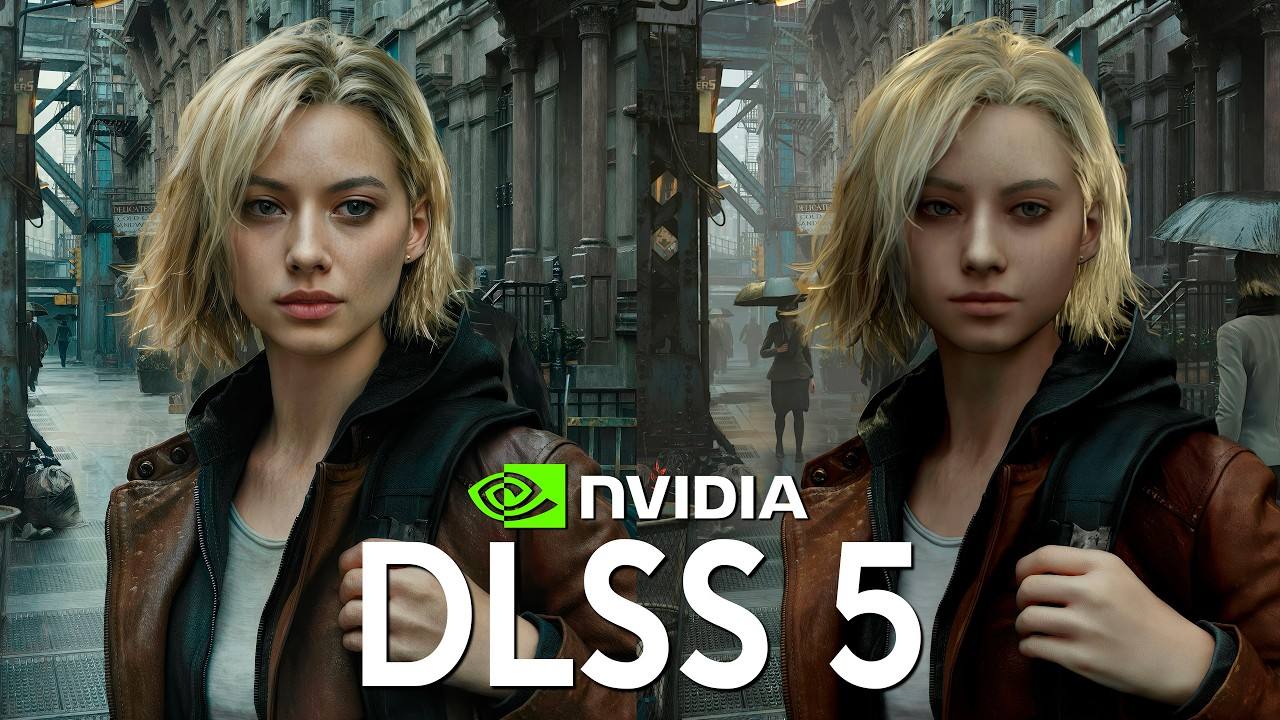
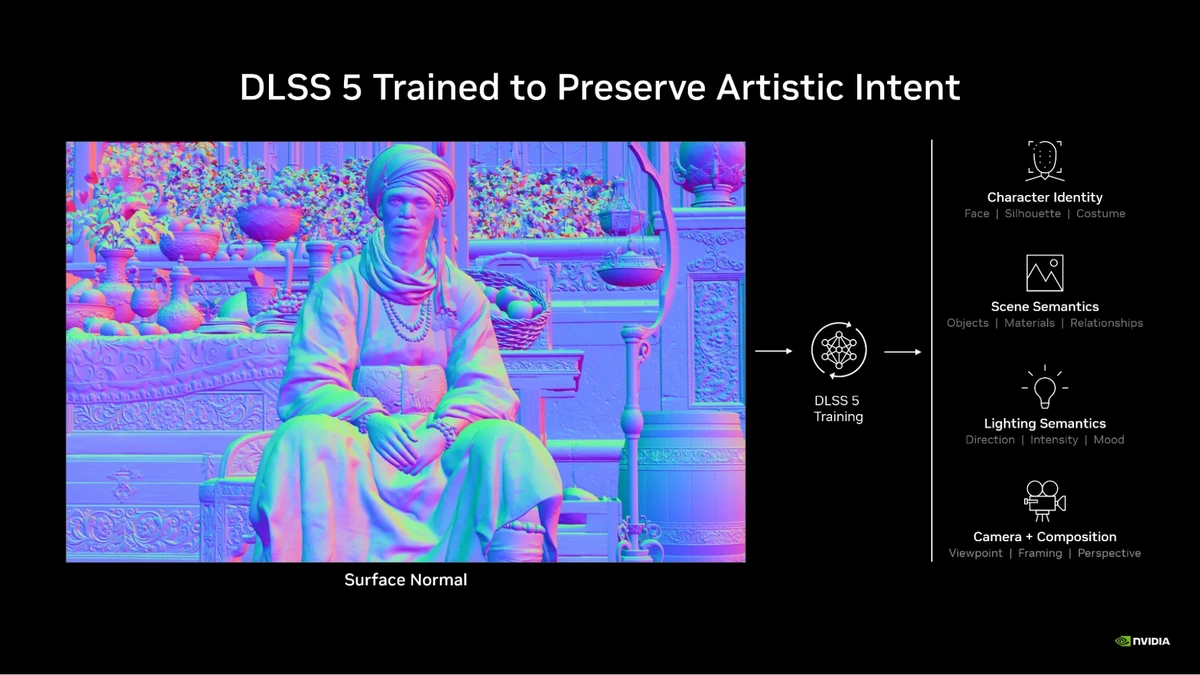
DLSS 5 introduces 3D-Guided Neural Rendering, a new final stage that extends the graphics pipeline as a neural-rendering pass. It uses the engine's rendered frame, including artist-authored geometry, textures, and lighting buffers, as an unyielding foundation. The engine frame defines what must remain, while developers direct what may change. Using frame color and motion vectors, the model adds lifelike lighting and material detail while preserving scene structure, character identity, and artistic intent.
Built specifically for real-time 3D rendering, DLSS 5 delivers deterministic, temporally stable output. It operates on a strict one-frame-in, one-frame-out model with game-engine motion vectors, keeping results consistent as players move. The compact, specialized model runs locally on a single GeForce RTX 50 Series GPU at up to 4K resolution.
DLSS 5 is available now in NBA 2K27, developed by Visual Concepts and published by 2K, on all GeForce RTX 50 Series desktop and laptop GPUs. GeForce NOW Ultimate members can also experience the technology when streaming from NVIDIA-operated servers powered by GeForce RTX 5080 GPUs in the cloud. Visual Concepts uses overall tone and style controls plus a per-pixel uplift control mask to fine-tune character detail while respecting player likenesses. In NBA 2K27, DLSS 5 preserves scanned facial geometry while enhancing skin subsurface scattering, light transmission through hair and ears, and contact shadows.
Beyond DLSS 5, the announcement covers updates to NVIDIA ACE and the RTX Kit. NVIDIA ACE expands the speech pipeline and inference framework for building conversational in-game characters, with the NVIDIA In-Game Inferencing (NVIGI) SDK providing in-process C++ execution for deploying local AI models alongside game graphics. RTX Mega Geometry SDK has been updated to 2.0, adding support for streaming continuous level-of-detail clusters for high-density meshes, demonstrated in a newly released textured glTF version of Zorah. RTX Mega Geometry is coming soon to Gears of War: E-Day.