Blog
 Public
- 12 Oct, 2026
Steam Frame order queue now stretches into 2027
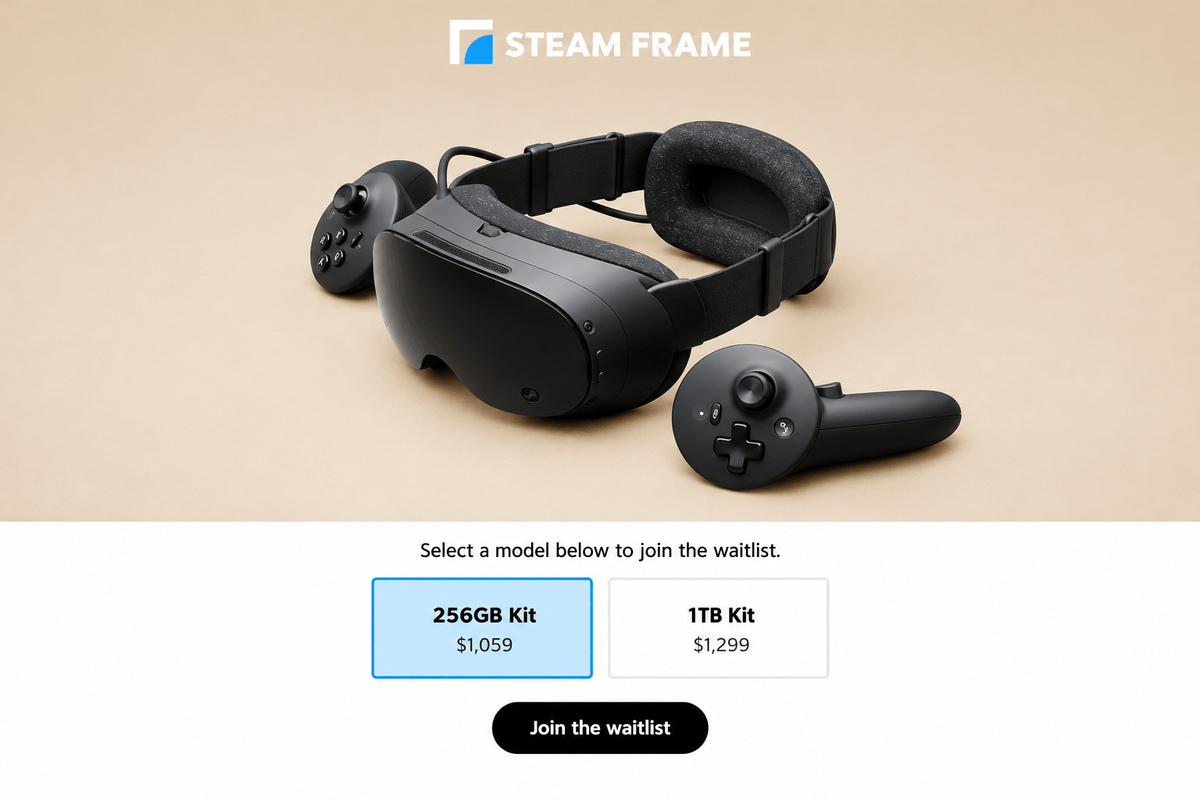
Valve has confirmed that the order queue for the Steam Frame, its recently launched standalone VR headset, now stretches into 2027. To find out your specific expected window, log into your Steam account and visit the product page. The company says order emails will be sent out either by December or in 2027. Those assigned to the 2027 delivery window will receive details on their exact timing by January. This update clarifies the long wait for the holiday season: it is not possible to deliver all reserved units immediately.Courtesy ValveThe waiting list operates on a sequential basis: those who joined later are further down the list. Valve emphasizes that each region has its own queue, so wait times vary across different markets. A key point the company highlights is that no one on the waitlist can leapfrog over someone who already holds a reservation. The company only dips into a region's waitlist once it reaches the end of that specific region's reservation queue. This ensures fairness within each geographic segment, although users in regions with lower demand may move up the list faster than those in high-demand areas.
- Public
- 12 Oct, 2026
Japanese Certification Reveals the Design of the Pico Space Pro
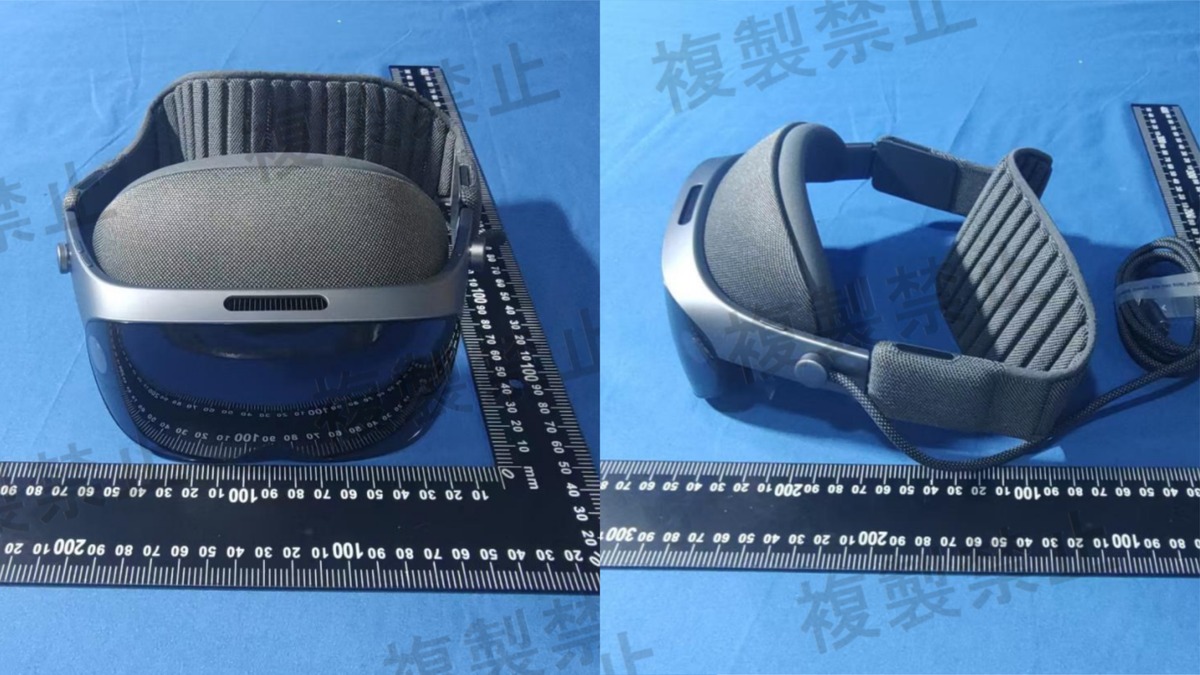
ByteDance's upcoming Pico Space Pro headset has been physically revealed through newly surfaced Japanese regulatory filings. These documents, listed under certification number 202-JWM032, provide the first clear look at the actual hardware, moving beyond the stylized silhouettes and SDK renders previously seen. The device carries the model number B3110, matching the US FCC filings that appeared in September. The overall design aligns with earlier leaked videos found in a public Pico SDK, which depicted a headset heavily inspired by both the Apple Vision Pro and the Samsung Galaxy XR. Specifically, the rear strap closely mirrors the Solo Knit Band, while the visor and forehead pad resemble the Samsung device.Posts with the announcement and the delay notice from the Pico channel on Bilibili.A key distinction in these new filings is the color scheme and finish of the unit, which differs from the previous SDK renders. Instead, the physical device resembles the Vivo Vision headset, an Apple Vision Pro competitor that was announced in 2025 but has not yet fully launched commercially. The documents also include detailed teardown images, offering a rare glimpse into the internal architecture. These photos reveal the front camera and sensor array, the optical modules, and a central cooling fan. While the external tethered puck is not directly shown in the main device shots, a test-setup photo displays a camouflaged version of the headset on a desk, with a similarly camouflaged box-like object positioned directly behind it, confirming the presence of the separate main unit.External images found in 202-JWM032_01_002.The hardware specifications for the Pico Space Pro were initially outlined by the company in November 2025 and teased in March under the codename Project Swan. The headset features micro-OLED panels with a resolution of 4000 pixels per inch. It utilizes a dual-chip architecture that includes a self-developed coprocessor dedicated to computer vision and image processing. The main processor is claimed to deliver twice the CPU and GPU performance of the Snapdragon XR2 Gen 2, which powers current devices like the Pico 4 Ultra and Meta Quest 3. Software capabilities include visionOS-like features within Pico OS 6 and a RealityKit-like Pico Spatial Engine. The company had opened a Global Early Access Program to gather rigorous feedback from experts with deep XR platform knowledge before a wider release.External images found in 202-JWM032_01_002.The path to launch for the Pico Space Pro has been marked by significant changes. In August, the company announced a launch event via Asia-region social media channels and officially revealed the product name. However, just days later, the event was abruptly canceled, and the release date was pushed back to Q4 2026. Despite this delay, the device received FCC certification in September, the day before the originally planned event. The FCC filings listed the device as a Mixed Reality Computer, with separate entries for the headset and the external tethered puck under IDs 2A5NV-AA1Z0 and 2A5NV-B3110. The short-term confidentiality period for these US documents is set to expire on February 28, 2027. As of now, the exact launch date within the Q4 2026 window remains unconfirmed, leaving developers and users awaiting further official announcements.
- Public
- 12 Oct, 2026
Steam Frame Gets SteamOS 0.4 Update With Battery and Streaming Fixes
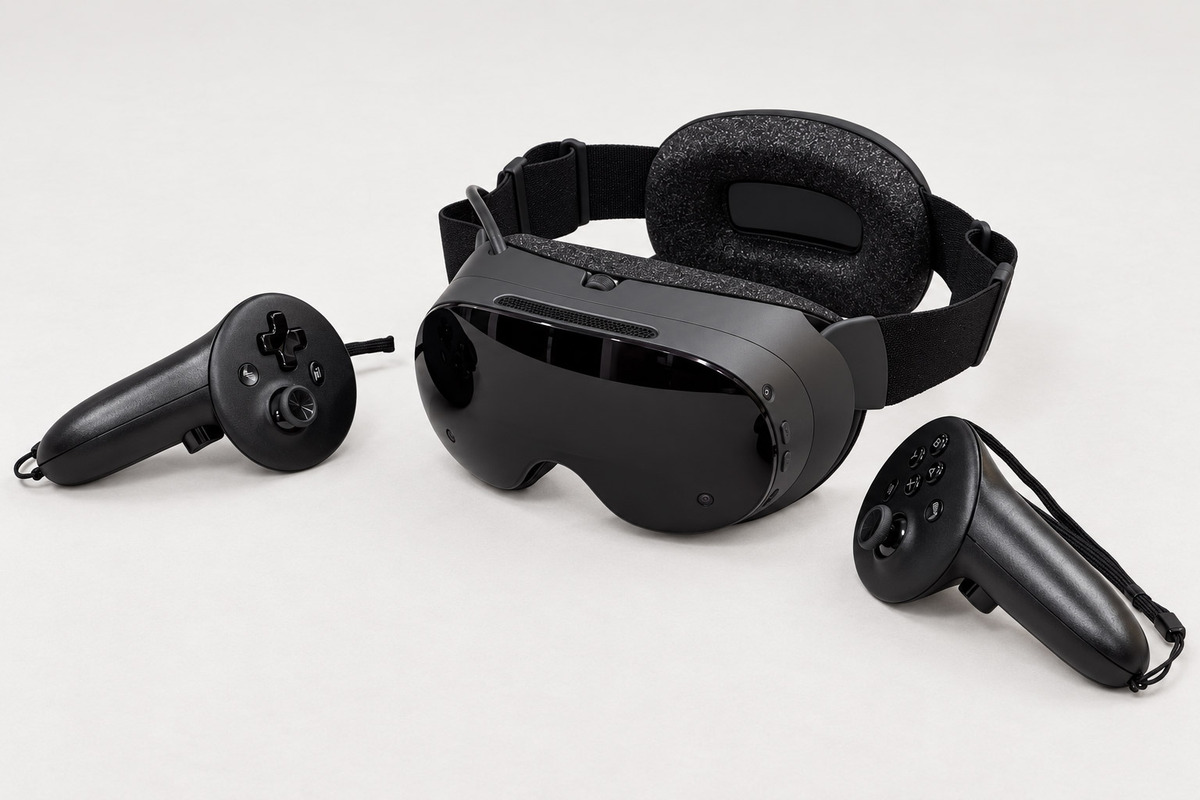
Valve has released SteamOS 0.4 for the Steam Frame headset, addressing key performance and stability issues that emerged after the device's launch last month. The update noticeably improves power efficiency: battery life increases by up to 12% both during local gameplay on the Snapdragon 8 Gen 3 chipset and during PC streaming sessions. Before this patch, users typically got between one and one and a half hours of battery life in mixed use. This limitation was the main complaint among early adopters. The new firmware also improves visual quality: color clarity during VR streaming has been enhanced, providing a sharper and more accurate image for those who connect to desktop computers.Steam Frame Optics | Road to VRIn addition to performance gains, the update resolves critical connectivity and reliability problems. A specific fix targets "Error 17," which indicates incompatible protocol settings or connection issues during PC VR streaming. To benefit from this fix, users must opt into SteamVR version 2.18.2 or later, available on the beta branch. The patch also corrects Wireless Adapter connectivity issues that affected users in certain regions and ensures that manual configuration displays the correct list of Wi-Fi channels globally. Notably, Valve has released the Steam Frame CAD files and electrical interface information for non-commercial use, enabling the community to design and implement custom hardware mods with greater ease.
- Public
- 09 Oct, 2026
FunFitLand adds knee strikes to CombatFit and brings Space sessions to Vision Pro
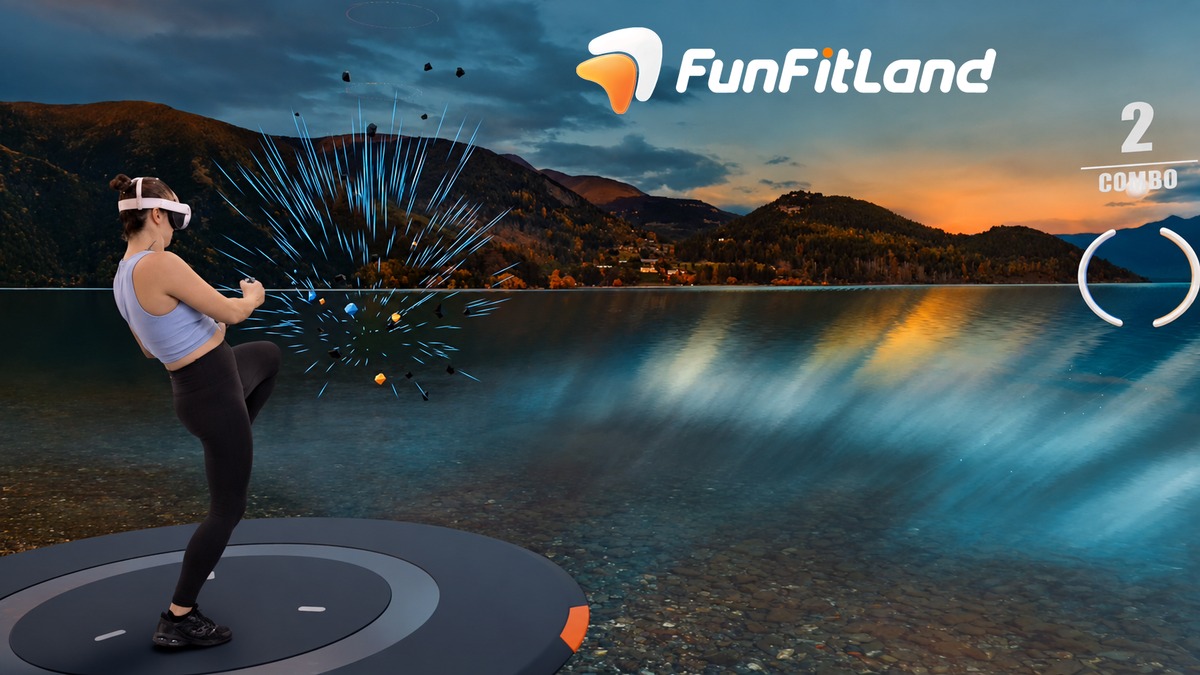
FunFitLand has expanded its CombatFit workout series with the addition of knee strikes and a dynamic "grab and smash" mechanic. Users grab an overhead target and pull it downward while lifting their leg to strike the target with their knee. Although complex to describe, the execution adds a satisfying new layer to the routine, effectively targeting the abdominal muscles. The moment of impact is enhanced with visual, auditory, and haptic feedback when using controllers, delivering the high-quality sensory response the app is known for.The "grab" target for knee strikes. Photo: FunFitLandThe decision to limit knee strikes to CombatFit stems from the specific nature of the workout. The percussive quality of the hits aligns well with the combat-focused sessions, whereas the flowing movements of SwingFit and FlowFit would be disrupted by such abrupt actions. Beta testing showed that the two-handed grab mechanic significantly helps users keep their balance. The upper body motion of grabbing the target and pulling it down to meet the rising knee proved far more stable than simply lifting a leg, providing a safer and more controlled experience during intense physical activity.FunFitLand on visionOS, as shown in the Apple App Store. Photo: FunFitLandFor onboarding, the knee strike tutorial plays automatically when a user first selects a workout containing the new moves. Users can replay the tutorial at any time to review the technique. Additionally, those who prefer not to use the new feature can disable knee strikes entirely in the app settings. This flexibility ensures that the update does not force a specific movement style on users with physical limitations or personal preferences.Alongside the new mechanic, FunFitLand has made its meditative Space sessions available on Apple Vision Pro. These sessions offer a range of immersive environments designed for cooling down after a workout or for general relaxation. This update brings features previously exclusive to Meta Quest to the Vision Pro platform, including the recently released mobile app integration. The mobile app now supports heart rate tracking during VR workouts, allowing for a more comprehensive fitness experience across both devices.

- Public
- 09 Oct, 2026
RizomUV 2027.0: Headless Mode and Advanced Texel Density Control for Production Pipelines
Rizom-Lab has released RizomUV 2027.0, the most significant update in the software's history, despite the version number skipping 2026. The release targets professional pipelines in game development, VFX, and motion graphics, enhancing usability, performance, and customization. The update introduces a new headless mode designed specifically for batch processing assets, automated build steps, and execution on render farms. This allows technical artists to integrate UV unwrapping directly into automated workflows without manual intervention, streamlining production for large-scale asset libraries.A key feature for game dev and real-time artists is the new map-based workflow for controlling texel density. Density maps can now be generated from ambient occlusion data, which allows the software to reduce texel density in recessed areas of a surface. This mechanism affects both UV unfolding and packing scale, giving artists precise control over texture budget allocation. In addition, the existing edge selection tools have been updated: edge loops can now continue through UV seams, and parallel selections can propagate across cuts, offering greater flexibility during the unwrapping phase.The user interface has been fundamentally redesigned to improve day-to-day production efficiency. All panels can now be moved, docked, and set to floating mode, which makes it possible to create custom UI presets for different screen layouts. Artists can group frequently used tools into custom toolbars, and a new global search function provides quick access to tools and settings via hotkeys. The viewport has also been reworked to improve UI scaling and make it easier to preview selections and packing states. For complex assets, the Scene Outliner now supports polygon groups and materials from imported OBJ and FBX files.Performance has been improved through parallel processing of UV islands in a scene: the software automatically assigns the fastest available solver core to each task. A new Live Update setting shows the effect of adding or removing edge constraints in real time, eliminating the need to apply changes manually. For pipeline integration, the default scripting language is now Python: Linux and macOS use version 3.13 in accordance with the VFX Reference Platform spec, while Windows uses Python 3.12. The command log now records each work session as a script, allowing artists to save and reuse workflows that technical directors can later convert into more complex tools.Import and export capabilities have been expanded with support for the glTF 2.0 format. Mac users now have access to USD support, which had previously been available only on Windows since version 2023.0. The software can now store more data, including UV constraints and pins, inside FBX files, and large FBX files can be opened selectively, similar to USD. RizomUVLink, the live connection used by DCC bridges and studio tools, now runs on macOS and Linux in addition to Windows. However, third-party plugin developers are responsible for updating integrations for DCC applications, since Rizom-Lab does not maintain them.RizomUV 2027.0 is compatible with Windows 10 and later, macOS 11.0 and later, and Linux distributions including RHEL, Rocky, Alma 8/9, and Ubuntu 24.04. Licensing options differ between Indie users (artists or companies earning under €100,000 per year) and Pro users. Indie users can choose between a rent-to-own model or a perpetual license, both node-locked to two computers. Pro users operate under a rental-only model with the option of floating licenses. The Virtual Spaces edition starts at €149.90 for a perpetual license, while the Real Space edition starts at €299.90.

- Public
- 09 Oct, 2026
Rebel Unit Presents VFX Breakdown of Flooded London in The End We Start From
Norwegian studio Rebel Unit has published the visual effects breakdown for the film The End We Start From. The movie depicts a near-future Britain where incessant rain has triggered widespread floods. This has led to a nationwide crisis regarding food supplies and accommodation for displaced populations. The production focuses heavily on environmental storytelling to convey the scale of the disaster.For sequences set in central London, the team created a full 3D reconstruction of the Fleet Street area, submerging it beneath simulated water. This approach allowed for precise control over the fluid dynamics and lighting within the urban environment. The studio's reel also showcases a range of rural environments, including shots of flood water breaking through the window of an isolated house. These elements combine to create a cohesive visual narrative of a country in decline.Rebel Unit received a nomination for a British Independent Film Award for this work. The project highlights the studio's capability in handling large-scale environmental VFX. Technical details and artist credits are available on IMDb and VFX Voice, providing further insight into the production pipeline. The breakdown serves as a case study for developers and artists interested in realistic water simulation and urban destruction.
- Public
- 09 Oct, 2026
NVIDIA Developers Use Frontier AI Agents to Automate Omniverse Simulation Workflows
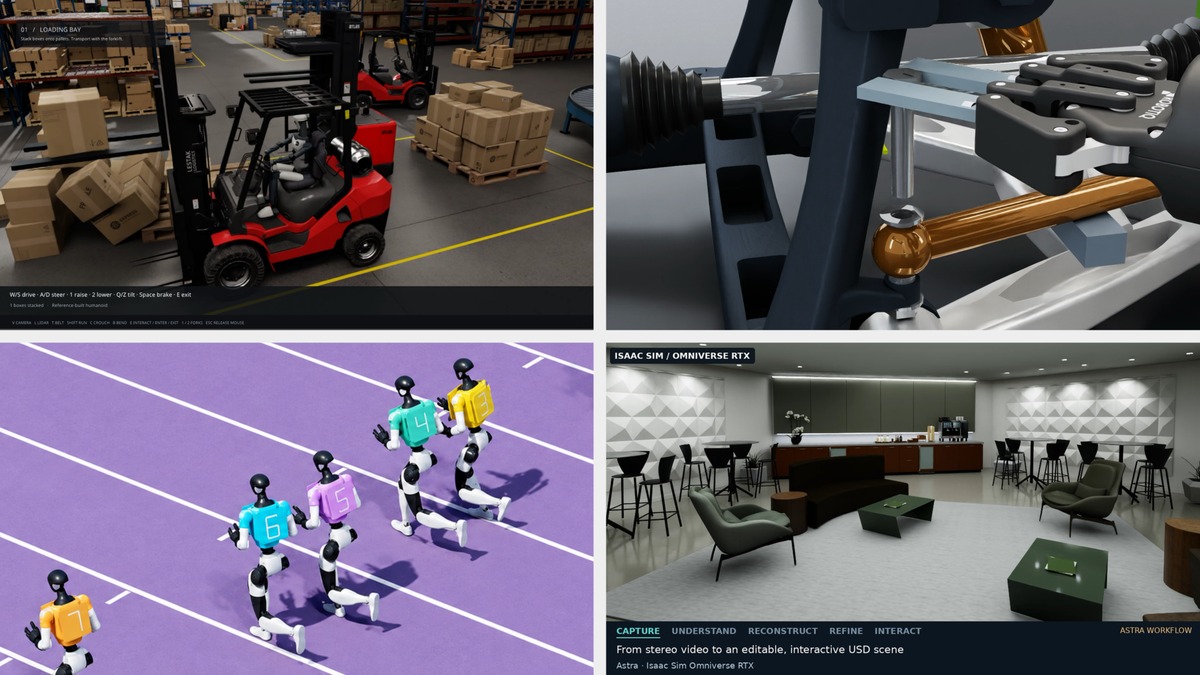
Developers are increasingly combining frontier AI models with NVIDIA Omniverse libraries to transform simulation concepts into functional applications. This integration allows teams to assemble digital assets, connect physics engines, and configure rendering pipelines with significantly reduced manual effort. By directing AI agents through natural language instructions, engineers can focus on high-level design goals while the agents handle the intricate technical implementation. The resulting applications support scenario exploration, failure investigation, and iterative design improvements across various industries. This shift in workflow enables faster prototyping and more robust testing environments for complex systems.Frank DeLise, an Omniverse product manager at NVIDIA, used the Astra agent to create an interactive simulator for warehouse automation. He directed Astra to connect specific Omniverse libraries, including ovphysx for physics, ovstage for scene updates, ovrtx for rendering, and ovui for the user interface. Using SimReady assets, the agent generated the necessary animation and application code to bring a humanoid robot into a first- and third-person view. This project demonstrates how AI can automate the assembly of physics-based control systems, allowing developers to evaluate task behavior in a realistic environment before deploying physical robots. The process highlights the efficiency of using AI to bridge the gap between static assets and dynamic, interactive simulations.Doyub Kim, a manager on the simulation technology team, employed Astra to build Zero to Alpamayo, a reusable simulation environment based on San Francisco's Market Street. Kim guided the agent to map out the workflow and connect asset creation, traffic simulation, and driving models in stages. The resulting prototype serves as a testing ground for comparing different driving models and tracing how scene or sensor changes affect downstream behavior. Additionally, a separate experiment using Cosmos3-Nano varied weather and lighting conditions in recorded simulation videos. This allowed Kim to analyze the driving model's responses to identical scenarios under different environmental factors, providing critical data for refining autonomous vehicle algorithms.Ashley Reid, working on RTX sensor validation, directed Astra and Claude Fable 5 agents to compare simulated sensor outputs with recorded real-world data. The agents created two digital twins from scratch and improved two existing ones over a three-day iterative workflow. They measured differences between ovrtx camera and raw LiDAR outputs, creating or modifying OpenUSD scenes to address missing objects, geometry, and materials. Acceptance criteria were based on specific camera and LiDAR metrics, ensuring that the simulated sensors closely matched their physical counterparts. This methodology provides developers with a systematic way to use measured discrepancies to guide scene creation, ensuring high-fidelity validation for autonomous systems and robotics applications.Tae Kim, leading NVIDIA Omniverse engineering, used sports videos and natural language instructions to guide Astra in building Robo Olympics. This experimental project tests simulated Unitree G1 humanoids performing various sports movements. Under Kim's direction, Astra built controllers and refined them through physics trials using the Newton Physics Engine and the open-source NVIDIA Warp framework. The ovrtx library rendered the scenes and virtual camera images, providing visual feedback on the robot's performance. In one specific experiment, the robot successfully cleared a single hurdle in 64 out of 100 simulation trials. These trials provided valuable feedback for improving the robot's timing and control mechanisms, demonstrating the utility of AI in optimizing physical constraints and movement planning.Jens Jebens, a senior product manager for OpenUSD, directed Astra to model a car suspension in PTC Onshape and configure it in NVIDIA Isaac Sim. The agent measured available space and designed a wrench that the robot could use to reach the suspension's bolts. Jebens reported the successful removal of a suspension component in the simulation, connecting design and tooling decisions directly to disassembly results. This workflow offers a starting point for robot policy training, ensuring that tools are viable before physical manufacturing. Nic Johns, an engineering director, also used Astra to assemble NASA assets into an OpenUSD International Space Station model with telemetry. He built the application with a single prompt, using Blender for asset preparation and Omniverse libraries for rendering and streaming, bringing 3D models and operational data into the browser.
- Public
- 09 Oct, 2026
Echo Weaver: Designing a Time-Loop Metroidvania in Unity 6
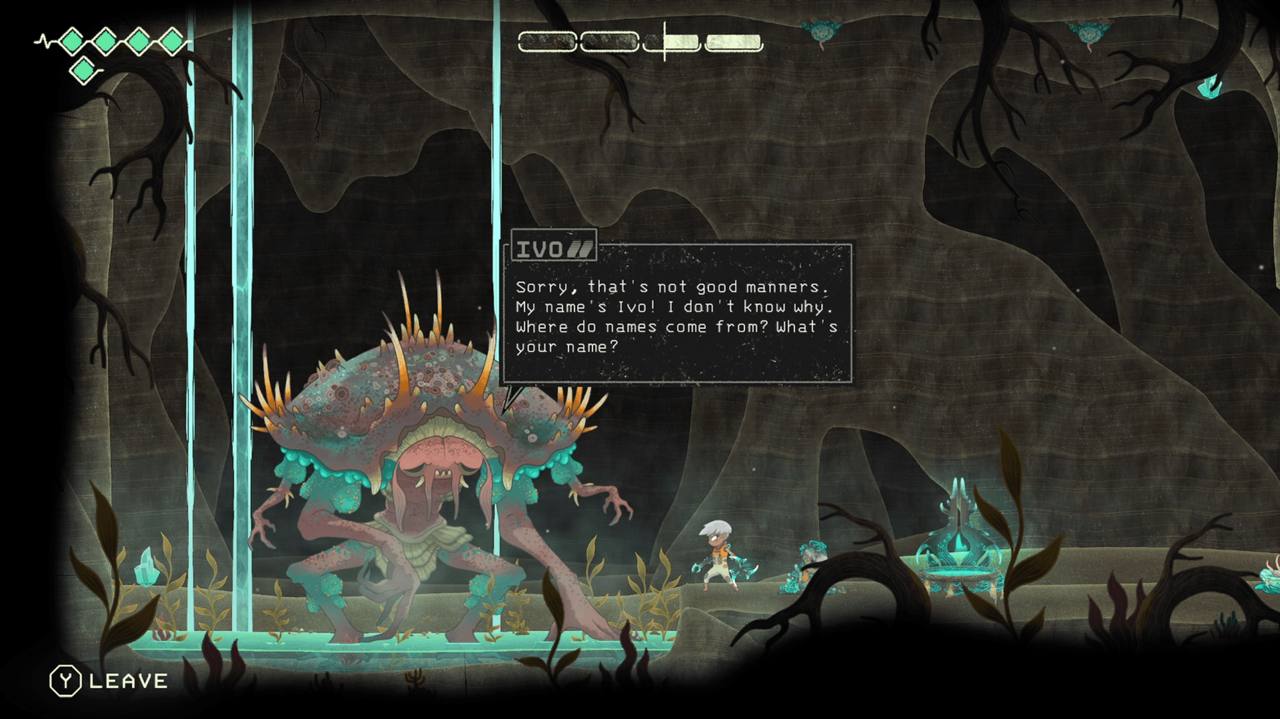
Echo Weaver, a new metroidvania from Moonlight Kids and Akupara Games, launches on PC and consoles with a unique design philosophy centered on a time loop. The three-person studio initially conceived the project to avoid the notorious save-state system, which had caused issues in their previous game, The Wild at Heart. The idea was simple: if time resets, nothing needs to be saved. However, the game's seamless, interconnected world requires constant loading and unloading of map chunks, meaning the system must maintain persistence for events like broken walls or NPC interactions until the loop restarts. The team ultimately implemented a full save system but found that the time-loop mechanic mitigates the frustration of data loss, as players can always reset the cycle if an error occurs.The game features no ability gates; the world is fully open from the start, and progression relies on player knowledge. This "space parkour detective" approach means players can stumble into any ability at any time, which creates a complex challenge for level design. To manage this, the team established a narrative rule: the protagonist, the Weaver, retains memories across loops. This allows the game to track unlocked knowledge without breaking immersion. A key design concession was made during playtesting: while hidden areas were originally revealed only temporarily, the team permanently faded foreground artwork in frequently revisited spots to help players remember discovered shortcuts, as the standard metroidvania tool of one-way walls is ineffective in a resetting world.For larger shortcuts that cannot be resolved within a single loop, the team relies on visual concealment: passageways are hidden behind foreground art at one end and placed in the foreground at the other. The game's clock is a central system, visible at all times, starting with one minute per loop. Players collect time crystals to extend this duration or sacrifice them to heal. Early versions used a second-by-second timer, but playtesters reported high stress levels. The final HUD displays minute-long chunks called "bells," which aligns with the game's timing mechanics and allows players to create optimized "boot-up sequences" to bank time quickly.The technical architecture, led by programmer Ankit Trivedi, divides the game world into chunks with a custom build process that strips expensive content. A heavy, unchanging layer of world geometry is baked into scenes and stays loaded permanently, while a lightweight "essentials" scene holds volatile state like the game manager and player data. On a loop reset, the game unloads active chunks, discards the essentials scene, and reloads it, streaming back only the necessary chunks for the opening sequence. Run-specific state is stored in an in-memory dictionary of string keys, which is wiped on reset, while persistent data like loop counts and seen abilities is serialized to disk. This "trash and redo" approach ensures clean state management without significant performance impact.Performance optimization was critical due to the dense, hand-drawn art style. The team discovered that enabling compression on texture atlases reduced memory usage to about 1 GB. To handle loading, decorative assets are stripped from chunks at build time and reinstantiated asynchronously in small batches to prevent main-thread stalls. A custom tool flattens groups of sprites into single images to reduce draw calls, particularly for complex backgrounds like skies. Lighting was also optimized by consolidating six distinct light layers into three, significantly reducing rendering costs while maintaining visual quality. Water effects, using the Game2D Water Kit, were adjusted for low-end hardware by separating perspective effects from refraction to avoid expensive camera re-renders.The development transitioned from Unity 2021 to Unity 6, with the team highlighting specific features that improved their workflow. Chris Sumsky noted that Nested Prefabs and edit mode were life-changing for managing complex scenes. Ankit Trivedi emphasized the utility of Composite Collider 2D and Unity's native object pool, which allowed the team to retire the custom object pool written for their previous game. The use of Unity's Frame Debugger was central to identifying batching breaks, enabling the team to unify materials and convert sprites to maximize performance. The team advises other developers to use the Frame Debugger liberally from the start of a project to identify and fix rendering inefficiencies early.
- Public
- 09 Oct, 2026
Smartglasses: A Promising but Immature Platform for Developers
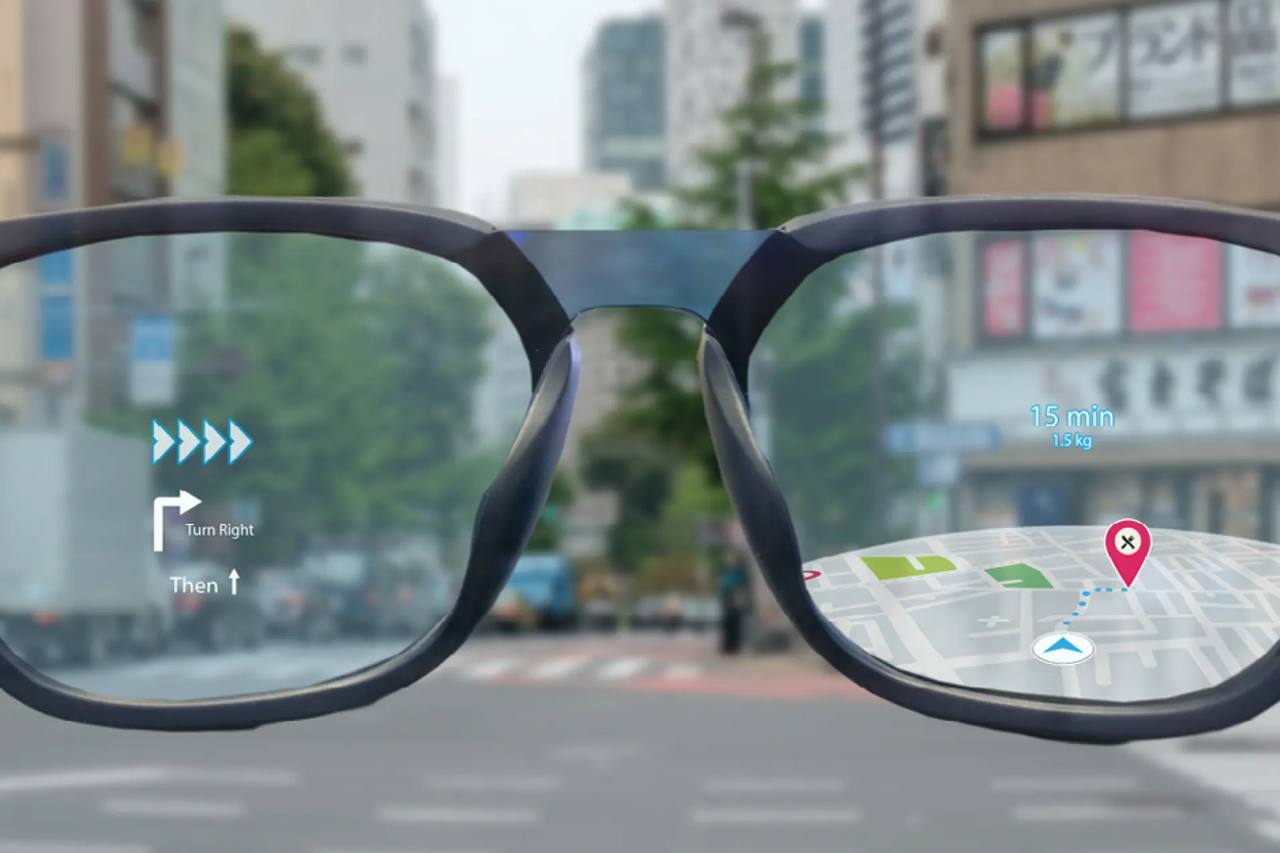
The smartglasses sector is experiencing a surge in adoption, with Meta and Luxottica targeting production volumes of 20 to 30 million units annually. This volume rivals the lifetime sales of the Quest 2, signaling a shift from niche experimentation to mainstream hardware. Major players including Samsung, Apple, Huawei, and Alibaba are entering the market, creating a competitive landscape that resembles the early days of the Oculus DK1. Unlike VR headsets, which require user education, glasses leverage existing consumer habits and Luxottica's extensive retail distribution network, making them a highly accessible entry point for new XR users.Promotional image of Ray-Ban Meta glasses (image by Meta)Despite the hardware hype, the software ecosystem remains underdeveloped and restrictive. The most popular models, such as the audio-only Ray-Ban Meta, lack displays, which limits applications to basic functions like audio and photo capture. Even the Meta Ray-Ban Display offers only a small, monocular screen suitable for brief glances rather than sustained interaction. Developers face fragmented SDKs: for example, web apps for the Meta Ray-Ban Display currently cannot access the camera, and some platforms, such as Huawei glasses, remain entirely closed to third-party development. This fragmentation forces developers to build separate frontends for each device, similar to the pre-OpenXR era of VR, with no unified standard to streamline the process.Something like this is the situation.Monetization presents a critical challenge, as platform holders like Meta and Samsung have already captured the most obvious use cases: real-time translation, navigation, and AI assistants. With giants like Gemini and Muse AI integrated natively, independent developers struggle to compete on core functionality. Furthermore, distribution channels are immature: most glasses lack dedicated app stores, forcing developers to publish standard mobile apps that get lost among millions of other listings. While some platforms, such as Mentra OS, offer mini-app stores, the overall infrastructure is insufficient to support a sustainable business model for consumer-facing applications, leaving developers in a "wild west" scenario with limited revenue opportunities.The long-term viability of consumer smartglasses is further threatened by social acceptance issues and comfort concerns. The device's weight and size may deter all-day wear, while public backlash against recording capabilities, often referred to as the "pervert glasses" affair, could lead to restrictions in public spaces. Historical precedents like Google Glass, which failed to find a sustainable consumer niche despite initial hype, suggest that current sales figures do not guarantee long-term success. Most users currently rely on the devices primarily for photography, which raises questions about whether there is genuine demand for complex, app-based interactions on such limited hardware.For developers seeking immediate revenue, the enterprise sector offers a more viable path than the consumer market. Businesses are increasingly interested in on-premises AI assistants that avoid sending sensitive data to external cloud services, creating opportunities for secure, localized applications. Devices like the Vive Eagle and Mentra support these enterprise workflows, and solutions like NVIDIA's XR AI facilitate the deployment of dedicated AI systems for factory workers and warehouse management. While consumer apps remain a speculative bet on future hardware improvements, enterprise applications provide a clearer route to profitability by addressing specific operational needs such as training, research, and industrial efficiency.
- Public
- 09 Oct, 2026
Meta and ESPN: Immersive 8K College Football on Quest and VR Glasses
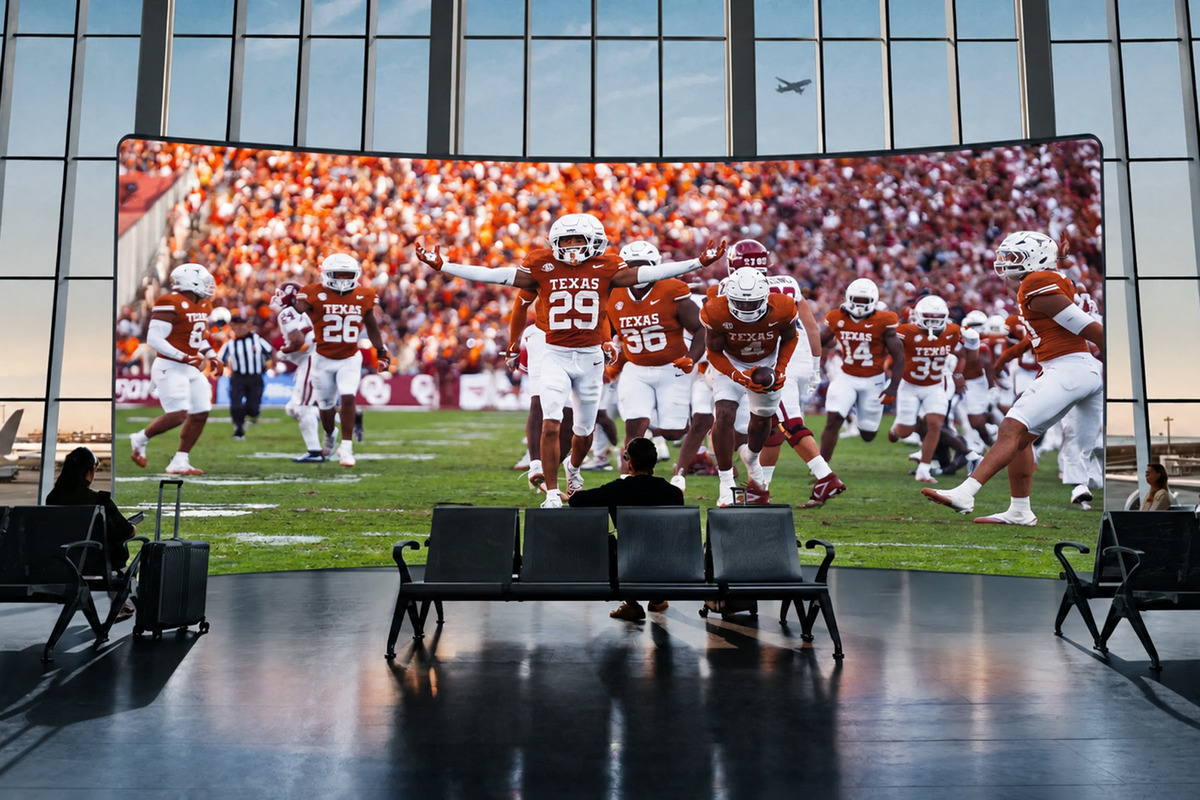
Meta has established a partnership with ESPN to deliver select live college football games in an immersive 180° format through the Quest TV app. The season opens on October 10 with the Texas Longhorns facing the Oklahoma Sooners in the Red River Rivalry at the Cotton Bowl. The broadcasts will feature 8K resolution and Dolby Atmos audio, allowing viewers to see the entire field from a central perspective. After each match, users will get access to full-game replays and highlights on demand. These immersive recordings will remain available for a week after the event ends.Image courtesy of Meta, SECThe collaboration ensures weekly immersive game coverage throughout the regular season, extending to Conference Championship Weekend and the College Football Playoff, including the 2027 CFP National Championship in January. Although the complete schedule has not yet been released, this initiative serves as a significant content push for the Meta VR Glasses, which are scheduled for release next spring at a price of $1,300. The company aims to make the new hardware more attractive by offering a broader range of sports content than previous iterations.This expansion builds on Meta's history of live sports streaming on Quest, most notably the 52 immersive NBA games introduced alongside the Quest 3S launch in 2024. As announced at Connect 2026, the company plans to offer over 100 live sporting events in 2027, leveraging ongoing partnerships with MLB, NBC Sports, TNT Sports, and UFC. This strategy indicates a shift toward a more diverse sports portfolio, designed to attract both existing users looking to upgrade and new customers to the VR Glasses platform.
- Public
- 08 Oct, 2026
Meta's 2027 VR Glasses Launch: A Strategic Pivot Away from Gaming
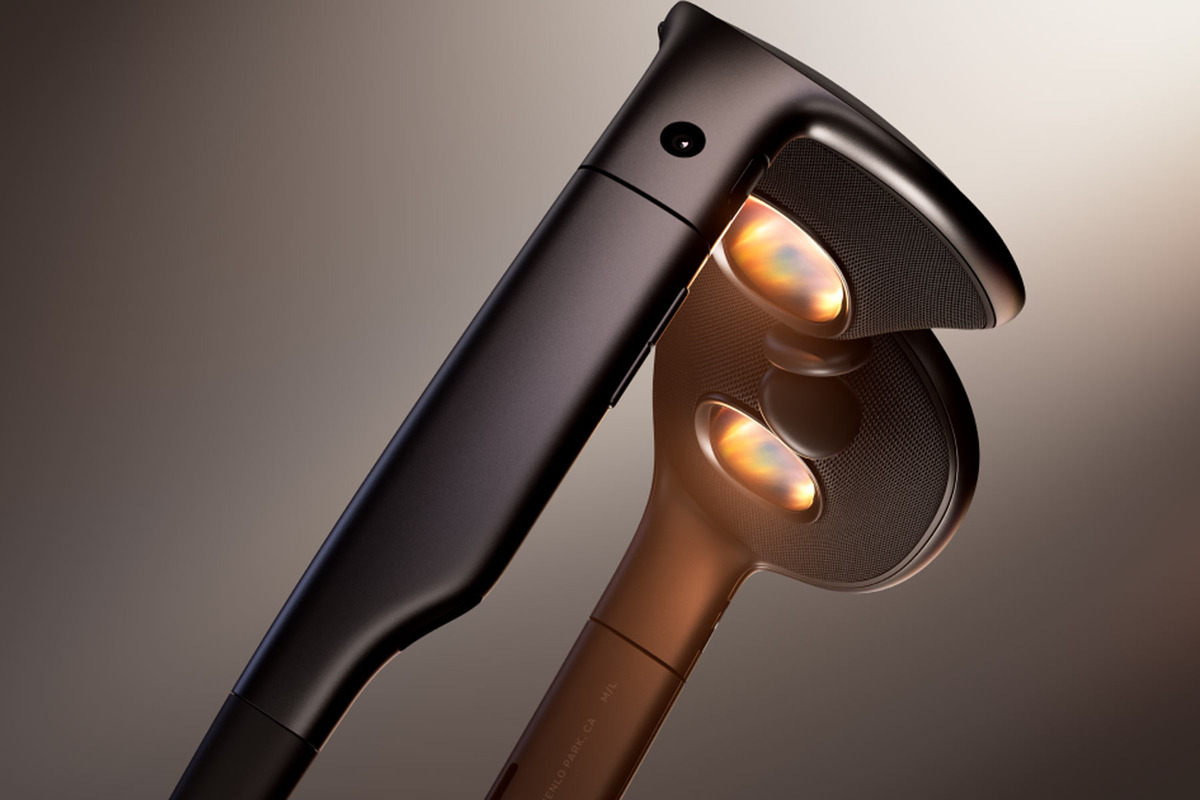
Meta has officially announced VR Glasses, a new mixed reality headset that will go on sale in Spring 2027 for $1,300. The device is tethered to a compute puck, which distinguishes it from standalone headsets. It runs the same operating system as the Quest series, ensuring compatibility with the existing library of Quest 3 games. While the hardware prioritizes hand tracking as the primary input method, users can still pair it with Touch Plus controllers to access the full back catalogue of titles. This approach allows the device to leverage established software while introducing a new form factor to the market.Courtesy of MetaDespite sharing software with Quest, VR Glasses are not a direct replacement for the current lineup. The new device is significantly more expensive and offers a narrower field of view, resulting in less immersion compared to dedicated VR headsets. Meta is positioning VR Glasses specifically for productivity, communication, and casual media consumption rather than gaming. Ryan Cairns, Meta's Vice President of VR, clarified that the product is part of a "glasses continuum," intended to bridge the gap between audio-only glasses and full immersive VR. This strategic positioning suggests a deliberate move away from the high-immersion gaming focus that defined previous Quest iterations.Courtesy of MetaThe introduction of VR Glasses coincides with a dramatic contraction of Meta's gaming ecosystem. Earlier this year, the company shut down three major internal studios: Armature Studio, Twisted Pixel, and Sanzaru Games. Additionally, funding was pulled from partner studios, leading to the cancellation of projects from Skydance Games, Cloudhead Games, and Polyarc, the latter of which was forced to shut down. Meta CTO Andrew Bosworth acknowledged this shift, stating that the "gravy train has come to a stop." This reduction in content development reflects a reaction to an underperforming games market and a decision to rein in multi-million-dollar spending on a platform that has not yet turned a profit after seven years of Quest sales.Oculus Quest (left), Rift S (right) | Courtesy of MetaThe impact on the developer ecosystem has been severe, with studios like Schell Games and Mighty Coconut conducting layoffs. Schell Games CEO Jesse Schell noted that headset-based VR has dropped from 80% to 30% of their work, while Mighty Coconut is downsizing by 10 staff members. Beyond games, Meta has shuttered Horizon Workrooms and disentangled Horizon Worlds from Quest, turning it into a non-VR social platform. This broader redefinition indicates that the metaverse is no longer the company's primary spiritual anchor. Instead, Meta is betting on augmented reality and AI-driven wearables, with VR Glasses serving as a natural bridge to future AR devices like the Orion prototype.The future of the Quest line remains ambiguous. While Meta is not abandoning the platform, it is no longer positioning Quest as the future of everything. The company may keep Quest alive as an affordable gaming platform with a large install base, but its strategic focus has shifted. A Meta spokesperson stated that the company is exploring a roadmap of VR devices tailored to different audience segments, but notably did not promise a future gaming-focused headset. With Quest 3 now three years old, fans of flagship gaming hardware may face a longer wait. The commercial success of VR Glasses in 2027 will likely determine whether Meta continues to support the gaming-focused Quest line or simply coasts until existing stocks run out.