Blog

 Public
- 15 Oct, 2026
NVIDIA Joins the European Commission's AI in Science Initiative
The European Commission has launched the AI in Science Enablers Initiative at the AI in Science Summit in Dublin. It is a framework linked to RAISE that connects private sector support with Europe's research community. NVIDIA is participating in this campaign to address the significant barriers facing smaller labs, early-career scientists, and science-based startups. These groups often struggle with the preliminary steps of research: assembling tools, securing compute resources, and building the expertise needed to use accelerated computing effectively for modeling climate systems, designing molecules, and simulating materials.NVIDIA's contribution begins with a massive release of open technology: more than 250 open models, 250 open datasets, and over 1,400 open-source projects. These resources span large language models, healthcare, robotics, climate science, physical AI, and autonomous vehicles. All of them are available on Hugging Face and GitHub. Researchers can use this ecosystem to build agentic reasoning capabilities with NVIDIA Nemotron, a family of architectures with open weights and training data. Additionally, specialized scientific software is provided, such as the NVIDIA BioNeMo Agent Toolkit, PhysicsNeMo libraries, Earth-2 models, and ALCHEMI NIM microservices, to accelerate research in biology, chemistry, molecular design, weather, energy, engineering, physics, and materials science.To ensure knowledge travels as freely as compute, the NVIDIA Deep Learning Institute has launched a new open-source courseware hub. This platform offers hands-on course materials on accelerated computing and deep learning that are freely downloadable, openly licensed, and require no enrollment, fees, or deadlines. The modular design allows these courses to be adapted for university curricula, supercomputing center bootcamps, or developer community events. This initiative serves as a direct bridge to NVIDIA's broader training and certification programs, facilitating the widespread adoption of advanced intelligence capabilities across the continent.NVIDIA is also collaborating with cloud infrastructure partners and European national AI factories in France, Spain, and Sweden to open new routes for startups and SMEs to access sovereign European compute. The NVIDIA Inception program provides these entities with compute resources and technical support, lowering the barrier to entry for high-performance infrastructure. The AI2F in France has already collaborated with Inception for four months with strong results, while the BSC AI Factory in Spain is rolling out its first full accelerator program, with other factories planning to replicate the model in 2027. The Sweden AI Factory has announced a collaboration to open its infrastructure to Inception startups and SMEs in life sciences, autonomous systems, and gaming.EuroHPC supercomputing centers like CINECA and JSC provide free access to NVIDIA GPU infrastructure for open research, complemented by office hours, bootcamps, and hackathons. NVIDIA is co-organizing a European AI hackathon this month with partners including Austrian Scientific Computing and the Leibniz Supercomputing Centre for the Pharos-CY project. Furthermore, NVIDIA is powering the largest single-year buildout of supercomputing capacity in European history, with 35 supercomputers currently in development. These systems will equip over 3 million researchers with next-generation infrastructure, accelerating discovery in climate science, drug development, and materials research.
- Public
- 14 Oct, 2026
Sandisk and Meta: Official Storage for VR Glasses
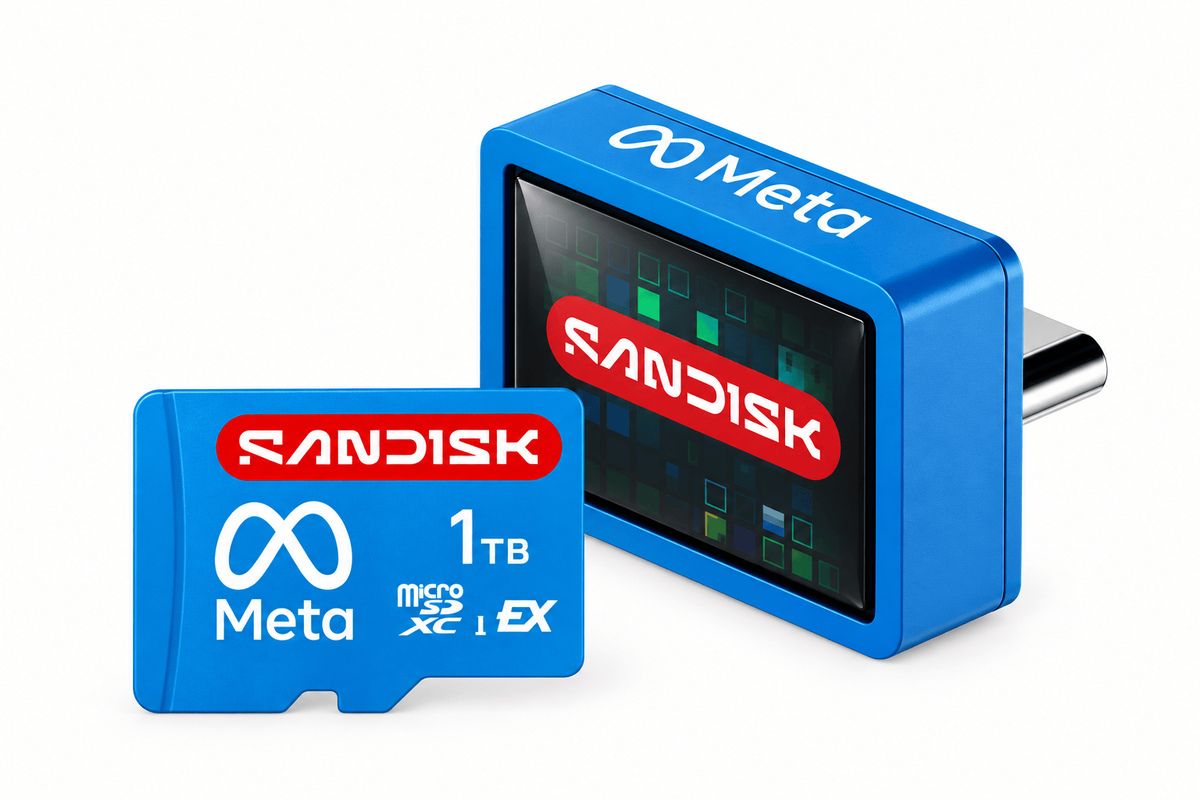
Meta and Sandisk have established a partnership to provide official expandable storage options for the upcoming Meta VR Glasses. This is the first time a standalone Meta headset will support external storage. Sandisk is designated as the exclusive provider of these solutions. The new accessories include microSD cards and USB-C flash drives. All of them carry the "Made for Meta" certification, which ensures compatibility and performance.Courtesy MetaThe Meta VR Glasses are scheduled to launch in Spring 2027 with a base price of $1,300. The device will ship with 128GB of internal storage but supports microSD cards up to 1TB in capacity. Specific speed class requirements have not yet been disclosed, but the official Sandisk microSD Express cards have been tested and certified to work seamlessly with the headset. More details about storage standards are expected closer to the release date.Official images show that the microSD option is available in 1TB capacity. Pricing for the branded accessories has not been announced, but an equivalent non-branded Sandisk card with similar specifications currently costs $360 directly from the manufacturer. This suggests that the "Made for Meta" versions may carry a premium or align with market rates for high-performance flash memory.The USB-C flash drive option is likely based on the Sandisk Extreme Fit USB-C model. If so, the drive will feature USB 3.2 Gen 1 connectivity and read speeds of up to 300MB/s. Storage capacities are expected to range from 64GB to 1TB, giving users flexibility for backing up content or expanding their space beyond the internal limit.This strategy allows Meta to maintain a competitive starting price of $1,300 despite rising NAND memory costs. By offering expandable storage, the company avoids significantly increasing the cost of the base model. This approach suits those who need more space for content, multi-monitor screen mirroring, and VR games. Users with lighter needs can stick with the standard 128GB at no additional cost.

- Public
- 14 Oct, 2026
War Robots' Strategy in China: Balancing Localization and Core Identity
War Robots has maintained high player retention since its 2014 release by adopting a cautious, data-driven approach to live operations. The development team avoids chasing short-lived trends or making abrupt changes, instead relying on extensive A/B testing to preserve the project's identity. A significant factor in this longevity is internal loyalty: a large portion of the core team has been with the project since day one. This continuity ensures that the game's core DNA is preserved and passed down, contributing to a stable player base that includes users who have remained active for over a decade. The game currently boasts more than 325 million registered users, a testament to the effectiveness of this steady, evolutionary development pace.The decision to enter the Chinese market was driven by the recognition that War Robots occupies a unique niche in mobile gaming. It is an action game featuring slower, tactical combat and giant walking robots, distinct from typical fast-paced mobile shooters. The team believed this niche was stable and that China had a sufficient number of players who fit this profile. Historical data supported this confidence: before strict ISBN regulations were introduced, the game had briefly been available in China, and the country immediately ranked among its top five regions. According to Sensor Tower, War Robots continues to rank among the top five most successful imported mobile titles in China by revenue, validating the initial strategic assessment.The localization process was complex, characterized by a strict rule: if something could be left unchanged, it was not changed. This approach was driven by a decade of operating experience and the high risk associated with altering a successfully running game without compelling reasons. Direct translation was considered the safest and most energy-efficient method. However, challenges arose when mechanics or pacing had to be adjusted for the local market. To make the visual content compliant, prohibited elements like blood and skulls had to be removed, though the robot-based gameplay, where pilots eject safely, provided a natural advantage. Even so, art assets still required targeted adjustments and review by local partners to meet regulatory standards.Content delivery presented a major logistical challenge due to the library of robots and weapons accumulated over ten years. The team could not release all content at once, which necessitated a rebuilt pipeline with more frequent content events. In 2025, for example, global players received nine robots and three Titans, while Chinese players received fourteen robots and five Titans due to the accelerated pace. This disparity forced the team to rebalance the game meta for every new drop. Without the benefit of global experience in these rapid-release scenarios, the team encountered balance issues, including a recurring problem where overly powerful robots rendered others obsolete, and it still does not know for certain whether such a fast content release pace was justified.A key lesson from the Chinese launch is the danger of over-adapting a game for a foreign audience. Attempting to completely remake a working game for a new market is akin to rebuilding it from scratch, a risky endeavor for Western developers who lack the local insight of native teams. While cultural adjustments are necessary, core mechanics and gameplay should remain intact. The experience highlighted the importance of a clear division of responsibilities with local partners. Developers must trust their own expertise regarding gameplay, features, and economics, filtering partner advice through their own data and experience. Conversely, local partners are indispensable for handling cultural nuances, community specifics, legal regulations, and compliance checks, preventing major missteps in presentation and legal adherence.The audience lifecycle in China differed significantly from global servers. While global players form a mature, loyal base, the Chinese market felt like a brand-new project, with every player a newcomer. Seasonality also varied: peak online hours in China are pronounced during specific evening times, and matchmaking sits empty the rest of the day. The spending gap between weekdays and weekends is wider, and the annual activity peak falls around the Lunar New Year rather than December. To mitigate these differences, the current goal is to align content releases between the Chinese and global versions as closely as possible. The success of the launch confirms that tactical gameplay and competitive drive are universal, allowing the game to maintain its distinct identity without massive brand awareness campaigns, relying instead on its established universe and lore to attract players globally.
- Public
- 14 Oct, 2026
Locodrome Character Animation Tool released for Unreal Engine
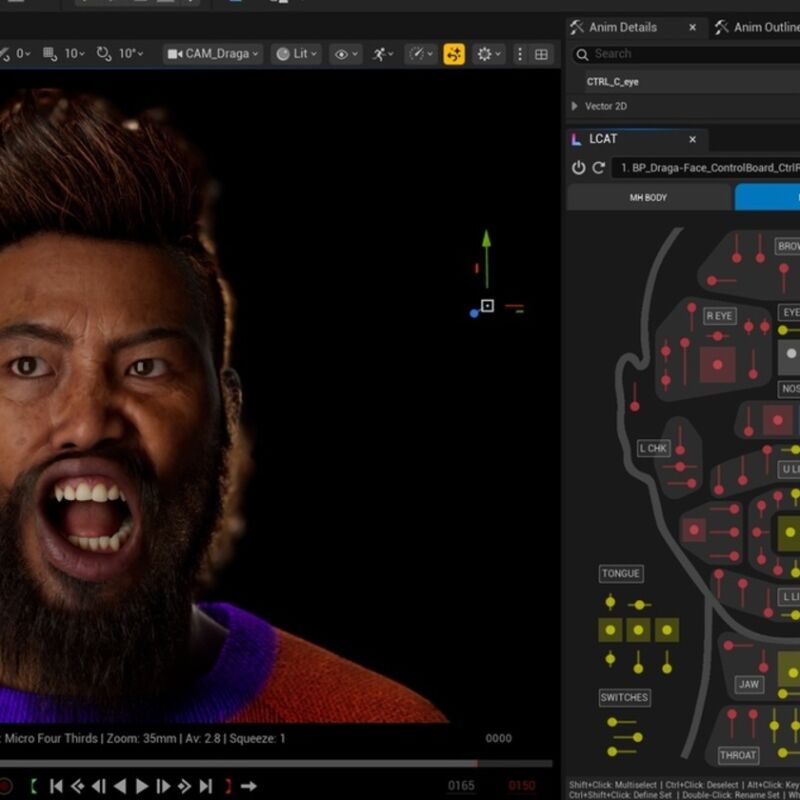
The Locodrome Character Animation Tool, abbreviated as LCAT, has been released as a free editor utility widget designed to streamline character animation in Unreal Engine 5. The tool was developed by Anthony Koithra. It is a complete successor to the previous MetaHuman Animation Tool, rebuilt from the ground up to retain existing functionality while adding new features. The key improvement is a dynamic interface that automatically switches between Face and Body modes based on the selected Control Rig. This significantly reduces manual configuration steps when working with MetaHuman assets, allowing animators to focus on the character's performance rather than technical setup.LCAT extends its compatibility beyond standard MetaHuman assets by supporting the UE5 Mannequin skeleton and the CC4 skeleton through Reallusion's custom MetaHuman Control Rig. The tool incorporates animator-friendly features developed in response to direct feedback and guidance from top Unreal Engine animators, with development supported by an Epic Megagrant. Koithra offers the tool for free on FAB and Gumroad, including installation instructions, as a way to give back to the Unreal Engine community that supported his transition to full-time indie animation. For those interested in additional resources, Anderson Rohr also shares free monthly mocap packs, including recent Halloween-themed setups.
- Public
- 14 Oct, 2026
AGNTCon Europe: Governance and Reliability in Agentic AI Development
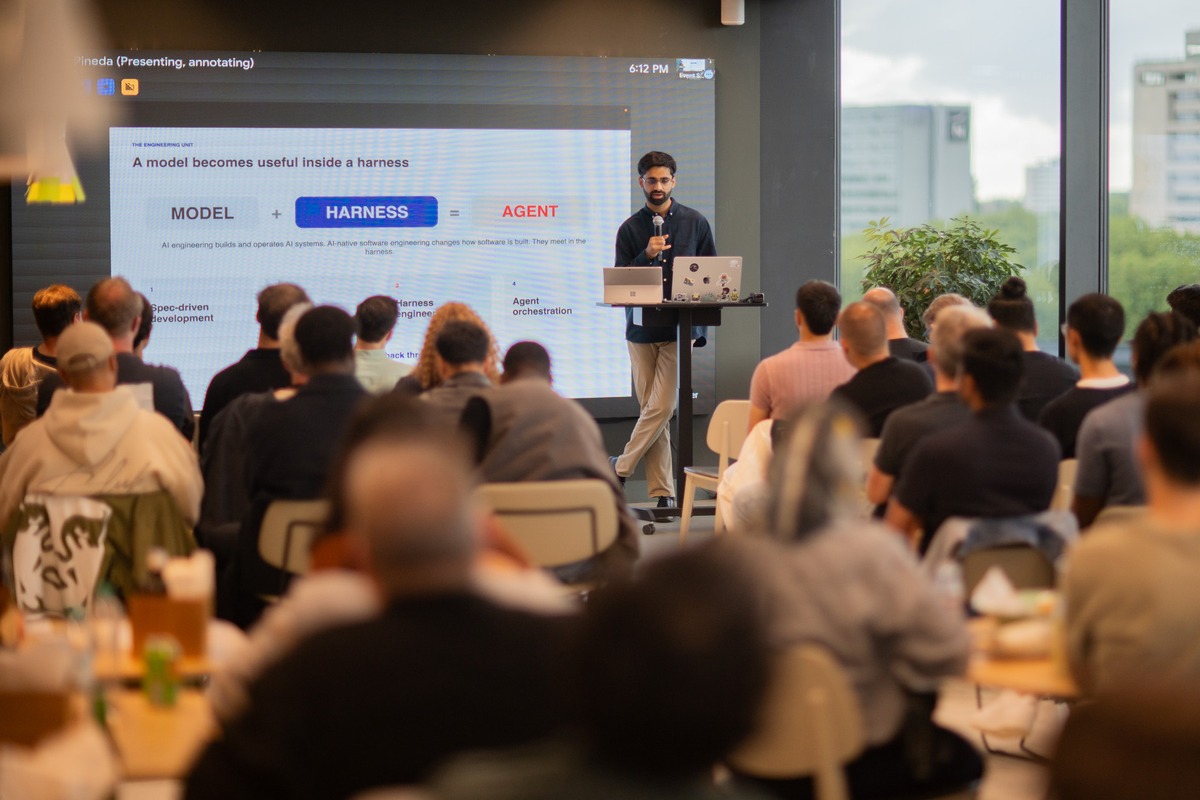
The eve of AGNTCon and MCPCon Europe featured a high-demand community meetup at the JetBrains office in Amsterdam, where the Agentic AI Foundation gathered to discuss governance in open source. The central question was how to manage conflicts when companies, maintainers, and contributors have diverging interests in shared projects. Panelists Nick Veenhof from GitLab, Alessandro Vozza from VOLT Datacenters, and Miguel Luna from JetBrains explored this dynamic, emphasizing that while financial support is essential for infrastructure, decision-making power rests on earned trust. This trust is built through consistent, transparent work rather than monetary investment. This principle remains vital as agentic systems introduce new layers of complexity to project management and community interaction.A significant theme emerging from the conference is the quality crisis in AI-generated content and code. Many talk proposals and open-source contributions are now AI-generated, polished, and interchangeable. As a result, maintainers have to spend time explaining previously settled decisions rather than building. Dexter Horthy of HumanLayer argued in his keynote that code from unattended agents degrades over time, necessitating a return to human-led planning and rigorous code review. He proposed integrating agentic code review and regression testing into production pipelines, noting that human review remains the primary bottleneck. The consensus is that the hardest part of development is no longer writing code, but understanding and taking accountability for what agents produce. This was vividly illustrated by startups showcasing agent-generated bugs on the show floor.Nick Veenhof's talk provided a stark look at the reliability challenges of multi-agent systems. He described a personal setup with thirteen specialist agents and one orchestrator, detailing specific failures where tests passed despite broken underlying wiring. Notable incidents included a background job stopping for forty-six days without alerts and an agent producing eighty fabricated data points that took two hours to detect. These examples underscore that a complete but incorrect output is more dangerous than a partial but honest one. Veenhof is documenting these failures publicly to help the community learn, highlighting that transparency about errors is crucial for building trust in agentic workflows and ensuring that developers remain vigilant about the integrity of automated processes.The conventions for agent connectivity, tracing, and security are currently being defined in open working groups that welcome non-coders. Much of this work involves creating threat models and governance documents rather than writing code, making it accessible to a broader range of participants. Openness is critical because agentic development will not rely on a single model or vendor stack; teams will mix technologies, requiring systems that support this diversity while maintaining accountability. JetBrains Air, announced shortly after the conference, reflects this thinking by supporting such flexible, multi-vendor environments. Participation in these standards-setting groups is encouraged, as the decisions made there will directly impact how developers build and manage agentic systems in the near future.
- Public
- 14 Oct, 2026
mGear 5.4: New Unified Facial Rigger and Updated Anim Picker Interface for Maya
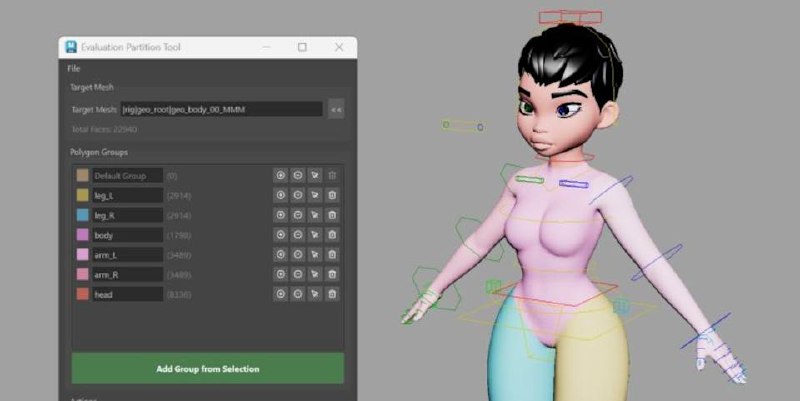
The mGear development team has released version 5.4 of their open-source character rigging framework for Maya. This update focuses on enhancing the workflow for facial animation and general rigging tasks. The primary highlight is the introduction of a new unified facial rigger, which aims to streamline the process of setting up facial controls. Alongside this, the Anim Picker interface has been updated to improve usability. Additionally, a new feature called Blocking Ghosts has been added specifically to assist animators in their daily work.mGear has been undergoing a series of updates in the 5.x line, each adding significant capabilities to the toolset. Version 5.1 improved the RBF Manager for better compatibility with Brave Rabbit's Shapes blendshape editor. Version 5.2 introduced a new system of Blueprint Guides and xPlorer, a Softimage-inspired alternative to Maya's Outliner. Version 5.3 added automated tools for transferring blendshapes between meshes and generating Set Driven Key setups from character poses. The latest 5.4 release continues this trajectory of expanding the toolset's functionality.The framework itself, first released in 2015, provides a library of customizable rig components for different body parts. It is designed to generate a wide variety of rig combinations without requiring programming knowledge from the user. Beyond the core Shifter rigging framework, mGear includes a customizable Anim Picker interface, an RBF Manager, and a shot-sculpting tool called Crank. The toolset is free and open-source, with commercial support and rigging services provided by mcsGear, the company of lead developer Miquel Campos, which funds the ongoing development.mGear has been adopted by various VFX, animation, and game development studios. Projects from El Ranchito, Mac Guff, Unseen, and Pendulo Studios are featured in the user reel, demonstrating the tool's application in professional pipelines. The recent updates have focused on integrating with other popular tools and improving the user interface. For instance, the move to Python 3.13 in version 5.3 aligned the software with the current CY2026 spec for the VFX Reference Platform, removing the old Python 2 compatibility layer.The evolution of mGear reflects a broader trend in the industry towards more modular and efficient rigging solutions. By providing a robust set of tools that can be customized and shared, mGear helps artists save time and maintain consistency across projects. The introduction of features like Blueprint Guides in version 5.2 allows for standardized rig settings to be shared across multiple characters. As the toolset continues to evolve, it remains a valuable resource for artists looking to enhance their character rigging workflows in Maya.
- Public
- 14 Oct, 2026
Gemini 4 Argon and the Antigravity CLI Plugin Launch for Android Developers
The Android development ecosystem is shifting from assistive code completion to agents that execute end-to-end tasks under developer direction. Gemini 4 Argon is the latest frontier model designed for deep work in complex, real-world domains such as coding, finance, legal, cybersecurity, and science. It offers significant improvements in long-horizon autonomous execution, allowing developers to plan and run multi-step, complex software tasks over time. The model demonstrates exceptional design craft by generating production-ready Jetpack Compose code directly, reducing the effort required to build high-quality user interfaces. This capability supports a flexible workflow where developers can choose their preferred models and agents without being locked into a specific ecosystem.Antigravity operates across multiple surfaces, including desktop applications, IDE extensions, and the command line. The official Android CLI plugin serves as the de-facto engine connecting agents to local Android tools. It enables the execution of programmatic commands for common tasks and custom developer skills. Developers can access and configure this agentic workspace immediately. For any terminal agent via the Android CLI, the installation command is agy plugin install android-cli-plugin. To initialize the environment, run android init. The model is rolling out globally to developers in supported regions starting today. This update allows teams to integrate advanced agentic capabilities into their local environments across three primary development surfaces, facilitating the creation of high-craft Android experiences at the technological frontier.

- Public
- 14 Oct, 2026
Apple Unveils Apple TV 4K with Siri AI and the A19 Chip
Apple has announced the next generation of Apple TV 4K, designed to deliver its most immersive home theater experience yet. The device introduces Siri AI, a completely new version of Siri powered by the next generation of Apple Intelligence. This update transforms how users search for, discover, and enjoy movies and TV shows through a full-screen conversational interface. The system leverages personal context understanding and broad world knowledge to take systemwide app actions. With built-in far-field microphones, users can now interact with Siri completely hands-free, asking questions about show details or finding specific content without touching the remote.The hardware foundation of the new Apple TV 4K is the A19 chip, which provides up to 50 percent faster CPU performance and up to two times faster GPU performance compared to the previous generation. This results in greater responsiveness, faster navigation, and smoother animations across the interface. The chip also includes a new, dedicated AV1 decoder, enabling more efficient, high-quality streaming while utilizing less bandwidth. The accompanying Siri Remote retains its familiar design but adds Find My support with Precision Finding and an option to play a sound, making it significantly easier to locate if misplaced.Audio capabilities are significantly enhanced when pairing the device with HomePod speakers. For the first time, users can create a four-speaker surround sound experience using Apple TV 4K and HomePod mini 2 or HomePod (2nd generation). The speakers intelligently recognize their position in the room to automatically calibrate audio timing and levels. This setup offers the most immersive home theater surround sound Apple has ever offered. The device also serves as a powerful home hub, allowing users to control smart home accessories, manage scenes, and view doorbell notifications directly on the TV screen without interrupting their viewing.Privacy and security are central to the new architecture. The A19 chip and Apple TV 4K include Secure Exclaves, protected runtimes that process microphone data separately from the rest of the system. Data processed in these enclaves cannot be accessed by tvOS, apps, the user, or Apple. Siri requests can use on-device processing or Private Cloud Compute, ensuring data is neither stored nor made accessible to Apple when processed in the cloud. HomeKit Secure Video footage remains end-to-end encrypted. The device is also designed with environmental sustainability in mind, featuring 100 percent recycled gold plating and tin solder in all Apple-designed printed circuit boards, 100 percent recycled rare earth elements in magnets, and an enclosure for the Siri Remote made of 100 percent recycled aluminum.

- Public
- 14 Oct, 2026
New Google Play Tools Improve Game Discovery and Lower Fees
Google Play is evolving beyond a traditional store by integrating personalized discovery and advanced engagement tools. The platform now features a You tab that serves as a personalized home base for apps and content. Additionally, Play Games Sidekick connects more than two billion players, keeping users engaged across various devices. For developers, the main goal is to build better connections with their audience and ensure sustainable business growth through these new capabilities.To be accurately represented across new discovery channels, developers need to review optimization checklists. These include Ask Play, Game finder, the Gemini app, and home screen Collections. Accurate metadata is critical because these AI-driven and curated interfaces rely on structured data to recommend titles. By aligning app details with these new channels, developers can increase visibility in contexts where users are looking for recommendations or specific game genres.New social and competitive features are being introduced to keep players engaged after their initial discovery of a game. Developers can integrate Game Stats and Play Games Rewards to enable players to share favorite moments, compete with friends, and earn tangible rewards. These integrations foster community connection and recognize player progress. Turning on these features requires specific technical implementations that allow for real-time data sharing and reward distribution within the game ecosystem.Quality programs such as Apps Experience and Level Up reward high-performing titles with lower service fees. Games like Summoners War, PUBG MOBILE, and Fruit Ninja have already benefited from these guidelines. For instance, PUBG MOBILE achieved a 22 percent uplift in new installs from high-value players and a 62 percent increase in spend per buyer among engaged users. These programs are currently available in Australia, Japan, the EEA, UK, and US, with a rollout to Korea planned by the end of the year. Enrollment and management are now streamlined directly within the Play Console.
- Public
- 13 Oct, 2026
SideQuest simplifies sideloading on Quest: wireless ADB and direct Steam ports
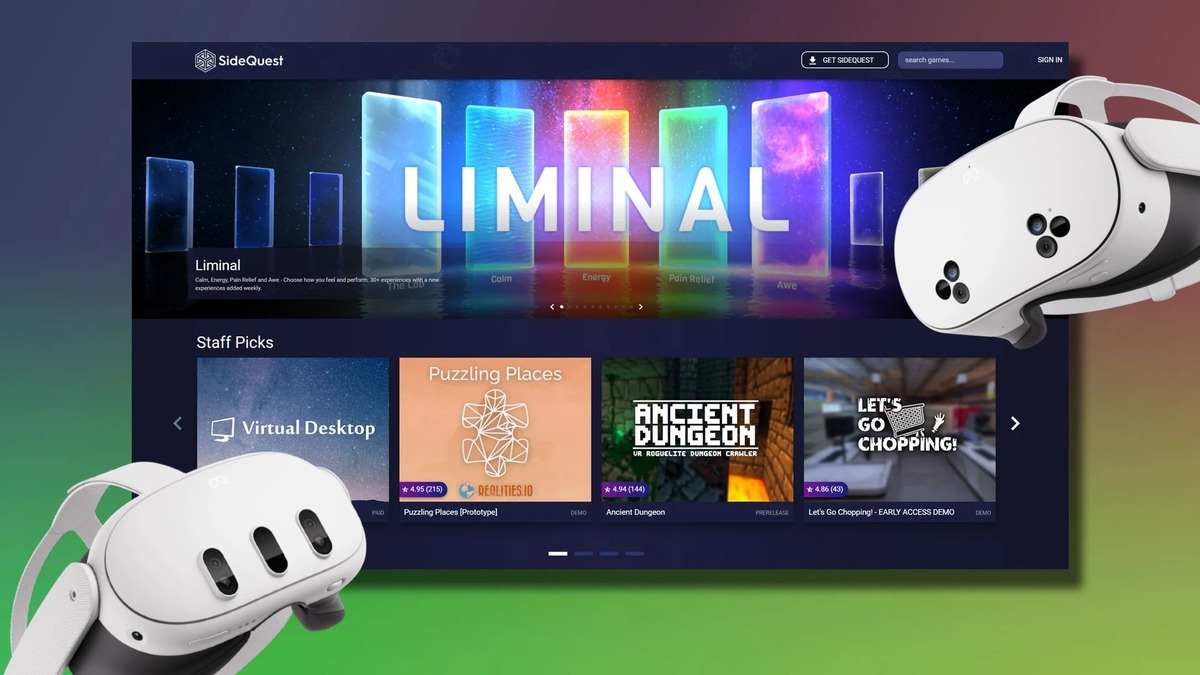
SideQuest, the leading unofficial store for Quest games since 2019, has significantly simplified its installation process. Previously, setting up the platform required a cumbersome procedure involving a computer. Now, the team has reduced the setup to just a few essential steps, making it much more accessible for new users who want to access a wider library of virtual reality content without the technical hurdles associated with sideloading applications on Meta hardware.The new workflow requires users to sign into their Meta Account and allow SideQuest to connect via Bluetooth, which enables wireless ADB. This means users can install the app directly from their desktop or mobile device. The process is now so streamlined that users simply connect and the software installs into the headset immediately. This eliminates the need for physical USB cables and driver installations on a PC, offering a seamless experience whether the download is started from a computer or from an Android phone via an APK file.Created using images provided by SideQuest, MetaA key feature of this update is the ability to install Steam game ports directly inside the Quest headset. Users no longer need to drag and drop files from a PC to the device. After signing into a Steam account through SideQuest in the headset, the platform automatically downloads the selected games. However, this functionality is limited to existing ports and does not cover all Steam titles. This direct integration saves time and removes the need for manual file management, allowing developers and gamers to access ported content more efficiently.The in-headset experience has also been refined to integrate better with the native operating system. SideQuest now automatically adds installed apps to the Quest library, removing the need to manually enable the unknown sources setting. To get started, users can bypass the PC route entirely: open the Meta Quest Browser and download the SideQuest APK. After locating the file in the Files app and installing it via the Package Installer, the app prompts users to add it to their library. The only drawback compared to the PC method is the inability to tweak advanced headset settings directly through the interface.
- Public
- 12 Oct, 2026
Seven Indie Games Debut on the App Store as Part of a Special Week
Indie Games Week has officially begun on the App Store. This week, the platform is spotlighting seven highly acclaimed titles developed by independent teams. The initiative aims to celebrate the creativity and innovation of indie developers by giving their work a global stage. Throughout the week, the App Store will feature daily highlights and curated collections to help players discover these new adventures. The event underscores the platform's commitment to supporting bold ideas and unique gameplay that push the boundaries of mobile gaming.One of the headline releases is Sifu, a stylish third-person brawler that brings cinematic combat to mobile devices. Players follow a young kung fu student on a relentless path of revenge. The game features ferocious battles where enemies attack simultaneously. To survive, players must master parrying, chaining combos, and using the environment as a weapon. Sifu is fully adapted for iPhone and iPad: the developers have tuned the touch controls, reworked the camera system, and added full controller support. This ensures that the intense, unforgiving gameplay remains accessible and responsive even on smaller screens.Vampire Crawlers offers a different pace, combining quick bursts of strategy with dark humor in a gothic card battler. As a spin-off of the popular Vampire Survivors, it shifts the focus from dodging bullets to tactical deck building. Players navigate chaotic dungeon runs by discovering game-changing card combinations, uncovering secret relics, and mastering the luck of the draw. The game invites players to rough up skeletons, bats, and other nefarious creatures, providing a strategic counterpoint to the action-heavy combat found in other featured titles.No Man’s Sky makes its mobile debut on October 28, marking a decade of continuous evolution for the space odyssey. The version for iPhone and iPad includes every major content expansion to date, such as the recent Cosmos update that allows players to command their own space stations. Set in an infinite, procedurally generated universe rendered entirely at runtime, the game lets players explore, trade, fight, and survive across an interconnected galaxy. This release brings a massive open-world experience to handheld devices, allowing for deep exploration in the palm of one’s hands.Other titles available during the week include Little Kitty, Big City, where players guide a feline through an open-world metropolis. In 9 Kings, players can assemble card armies to conquer royal adversaries in a strategic kingdom builder. Dome Keeper challenges players to dig deep to fend off foes in an alien mining simulator. Finally, Yes, Your Grace 2: Snowfall asks players to grapple with agonizing moral choices to save a crumbling empire. All these games are available for download or pre-order on the App Store now.