Echo Weaver: Designing a Time-Loop Metroidvania in Unity 6
 Public
- 09 Oct, 2026
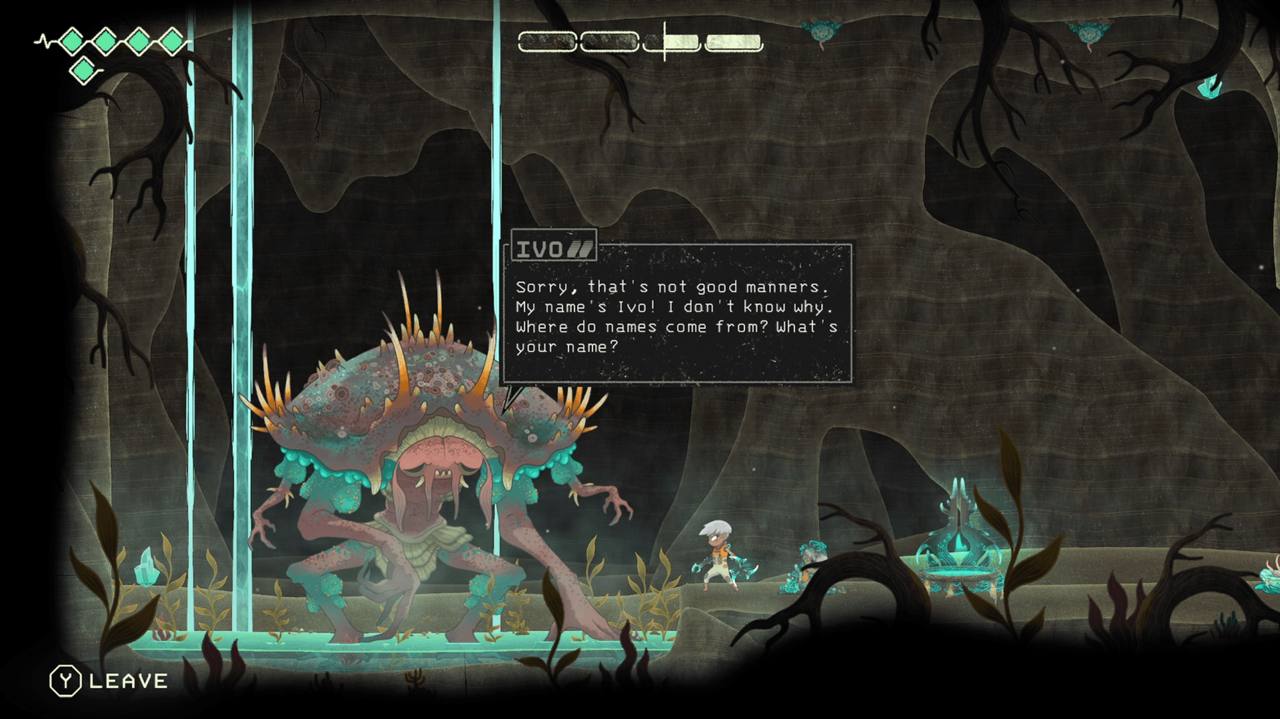
Echo Weaver, a new metroidvania from Moonlight Kids and Akupara Games, launches on PC and consoles with a unique design philosophy centered on a time loop. The three-person studio initially conceived the project to avoid the notorious save-state system, which had caused issues in their previous game, The Wild at Heart. The idea was simple: if time resets, nothing needs to be saved. However, the game's seamless, interconnected world requires constant loading and unloading of map chunks, meaning the system must maintain persistence for events like broken walls or NPC interactions until the loop restarts. The team ultimately implemented a full save system but found that the time-loop mechanic mitigates the frustration of data loss, as players can always reset the cycle if an error occurs.
The game features no ability gates; the world is fully open from the start, and progression relies on player knowledge. This "space parkour detective" approach means players can stumble into any ability at any time, which creates a complex challenge for level design. To manage this, the team established a narrative rule: the protagonist, the Weaver, retains memories across loops. This allows the game to track unlocked knowledge without breaking immersion. A key design concession was made during playtesting: while hidden areas were originally revealed only temporarily, the team permanently faded foreground artwork in frequently revisited spots to help players remember discovered shortcuts, as the standard metroidvania tool of one-way walls is ineffective in a resetting world.
For larger shortcuts that cannot be resolved within a single loop, the team relies on visual concealment: passageways are hidden behind foreground art at one end and placed in the foreground at the other. The game's clock is a central system, visible at all times, starting with one minute per loop. Players collect time crystals to extend this duration or sacrifice them to heal. Early versions used a second-by-second timer, but playtesters reported high stress levels. The final HUD displays minute-long chunks called "bells," which aligns with the game's timing mechanics and allows players to create optimized "boot-up sequences" to bank time quickly.
The technical architecture, led by programmer Ankit Trivedi, divides the game world into chunks with a custom build process that strips expensive content. A heavy, unchanging layer of world geometry is baked into scenes and stays loaded permanently, while a lightweight "essentials" scene holds volatile state like the game manager and player data. On a loop reset, the game unloads active chunks, discards the essentials scene, and reloads it, streaming back only the necessary chunks for the opening sequence. Run-specific state is stored in an in-memory dictionary of string keys, which is wiped on reset, while persistent data like loop counts and seen abilities is serialized to disk. This "trash and redo" approach ensures clean state management without significant performance impact.
Performance optimization was critical due to the dense, hand-drawn art style. The team discovered that enabling compression on texture atlases reduced memory usage to about 1 GB. To handle loading, decorative assets are stripped from chunks at build time and reinstantiated asynchronously in small batches to prevent main-thread stalls. A custom tool flattens groups of sprites into single images to reduce draw calls, particularly for complex backgrounds like skies. Lighting was also optimized by consolidating six distinct light layers into three, significantly reducing rendering costs while maintaining visual quality. Water effects, using the Game2D Water Kit, were adjusted for low-end hardware by separating perspective effects from refraction to avoid expensive camera re-renders.
The development transitioned from Unity 2021 to Unity 6, with the team highlighting specific features that improved their workflow. Chris Sumsky noted that Nested Prefabs and edit mode were life-changing for managing complex scenes. Ankit Trivedi emphasized the utility of Composite Collider 2D and Unity's native object pool, which allowed the team to retire the custom object pool written for their previous game. The use of Unity's Frame Debugger was central to identifying batching breaks, enabling the team to unify materials and convert sprites to maximize performance. The team advises other developers to use the Frame Debugger liberally from the start of a project to identify and fix rendering inefficiencies early.