Blog
 Public
- 16 Nov, 2026
Android XR gets OpenXR Spatial Containers for multi-engine apps
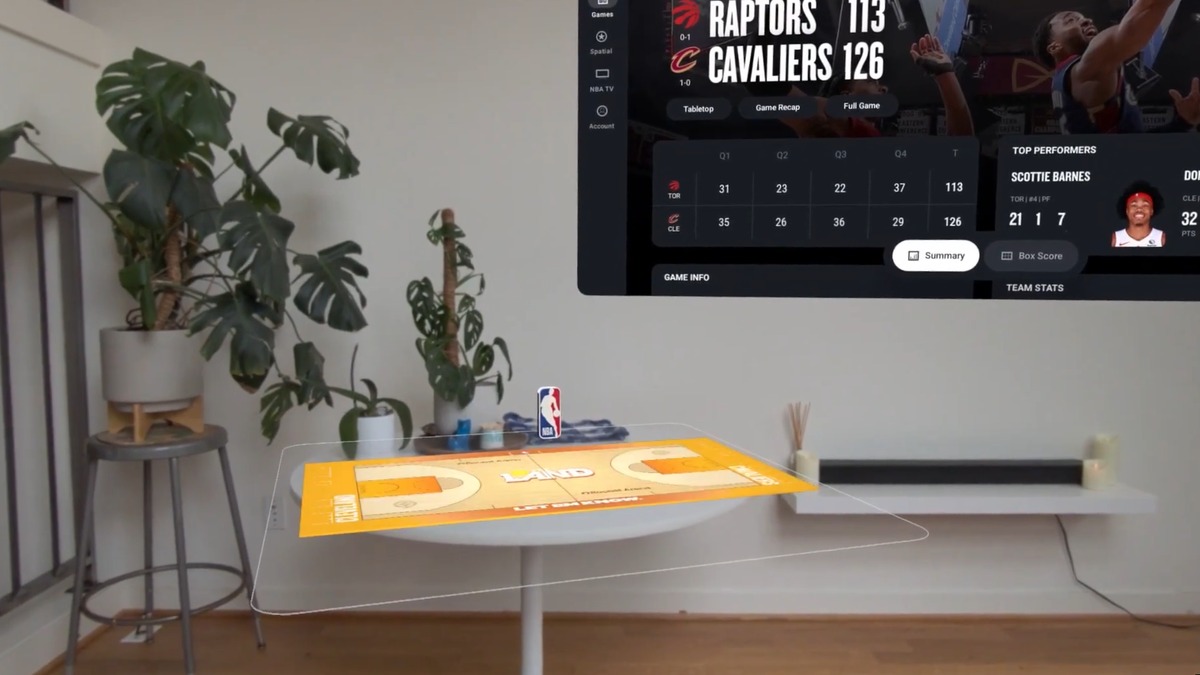
Android XR now supports the recently standardized OpenXR Spatial Container extensions. Support requires a device with Spatial API Level 4 or higher, and apps must run in Full Space mode. The extensions define system-managed spaces where an application shows volumetric 3D content, much like a desktop OS places 2D content inside windows.Until now, an OpenXR session on Android XR took exclusive control of the display. With Spatial Containers, an app can render 3D content inside a bounded 3D volume, or switch to an unbounded immersive mode that behaves like a conventional OpenXR app. The system manages window controls and placement for each container. When a container is focused and interactive, users can manipulate its content directly with hand tracking, eye gaze, or 6DoF controllers.The main practical gain is mixing technologies inside one app. Jetpack Compose UI, standard 2D Android activities and OpenXR-based 3D content can now coexist. The 3D part can be rendered with engines such as Unity or Godot, or written directly against native OpenXR. The NBA app is one of the first to use this for a feature called Court View. Its main interface is built in Compose, while selected games show volumetric 3D courts rendered in Unity. The feature mirrors Tabletop in the NBA app for Apple Vision Pro, which has also been renamed Court View.At the standards level, Spatial Containers could enable apps similar to visionOS ones. There, the Shared Space architecture and RealityKit let windowed and volumetric apps run side by side and move into Full Space immersion. Android XR's first implementation is narrower. Containers require Full Space Managed mode rather than Home Space, the multitasking mode. An app can show several containers of its own, but not next to other apps' content. This is consistent with Android XR limiting spatialized components to Full Space.For now, the feature is best described as enabling multi-engine apps rather than cross-app spatial multitasking. That matches Google's description of "multi-engine experiences" when it previewed the functionality at I/O earlier this year. There is still a gap compared with the full spatial multitasking offered by visionOS on Apple Vision Pro and by Pico OS 6 on the upcoming Pico Space Pro.

- Public
- 16 Nov, 2026
CUDA turns 20: from the first GPU programs to 11 million developers
NVIDIA is celebrating the 20th anniversary of CUDA at the SC26 supercomputing conference, honoring the researchers, developers and engineers who turned GPU computing into a foundation for modern science and AI. The platform was announced in November 2006 and presented to the scientific community at SC06. It gave developers a familiar, high-level programming model for GPUs and pushed accelerated computing far beyond graphics into simulation and other demanding workloads.Two decades later, more than 11 million developers build on CUDA across the computing stack. The platform has powered Nobel Prize-winning AI research, scientific applications running on supercomputers and visual effects in Oscar-winning films. Today's ecosystem includes more than 1,000 CUDA-X libraries used in drug discovery, factory design, autonomous vehicles, financial market modeling and quantum computing.Among the early milestones is the work of biophysicist Klaus Schulten's team at the University of Illinois Urbana-Champaign. Their Nanoscale Molecular Dynamics and Visual Molecular Dynamics tools linked GPU computing with molecular biology. In 2013, researchers from Illinois, the University of Pittsburgh and Vanderbilt University used CUDA-accelerated tools to resolve the atomic structure of the HIV capsid. They combined experiments with simulations on Blue Waters, then one of the most powerful supercomputers in the world.In AI, University of Toronto researchers Alex Krizhevsky, Ilya Sutskever and Geoffrey Hinton used CUDA to train AlexNet on just two NVIDIA GPUs. The image-recognition model won the 2012 ImageNet competition and showed what GPUs could do for deep learning. Later, Demis Hassabis and John Jumper shared the 2024 Nobel Prize in Chemistry for protein structure prediction with AlphaFold. Their team's publicly released AlphaFold 2 software relies on CUDA for GPU execution.These examples illustrate how one generation's work opens doors for the next. The CUDA Toolkit remains the entry point for building on the platform. At SC26, NVIDIA's booth also hosts a 20-Year CUDA Celebration Event Wall dedicated to the anniversary.
- Public
- 16 Nov, 2026
Unity Fellowship will award $50,000 grants to ten indie studios
Unity has launched Unity Fellowship, a program offering financial help and support to independent game studios. Ten teams whose games are roughly a year away from launch will be chosen and connected with resources, support and networks. Each team receives a $50,000 cash grant. It requires no equity and does not have to be repaid. Studios decide how and when to spend the resources and keep complete creative control over both their game vision and business strategy.Unity is looking for unique games with a strong creative vision. Applicants must submit a video showcasing the game, a playable build and a development roadmap, and explain how the program's resources would move the project forward. The program mainly targets teams without publisher backing, though studios that already have a publisher may still apply. Applicants must own or hold rights to all content in their game, including anything generated with AI.Eligibility is restricted by region. Unity will not accept applications from developers in countries and territories under U.S. sanctions, or from Brazil, Italy and the province of Quebec. The program is intended for indie studios building games with Unity. The selected teams will be announced at GDC in March 2027.
- Public
- 16 Nov, 2026
FunFitLand on Meta Quest now offers multiplayer workouts that you can join at any time
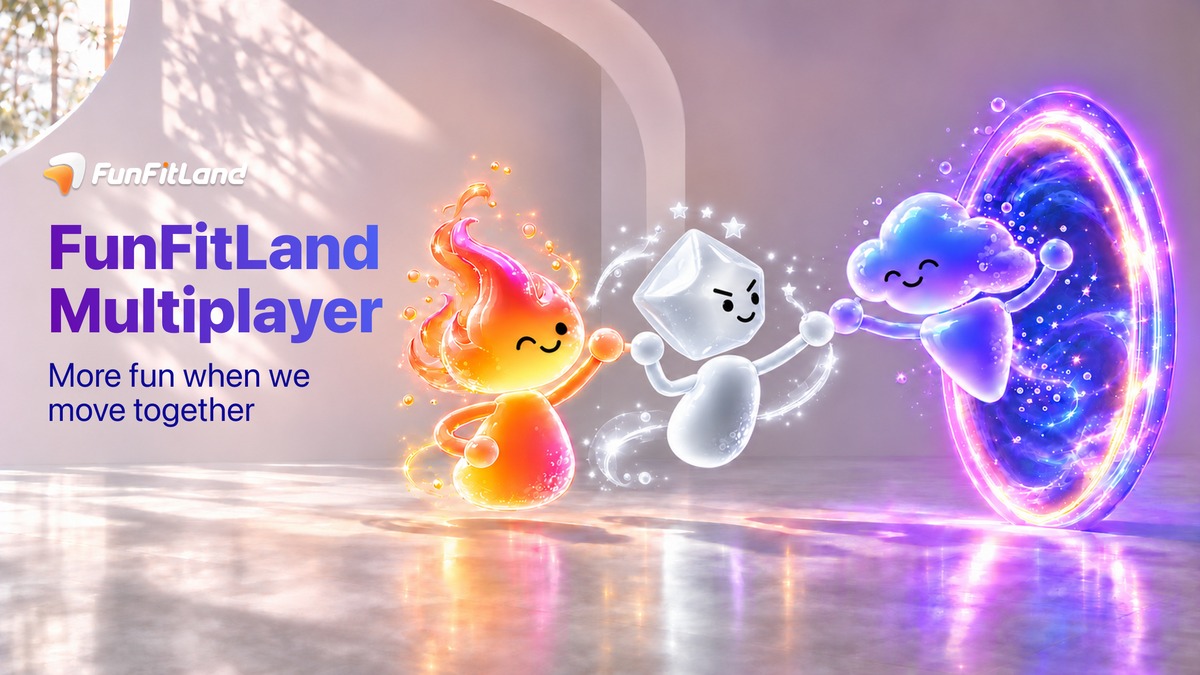
FunFitLand, a VR fitness app on Meta Quest, now has a multiplayer mode. It addresses one of the main weaknesses of home VR workouts: the loss of the social contact and motivation people get from training together at a physical gym. Every workout type in the app supports multiplayer. That includes CombatFit (rhythm boxing), GrooveFit (dance), SwingFit (flowing movement with bats), FlowFit (zen, tai-chi inspired movement) and Space, a set of meditative virtual environments with no workout at all. Space lets groups simply hang out and chat, for example during a cool-down, which fits the app's goal of being a wellness destination as well as a fitness program.FunFitLand multiplayer mode. Photo: FunFitLandThe design also tackles the empty lobby problem. In other VR fitness apps, a group workout only starts once a full party has assembled. In FunFitLand, you can open a room alone and start exercising right away, and up to three others can join mid-session. The team spent about three weeks on one technical challenge: a newcomer has to land at exactly the point the host has reached, even during the last five seconds of a cool-down. Rooms can also carry language tags: the app's users are all over the world, so you can see right away whether others in a session speak your language.The multiplayer menu. Photo by the author.Language selection. Photo by the author.In multiplayer, players appear as cute cartoon figures. You can pick a head shape and a "face" from several options and customize the color accents. The creators expect people to keep several avatars and switch between them to match their mood. An avatar also hides your appearance, so some users work out freely and don't feel self-conscious. Other apps take a different approach: FitXR uses Meta avatars, while the legacy version of Supernatural represented users with "fuzzy" body models. The new Supernatural has not shown its multiplayer mode yet. The look of FunFitLand's avatars went through many rounds of refinement based on feedback from the internal team and from external beta testers in the app's Facebook community.Targets come at you along multiple lanes, with up to 360º of movement. When side lanes open and start sending targets, a partner's avatar turns translucent so incoming targets stay clearly visible. This subtle detail also came out of user testing and feedback. A "skip cooldown" option makes it easy to stack group workouts back to back. The studio presents multiplayer as a core piece of its plan to connect people through exercise, mindful movement, and community, and says more features are planned. FunFitLand is a free download on Meta Quest. Subscriptions cost $9.99 per month or $99.99 per year.

- Public
- 15 Nov, 2026
What a Game-Ready 3D Character Should Look Like: Advice from Four Character Artists
Every game revolves around a hero, but most of what appears on screen is the supporting cast: enemies, allies, merchants, bosses, guards, creatures and background characters. A protagonist can justify heavy geometry and complex materials. NPCs must balance visual impact against performance, consistency and production efficiency. Four artists who sell game-ready characters, RyanReos, Hisqie Furqoni, Andryuha1981 and KirTheGreat, explain how they strike that balance.For them, "game-ready" means more than "low-poly". Furqoni once judged assets by polygon count. Now he asks whether a model fits the pipeline: rig, deformation, file structure and engine compatibility. KirTheGreat lists clean topology, optimized geometry, proper UVs, PBR textures and preparation for rigging and engine implementation. RyanReos calls the ideal "plug-and-play". His modular fantasy characters are prepared for Unreal Engine 5 and ship as rigged FBX files meant to move easily into Unity or Godot.Detail should follow a character's role. Andryuha1981 notes that heroes and major bosses can afford complex geometry because few appear on screen at once, while common enemies must be lighter: "A game does not consist of one main character." Modularity stretches a cast further. RyanReos keeps body, hair, armor and clothing separate. Andryuha combines outfits, hairstyles, weapons, materials and faces to turn one character into several NPCs. Furqoni keeps his series cohesive by varying role, silhouette, weapons and armor within one style. He treats naming and organization as the "UI and UX of a 3D product".When buying, all four warn against trusting a promotional image. Kir recommends checking topology, UVs, textures, polygon count, materials, rigging, file organization and engine compatibility. RyanReos stresses supported engine versions, a common reason assets fail in a buyer's project. Furqoni adds texture resolution, rig type, file formats and included features, warning that AI-generated promo art makes verification more important. Andryuha advises reading the full description, studying screenshots and watching a video preview. A useful character, they agree, must fit both the game's world and its pipeline.

- Public
- 14 Nov, 2026
NVIDIA cuPhoton.xBeam moves black hole interferometry data correlation to the GPU
Imaging a black hole means resolving something tiny: the observed ring of M87* spans just 42 microarcseconds. The Event Horizon Telescope (EHT) links 13 radio stations, including sites in Hawaii, Chile, Spain, Mexico, and the South Pole, through very-long-baseline interferometry (VLBI). Each station records two polarizations at up to 64 gigabits per second, producing petabytes of voltage data. Correlating telescope pairs yields visibilities, which are sparse Fourier samples of sky brightness along tracks traced by Earth's rotation. Reconstruction algorithms must then solve an inverse problem from those samples. Variable sources such as Sgr A*, which change during an observing session, make this harder still. The next-generation EHT (ngEHT) plans to add more sites to improve image quality and track changes over time.Figure 2. A synthetic EHT-like example showing spatial frequency sampling, visibility amplitudes, a "dirty" image, and a crescent-shaped modelNVIDIA's cuPhoton.xBeam is a GPU-based FX correlator. From raw recordings, it produces one complex visibility per station pair, frequency channel, and short time interval. The correlator was developed with the Harvard-Smithsonian Center for Astrophysics and MIT Haystack Observatory. On an NVIDIA Vera Rubin NVL72 system, it processed a 10 TB dataset in 70 seconds. This required 64 GPUs and GPUDirect Storage in compatibility mode. That is about 460x faster than an x86 CPU baseline, which took 31,992 seconds (8.89 hours). Downstream calibration and imaging, such as 3D gas models built with Gaussian splatting, are not part of cuPhoton. xBeam does not compute delays from station positions or trace light paths. Results are validated against DiFX, the open-source CPU correlator, and tools such as HOPS, rPICARD, and eht-imaging consume the output.Figure 4. cuPhoton.xBeam speedup over the x86 CPU baseline (left) and data ingest throughput (right) at different GPU counts on NVIDIA Vera Rubin NVL72The pipeline has five stages. At the ingest stage, each VDIF frame is placed at its correct time. A .vdix sidecar is written alongside it, indexing frames by timestamp, thread, and physical location without copying the data itself. Missing or invalid data is explicitly marked along the way. At the delay and fringe correction stage, the data is aligned to the nearest whole sample before the FFT, and fringe rotation is applied. The remaining fractional delay is compensated by a frequency-dependent phase correction.The delay comes from the job file. It is composed of a geometric polynomial around t0, a per-station clock offset and drift, and a per-band clock offset. Within one FFT, the delay can be constant, linear, or parabolic, set by the fringe_approximation_order parameter (0, 1, or 2). At the channelization stage, an FFT is run for each station. At the cross-multiply-and-accumulate stage, one station's spectrum is multiplied by the complex conjugate of the other's. Invalid input is masked, and the result is normalized by exposure weights. The output is in DiFX SWIN or xbeam-v1 format.Version 0.1.3 accepts a normalized JSON job (schema version 1) or a supported DiFX .input file. It lists stations, clocks, frequencies, VDIF datastreams, baselines, and scans. The output directory must be new. The command cuphoton xbeam inspect-vdif RECORDING.vdif --json reads headers only. The command build-vdif-sidecar with parameters --index-dir, --backend cufile (or posixif GPUDirect Storage is not available) and --devices creates reusable indexes while the source files stay unchanged. The command cuphoton xbeam correlate JOB.json with --backend cupy runs correlation on the GPU. By default, data is read through POSIX into pinned host memory, and with --vdif-io cufile - via GPUDirect Storage. Options include --scan, --first-integration and --integration-count. From Python, you can call load_job and correlate with CorrelationWindow and yield records one at a time, but SWIN writing is available only from the CLI.For recordings with gaps, there is a profile --profile interop-real-usb-buffered-window-replay-v1. With it, samples within a retained buffer continue to be consumed using the existing time reference until a new anchor appears. The profile also determines which FFT blocks contribute and how weights are reported. It does not recover lost samples, and full weight does not guarantee complete data. Without the profile, frames are aligned by header timestamps, missing slots are marked invalid, and visibilities and weights may differ. Scaling splits a scan in time. On one node, --devices 0,1,2,3 launches one process per GPU, writes results into RUN/shards/, and merges them. Across nodes, each process sets --shard-count and --shard-index, for example 64 with indices 0-63, using identical scan and integration settings. Then merge-shards then joins the partial SWIN outputs.Figure 1. Radio telescopes record signals that are correlated into visibilities for image reconstruction. Conceptual illustrationFigure 3. cuPhoton.xBeam converts telescope recordings into visibilities for downstream imaging
- Public
- 14 Nov, 2026
Creating a Game-Ready Lee-Enfield Rifle: The Full Pipeline in Blender, Substance and Marmoset
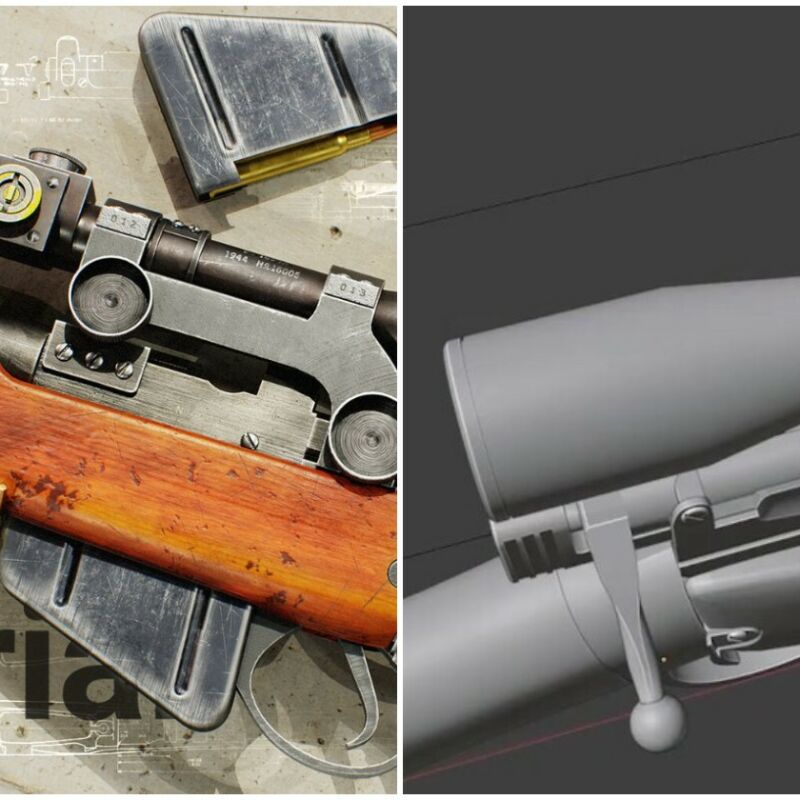
Titanium Studio has released Mastering LEE-ENFIELD NO4 MK1 Game Ready Creation in Blender, a production-focused course with more than 26 hours of video. It is taught by Navid Valizadeh, a Senior Weapon and Prop Artist who specializes in photorealistic assets. The project is a WWII-inspired sniper rifle, built from scratch and carried all the way to a polished final render.Modeling happens in Blender and relies on professional hard-surface techniques. It focuses on clean geometry, detailed components and a structured workflow. The asset then moves to Substance 3D Painter for texturing, where students create realistic materials, surface variation, roughness, wear and fine detail. The course is designed to teach the complete asset creation workflow, not only how to operate individual tools.The last stage is presentation in Marmoset Toolbag 5. It covers professional lighting, material setup, camera composition and presentation techniques for showcasing the finished weapon. Together, the three stages mirror a typical game-ready prop pipeline used in production.
- Public
- 14 Nov, 2026
TDK's Meta-Optics Mirror and Coherent Lissajous Scanning: The Return of Laser AR Glasses
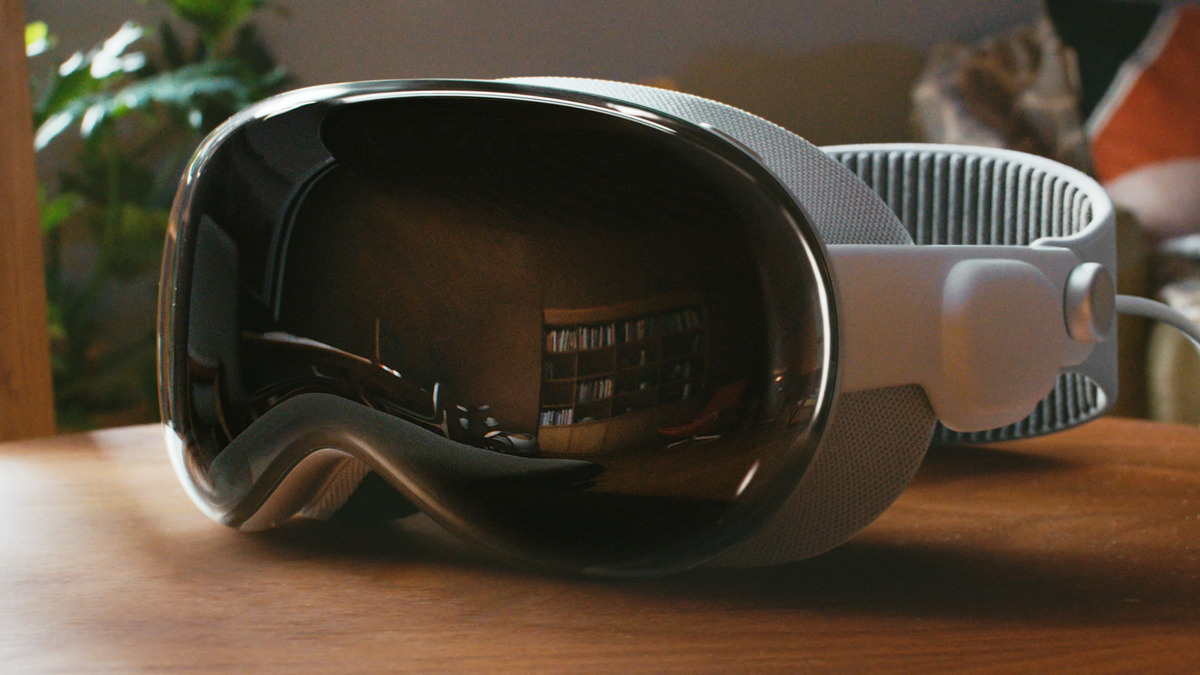
On October 2, 2026, TDK announced its Meta-Optics Mirror, a new kind of "free-air combiner" for AR glasses. The launch follows two deals earlier that year. In May 2026, TDK acquired the core assets, IP and staff of Oqmented, a company that built vacuum-sealed MEMS mirrors for Lissajous laser beam scanning (LBS). In June 2026, TDK signed a business cooperation agreement with laser maker QD Laser to develop retinal-projection optical engines for smart glasses. The two companies have worked together since at least 2020. QD Laser, a Fujitsu spin-out, has been showing LBS direct retinal scanning since at least 2016.The deal changes TDK's direction. Oqmented had focused on waveguide-based LBS. In that setup, the waveguide expands the pupil, and the output behaves more like a flat-panel display: the light is no longer "Maxwellian," meaning it is no longer focus-free. TDK's mirror instead targets direct retinal projection, the path earlier pursued by Microvision, Bosch, North Focals, Intel Vaunt and Eyeway Vision. Waveguides offer a much larger viewing range and avoid the drawbacks of a free-air laser path from a temple projector to the eye. In free air, dust on a surface or a single hair crossing the beam can cast a large, sharp shadow over part of the image, and users may also have concerns about eye safety. TDK's website still lists the waveguide approach, so the company seems to be developing both paths.The mirror relies on nanostructures between 200 nm and 1 µm in size that steer light from the scanner toward the eye. A plain mirror would reflect light from a temple projector at an angle that misses the eye entirely. The structure is made with a semiconductor-like process on a thin substrate. It can be embedded in an ordinary eyeglass lens, probably sandwiched between two lens halves the way waveguides are built today. In TDK's layout, the projector beam runs nearly parallel to the frame to a second mirror near the lens. From there it strikes the nano-reflector at a very shallow angle, which keeps the free-air path short. The current version works only in green, and the structure sizes are likely wavelength-dependent, as they are in diffractive waveguides. TDK says it is accelerating work on a full-color demo and aims for mass production "within the next few years." The term "meta-optics" here means flat optics with subwavelength structures and has nothing to do with the company Meta. Waveguide gratings with complex sub-100 nm substructures blur the line between gratings and metasurfaces anyway.At MicroLED and AR/VR/MR Connect 2026, TDK showed a short working demo of what Oqmented originally called "Progressive Lissajous Scanning." TDK's website now calls it "coherent" Lissajous scanning, the same term Meta used at SPIE AR/VR/MR 2025, although TDK says it came up with the idea independently. In Lissajous scanning, a single mirror is driven by two sine waves, and the beam traces a path resembling a figure 8. Oqmented's fast axis runs at 20-40 kHz. Raster LBS is different: its vertical axis runs at about 60-120 Hz, while the horizontal axis runs at 20-60 kHz. In Lissajous scanning the slow axis is much closer in speed to the fast one, so the beam follows strongly curved, diagonal paths. Traditionally, pixels are written pseudo-randomly, whenever the beam happens to pass through them, with the laser modulated for both brightness and beam velocity. As a result, during saccadic eye movements the eye sees partial frames and the scan pattern itself.The coherent variant keeps the same mirror motion but draws pixels in sweep order, forming curved, raster-like segments. The laser is blanked while the beam slowly turns around at each edge of the sweep. This removes the saccadic breakup, but the fundamental limits remain. A rectilinear pixel grid has to be resampled onto curved scan lines that never land exactly on a pixel, and under basic Nyquist theory this costs roughly a factor of two in effective resolution per axis. To keep most people from noticing flicker, every point must be refreshed, even in the worst case, more than about 90 times per second. With a 40 kHz fast axis, that works out to around 300 effective lines after resampling. For comparison, NTSC used a line rate of about 15 kHz for 720×480 interlaced at 60 Hz, without any resampling onto a curved grid. LBS systems have historically had to trade flicker against resolution.The low-resolution Oqmented/TDK prototype on display did eliminate the breakup, but some flicker was still visible. Among other combiner efforts, CREAL is working on an HOE combiner. More radical approaches are also emerging, such as Gixel's active mini-mirrors and Smith Display's non-linear crystal combiner.
- Public
- 13 Nov, 2026
Apple confirms it is not abandoning visionOS at a session for spatial computing developers
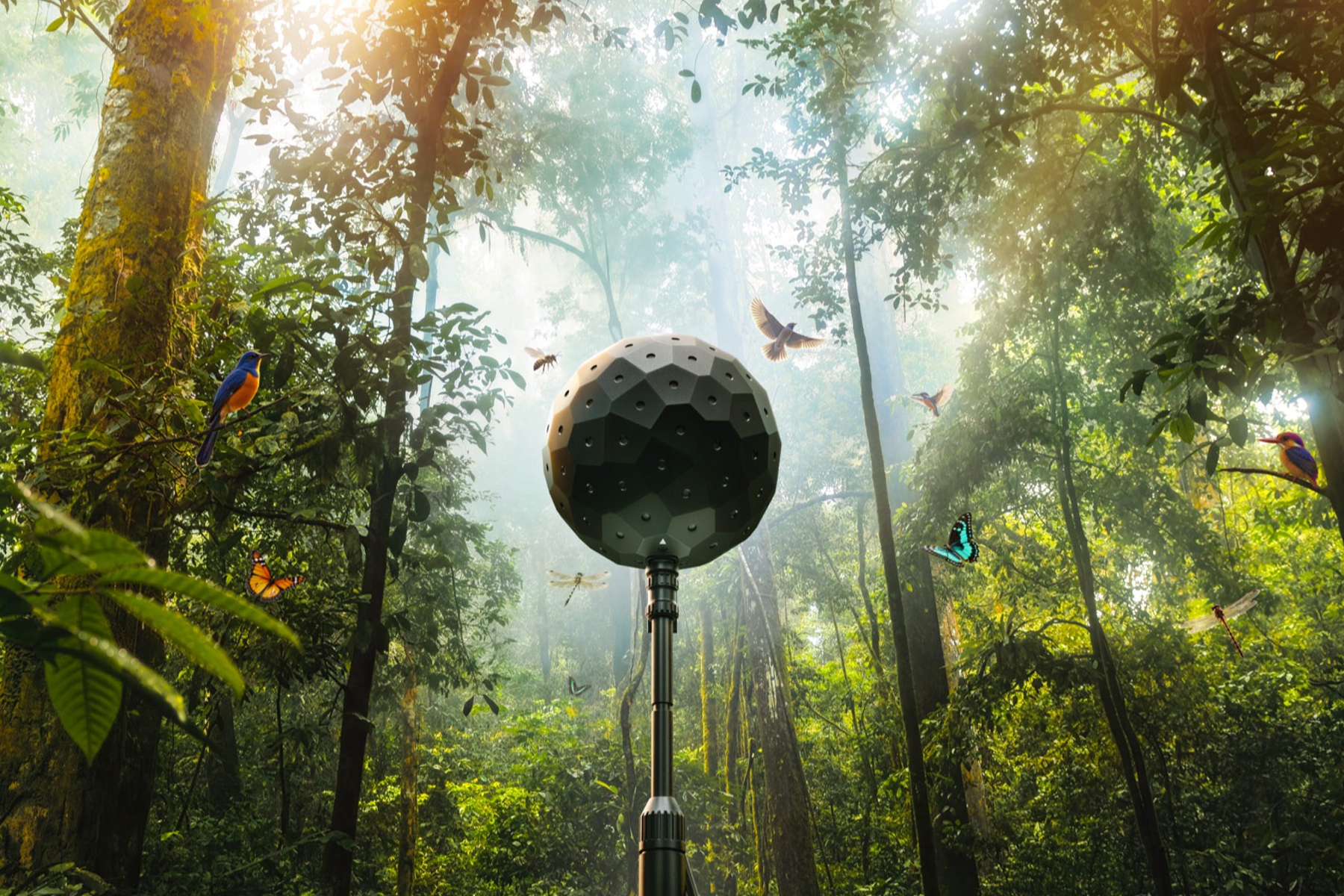
Apple held a day-long "Meet with Apple" developer session dedicated to visionOS, its spatial computing platform, and used it to address months of doubts about its XR plans. Yuri Imoto, a product manager in Apple's Spatial Computing division, stated that the company is "very committed to the platform" and noted that spatial computing has evolved rapidly in a short time. The event covered surgery, healthcare, education, training and immersive film as key areas for the platform.One of the most notable announcements was Blackmagic's professional ambisonic microphone. It packs a 108-microphone array and an internal processor that natively converts the signal into a format ready for use in Apple spatial content. Creators of immersive audio no longer need a separate conversion step.Courtesy of BlackmagicOn the hardware side, the latest headset release was the M5 refresh of Vision Pro in October 2025. The headset became faster, the image sharper, the refresh rate higher, and it is more comfortable to wear, but it was still an incremental update rather than a new generation. Over the past year, Apple has instead focused on how visionOS feels in everyday use for both casual and enterprise users, released immersive documentaries and live MLB games, and added support for third-party tracked controllers and accessories.That said, commitment to visionOS does not necessarily mean commitment to Vision Pro specifically. Apple is developing not only mixed reality headsets but also smart glasses and AR devices, and visionOS could run in some form across all of them, much like how AndroidXR spans devices today. Analyst Ming-Chi Kuo reported this summer (Apple has not confirmed it) that Vision Pro 2 has slipped to late 2028 or even 2029, as Apple is prioritizing smart glasses for late 2027 to compete with Meta and Google/Samsung.Smart glasses on AndroidXR | Courtesy of Google, Samsung
- Public
- 13 Nov, 2026
Blackmagic introduces an ambisonic microphone with 108 capsules for capturing content for Apple Vision Pro
Blackmagic Design has introduced the Blackmagic Ambisonic Microphone, a professional microphone for capturing spatial audio in immersive video production. It has built-in support for Apple Vision Pro. It packs 108 digital MEMS microphones that record the complete sound field around the device.Courtesy of BlackmagicAn onboard processor runs array geometry and ambisonic encoding filters licensed from Apple, turning the 108 raw signals into 64 channels of 32-bit audio in real time. That removes the need for external breakout boxes or separate encoding software. Apple supplied the geometry and filters, while Blackmagic handled engineering and design. The capsules sit flush in a solid, faceted metal body compact enough to hold in one hand or mount on a camera.Courtesy of BlackmagicA single USB-C cable carries both data and power, and the microphone is class compliant, so no drivers or plug-ins are required. The headline workflow pairs it with the URSA Cine Immersive camera: mounted on top and plugged in, it records spatial audio straight into the camera's immersive files for Apple Immersive content.Other options include connecting to a computer to record and mix live in Fairlight Live, or recording directly to iPhone through the Blackmagic Camera app. A USB to SMPTE-2110 converter is also planned for advanced broadcast setups. The microphone costs $1,695. No exact ship date has been set, but availability is expected in December.
- Public
- 13 Nov, 2026
How to Measure and Reduce iOS App Size with Xcode and App Store Connect
iOS apps tend to grow with every release as new SDKs, higher-resolution images, and offline content pile up. Downloads take longer, and more storage is taken on the device. Optimization has to start with measurement, since the dominant contributor differs from app to app: assets in one, compiled code or bundled dependencies in another. "App size" is also not one number. Download size, install size, and storage used after use overlap but are not interchangeable. So in a PR, benchmark, or team update, state which metric changed and where it was measured. Deferring optional content shrinks the initial download and install footprint, but that content still lands on the device once fetched. Background Assets, including essential packs and prefetched content, can even arrive before first launch. They must be recorded separately and compared under the same download state.Users see these numbers in two places. The App Store product page's Information → Size field shows install size. If an app uses Apple-hosted essential asset packs, it can show an "Up to" figure that includes this content. iPhone Storage splits App Size from Documents & Data, which accumulates through downloads and use. Local APP, XCARCHIVE, and IPA files help with diagnosis but do not match App Store delivery: archives may hold debug symbols, and a universal IPA carries resources for multiple devices. For device-specific size estimates, export a Release archive with xcodebuild -exportArchive, passing -archivePath, -exportPath, and -exportOptionsPlist. With manual signing, the plist also needs signingStyle=manual, a teamID, and a provisioningProfiles mapping for each app or extension.The output folder will contain App Thinning Size Report.txt. It lists each variant with its device and OS descriptors and values such as "112 MB compressed, 260 MB uncompressed". The compressed figure is an estimate of download size, and the uncompressed one is an estimate of installed size. To inspect a bundle, pick a thinned IPA by its variant descriptors rather than its filename, because the export may also include a universal IPA. Extract it with ditto -x -k into a fresh directory created with mktemp, and locate the .app under Payload. Thinning is largely automatic for App Store and TestFlight, but it should be verified. If device-specific assets show up in every variant, check the asset catalog settings and loose files. When comparing, keep the build configuration, Xcode version, signing method, export method and variant descriptors fixed, and then repeat the comparison using the processed App Store Connect values. Those are estimates too: Apple may add DRM and recompress files, and sizes in TestFlight can differ from App Store delivery.Diagnosis begins with an inventory of the whole thinned bundle: main executable, Frameworks, PlugIns, asset catalogs and loose resources, localizations, media, databases and ML models. Running find with stat, sort -n and tail -30 lists the largest files, but these are logical uncompressed sizes, so they are only a diagnostic signal. When a binary matters, enable Write Link Map File (LD_GENERATE_MAP_FILE) in Build Settings, build the project and parse the .txt in DerivedData. Group the sizes from the # Symbols section by file index, and resolve the indices through the # Object files section. This exposes heavy generated code, static libraries, C++ templates and third-party SDKs. Symbol sums show who owns the weight, but they are not a full accounting: headers, padding, signatures and linker data are not included. Inlining, whole-module optimization and LTO blur code ownership. Exclude symbols removed as dead code, and build a map for each build target and architecture.We will show the workflow with a synthetic example using fabricated numbers: change one thing at a time, rebuild, and regenerate the report for the same variant. An asset-heavy app weighs 112 MB compressed and 260 MB uncompressed. The estimate drops by 31 MB (about 28%) and 58 MB (about 22%), and App Store Connect reports 80 MB download and 200 MB install. Savings do not map one-to-one: compilation, slicing, compression, alignment and signing intervene. A tutorial moved to remote delivery is deferred, not removed. After it is downloaded, storage grows by about 32 MB again, and the archive and the extracted files may sit on the device at the same time. So test offline, retry, purge and re-download paths, and measure delta updates separately.Assets often outweigh code. Keep bundled images in .xcassets so that app thinning can choose per-device resources. The pixel count should match the size on screen: a 24 × 24-point icon needs 48 × 48 pixels at 2x and 72 × 72 at 3x, and it should be resized before import. Share universal artwork, add device or color-gamut variants only when necessary, and do not duplicate image sets. After migration, load images by name, for example UIImage(named: "toolbar_search"), and remove any leftover loose copies from Copy Bundle Resources. Confirm the result by comparing the reports for the same variant before and after. For icons, it is better to use system SF Symbols, if the design and the minimum OS version allow it.