Blog
 Public
- 18 Nov, 2026
Apple's split-and-scale method increases the detail of 3D latents at inference without retraining
Apple machine learning researchers have introduced split-and-scale, a technique for increasing the capacity of latent 3D representations at inference time while keeping training costs manageable. Latent representations already encode 3D scenes compactly and underpin powerful 3D generative models. However, they struggle to preserve the fine details of complex objects because the latents can only hold so much information.The obvious fix has serious drawbacks. Increasing latent capacity during training is computationally expensive and often impossible within memory limits. Adding more latents at inference does not help either, because the model fails to make effective use of the extra capacity.The method relies on one key property. When a 3D scene is represented as a continuous function of 3D coordinates, a single pretrained tokenizer can be applied at inference to arbitrarily small sub-regions of that scene. Each sub-region receives the same latent capacity as a whole scene would, so the same budget is spent on a smaller spatial extent. As a result, the model captures far more detail, and no retraining is needed.The team ran extensive ablations to measure the trade-offs between compute, memory, latent capacity, and reconstruction quality. The results show that this inference-time scaling reaches quality on par with much larger models that exceed the memory of a single GPU. The approach also works for generation: an autoregressive 3D generator trained on split-and-scale representations performs competitively with state-of-the-art baselines. This suggests a practical way to generate more detailed 3D assets on modest hardware.
- Public
- 18 Nov, 2026
App Store Taxes and Prices: Botswana, Rwanda, the New SaaS Attribute, and California Sales Tax
Apple is adjusting taxes and prices on the App Store, which supports 43 currencies across 175 storefronts. Such changes follow shifts in tax regulations or foreign exchange rates. To keep prices for apps and In-App Purchases consistent across storefronts, Apple relies on public exchange rate data from sources like The Wall Street Journal or Bloomberg. Exhibit B of the Paid Applications Agreement will be updated to show that Apple now collects and remits applicable taxes in Botswana and Rwanda.A new "Software as a Service (SaaS)" attribute is available for the App Store Software, Software Training Material, Dating, and Boosting tax categories. Developers can review and update it in the Pricing and Availability section of Apps in App Store Connect. Starting January 1, 2027, SaaS, App Store Software, Software Training Material, Dating, and Boosting apps become subject to sales and use tax in California. US storefront prices are shown without tax, so displayed prices and developer proceeds stay the same, but the total customers pay may increase.On December 3, 2026, prices for apps and In-App Purchases will change in Botswana, Colombia, Egypt, Rwanda, and Türkiye, taking the new VAT into account. The exception is when one of these countries is selected as the base storefront. In that case, prices there will stay fixed, while prices in the other storefronts will be updated to remain equalized with the selected base price.Auto-renewable subscriptions will not be affected in any region. Prices in storefronts where they are managed manually will also remain unchanged. The upcoming changes are already visible in App Store Connect, and prices of apps, In-App Purchases, and subscriptions can be changed at any time.

- Public
- 17 Nov, 2026
Falling Leaves: a free Blender add-on that generates, scatters, and animates autumn leaves
Guillaume Bissieres has released Falling Leaves, a free Blender add-on for building autumn scenes. It generates fallen leaves, scatters and animates them, and adds wind effects. The add-on configures leaf generation and physics automatically, so all that's left for the user is to adjust the leaf count, size, swaying motion, and other parameters.The default leaves can be replaced with custom models or with images that have transparent backgrounds. The add-on automatically extracts leaf outlines from such images and turns them into meshes with UVs and materials. For placing leaves on the ground, there are three different Geometry Nodes setups. The tool can also build large leaf piles and generate ground wind, which pushes leaves along a surface such as a road instead of twirling them through the air. Wind strength can be set to anything from subtle to dramatic.Simulation settings can be saved and reused to recreate the same effect in other scenes. Falling Leaves is also designed to work alongside Leaf Gen, a separate tool from the same developer for procedural leaf creation and retopology.

- Public
- 17 Nov, 2026
Apple's N50 smart glasses: hardware reportedly finalized, with Siri set to be the gateway to apps
Apple's smart glasses, codenamed N50, are expected to debut at WWDC next June, and much of their hardware is now reportedly finalized. According to a new Bloomberg report, Apple is building the device's software story around Siri. The voice assistant will act as the main interface to third-party iPhone apps rather than serving only as a built-in helper.The plan is to let users book restaurants, order coffee, call rideshares and buy tickets by voice, with Siri routing those requests to apps already installed on the phone. Apple reportedly intends to make it easier for developers to expose such functions from their existing iPhone apps to Siri. The bet is on the current App Store ecosystem, not on a new class of glasses-native software. Third-party apps will not run on the N50 directly. The glasses will also work only with relatively recent iPhones and will not support Android.Ray-Ban Meta glasses | Courtesy of EssilorLuxottica, MetaOn the hardware side, the prototypes are said to be slightly thinner than Meta's second-generation Ray-Ban smart glasses. The cameras are flush-mounted and have privacy indicators. The glasses use a proprietary magnetic charging connector. They run a "pared-down" version of visionOS 28 on a custom processor derived from Apple Watch chips. This fits Apple's recently stated commitment to visionOS, which now appears to be expanding beyond headsets.The competitive pressure comes mostly from AI, where Siri lags well behind rivals. Meta's glasses lean on its Muse AI. Google's Gemini will power upcoming Android XR glasses from Gentle Monster and Warby Parker. All of these work with both iOS and Android. Even with Meta's early lead, the category is still young.Courtesy of Warby ParkerToday's glasses without a display look more like a step toward a price point that works for mass-market buyers than the final form of the device. The longer-term goal appears to be glasses with a display and, eventually, AR glasses that can be worn all day. Such platforms would likely support a more diverse app ecosystem, which would help solve the "killer app" problem. Platform holders would also get recurring revenue rather than only income from the sale of the hardware itself.

- Public
- 17 Nov, 2026
Organic Zombie Web: A Generator of Creepy Organic Webs in Blender Built with Geometry Nodes
Organic Zombie Web is a new Blender tool built with Geometry Nodes. It creates thick, slimy webs that look like living tissue. These webs suit post-apocalyptic and horror environments and can cover almost any surface. The generator was created by Deepak Kushwaha, who usually works on sci-fi projects such as a functional portal and a cyberpunk lab. The tool is publicly available for download.There are no simulations here: everything is built on mathematical operations. As a result, the generator is lightweight and designed to run in real time. It ships with its own materials, but they can be swapped for custom ones so the web matches the look of a project. Once the result is final, it can be converted into a regular mesh.Under the hood, the generator is organized into multiple layers, all built around three components: Web, Surface, and Subject. The first layer connects the surface to the subject and stretches a web between them. The second attaches additional webs to existing ones, making the structure more complex and random. The third takes the generated surface and builds yet another web layer on it to add detail. Shape and distribution are controlled with curves, Set Position, Sample Nearest Surface, and other nodes.Veins can be added to the web to give it a living look, as if it were threaded with veins and arteries. Their color, noise, and other properties are adjustable. An instancing system scatters extra details across the web. This can be a single object, such as spheres, egg-like shapes, or mushroom-like growths, or an entire collection with multiple variations. The distribution of instances is adjustable as well.General controls include thickness, width, density, randomness, and sag, as well as how far the web hangs down and how much noise distorts its shape. Together these parameters produce a wide range of results, from sparse individual strands to dense, overgrown masses.
- Public
- 17 Nov, 2026
NVIDIA Unveils Rubin HPC GPU with More Than 50,000 CUDA Cores for Agent-Driven Simulation
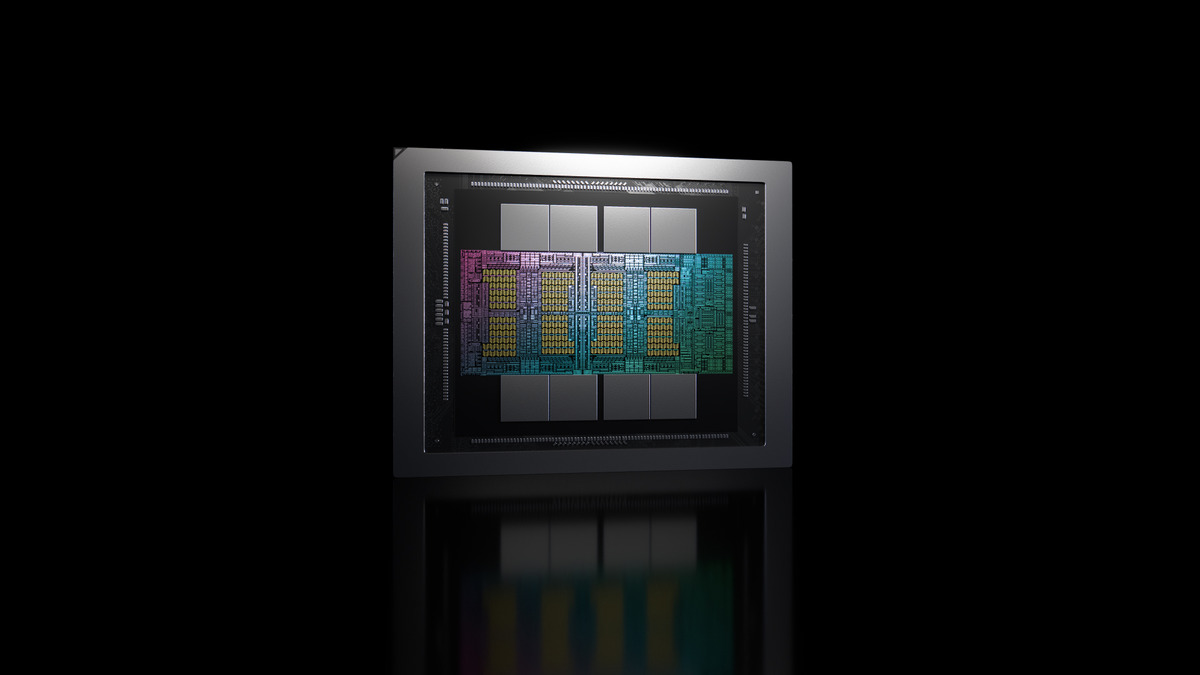
At SC26, NVIDIA introduced Rubin HPC, a new GPU within the Vera Rubin platform. It is designed for simulation and data processing in science, engineering and analytics. The chip targets a pattern that is increasingly common in research and industry: AI agents propose candidate materials, molecules and designs, then use simulations to evaluate them and decide what to try next. More candidates mean more simulation demand, and Rubin HPC is meant to absorb that load.On the hardware side, Rubin HPC sets a record for the number of CUDA cores: there are more than 50,000 on a single GPU. A new sparse data acceleration feature is meant to keep those cores from sitting idle without data, while seventh-generation NVLink speeds up communication between GPUs. Overall, the architecture is balanced: data bandwidth scales together with compute power, rather than simply adding more and more arithmetic units.That balance suits a common shape of scientific workloads. Climate models, engineering simulations, genomic analysis and financial risk calculations typically work the same way: a program reaches into a huge dataset, pulls a few scattered values, computes a result and repeats this at enormous scale. When the cores are kept fed with data, they compute instead of waiting. This speeds up recurring operations such as sparse matrix operations, stencil computations, sorting and reductions.On the software side, NVIDIA positions its CUDA-X libraries as a growing set of optimized algorithm implementations that agents can call, including those most relevant to simulation and analytics. Paired with Rubin HPC, they are intended to shorten the "hypothesis, simulation, refinement" loop, so teams can pick next steps sooner and direct lab work toward the most promising candidates. Ian Buck, NVIDIA's vice president of hyperscale and high-performance computing, framed it simply: faster simulation means faster discovery. Rubin HPC is expected to be available in 2028.

- Public
- 17 Nov, 2026
macOS 27.3 beta 2: finer-grained options for Device Control and Data Access and for Full Disk Access
In macOS 27.3 beta 2, two powerful permission APIs have become more transparent and gained finer-grained options: Device Control and Data Access, and Full Disk Access. Apple's reasoning is that granting this level of access puts all data on a Mac at risk. The updated flow aims to make that clear to users so they can make informed decisions about their data and privacy.Developers of apps that rely on these APIs should rework onboarding. Apps must also cope gracefully when users grant access to only a limited set of folders or apps. The new prompts appear only for new permission requests, and everything users granted earlier stays in effect.Some apps can request entitlements to keep their pre-27.3 experience on new installations. This applies to apps that use Full Disk Access for disk backup and to apps that use the new Accessibility settings for assistive technologies. Known apps are currently unaffected and keep the same experience without an entitlement. Apple says more details on the entitlements are coming soon.
- Public
- 17 Nov, 2026
Unity acquires Synty Studios: POLYGON assets are coming to Unity Spark
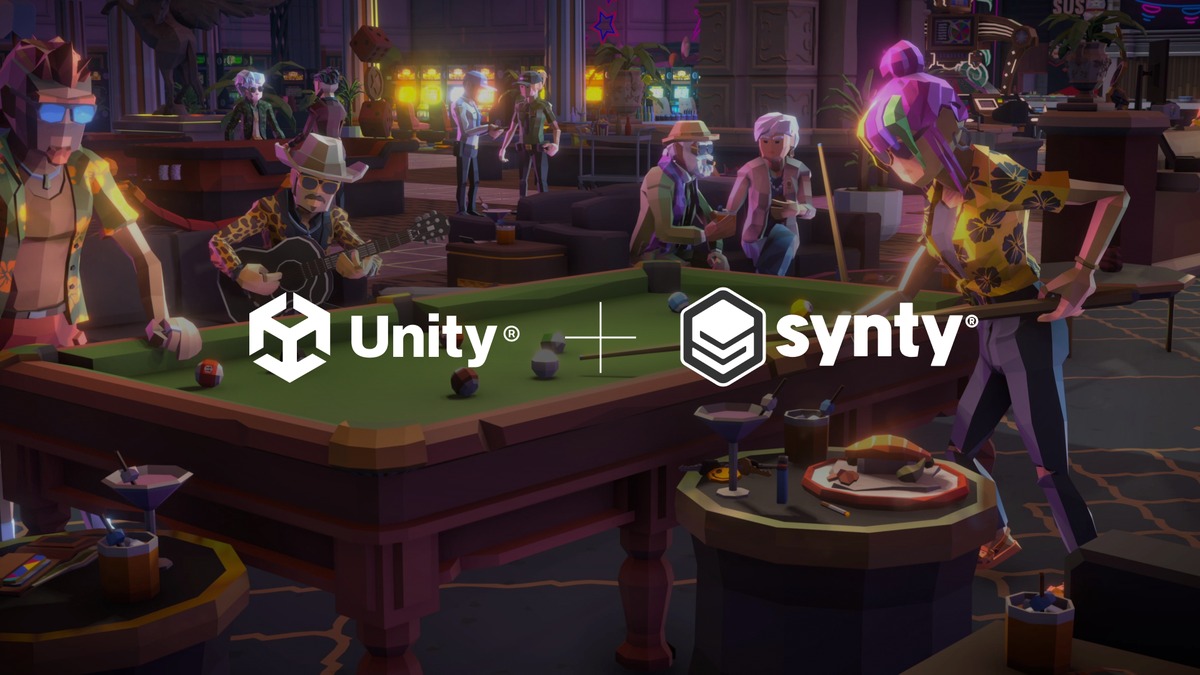
Unity has acquired Synty Studios, the company behind the POLYGON range of stylized 3D art packs. Synty's founders and artists are joining Unity full time, and their library will be integrated into Unity Spark. Spark is Unity's upcoming AI-native game creation platform, built so that anyone with a game idea can make it. Both the existing catalog and new content from Synty's artists will come to the platform.Synty began in 2014, when two founders made a single asset pack over a weekend and published it on the Unity Asset Store. The library now holds more than 70,000 stylized, low-poly 3D assets. It is used by everyone from first-time creators to professional studios. The brand, the art style and the team all stay the same, and the artists will keep making new assets with support from the wider Unity team.Synty content will be available in Unity Spark starting with the platform's closed beta later this year. A waitlist for the beta is already open. Spark connects directly to the Unity Asset Store, so creators can build with Synty assets alongside work from participating Asset Store publishers.For existing customers, little changes for now. The catalog remains on the Unity Asset Store, and free Synty assets stay free. There are currently no plans to change pricing. Synty Store accounts work as before, and buying Synty Store assets through the Unity Asset Store requires a Unity ID. Support continues through Synty's Contact Us form.The packs will remain available for the engines and tools they support today. Anything already bought, for any engine, is unaffected. Unity says it will give plenty of notice before any future changes to engine support.

- Public
- 17 Nov, 2026
Meta earmarks more than $120 million for third-party VR games ahead of VR Glasses launch
In January 2026, Reality Labs, Meta's division, shifted its focus to wearables and AI and cancelled a number of Quest games that were in development, both first-party and third-party. Despite that, the company is still funding outside developers. As of October 1st, Meta had earmarked more than $120 million for third-party video games in active development. According to Chris Pruett, Director of Games at Meta, the money is committed through funding agreements. Most of it was paid out to developers this year or will be paid in future years as projects reach milestones.Photo: Road to VRThere is no direct number to compare this against. In 2023, Meta said it had committed "hundreds of millions of dollars" over a decade to third-party content funding and specialized development support. Games take a long time to make, so part of the $120 million likely goes to projects that began before the pivot and, afterwards, either did not need additional money or did not qualify for it. Meta has not said how much new funding it has committed since early 2026.Since Quest 3S launched in 2024, the Quest app ecosystem has relied more and more on in-app purchases, free-to-play social games, and recurring payments. There has been no new headset for two years, yet app revenue has held steady year over year. Every one of the Store's top 50 apps over the past 12 months earned more than $1 million after store fees. Hundreds of other apps brought in several hundred thousand dollars each over the same period. Social games such as Gorilla Tag lead the charts.The audience is expected to change when VR Glasses launch in spring 2027 at $1,300. Meta expects games and apps on the device to be secondary, with watching entertainment content as the main use. The company also expects buyers to want to play seated, use their hands first and foremost for control, and choose "mid-core" games: easy to start playing, but hard to master. It is unclear how many of the funded projects are designed mainly for Quest. However, Meta has been urging developers to add hand-tracking input, which could let many games run on both Quest and VR Glasses without extra work.
- Public
- 17 Nov, 2026
Unity CLI and the Pipeline package reach version 1.0 with a compatibility guarantee across 1.x
The Unity CLI and the Pipeline package (com.unity.pipeline) have left beta and reached version 1.0, announced at Unite Tokyo. The CLI is a single binary that installs and manages Unity Editors, modules and projects right from the terminal. The Pipeline package lets the CLI control a running Editor on the local machine: a script or an agent can open a project, execute a command and verify the result. The latest Unity Hub already installs the CLI automatically.During the beta, Unity shipped more than 17 releases and added official plugins for Claude Code, Codex, Grok Build and Google Antigravity. Through them, agents get skills written by Unity's own teams. The same skills are public in the Unity skills repository on GitHub, so any agent can use them. Since July 20, over 350,000 logged-in users have run more than 600 million commands, and about 98% of those runs come from AI coding agents and other automation. The typical pattern: a developer sets up Unity, and then an agent works inside a live Editor.Studio feedback drove many fixes in 1.0. Commands no longer report success when they actually failed, dialogs no longer block remote sessions, and scripts no longer break when the output format changes. The full list of changes is available in the release notes, and it can also be viewed with the unity changelog command. Version 1.0 also comes with a stability promise: commands, flags and output format will remain compatible across all 1.x releases. If something does have to break, a deprecation warning will come first, and users will have time to move to the new option before the old one is removed.Through the CLI, an agent opens a project, runs commands in the Editor, enters Play mode and reads the result. With the official Unity plugin, it also gets skills for specific tasks: building UI, setting up lighting or adding in-app purchases. Agents without an official plugin can still work through the CLI, as can ordinary scripts, test runners and CI jobs where no AI is involved. The Build Server license now covers not only builds but also agents and automation: one license per instance allows running agents in a headless Editor or in a container, on any computer.Next up is a containerized Editor for Linux: an officially supported headless Unity Editor in a Linux container for CI, build machines and agents. Unity also plans to add commands to the CLI for AI Generators, Live Games and Build Automation, create accounts designed specifically for agents, and keep the frequent release cadence used during the beta.

- Public
- 16 Nov, 2026
Lambda interconnects more than 10,000 GPUs with NVIDIA Photonics co-packaged optics switches
Lambda has deployed NVIDIA Photonics co-packaged optics (CPO) switches to interconnect NVIDIA GB300 NVL72 racks totaling more than 10,000 GPUs. The goal is a network for large-scale AI training and inference that draws less power, is more resilient and achieves a longer mean time between interruptions (MTBI) than conventional setups.In Lambda's tests, network latency fell by about 4% at rack scale and by up to about 10% at pod scale. Throughput matched conventional pluggable optics across rack, scalable unit and pod configurations. The network matters here because a single failed link in a big training job can stall thousands of GPUs, and with agentic inference one disruption can cascade into latency for many agents. Every watt spent on networking is also a watt taken from compute.The switches replace pluggable transceivers with optical engines placed on the switch package next to the chip. NVIDIA rates this design at up to 5x better power efficiency and up to 15x higher reliability than pluggable optics, using 4x fewer lasers and therefore fewer parts that can fail. Each switch in Lambda's deployment offers 144 ports at 800Gb/s, with liquid cooling removing heat from the switch chip and optical engines. Lambda measured a median optics temperature of 36°C versus 51°C for pluggable optics, along with more stable signal integrity.Light comes from 18 removable external light sources per switch, which feed the optical engines that turn electrical signals into light carried over fiber across the cluster. These modules can be swapped in the field, whereas a laser failure in a pluggable module means replacing the whole unit. Co-packaging also shrinks the electrical path from inches to millimeters, reducing signal loss and eliminating retimer chips, which lowers power draw and cuts the number of components in the signal path.