Blog
 Public
- 11 Nov, 2026
NVIDIA Snapshot Cuts GPU Workload Startup to Seconds
NVIDIA has introduced Snapshot, an open-source component of the NVIDIA DSX AI Factory Platform that makes initialized GPU workloads reusable across inference replicas. The problem it targets is familiar to anyone running LLM serving: when demand spikes or a replica fails, available GPUs do not immediately become serving capacity, because initializing an LLM workload - a cold start - can take minutes. Snapshot is a checkpoint and restore system for GPU workloads on Kubernetes. It captures a fully initialized workload, including CPU and GPU memory, and restores that state on compatible infrastructure, bringing inference capacity online in seconds rather than minutes. Infrastructure provisioning and container image loading remain outside the measured restore path.The tool exposes two operations for GPU Pods, both driven by Kubernetes custom resources. To checkpoint a running Pod, you create a PodSnapshot that names it; to start a Pod from a template and checkpoint it as soon as it is ready, you create a SnapshotJob instead. Restoring means adding the annotation nvidia.com/restore-from to a new Pod and naming the PodSnapshot to restore from. The workload itself only needs a small handshake to pause before the checkpoint and resume after the restore, and the repository ships ready-made examples for vLLM, SGLang, and NVIDIA TensorRT LLM. Snapshot can checkpoint and restore compatible workloads spanning multiple GPUs on a single node as a single artifact across ranks, which supports fast startup for large mixture-of-experts models using tensor parallelism, data and expert parallelism, and decode context parallelism, provided the workload meets the checkpoint/restore and runtime compatibility requirements.Figure 1. Cold start sequence: machine provisioning, container image loading, inference engine startup, loading model weights into GPU memory, torch.compile compilation, and NVIDIA CUDA graph captureBenchmarks cover models from 600 million parameters up to MoE models with 1 TB checkpoints on 8 GPUs, tested on the same hardware and software stack under two strategies: cold start versus Snapshot restore. Across all tested configurations, Snapshot brings a replica back in under 45 seconds, 8x to 36x faster than a cold start. Per-engine restore ranges are as follows: vLLM at 4.7 to 39.6 seconds, SGLang at 3.6 to 42.7 seconds, and TensorRT LLM at 7.79 to 33.55 seconds. Both measurements exclude pulling the container image and setting up the container runtime, and the KV cache release is triggered before every checkpoint, so it is not part of the artifact. Checkpoint time and artifact size are reported as a one-time cost per model and configuration.Figure 2. vLLM: cold start versus Snapshot for each model and each tested parallelism configuration. Snapshot brings up each replica in 4.7-39.6 secondsThe restore path itself breaks down into agent setup, CRIU restore, CUDA restore, and wake/remap, and the cold-start breakdown shows which initialization phases a restore skips. Snapshot was originally developed for NVIDIA Dynamo inference workers, but it is designed for integration by other inference engines, schedulers, controllers, and platforms. Benchmarking tools and reproduction instructions live in the repository, alongside installation instructions and usage guides, and the Dynamo user guide covers restoring workers. Design partners have also evaluated Snapshot on their own workloads.Figure 3. SGLang: cold start versus Snapshot for each model and each tested parallelism configuration. Snapshot brings each replica online in 3.6-42.7 secondsFigure 4. TensorRT LLM (TRT-LLM): cold start versus Snapshot for each model and each tested parallelism configuration. Snapshot brings each replica online in 7.79-33.55 secondsFigure 5. Snapshot restore time broken down by phase on vLLM, shown as an example. The number above each bar is the total restore time in seconds

- Public
- 11 Nov, 2026
Sign in with Google Plugin for Unity Is Now Open Source
Google has launched the Sign in with Google Mobile Plugin for Unity, now open-source and publicly available on GitHub. The plugin is designed as a production-ready, first-party authentication bridge built specifically for modern engine requirements, including full compatibility with Unity 6.5. It replaces the legacy implementation that developers previously relied on: deprecated sample bridges that struggled with modern Gradle build pipelines and AndroidX requirements. With Unity powering over half of all mobile titles worldwide, the plugin targets a smooth and reliable player onboarding experience, which is essential for day-one retention and long-term engagement.The plugin is positioned for both indie developers prototyping their first title and established studios optimizing player onboarding for a global launch on Unity 6.5. Getting started with the integration is described as taking just minutes. By offering a high-performance first-party bridge instead of deprecated sample code, the plugin addresses long-standing friction in adding Google authentication to Unity games built on current Android tooling.The release is available now in the Sign in with Google Plugin for Unity repository on GitHub: developers get direct access to the source code and can integrate the plugin into their projects right away.
- Public
- 11 Nov, 2026
Adobe Ships After Effects 27.0 with Agentic AI Assistant and Expanded 3D Tools
Adobe has shipped After Effects 27.0, the newest release of its compositing software for motion graphics, post-production and VFX. The headline addition is an agentic AI Assistant that lets users control the application through detailed natural-language instructions instead of performing tasks manually. Beyond flattening the learning curve for newcomers - who no longer need to know where tools live in the interface, or that they exist at all - the Assistant targets tedious or technical work: inspecting compositions or footage supplied by collaborators and returning an automatic summary, for example. It can also generate code, positioned as a way for non-technical artists to write custom JavaScript expressions for motion graphics.Most creative actions the Assistant performs, such as creating or editing content, consume generative credits, as with many AI features across Adobe's tools. Single-app After Effects subscriptions include 25 free generative credits per month - enough for only an action or two - so practical use will likely require a separate Firefly subscription for additional credits. On the 3D side, the Advanced 3D renderer now accepts layers as material sources, allowing textures to be generated from video layers or entire precomps. Substance materials can now be applied to text and shapes rather than only standard 3D objects, with separate materials assignable to front, back, sides and bevel.A new Contour Paint effect applies heavily stylized looks by analyzing each frame to find visible flows along the edges of shapes, then smearing pixels along those edges in a manner similar to finger painting; the smeared areas can also be posterized into solid color fills. For dialogue editing, a De-esser automatically detects harsh "s" and "sh" sounds and reduces their volume. Pipeline work gains several improvements: text imported from Adobe Illustrator arrives as an editable layer preserving fonts, size, fills, positions and styles, and PNG image sequence export adds a Compression slider to balance render time against file size. Assets from the Adobe Stock library can now be browsed and downloaded directly inside After Effects.The Auto-Save system has been reworked so it no longer runs on its own schedule, meaning manual saves no longer reset the timer, and projects no longer need to be named before it activates. Crash recovery is also improved, with After Effects automatically offering to open the most recent auto-save on restart. After Effects 27.0 runs on Windows 11 and macOS 15.0 or later on a rental-only basis, with single-app subscriptions priced at $34.49 per month or $263.88 per year. The online documentation refers to the update as the November 2026 release.
- Public
- 11 Nov, 2026
Blender 5.3 gets native 3D Gaussian Splat support and Vulkan by default
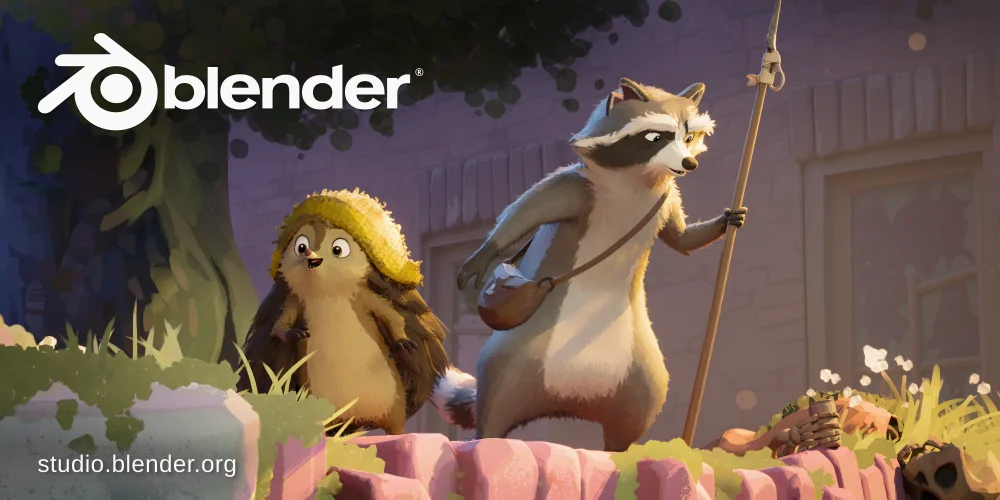
Blender 5.3 has been released, closing out 2026 with updates across the entire application. The headline feature is native support for 3D Gaussian Splats: they can be imported from PLY and SPZ files as point clouds, then edited and processed with Geometry Nodes, relit, and rendered in Workbench, EEVEE and Cycles. Asset Libraries can now be shared as extensions, and the Extensions platform accepts Asset Libraries containing Public Domain (CC0) assets.On NVIDIA GPUs, a new DLSS denoiser for the viewport produces a cleaner image faster by upscaling and reusing samples from previous frames. The release also adds native support for NVIDIA RTX Spark devices running Windows 11, including memory optimizations. Vulkan is now the default backend on Windows (except ARM) and Linux, with lower minimum requirements, and Workbench can use hardware raytraced shadows on Metal and Vulkan.Cycles adds dispersion and anisotropic roughness for glass and transmissive materials, making it possible to reproduce the rainbow effect seen in glass and gemstones. EEVEE introduces Material Lighting Nodes for precise control over how materials react to light, useful both for NPR and for physical effects such as iridescence, and also gains panoramic cameras and the full Sky Texture sun disc. Geometry Nodes gets the first building blocks for custom fluid simulations with new volume grid nodes, plus a low-level node for building curves with custom topology. The Compositor can now use a stack of effects similar to Geometry Nodes modifiers: each effect is its own node group and passes its output to the next.Grease Pencil adds selection tools to Draw Mode and the new Carver Tool for cutting shapes with proper boolean subtraction, while the Fill tool can fill many regions at once. The Video Sequencer gets a full ripple editing framework, a rewritten blade tool, initial OpenTimelineIO support, and numerous editing, interface and performance improvements. A new optional project system makes Blender aware of context beyond the open .blend file, with project-wide features to match. Animation & Rigging adds operators to copy and paste world-space animation and to convert rotation modes, along with friendlier playback and many smaller improvements.
- Public
- 11 Nov, 2026
CyberAgent Releases a Free Guide to Performance Tuning in Unity 6
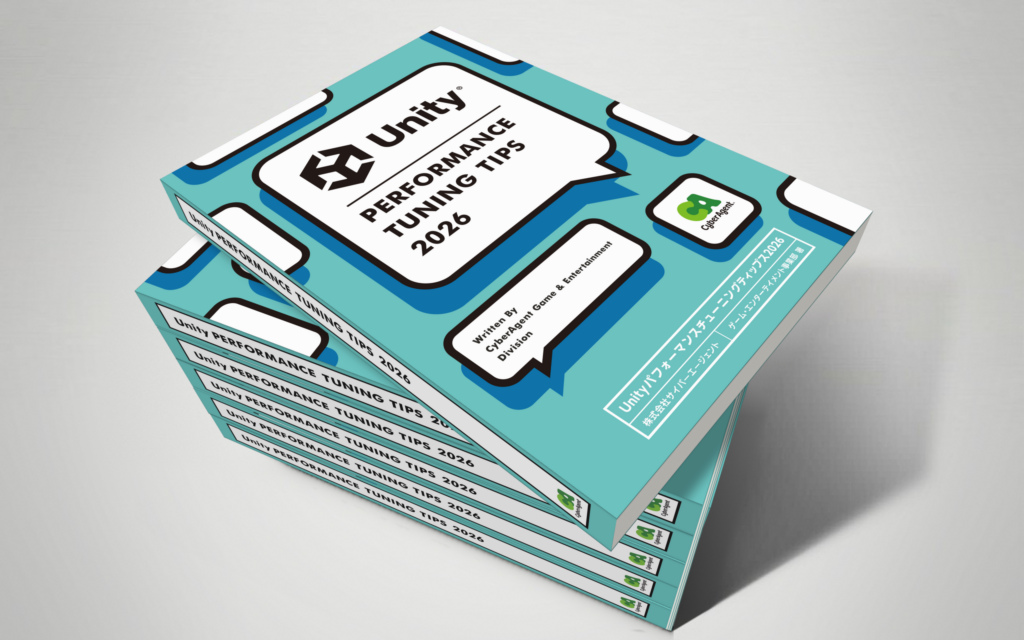
CyberAgent's game and entertainment division has released a free web and PDF edition of "Unity Performance Tuning Tips 2026," a 21-chapter follow-up to the 2022 "Unity Performance Tuning Bible." Sixteen engineers from the division contributed findings from their own projects. The guide targets the Unity 6 era, where URP now includes RenderGraph, CoreCLR and C#14 support are approaching, and high-end GPU performance has grown roughly threefold on iPhone and over fourfold on Android since the original book.The core problems remain familiar: mobile GPU memory bandwidth, CPU load when drawing many objects, shader compilation spikes, leaked assets, and per-device memory limits. New features are framed as additional options, making the choice of which to use the real challenge. The book opens with a reverse-lookup guide that maps symptoms like capacity, memory, CPU, and GPU issues to the values to check first and the relevant chapter.Part 1 covers rendering: structuring passes and handling tile memory in Render Graph, reducing shader math, passing per-object values without adding materials, and shader warm-up. Part 2 addresses CPU and memory topics, including character animation and particle load, async lifetime management, and UI system selection. Part 3 focuses on areas that shift the capacity, memory, and speed balance without rewriting code: asset management, per-device render settings, code stripping and Link Time Optimization build settings, and raising iOS memory limits.Part 4 covers measurement: using iOS built-in profiling, automating on-device profiling in daily builds, and turning the book's knowledge into skills for AI coding agents. The guide also covers GraphicsStateCollection and practical techniques portable to pre-Unity 6 projects, all backed by measured values. The web version is hosted on GitHub Pages, and the PDF is available from the GitHub repository's Releases section.A printed edition will be distributed at "Game Tech Night by CyberAgent #1," a free technical event on December 2 at Abema Towers featuring short talks by the authors and roundtable discussions on performance tuning. Registration closes November 24.
- Public
- 10 Nov, 2026
The State of Go in 2026: Survey Data on AI Integration, Tooling Changes, and Developer Demographics
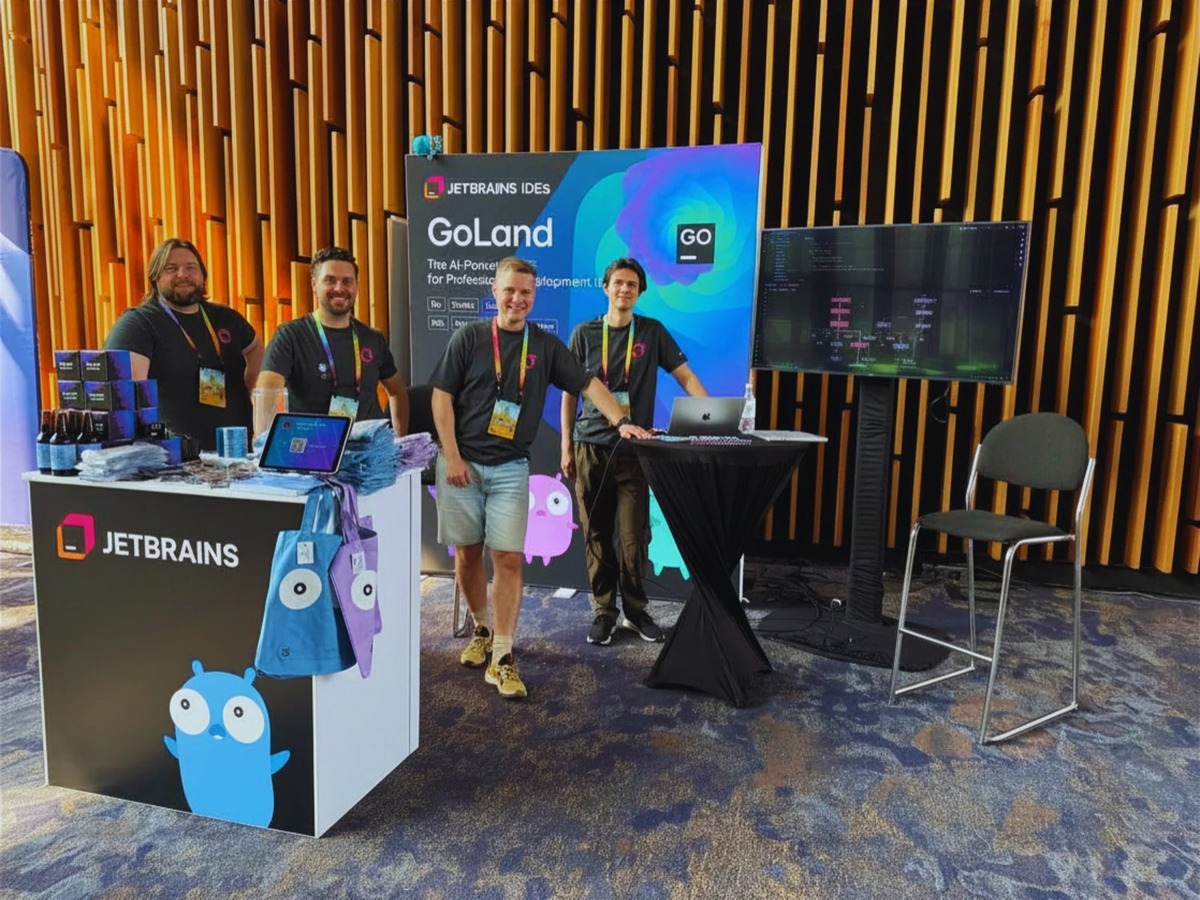
The 2026 JetBrains Developer Ecosystem survey, conducted between May and July, gathered data from 28,945 developers, with 1,836 identifying Go as a primary language. Backend web development remains the dominant use case for 80% of Go developers, while command-line interface (CLI) utilities account for 49%. A significant trend is the growth of full-stack work, rising from 30% in 2025 to 40% in 2026. This shift correlates with TypeScript becoming the most common companion language, jumping from 24% in 2024 to 43% in 2026. In effect, a Go backend with a TypeScript frontend has become the default stack for many teams. Python (35%) and Java (22%) remain other common primary languages, but TypeScript's project-level integration has outpaced them.Tooling preferences are shifting toward the standard library, driven by improvements in Go 1.22 and the rise of AI-assisted coding. The usage of net/http rose to 46%, nearly matching Gin at 48%, while chi, Echo, and Fiber hold smaller shares. The standard ServeMux now supports method matching and wildcards, reducing the need for third-party routers. Additionally, AI agents can handle boilerplate code, diminishing the advantage of frameworks like Gin that previously saved time on repetitive tasks. In testing, 35% of developers use no external frameworks, while Testify leads at 31% and GoMock at 25%. The share of developers not writing unit tests dropped to 14%, aided by AI tools that generate tests weekly for 84% of Go developers.Go developers are heavily integrating AI into their workflows, particularly through command-line agents. 86% run AI agents in the CLI or terminal at least weekly, compared to 74% of all respondents. This preference persists even among senior developers with six or more years of experience, where 87% use CLI agents weekly. The Go toolchain, including go build, go vet, and go test, provides a fast, deterministic feedback loop that suits terminal-based agents. Despite this, IDE usage remains strong, with 61% of Go developers running coding agents inside their IDE daily. GoLand and VS Code are the most popular editors, each used by about half of Go developers, while Zed and Cursor also maintain significant shares.The demographic profile of Go developers is characterized by high seniority and stability. 66% have six or more years of professional experience, compared to a 49% average across all respondents. Only 3% have less than a year of experience. This seniority correlates with higher salaries: 17% earn over USD 120,000 annually, and 9% earn more than USD 180,000. Most developers (70%) do not plan to migrate to another language within the next 12 months. Among those who do plan to learn new languages, Rust is the top choice, cited by 16% of Go developers. Rust usage in the last 12 months grew to 25%, indicating active adoption for performance-critical components rather than full rewrites of Go services.Go developers maintain rigorous practices when reviewing AI-generated code. 79% review AI output often or always before acceptance, checking not only that it compiles but also for correctness, security, and maintainability. Most review occurs in the IDE (65%), followed by the AI agent interface (50%) and pull requests (42%). While 55% of Go developers report that more than 60% of their work code was fully generated by AI in the last month, they do not blindly trust it. 29% rate AI-generated solutions as worse than their own code, slightly higher than the general population. However, 33% believe AI will eventually take over coding entirely, reflecting a mix of heavy reliance and cautious skepticism regarding the quality and long-term impact of AI assistance.
- Public
- 10 Nov, 2026
Blender Foundation Launches Pay It Forward Campaign for 2027
On November 10, 2026, in Amsterdam, the Blender Foundation officially launched the Pay It Forward fundraiser. This initiative is designed to meet the organization's entire funding goal for 2027. The campaign emphasizes that Blender remains completely free for users, with no subscriptions, licenses, or usage limits. The foundation highlights that while the software has provided professional 3D tools for learning, art, and business for the past year, maintaining this infrastructure requires significant resources. The core philosophy remains that the best 3D technology should belong to everyone, supported by a community rather than corporate owners or subscription fees.The foundation outlines a specific target for the campaign: if every active Blender user contributed €5 this month, the entire funding goal for 2027 would be met. This amount is presented as a baseline, with users encouraged to donate more if the software provided greater value to their work. The message stresses that every contribution, regardless of size, helps keep Blender growing, independent, and free. The appeal is directed at current users to invest in a brighter future for the next generation of artists who will open the software for the first time. By participating, the community ensures that the development, design, and infrastructure costs are covered without introducing commercial restrictions or ownership structures.
- Public
- 10 Nov, 2026
Unreal Engine 5.9 Preview: Launch with AI-Driven Development and Web Support
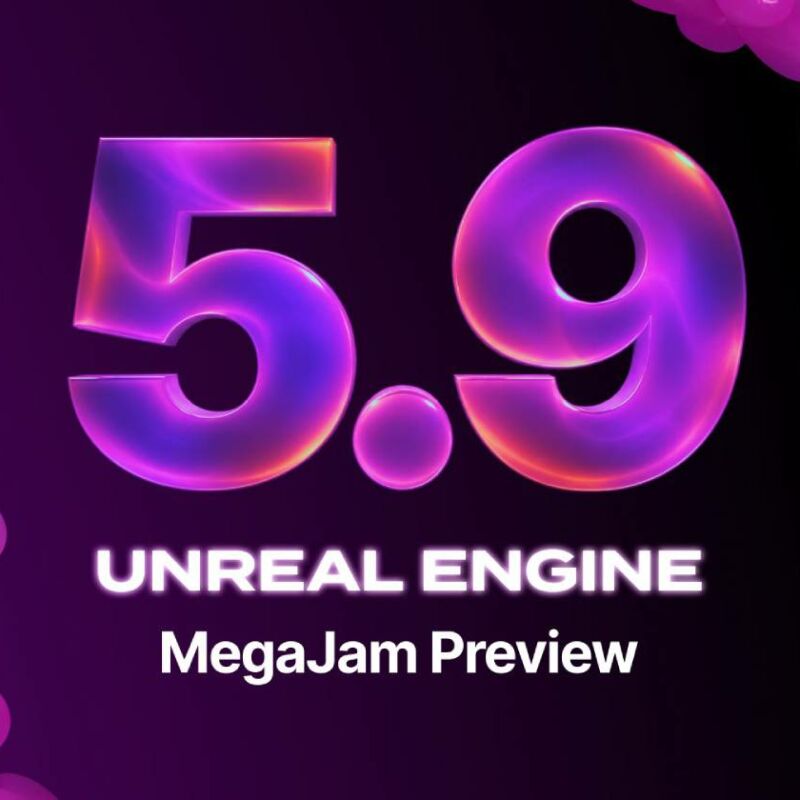
Epic Games has released the Unreal Engine 5.9 MegaJam Preview, a major update originally intended for a later date but accelerated to coincide with the 2026 Epic AI MegaJam, running from November 12 to 15. Although UE5.8 was planned as the final major release before UE6, the team decided to bundle accumulated rendering and animation improvements into this new version. The preview was assembled in roughly one week with a shortened QA period, marking a pivotal shift in how the engine is developed and delivered to the community.This release is notable for being the first engine version built primarily using agentic AI workflows. A small team directed fleets of AI agents that ported AI tooling from the UE6 development branch and implemented the Web as a target platform. The agents wrote the web platform code, starting from UE4's retired HTML5 platform, while human engineers handled direction, review, and testing. Epic states that this approach allows for faster bug fixes and feature development without diverting focus from the upcoming UE6, though it acknowledges there is still much to learn about managing parallel agent swarms.Key technical additions include the return of the Web as a target platform, enabling projects to run in browsers through WebAssembly and WebGPU. The update also brings major improvements to Python scripting and AI-assisted workflows, in particular introducing Unreal MCP, Unreal Assistant, and Unreal Canvas, an AI-powered content creation tool. In addition, the engine receives enhancements in animation, rendering, and world-building, such as Lumen World Cache and improved Nanite culling, which optimize performance and visual fidelity for complex scenes.Developers should note that this is a preview release that is under active development, so it may be unstable. Epic is currently cleaning up agent-written code and refactoring parts of the web renderer, which are still prototypes, before the full 5.9 release ships. Users can download the Unreal Engine 5.9 MegaJam Preview through the Epic Games Launcher to test the new features or report bugs found during testing.

- Public
- 09 Nov, 2026
Nokia Demonstrates Adaptive Streaming of Dynamic 3D Gaussian Splats at MatchXR in Helsinki
Nokia is preparing to demonstrate a significant breakthrough in immersive media technology at the upcoming MatchXR event in Helsinki. The company will present its latest work on the adaptive streaming of dynamic 3D Gaussian splats, a technique that allows for the creation of highly realistic volumetric representations of people, objects, and environments. This technology gives viewers the ability to experience such scenes interactively in three dimensions. During the demonstration, visitors will be able to view high-quality volumetric video through lightweight augmented reality glasses, marking a step toward practical, real-world applications of this complex rendering method.Explicit radiance field representations deliver photorealistic visual detail, but feel natural to 3D developers (Image by NOKIA)The core innovation behind this demonstration lies in the efficient compression and streaming of photorealistic 3D content. Nokia is using standardized technologies and existing streaming approaches to ensure that this data can be transmitted smoothly without requiring excessive bandwidth or processing power. The primary goal is to make volumetric media as streamable and interoperable as traditional 2D video is today. By achieving this level of efficiency, immersive experiences can work seamlessly across different devices and platforms, paving the way for broader adoption and scalability in the industry.Volumetric video offers a fundamental shift in how users interact with digital content by removing the limitation of a fixed camera perspective. Instead of a single viewpoint, the technology captures subjects in three dimensions, allowing viewers to explore them from various angles. This capability opens up diverse application scenarios across multiple sectors. In industrial settings, experts can demonstrate complex procedures, enabling trainees to observe from different viewpoints. In healthcare and education, it facilitates more immersive teaching and simulations. Consumer applications include experiencing sports events as if present, exploring cultural heritage sites, or viewing products in detailed 3D.The barrier to entry for creating and consuming volumetric content has lowered significantly with recent technological developments. While high-quality, dynamic experiences still require dedicated capture systems and specialized workflows, basic content can now be generated using smartphones and AI tools. This mirrors the evolution of 2D video production, where professional studios coexist with consumer-created content. AI plays a crucial role in this pipeline, helping to generate 3D models from limited input, reconstruct scenes accurately, and reduce the need for extensive capture equipment. Furthermore, AI aids in processing, compressing, and streaming 3D data more efficiently, potentially allowing anyone to create high-quality dynamic volumetric video through simple prompts or 2D video inputs.Nokia's involvement in this space is supported by broader ecosystem initiatives in Finland, which has made significant progress in building a collaborative metaverse ecosystem. The Nokia Veturi Industrial Metaverse LEAD program connects over 200 partners through co-innovation projects, focusing on areas such as XR, advanced connectivity, and AI-driven applications. This collaborative approach emphasizes industrial applications, human-centric technologies, and sustainability, moving beyond hype to practical implementation. By contributing foundational technologies and providing ecosystem leadership, Nokia aims to accelerate the transition from research to practical industrial applications, ensuring that immersive technologies become a standard part of digital infrastructure.
- Public
- 09 Nov, 2026
Creating Base Texture Generators in Substance 3D Designer for a Consistent Art Style
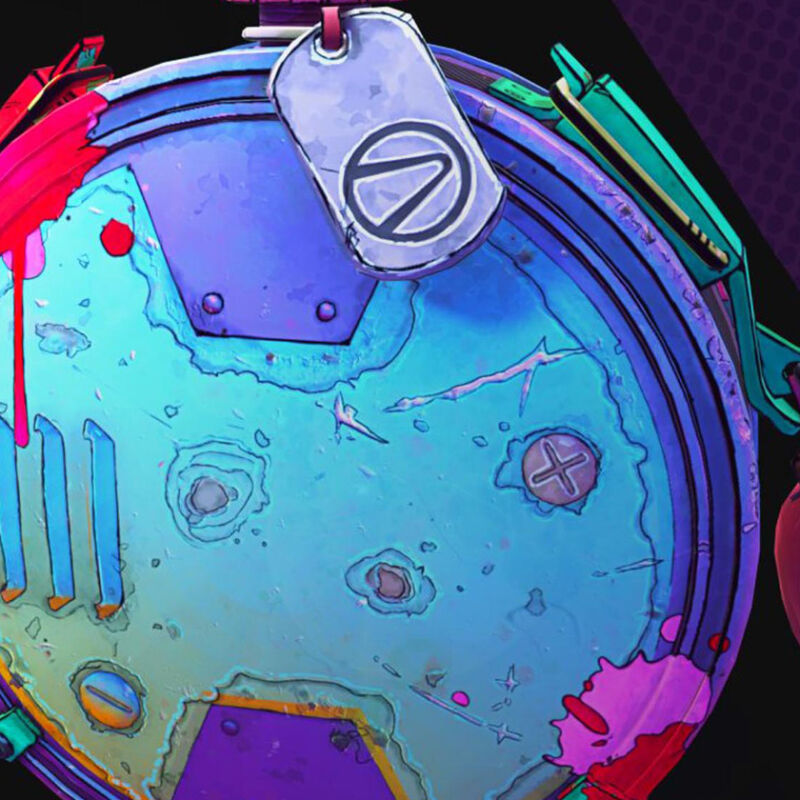
Maintaining a consistent hand-painted aesthetic across large teams of artists is a significant challenge in game production. To address this, a specific workflow was developed in Substance 3D Designer to create a suite of base generators. These tools are designed to shorten production time while ensuring that all assets share a unified visual language. The core of the solution is four distinct components: a Two-Color Gradient, a Gradient Mask, Spots, and Flakes. By encapsulating complex layer stacks into single, reusable components, artists can avoid the tedious manual process of stacking gradients, flakes, and spots repeatedly for every new prop. This approach not only saves time but also improves performance by reducing the number of active layers in the material editor.Before constructing the generators, specific settings in Substance 3D Painter are essential for achieving the hand-painted look. The environment settings should use a Soft-Low-Contrast map instead of the default Studio Tomoko, so artists can paint hard lights manually for better control. It is critical to enable the sRGB color space, especially for game assets, and to create a fill layer on top of the working folder with metal and roughness disabled. Furthermore, baking assets is a mandatory step, since most generators and filters work correctly only with baked maps. Even for low-poly models, baking is required. It is recommended to work at one resolution above the target texel resolution to ensure sufficient data quality for the procedural nodes to operate effectively.The creation of the Two-Color Gradient generator begins with a simple Light node that controls two colors based on baked world-space normals. However, exposing the default angle values from the Light node causes display issues in Substance 3D Painter, where the default values do not render correctly in the interface. To resolve this, two custom float variables are created to control the light angles, replacing the default turns parameter. For optimal visual results in previews, angles of 80 and 200 degrees are recommended. They must be converted to turns (for example, 80 degrees divided by 360 equals 0.22 turns) before being plugged into the node. An HSL node is then added to the graph to give artists greater freedom in color adjustments, and all essential values are exposed for easy manipulation within the Painter interface.The Gradient Mask generator presents more technical challenges, primarily related to resolution and image quality. Initial tests revealed that the gradient appeared blocky and low-quality, especially when contrast was increased, due to the reliance on position data. While baking at a higher resolution helped, it did not fully solve the issue. The next problem encountered was gradient banding, a common artifact in image processing. Standard 8-bit per channel processing is often insufficient for smooth gradients. To eliminate banding, the output format of the parent node, specifically the RGBA Split node, must be changed to 16 bits per channel. This higher bit depth smooths out the grayscale data. Finally, a Blur HQ Grayscale node with very low intensity is inserted right before the histogram scan to achieve a pristine, artifact-free result.The Spots and Flakes generators build upon the mask gradient logic to add surface detail. The Spots graph reuses the mask gradient section via an RGB Split node, allowing the focus to remain on spot-specific details. A crucial element for achieving the hand-painted look is the Slope Blur node, which simplifies shapes and gives surfaces a "painted" appearance. By keeping the exposed parameters clean and limited, artists can maintain a consistent style without overcomplicating the material. Flakes are essentially a combination of spots passed through a slope-blur filter chain, commonly used to break up metal surfaces. When exposing values for Substance 3D Painter, it is vital to limit freedom to ensure consistency: only the values necessary for shaping the material should be available. While these procedural tools cannot replace the artistic skill required for hero assets, they significantly speed up day-to-day texturing and help teams keep project visuals cohesive.

- Public
- 09 Nov, 2026
Gentle Monster confirms December launch of Android XR smart glasses with Samsung and Google
Gentle Monster has confirmed that its highly anticipated Android XR smart glasses, developed in partnership with Samsung and Google, will be released this December. This announcement solidifies the timeline for one of the first consumer-facing devices to run on Google's Android XR platform, alongside similar frames from Warby Parker, which are also part of the initial wave of supported hardware. To generate buzz, the company has unveiled a teaser for a short film starring Joaquin Phoenix, which will showcase key functionalities such as translating foreign languages. The film is directed by Jonathan Glazer, known for works like The Zone of Interest and Under the Skin, who is leveraging his reputation for visual storytelling to highlight the potential of the new wearable technology.One of the three Gentle Monster smart glasses models | Based on materials from Google and SamsungThe hardware specifications for the first-generation frames reveal a focus on practical utility and integration with Google's ecosystem. Much like Meta's smart glasses, the Gentle Monster and Warby Parker models feature onboard cameras, microphones, and off-ear speakers, enabling users to take calls, listen to podcasts, and interact with Google Gemini. Samsung has disclosed that these devices will be powered by the Qualcomm Snapdragon AR1 Gen 1 chipset. Key hardware components include a single 12MP front-facing camera with an indicator LED for privacy and a battery life of up to nine hours per charge. A portable charging case is included to extend usage time. Although specific pricing and exact launch dates have not yet been disclosed, the first styles from both Gentle Monster and Warby Parker have already been debuted, signaling that the product line is ready for public viewing ahead of the December rollout.