Android XR gets OpenXR Spatial Containers for multi-engine apps
 Public
- 16 Nov, 2026
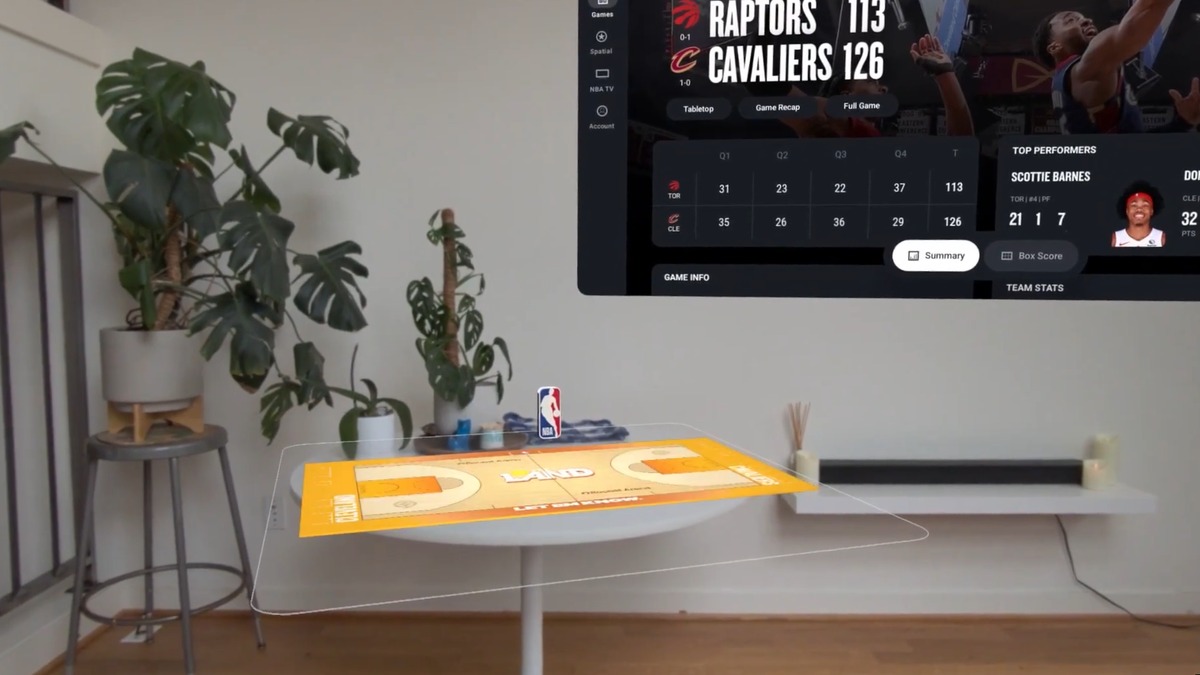
Android XR now supports the recently standardized OpenXR Spatial Container extensions. Support requires a device with Spatial API Level 4 or higher, and apps must run in Full Space mode. The extensions define system-managed spaces where an application shows volumetric 3D content, much like a desktop OS places 2D content inside windows.
Until now, an OpenXR session on Android XR took exclusive control of the display. With Spatial Containers, an app can render 3D content inside a bounded 3D volume, or switch to an unbounded immersive mode that behaves like a conventional OpenXR app. The system manages window controls and placement for each container. When a container is focused and interactive, users can manipulate its content directly with hand tracking, eye gaze, or 6DoF controllers.
The main practical gain is mixing technologies inside one app. Jetpack Compose UI, standard 2D Android activities and OpenXR-based 3D content can now coexist. The 3D part can be rendered with engines such as Unity or Godot, or written directly against native OpenXR. The NBA app is one of the first to use this for a feature called Court View. Its main interface is built in Compose, while selected games show volumetric 3D courts rendered in Unity. The feature mirrors Tabletop in the NBA app for Apple Vision Pro, which has also been renamed Court View.
At the standards level, Spatial Containers could enable apps similar to visionOS ones. There, the Shared Space architecture and RealityKit let windowed and volumetric apps run side by side and move into Full Space immersion. Android XR's first implementation is narrower. Containers require Full Space Managed mode rather than Home Space, the multitasking mode. An app can show several containers of its own, but not next to other apps' content. This is consistent with Android XR limiting spatialized components to Full Space.
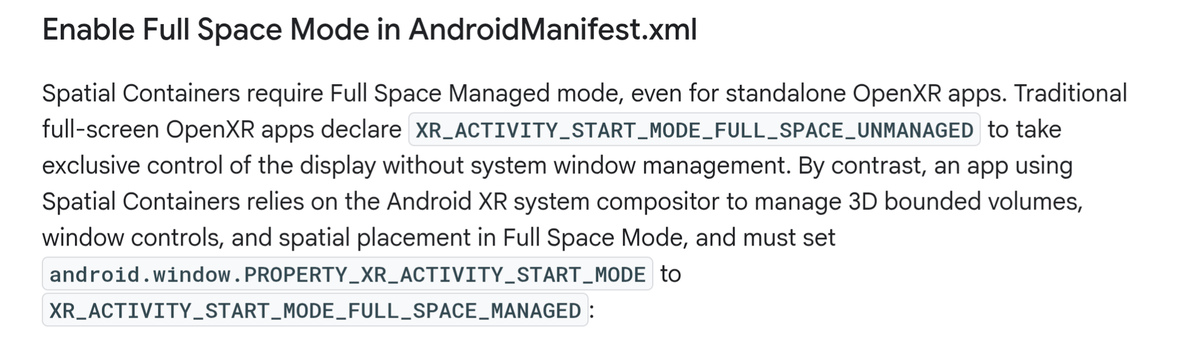
For now, the feature is best described as enabling multi-engine apps rather than cross-app spatial multitasking. That matches Google's description of "multi-engine experiences" when it previewed the functionality at I/O earlier this year. There is still a gap compared with the full spatial multitasking offered by visionOS on Apple Vision Pro and by Pico OS 6 on the upcoming Pico Space Pro.