Blog
 Public
- 12 Nov, 2026
Editable Motion Paths: edit animation in Blender for free, like a mesh
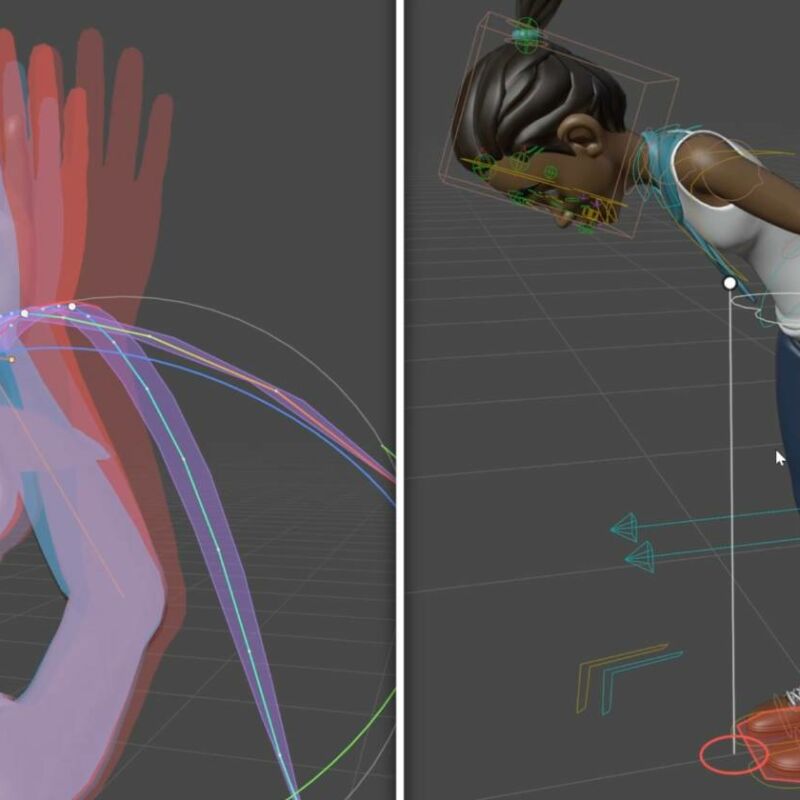
Editable Motion Paths is a free Blender add-on by J4m1ns. It lets animators reshape motion directly in the viewport instead of switching to the Graph Editor to work on F-curves. The motion of any bone or object is shown as an editable curve. Keyframes become points, and their tangents become Bezier handles.Because the path behaves like regular geometry, standard Edit Mode tools work on it: snapping, extrude, knife and bevel. Every change is written back to the underlying F-curves in real time, so the animation data always matches what is on screen.The add-on works with existing rigs as they are. It supports bones, constraints, IK, drivers and animation controls. There is no setup, no rig modification and no baking. It has been tested on Blender Studio's production rig Rain, and the developer describes it as production-ready and non-destructive.The developer is not a programmer and built the add-on with heavy help from AI. The add-on itself contains no AI and has no network access. The only file it writes on its own is a view render, and only when a script requests one. Editable Motion Paths will remain free. It requires Blender 4.4 or newer and is available on the official Blender Extensions platform.

- Public
- 12 Nov, 2026
Warby Parker and Gentle Monster Android XR glasses go on sale December 10
Warby Parker and Gentle Monster have opened pre-orders for their first Android XR smart glasses, developed together with Samsung and Google. The frames go on sale in stores and online on December 10, and select Google Stores will also offer demos. Functionally, they compete with Meta's smart glasses. They have built-in cameras and off-ear speakers for photos, video, calls and music. There are also AI features such as live translation and turn-by-turn directions. Google's Gemini replaces Meta AI as the assistant, and familiar Google services are built right into the glasses.Photo courtesy of Gentle MonsterGentle Monster is aiming at the premium end of the market, with prices from $449 to $489. Three new designs join the three shown earlier, for six models in total. Colorways include dark red, pink, gray and yellow, and lenses come tinted, clear, blue or brown. Most frames can be ordered with prescription lenses. At launch, the collection will be sold only in the United States and South Korea, and there are no announced plans yet for wider international availability.Photo courtesy of Warby ParkerWarby Parker covers the lower end of Android XR, with optical and sun styles starting at $395. That is still more than Meta's latest $300 glasses without Ray-Ban or Oakley branding. The company's in-house team in New York City designed three frames, Alden, Reid and Wren, based on its most popular designs. They come in Pine, Saddle and Jet Black, with a wide range of prescription, width and lens options. Warby Parker sells only in the US for now, and participating locations offer demo bookings.Photo courtesy of Warby ParkerAll first-generation Android XR glasses run on a Qualcomm Snapdragon AR1 Gen 1 chipset. Each has a single 12MP ultra-wide front camera with HDR processing, image stabilization and a recording indicator LED. A microphone array captures spatial audio. Battery life is up to 9 hours per charge, and a portable charging case adds seven more charges. The glasses work with both Android and iOS phones.The platform includes several privacy protections. If the indicator LED is covered or disabled, the glasses stop recording. Camera visuals captured by Gemini are not saved to Gemini History and are not used for model training or ad targeting. Bystanders' faces are automatically redacted before Gemini processes the images. Data is encrypted both on the device and in transit. As on Android phones, users control which apps can access the camera and microphone and can change these permissions at any time. They can also review or delete their Gemini chats and adjust settings in Gemini History.

- Public
- 12 Nov, 2026
In-app purchases overtake paid app sales on the Quest store
In-app purchases are now the largest source of revenue on the Meta Horizon store for Quest, surpassing sales of paid apps. Meta's figure covers overall revenue from January to September 2026. In Meta's terminology, any game that is not free-to-play counts as a premium title. The shift had been visible for a while: back in 2022 Gorilla Tag passed Beat Saber, then seen as the most successful VR game ever, in number of user ratings. Gorilla Tag is now one of a handful of apps with over 100,000 ratings, and F2P titles Animal Company and UG have since overtaken it.Meta has released several high-budget first-party games for Quest, but none of them has become a consistent top seller.The move toward social, microtransaction-heavy games may help explain why Meta has divested most of its in-house premium studios. Ready At Dawn, Armature Studio, Twisted Pixel and Sanzaru Games were shut down, while Within's original founders formed an independent studio and relaunched Supernatural as a third-party app. Meta has funded expensive first-party releases such as Deadpool VR, Asgard's Wrath 2, the Resident Evil 4 VR port and Batman: Arkham Shadow, yet only Resident Evil 4 is currently in the top seller list, at number 44. Its best performer remains Beat Saber, already popular before Meta bought Beat Games.That contrasts with other platform holders. According to Alinea Analytics, God of War: Ragnarok is Sony's highest-grossing title this generation, ahead of Spider-Man 2 and Gran Turismo 7, all from Sony-owned studios. Nintendo's Ocarina of Time remake sold 5.2M units in four days on Switch 2, whose top sellers (Mario Kart World, Pokémon Pokopia, Donkey Kong Bananza, Pokémon Legends: Z-A) are all Nintendo-developed or published exclusives.Meta says it has over $120M committed to third-party games in active development. Six new titles shown at Meta Connect target the Meta VR Glasses, due in spring 2027, with Quest 3 support. Quest still has the largest install base of any VR platform, though Quest 2, the best-selling VR headset by volume, reaches end of life at the end of 2027. Meta is also the ecosystem's largest funder, yet several studio heads have cited the general lack of funding when announcing layoffs and closures.Studios are responding in different ways. Sinn Studio, Owlchemy Labs, Fun Train, Character Bank, Schell Games, nDreams and Meta itself have tried free-to-play with mixed results. The Binary Mill and Innerspace Studio stay committed to premium, the former shelving its F2P social project Survive The Night. Vail, Hyper Dash, Zenith: Nexus and Population One converted from paid to F2P. The Horizon+ subscription suits paid games with add-ons and IAP, like Walkabout Mini Golf and GOLF+; Payday: Aces High launched on Horizon+ with cosmetics and bundles. Each route has both hits and failures, so developers will keep trying several paths into 2027.

- Public
- 12 Nov, 2026
NVIDIA AICR adds k8s-aibom to track AI workloads in Kubernetes GPU clusters
Version-locked platform recipes describe how a GPU cluster should be built, but they do not show which AI workloads actually run on it. Teams deploying through NVIDIA Dynamo, Kubeflow or Slurm update workloads separately from the recipe. Mutable tags like :latest make this worse: two nodes can run different code under the same tag, and a later pull may fetch an image no security review ever covered. NVIDIA AI Cluster Runtime (AICR), an open source component of the NVIDIA DSX AI Factory Platform, now includes a qualified AI bill of materials component. It is based on k8s-aibom, a Google open source project that tracks AI workloads on Kubernetes.Figure 1. NVIDIA DSX brings together the technologies needed to design, build and operate AI factoriesThe two tools work at different layers. AICR turns known-good GPU configurations into version-locked recipes and reproducible bundles. A recipe targets one combination of hardware, cloud, OS and intent, and records components, versions, values, constraints, deployment order and expected validation checks. Bundles include checksums, and aicr bundle --attest adds optional signing. k8s-aibom watches workload and pod APIs and emits a CycloneDX 1.6 AIBOM for each recognized AI workload. It supports native Dynamo graphs, NIMService, LeaderWorkerSet, DisaggregatedSet and CronJob, and child workloads roll up into their owner's AIBOM. Qualification means AICR pins the upstream source, chart, CRDs and a digest-pinned controller image as one tested set. AICR also verifies provenance against Google's build identity, reviews RBAC and security defaults, and tests install, upgrade, health and uninstall.In the recipes h100-gke-cos-inference and h100-gke-cos-inference-dynamo enable k8s-aibom by default. Other GKE recipes can enable it with --runtime-inventory enabled, and turns it off --runtime-inventory disabled. The examples use AICR v1.2.0, whose catalog pins k8s-aibom 1.6.2, and run on GKE with Kubernetes 1.32 or later and H100 nodes on Container-Optimized OS with GKE-managed drivers. The recipe is generated by aicr recipe --service gke --accelerator h100 --os cos --intent inference, and the resolved values are returned by aicr query with --selector components.k8s-aibom.version. aicr bundle builds the bundle with system and accelerated node selectors. The Helm deployer is the default; helmfile, flux and argocd are also supported. After aicr verify and deploy.sh the controller runs in the k8s-aibom-system namespace. Helm bundles apply the main chart's CRDs, while Flux and Argo CD update them through their controllers. In Helmfile, Terraform and Fleet, CRDs must be updated manually if a transition requires it; the expected storage version is v1beta1.The Team aicr snapshot, followed by aicr validate --phase deployment --phase conformance, runs the k8s-aibom health check. It requires an available controller, an AIBOMControllerConfig with Ready=True and the expected CRD storage version. A matching storage version does not prove the full schema is current, so during upgrades also check for Degraded=True with reason SchemaPredatesController. Inventory is enabled per namespace with the label aibom.k8saibom.dev/enabled=true. The label limits where AIBOM records are created, but the informers still cache workload and pod specs cluster-wide, including arguments and inline environment variables. No sink and no secret access are configured by default. In the demo, a vLLM Deployment serves Qwen/Qwen2.5-0.5B-Instruct from the vllm/vllm-openai:latest image. Its AIBOM is classified with category inference and runtime vllm. Records are built from the spec, so an AIBOM can show Ready=True before the pod finishes pulling its image: it does not prove scheduling or execution.The BOM is stored inline on the resource along with a SHA-256 hash of the canonical bytes: it can be extracted with jq and base64, and the hash checked with shasum. Its components list the application (vllm), the container image (vllm/vllm-openai) and the machine-learning model (Qwen/Qwen2.5-0.5B-Instruct). A conventional SBOM identifies the image, while an AIBOM also identifies the model and the serving runtime. Each attribute carries a confidence tier (declared, inferred, unresolved or verified) and an evidence locator pointing to the source the value was taken from. The k8s-aibom developers measured the controller overhead of version 1.6.1 on GKE with Dynamo and AICR's configuration. The test used CPU-only nodes, and the workload pods were left pending.Several gaps are intentional. Runtime observations are not signed yet, although the canonical bytes and hash make signing practical. k8s-aibom can verify Sigstore signatures on model claims, enforce signer identity and check Rekor inclusion, but AICR disables this by default. Linking AICR bundle attestations to runtime inventory is future work. So is comparing recipe intent with observed workloads, which requires shared artifact identities, freshness rules and coverage mapping. AICR is available at NVIDIA/aicr and k8s-aibom at GoogleCloudPlatform/k8s-aibom; both are open source.

- Public
- 12 Nov, 2026
How a defense training studio has maintained 3D digital twins in Unity for decades
i3 Corps develops virtual training and engineering productivity tools for US government customers. The company has built hundreds of training scenarios in Unity, covering most of the aviation training it supports as well as Navy platforms and ground vehicles. These applications reach classrooms on military installations through a government-owned distribution platform the company built, running in a secure government cloud. The real complexity, however, sits not in the apps but underneath them, in the 3D library.Unlike typical 3D work, where an asset is done once the product ships, these models are digital twins of physical equipment that keeps changing. New components enter service, manufacturers revise parts, and customers send fresh CAD packages. One aircraft model alone contains 80,000 components, down to nuts and bolts. The team adds ten to fifteen models a year, each beginning a maintenance cycle of eight or nine years. Every new batch of engineering data raises the same questions: which parts it supersedes, which model it updates, and which deployed applications depend on that model. Provenance matters too: models are built from CAD data from various sources and from in-house photogrammetry, where a single capture trip can yield millions of photos of one vehicle.Variants multiply the problem. The UH-60 Black Hawk exists in US Army versions UH-60A, L, M and V, the HH-60M MEDEVAC, and special operations aircraft, plus Navy, Air Force and international configurations. Most share the fuselage, tail boom, rotor assemblies and landing gear. The UH-60V keeps much of the L airframe but has a digital cockpit, and the HH-60M is a UH-60M with added medical and mission systems. Rather than modeling each variant from scratch, the approach is a common baseline of reusable components, with each variant adding only its differences in structure, mechanical systems, avionics or mission equipment.Storage is another hard constraint. Government machines may be older, heavily secured and capped on disk space, yet one classroom PC may hold every course for a platform. If models were baked into each build, that would mean hundreds of gigabytes of largely identical geometry. Unity Addressables solves this: models live in a catalog, load on demand and are cached locally, so an asset used by fifteen apps is stored once. Applications change only when their code does, and developers don't need the full library locally to assemble a scene. Security classification dictates where an asset may live: classified material never touches the cloud, while CUI can, but must be wrapped to prevent extraction. Ownership, whether a model belongs to i3 or to the government, determines whether it can be reused on future contracts.Commercial asset management platforms either didn't fit the data model or were sold on terms impractical for government contracts, and no option existed for a government cloud. A homegrown system, a database and search layered on existing version control and automation, helped find assets, but engine integration, pipeline automation, dependency tracking and indefinite maintenance could no longer be justified. So the company deployed Unity Asset Manager in a government cloud environment, letting artists and developers stay inside Unity. The catalog already answers what has been modeled, where it's used, whether access is restricted and who owns it.The open challenge is volatility: ten art teams change assets every week or even every day, and each change ripples through long dependency chains behind complex maintenance animations. The goal is to tell artists precisely what changed instead of reversioning everything that depends on the change. i3 Corps is working with Unity on it. The stakes extend further: the government holds vast amounts of CAD and parametric data in which it is practically impossible to find anything, while demand shifts toward simulation, visualization and AI-assisted content generation. All of this requires a searchable library that machines can query too.

- Public
- 12 Nov, 2026
Audi's Path into Formula 1: An Immersive Documentary for Apple Vision Pro
"Entering Formula 1 Racing" is now available for free on the Fovii app for Apple Vision Pro. The roughly 13-minute immersive sports documentary was produced by Emmy Award-winning studio TARGO together with the Audi Revolut F1 Team. It takes viewers behind the scenes of the team's preparations for its Formula 1 debut and plays out like a VIP tour through Audi's history and F1 work, including encounters with its drivers.The film opens with a short look at Audi's motorsport heritage and trophies. Michèle Mouton, the only woman to win a World Rally Championship event, shares her story in the same room as the viewer. This puts the focus on the people behind the wheel and behind the project rather than on the cars alone. Viewers also visit Audi's secret garage in Germany, where decades of vehicles are shown up close.The main part moves to Switzerland, where key team members assemble and test the car months before its debut at the Australian Grand Prix. Viewers meet driver Nico Hülkenberg, sit alongside Gabriel Bortoleto in the driver-in-the-loop simulator, and listen in on conversations that usually stay behind the scenes.The standout element of the film is how director Chloé Rochereuil places the camera. Shots range from wide views to close-ups of car components, and each position is chosen so the viewer can best follow the action, with enough time to absorb every moment. Transitions between locations keep a seamless sense of presence. Instead of feeling parked where a camera happened to stand, the viewer feels invited into each scene: speakers seem to address them directly, and otherwise the viewer feels like a team member observing from the side.

- Public
- 12 Nov, 2026
Sakura Rabbit shows off stretchable pantyhose in a Unity HDRP demo
Sakura Rabbit has released a new Unity HDRP demo focused on interactive fabric deformation. You can grab and pull the pantyhose: the material stretches, becomes more translucent where it is pulled thin, and snaps back naturally into place when released. The shading also responds to viewing angle: as the camera moves, the fine knit texture and pearly sheen shift, so both the motion of the nylon and the stretched areas are clearly readable.Post on X: https://twitter.com/Sakura_Rabbiter/status/2119661554954301546The character runs looping idle animations and reacts to the interaction, glancing down when the fabric is pulled. Two camera perspectives are included: one shows the full animation, while the other zooms in on fabric detail around the feet. The demo is distributed through Fanbox.Post on X: https://twitter.com/Sakura_Rabbiter/status/2088172459275235525This builds on an earlier project from the same developer that simulated stocking tension, showing how the fabric changes as it stretches and wrinkles when the knee bends. Sakura Rabbit's other Unity work includes detailed ribbons, heels, raindrops and fabric wrinkles, as well as environments such as a witch's bedroom, a water cross-section and a mobile rainy scene.

- Public
- 11 Nov, 2026
Somnium Space returns to Steam in December 2026 after being delisted over crypto
Somnium Space, the adult-only social VR platform, will return to Steam in December 2026 as an Early Access release. The platform was originally delisted during Valve's crypto games purge in 2021. Earlier this summer, the company said it planned to launch on SteamVR (including Steam Frame) and Steam Deck, with Apple Vision Pro support to follow later. The Steam listing now confirms the December 2026 Early Access window, and the company is hosting its Somnium Connect event on November 28th, where further details on the changes are expected.The return ostensibly means Somnium Space will comply with Steam's blanket ban on cryptocurrency and NFTs. The platform had been heavily involved with both: virtual land was auctioned off starting in October 2019, and its cryptocurrency CUBE was released a year later. After Valve purged all crypto/NFT-centric games in 2021, Somnium Space was left to attract players through its own launcher. The Steam release is slated to include the company's signature user ID system, which verifies that all users are over 18.According to the Steam page, the goal is to keep the core Somnium experience accessible to everyone who meets the platform's 18+ age requirement and completes the mandatory free age verification, with no plan to lock core features behind a purchase price. The company aims to stay in Early Access for the next one to two years. Unlike VRChat, which is built primarily around user-created avatars and worlds, Somnium Space was founded as a persistent virtual world with a more monolithic structure. Since its v3.1.6 update in July, however, users can host paid and/or private instances, enabling concerts, classrooms, meetings, paid events, and moderated gatherings.

- Public
- 11 Nov, 2026
Disney+ brings 3D movies and immersive environments to Quest
Disney+ has released an update for the app on Quest 3 and 3S that adds 3D content and immersive environments to Meta's headsets. The update introduces 60 3D movies, including titles from the Marvel and Star Wars catalogues such as Black Panther, The Avengers, and Star Wars: The Force Awakens. Other properties like Avatar are also available in 3D, along with 3D versions of Disney's traditional offerings such as the live action remake of Beauty and the Beast.The update also brings immersive environments to Quest users. These function as 3D spatial theaters in which viewers exist and watch a film, for example watching Star Wars on Tatooine or Monsters, Inc. on the film's famous "Scare Floor." Before this update, Disney+ on Meta headsets was simply an app for watching 2D media, and Disney+ 3D experiences had previously been exclusive to Apple's Vision Pro.The new Disney+ functionality will also arrive on Meta's upcoming VR Glasses headset when it debuts in spring of 2027. An active Disney+ subscription is required to access the app's content, and availability of 3D, Dolby Vision, and Dolby Atmos playback varies by region and subscription plan. The Disney+ app is available on Quest now.
- Public
- 11 Nov, 2026
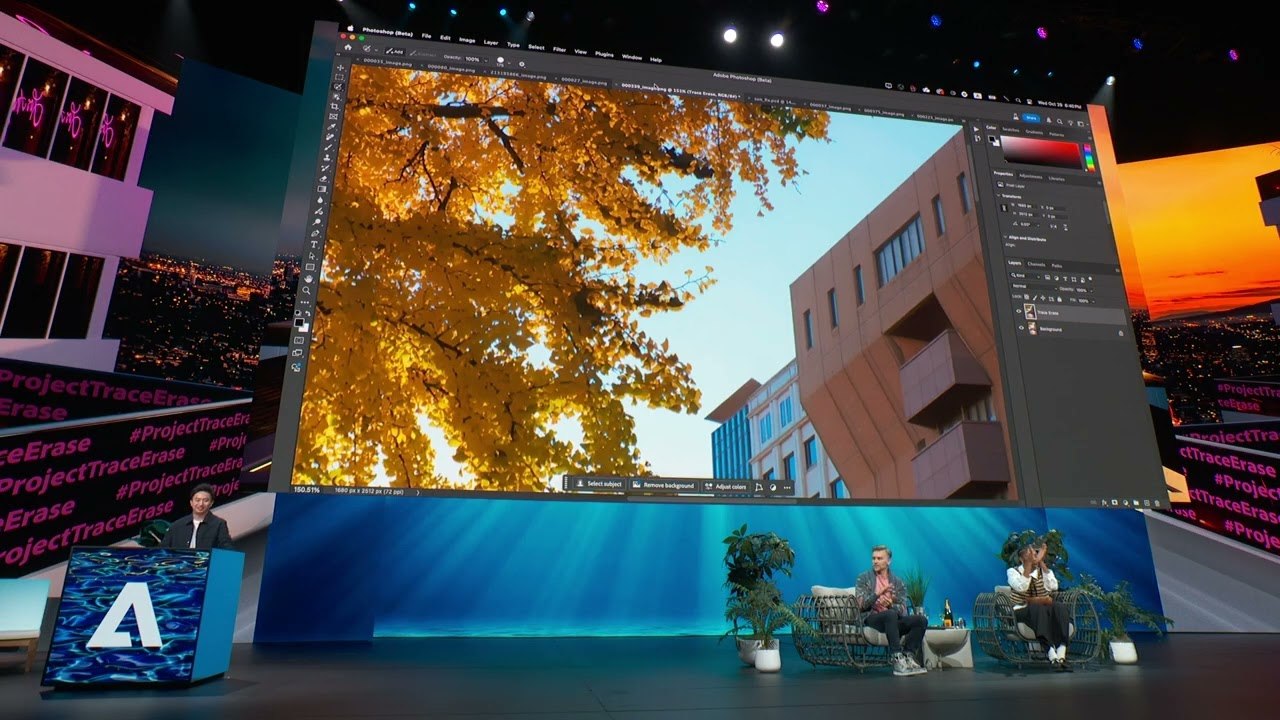
Adobe has shipped Photoshop 28.0 with new AI tools Relight, Trace Erase and Generative Recompose
Adobe has shipped Photoshop 28.0, the latest major release of its image-editing software, which is widely used in entertainment production for concept art, texture editing and retouching renders. The update is a substantial one: it centers on new generative AI capabilities for relighting images, removing every trace of unwanted objects, and reformatting images to different aspect ratios, alongside updates to the existing AI Assisted Editor, Prompt to edit and Generative Upscale features. A pair of non-AI additions rounds out the release: Quick Compare and improved text workflows.The headline AI feature is Relight. It detects the existing light sources in an image and feeds them into generative AI, which produces new lighting. Artists can adjust the color, intensity or softness of those existing sources, or click in the image to add up to three new light sources. Changes preview in near-real-time and are then generated at full resolution as a separate layer, keeping the result non-destructive. As with most of Photoshop's AI tools, processing happens online and consumes generative credits - 30 per generation for Relight. For context, single-app Photoshop subscriptions currently include 25 free generative credits per month, with additional credits requiring a separate Firefly subscription.The Project Trace Erase technology, first shown as a tech preview at Adobe MAX 2025, is now integrated into Photoshop's Remove tool as the Remove related elements option. Beyond deleting an object and generating a clean background, it also erases the traces the object left behind: shadows and reflections it cast, plus contextually related effects such as smoke, steam, water ripples and even footprints. The option consumes 10 generative credits. The third major AI addition, Generative Recompose, changes an image's aspect ratio by intelligently repositioning subjects and adapting backgrounds to suit the new layout. It includes presets for common online and social media formats, including 16:9 Widescreen, 1:1 Square and 9:16 Vertical. Adobe's online FAQs do not state how many credits it consumes.Existing AI features also get attention. The AI Assisted Editor and Prompt to edit system, added in Photoshop 27.10, gains a Generative Restyle option that converts a generated edit into a separate layer with a custom slider for adjusting the intensity of the effect; each slider generated costs 80 generative credits. Generative Upscale now supports the new Firefly Upscaler 2 AI model, at 10 credits for images up to 25MP and 20 credits for images up to 67MP. On the non-AI side, Quick Compare, available via a button in the Tools panel, shows before-and-after views of edits as a left/right split, top/bottom split or single view. Text workflows improve: character styles (font, size, bold and underline) can now be copied and pasted across text blocks, character styles are preserved when toggling Dynamic Text, and custom placeholder text for non-Latin alphabets is supported via a PlaceHolder.txt file in the Photoshop Presets folder.Photoshop 28.0 is compatible with Windows 10+ and macOS 15.0+, and is referred to in Adobe's online documentation as the November 2026 release. The software remains rental-only: Photography subscription plans including Photoshop cost $29.99/month or $239.88/year, while single-app Photoshop subscriptions cost $34.49/month or $263.88/year.
- Public
- 11 Nov, 2026
The free HairMesh add-on brings stylized quad-based hair to Blender
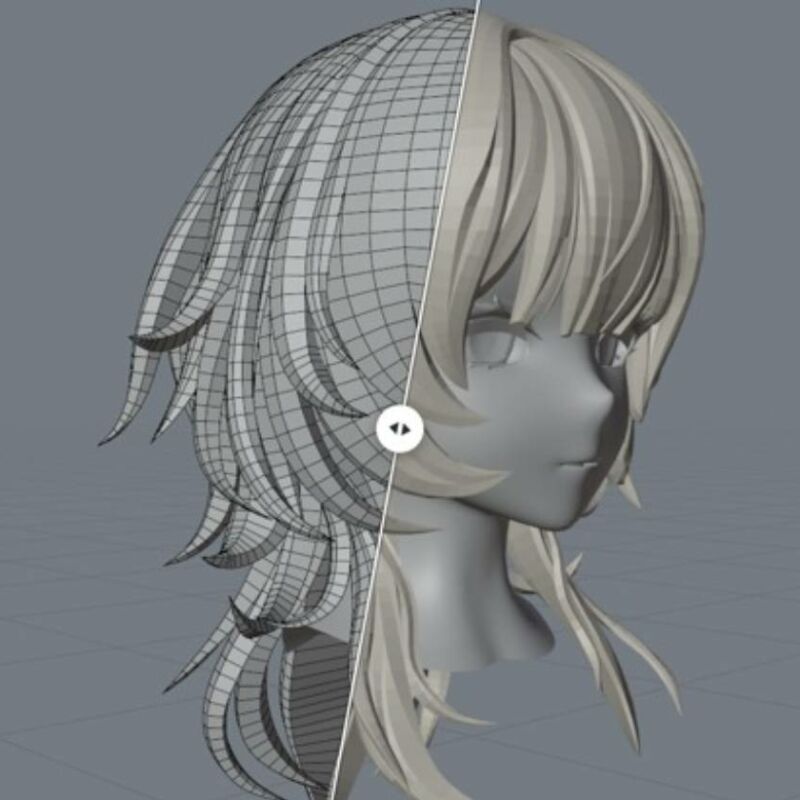
HairMesh by riel is a free Blender add-on that ports CataRackta's standalone Stylized HairMesh Creator into Blender, giving artists a curve-driven workflow for building quad-based hair meshes. The process starts by drawing curves directly onto a character's head, after which hair locks are created and the result is converted into a clean mesh with evenly distributed edge loops. Both point-by-point and freehand curves are supported, and the add-on's wall system connects neighboring curves to form individual hair locks.Users can switch between Live and Baked views to work with curves and walls or to preview the converted geometry. The toolset also includes guides, crowns, junctions, symmetry and duplication tools, plus a broad range of modifiers, including Tube, Mask, Thickness, Twist, Noise, Curls, Fill, and Density. Profiles, Extras, Brush, and Edges tools round out the feature set, and .hairmesh files can be imported.Post on X: https://twitter.com/Sa9_NR/status/2079529763950166351HairMesh requires Blender 5.1 or newer. While riel will continue development, future updates will focus on independent improvements designed specifically for Blender rather than mirroring the standalone original. The add-on is available for download from Ko-fi or GitHub.Post on X: https://twitter.com/mottomoto3/status/2110179328839606530