Nokia Demonstrates Adaptive Streaming of Dynamic 3D Gaussian Splats at MatchXR in Helsinki
 Public
- 09 Nov, 2026

Nokia is preparing to demonstrate a significant breakthrough in immersive media technology at the upcoming MatchXR event in Helsinki. The company will present its latest work on the adaptive streaming of dynamic 3D Gaussian splats, a technique that allows for the creation of highly realistic volumetric representations of people, objects, and environments. This technology gives viewers the ability to experience such scenes interactively in three dimensions. During the demonstration, visitors will be able to view high-quality volumetric video through lightweight augmented reality glasses, marking a step toward practical, real-world applications of this complex rendering method.
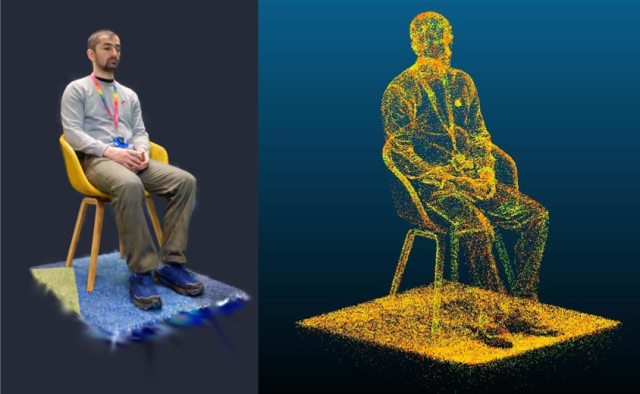
The core innovation behind this demonstration lies in the efficient compression and streaming of photorealistic 3D content. Nokia is using standardized technologies and existing streaming approaches to ensure that this data can be transmitted smoothly without requiring excessive bandwidth or processing power. The primary goal is to make volumetric media as streamable and interoperable as traditional 2D video is today. By achieving this level of efficiency, immersive experiences can work seamlessly across different devices and platforms, paving the way for broader adoption and scalability in the industry.
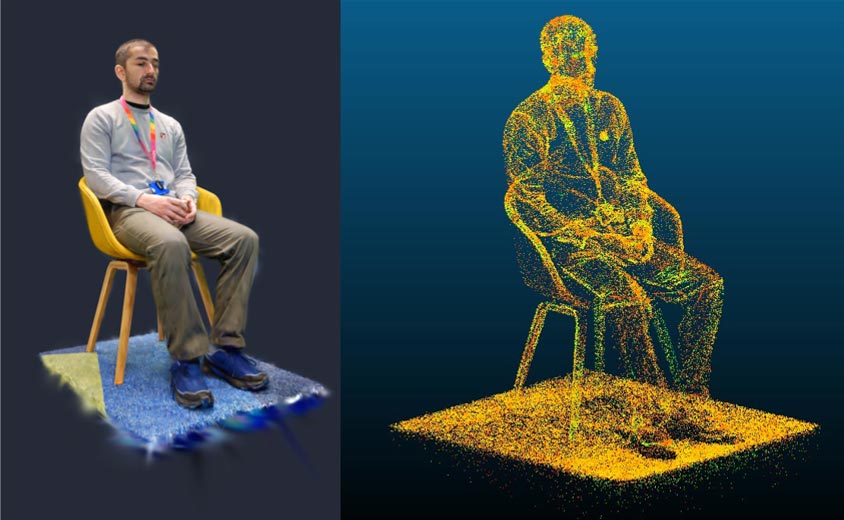
Volumetric video offers a fundamental shift in how users interact with digital content by removing the limitation of a fixed camera perspective. Instead of a single viewpoint, the technology captures subjects in three dimensions, allowing viewers to explore them from various angles. This capability opens up diverse application scenarios across multiple sectors. In industrial settings, experts can demonstrate complex procedures, enabling trainees to observe from different viewpoints. In healthcare and education, it facilitates more immersive teaching and simulations. Consumer applications include experiencing sports events as if present, exploring cultural heritage sites, or viewing products in detailed 3D.
The barrier to entry for creating and consuming volumetric content has lowered significantly with recent technological developments. While high-quality, dynamic experiences still require dedicated capture systems and specialized workflows, basic content can now be generated using smartphones and AI tools. This mirrors the evolution of 2D video production, where professional studios coexist with consumer-created content. AI plays a crucial role in this pipeline, helping to generate 3D models from limited input, reconstruct scenes accurately, and reduce the need for extensive capture equipment. Furthermore, AI aids in processing, compressing, and streaming 3D data more efficiently, potentially allowing anyone to create high-quality dynamic volumetric video through simple prompts or 2D video inputs.
Nokia's involvement in this space is supported by broader ecosystem initiatives in Finland, which has made significant progress in building a collaborative metaverse ecosystem. The Nokia Veturi Industrial Metaverse LEAD program connects over 200 partners through co-innovation projects, focusing on areas such as XR, advanced connectivity, and AI-driven applications. This collaborative approach emphasizes industrial applications, human-centric technologies, and sustainability, moving beyond hype to practical implementation. By contributing foundational technologies and providing ecosystem leadership, Nokia aims to accelerate the transition from research to practical industrial applications, ensuring that immersive technologies become a standard part of digital infrastructure.