Blender 5.3 gets native 3D Gaussian Splat support and Vulkan by default
 Public
- 11 Nov, 2026
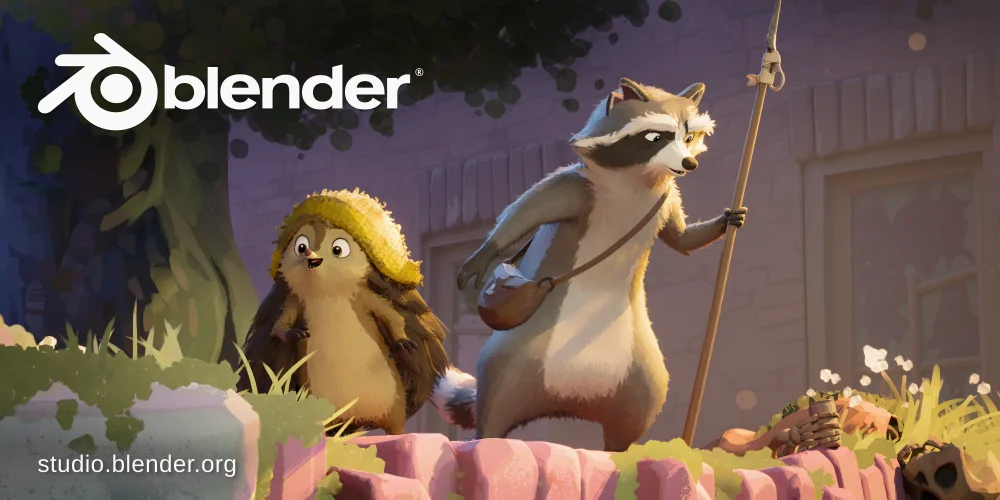
Blender 5.3 has been released, closing out 2026 with updates across the entire application. The headline feature is native support for 3D Gaussian Splats: they can be imported from PLY and SPZ files as point clouds, then edited and processed with Geometry Nodes, relit, and rendered in Workbench, EEVEE and Cycles. Asset Libraries can now be shared as extensions, and the Extensions platform accepts Asset Libraries containing Public Domain (CC0) assets.
On NVIDIA GPUs, a new DLSS denoiser for the viewport produces a cleaner image faster by upscaling and reusing samples from previous frames. The release also adds native support for NVIDIA RTX Spark devices running Windows 11, including memory optimizations. Vulkan is now the default backend on Windows (except ARM) and Linux, with lower minimum requirements, and Workbench can use hardware raytraced shadows on Metal and Vulkan.
Cycles adds dispersion and anisotropic roughness for glass and transmissive materials, making it possible to reproduce the rainbow effect seen in glass and gemstones. EEVEE introduces Material Lighting Nodes for precise control over how materials react to light, useful both for NPR and for physical effects such as iridescence, and also gains panoramic cameras and the full Sky Texture sun disc. Geometry Nodes gets the first building blocks for custom fluid simulations with new volume grid nodes, plus a low-level node for building curves with custom topology. The Compositor can now use a stack of effects similar to Geometry Nodes modifiers: each effect is its own node group and passes its output to the next.
Grease Pencil adds selection tools to Draw Mode and the new Carver Tool for cutting shapes with proper boolean subtraction, while the Fill tool can fill many regions at once. The Video Sequencer gets a full ripple editing framework, a rewritten blade tool, initial OpenTimelineIO support, and numerous editing, interface and performance improvements. A new optional project system makes Blender aware of context beyond the open .blend file, with project-wide features to match. Animation & Rigging adds operators to copy and paste world-space animation and to convert rotation modes, along with friendlier playback and many smaller improvements.