Blog

 Public
- 06 Nov, 2026
JetBrains releases .NET tools 2026.2.2 with the AI Agent Setup widget
JetBrains has released version 2026.2.2 of ReSharper, Rider, and the .NET tools suite. The update is available for immediate installation: developers can update their environments through the built-in mechanisms, the JetBrains Toolbox App, or by downloading the builds from the official website. The key new feature in Rider is the AI Agent Setup widget. It streamlines the configuration of AI agents, letting developers manage settings without navigating complex menus. The release aims to boost the productivity of .NET and game developers by integrating AI capabilities directly into the IDE workflow.In addition to the new widget, the update addresses performance issues related to security software. JetBrains collaborated with Microsoft to optimize the startup times of ReSharper and Rider for environments using Microsoft Defender for Windows Developers. This reduces the delays caused by security scanning at launch, making the experience faster and smoother. The changes ensure that developers in highly secured corporate environments will not face unnecessary wait times when opening their projects.The release notes also highlight recent community events and educational resources. On September 28, a full-day event was held for game developers and engineers, featuring technical talks, live demos, and discussions of modern game development challenges. The event took place in person in Belgrade and Limassol, as well as online. All sessions are now available for on-demand viewing. This allows developers who missed the live event to catch up on the latest industry insights and tool demonstrations at their own pace, keeping this valuable knowledge accessible to the wider community.

- Public
- 06 Nov, 2026
Java 28 Roadmap: Structured Concurrency Finalization and Value Objects Preview
The autumn conference season for 2026 has highlighted significant developments in the Java ecosystem, particularly regarding the upcoming Java 28 release. The most notable change is the trajectory of Structured Concurrency, which is scheduled to become a final feature in March 2027. This milestone marks a substantial shift in how developers handle concurrent subtasks, effectively reducing the reliance on CompletableFuture as the primary abstraction for such operations. While CompletableFuture remains part of the language, the new concurrency model offers a more robust and manageable approach for complex asynchronous workflows, addressing long-standing challenges in error handling and lifecycle management for parallel code execution.Alongside concurrency improvements, Java 28 introduces a Simple JSON API, currently available as an incubator module. This addition is particularly relevant for microservices that require minimal JSON processing, such as sending simple REST requests with JSON bodies. When combined with the standard JDK HTTP client, this API could simplify development by eliminating the need for heavy third-party libraries in lightweight scenarios. Furthermore, the release cycle includes various garbage collection improvements and performance enhancements, ensuring that the JVM continues to optimize resource usage and execution speed for enterprise-grade applications.The introduction of Value Objects stands out as a transformative feature for data handling in Java. This feature addresses the identity crisis often associated with data classes, ensuring that values like integers are treated strictly by their content rather than their object identity. For instance, in a default HotSpot configuration, comparing two Integer objects with the same value using the equality operator may yield different results depending on whether the Value Objects preview is enabled. This change is critical for modern applications, especially those involving AI and machine learning, where the exchange of large volumes of tokens and vectors requires efficient and predictable data comparison without unnecessary object overhead.Despite being preview features or incubator modules, certain Java advancements are already mature enough for production use, provided developers carefully assess compatibility and support. A prime example is the Vector API, which is actively used in major projects like Lucene and Elasticsearch to power semantic search capabilities. This SIMD-based approach demonstrates that even non-GA features can deliver significant performance benefits in real-world scenarios. Developers are encouraged to evaluate these emerging tools, as they offer powerful capabilities for optimizing data-intensive operations and leveraging modern hardware instructions directly within the Java runtime environment.The broader ecosystem continues to evolve with practical guides and shortcuts that enhance the developer experience in IntelliJ IDEA. Recent updates focus on improving command completion, debugging tools, and AI-assisted workflows, helping engineers navigate the complexity of modern development environments. These enhancements aim to reduce the cognitive load associated with remembering specific shortcuts or intention menus, thereby increasing productivity. As the Java community moves forward, the integration of these IDE features with the latest JDK capabilities ensures that developers have access to comprehensive tools for building, debugging, and optimizing high-performance applications in a rapidly changing technological landscape.

- Public
- 06 Nov, 2026
2026 AR Waveguide Trends: The Shift to Reflective Optics and Competitive Dynamics
The 2026 AR industry is defined by a clear pattern: Meta's product releases trigger a wave of similar innovations from competitors. In 2024, Meta introduced Orion with Silicon Carbide waveguides using a two-grating diffractive design, leading to a market surge in similar technologies the following year. In 2025, the launch of Meta Ray-Ban Display glasses featuring a Lumus 2-D pupil-expanding reflective waveguide set the stage for 2026, when multiple companies unveiled their own 2-D reflective waveguide prototypes. This trend indicates a significant pivot in the market: manufacturers are rapidly following the technical lead established by major players to capture market share and meet consumer expectations for superior optical performance in augmented reality devices.Reflective waveguides are gaining traction due to distinct technical advantages over the more common diffractive alternatives. They offer higher optical efficiency, typically by a factor of three to seven, and provide superior color uniformity. Additionally, reflective designs exhibit less inherent forward light projection, commonly known as "eye glow," and can achieve wider fields of view without requiring exotic materials like silicon carbide. While cost and yield have historically hindered their adoption, recent efforts by key players to reduce manufacturing expenses have accelerated their development. This shift is drawing significant competition to the sector, challenging the long-standing dominance of established players who have specialized in this technology for over two decades.Lumus, a pioneer in this space, has expanded its portfolio with new 2-D pupil-expanding designs. After introducing its first 2-D design in 2021, the company showcased a 70-degree prototype in 2026 and discussed thinner, more affordable 30-degree variants. To support higher production volumes, Lumus announced a manufacturing agreement with Crystal-Optech, a China-based manufacturer, complementing its long-standing partnerships with Schott and Quanta. Simultaneously, Optinvent presented a plastic-molded 2-D reflective waveguide prototype at SPIE AR/VR/MR 2026. This all-molded process offers a potential cost advantage over precision glass stacks, although early prototypes show some variation in pupil replication and image consistency compared to glass-based solutions.Other major players are also advancing their reflective optics capabilities. Optix demonstrated significant progress in waveguide size and image quality, achieving a 50-degree field of view with 6,000 nits brightness and less than 0.3% forward leakage. Canon displayed a 30-degree glass reflective waveguide driven by both MicroLED and Micro-OLED displays, though the OLED version suffered from low brightness. Envision Photonics showcased a hybrid waveguide combining diffractive and reflective elements, supporting a 30-degree field of view, alongside a 2-D reflective prototype with a vertical expansion area that is currently impractically tall. These developments highlight the diverse approaches companies are taking to balance optical performance, form factor, and manufacturing feasibility in the competitive AR landscape.Diffractive waveguides remain a dominant technology, with companies like Vuzix designing and manufacturing them for both internal and external use. Vuzix recently acquired Google's waveguide R&D facility, strengthening its position in the market. However, diffractive designs face inherent trade-offs, such as the rainbow effect where external light is split into colors, and worsening color uniformity as the field of view increases. Applied Materials, a major semiconductor equipment supplier, has made a significant push into diffractive waveguide development, highlighting the complexity of grating layouts. As the industry moves forward, the choice between reflective and diffractive technologies will depend on specific application requirements, balancing optical efficiency, cost, and manufacturability.

- Public
- 05 Nov, 2026
NVIDIA fixes long-standing Meta Quest Link freezes in new drivers
The prolonged instability affecting Meta Quest Link for PCVR has been officially resolved by NVIDIA. For approximately ten months, owners of newer NVIDIA graphics cards experienced random freezes and visual artifacts during USB streaming. These interruptions required restarting the Meta Quest service, but the issue would recur shortly after. Alternative solutions such as Virtual Desktop and Steam Link remained unaffected, but the failure in the native Quest Link significantly disrupted the workflow of many PCVR users, particularly those relying on specific NVIDIA hardware configurations.I develop in Unity, using my hands to interact with the world. Quest Link lets me do thatNVIDIA addressed the defect in game driver version 621.01, with release notes explicitly stating a fix for the issue where Meta Horizon Link streams could freeze when connected over USB. However, users with enterprise-grade GPUs faced a delay, as the fix required the corresponding enterprise driver update. This patch arrived in version 621.14, allowing professionals with high-end workstation hardware to finally install the solution. The difference between consumer and enterprise driver release timelines meant that some users had to wait an additional period for the stability fix to become available in their hardware ecosystem.The restoration of stable Quest Link functionality is particularly important for application developers working in mixed reality environments. Unlike third-party streaming tools, the official Quest Link can transmit passthrough, eye tracking, and hand tracking data from the headset to the PC. This data flow allows developers to test mixed reality applications directly in the Unity editor, without having to build and deploy the project to the headset for every iteration. By pressing Play, developers can observe real-time interactions in a PCVR environment, which significantly accelerates the development cycle and shortens the feedback loop for complex spatial applications.Users experiencing the described freezing issues are advised to update their graphics drivers via the NVIDIA App or by manually downloading the latest packages from the official website. The fix is included in driver version 621.01 for standard GPUs and 621.14 for enterprise cards. While resolving this bug restores full functionality for development and casual use, some users may encounter new compatibility conflicts with specific third-party VR applications. It is recommended to verify software compatibility after updating, as driver changes can occasionally introduce unforeseen interactions with other components of the VR development stack, requiring temporary rollbacks or further patches.
- Public
- 05 Nov, 2026
Steam Frame captures 5.49% of the market in its first month, surpassing the launch figures of the Valve Index
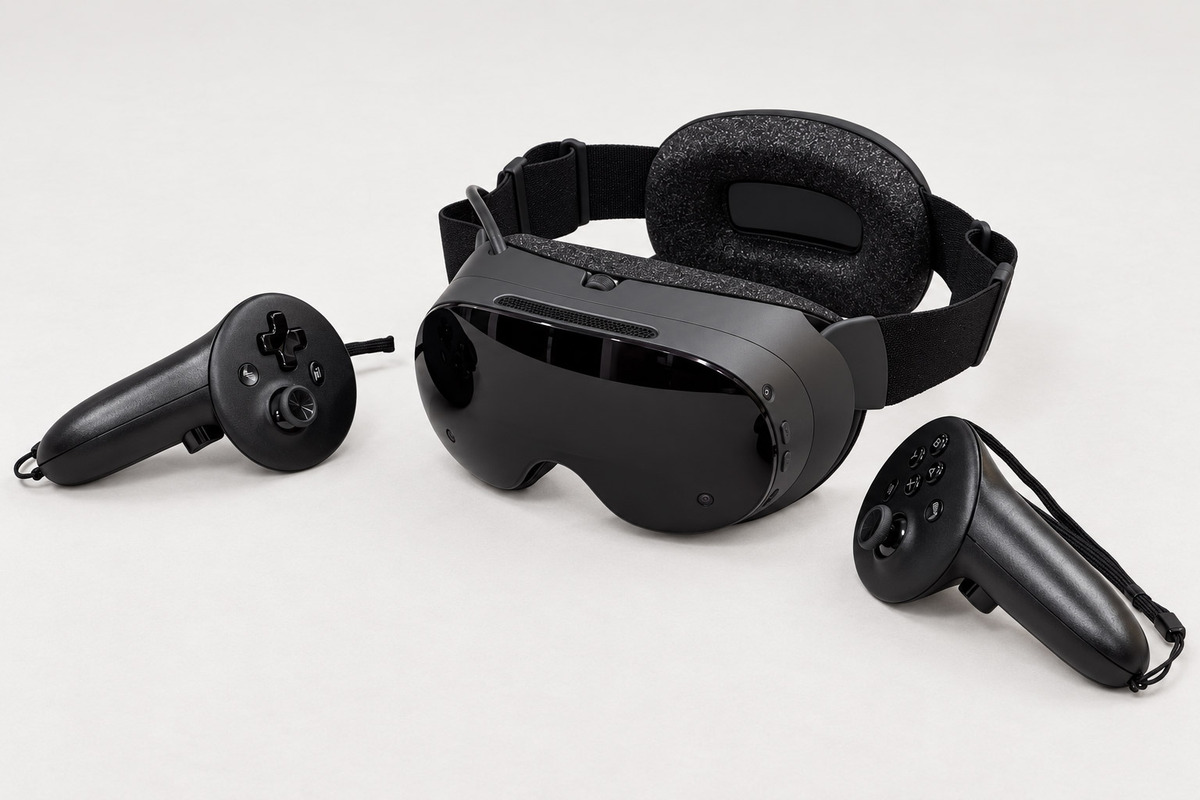
Valve's Steam Frame has demonstrated immediate demand, taking fifth place in the latest Steam Hardware Survey with a 5.49% share of all connected headsets. This result is notable given that the standalone device, which natively supports SteamOS, has been on the market for only slightly over a month and remains heavily backordered, with shipments scheduled to continue into 2027. The rapid adoption points to strong consumer demand despite significant supply constraints that limit the total number of units in circulation.Courtesy ValveThe performance of the new headset contrasts sharply with the launch trajectory of the Valve Index. In its first month on the survey, the Index recorded only a 1.46% share of connected headsets. It took the Index nearly two years to climb to the second most-used VR headset on the platform, eventually positioning itself just behind the Quest 2 in the September 2021 survey data. The current success of the Frame may also be influenced by a 3.57% decline in Quest 2 usage since September, indicating that a portion of those users may have upgraded to the newer Valve hardware.Valve Index | Courtesy ValveContext for these numbers requires understanding a methodological change implemented by Valve in March 2020. The survey previously tracked headsets connected at the exact moment of data collection. The current system analyzes SteamVR records of headsets connected during the preceding month. This adjustment provides a more accurate and fair representation of actual headset usage patterns over time, rather than a snapshot of active sessions.Pricing structures also play a role in adoption rates. The Valve Index launched in late 2019 at $999 for a full kit, including the headset, two controllers, and two base stations, a price that equates to approximately $1,300 in today's inflation-adjusted terms. The most expensive Steam Frame model, featuring 1 TB of storage, carries the same current price point. However, the Frame operates as a standalone device without requiring a VR-ready gaming PC, although the library of optimized games remains comparatively small.A critical difference in entry barriers is that Index users could previously upgrade piecemeal, purchasing the headset alone for $499 if they already owned compatible HTC Vive controllers and SteamVR base stations. The Steam Frame, being a self-contained unit, does not offer this modular purchasing option. Despite these economic and technical distinctions, the Frame has already proven popular enough to surpass the Index's early adoption metrics, setting a new benchmark for Valve's future VR hardware performance.
- Public
- 05 Nov, 2026
Hogwarts Legacy Gets a DLSS 5 Upgrade on GeForce NOW
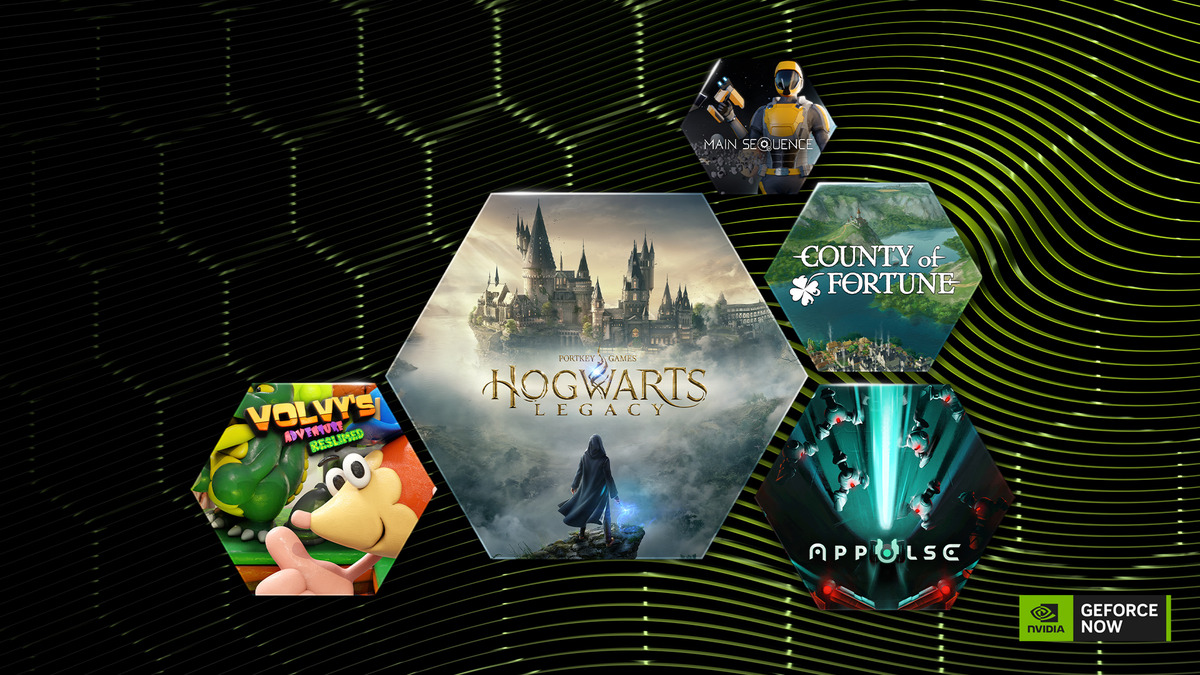
Hogwarts Legacy has received a significant graphical upgrade through the implementation of NVIDIA DLSS 5, specifically the 3D-Guided Neural Rendering technology. Players who stream the game via GeForce NOW can now enjoy a substantial boost in visual quality without needing to upgrade their local hardware. The technology focuses on enhancing the game's aesthetic appeal: it adds lifelike lighting and material details that were previously difficult to achieve in real-time streaming environments. This is a pivotal moment for the title, allowing players to experience the wizarding world with a level of detail that closely mirrors the performance of high-end local PCs. Cloud gaming becomes more immersive and visually compelling for a wider audience.Familiar roads. New discoveries.The integration of DLSS 5 is not a simple overlay but a deep technical adjustment handled by Avalanche Software, the developer behind the game. The update retains the original geometry and textures while adding new layers of visual detail. Developers have carefully tuned the integration through DLSS 5's developer controls to ensure that the enhanced visuals do not compromise the game's artistic intent or unique style. This balance allows the familiar locations of Hogwarts and the surrounding areas to remain recognizable while benefiting from the improved rendering. The result is a more cohesive visual experience where the new neural rendering techniques blend seamlessly with the existing art direction.From city streets to Roman roads.Beyond the core DLSS 5 features, the update also includes support for DLSS Multi Frame Generation and Ray Reconstruction. These additional tools accelerate and improve ray tracing, making time in the School of Witchcraft and Wizardry more immersive. Players can fine-tune their experience using NVIDIA DLSS 4.5 controls available in the cloud, choosing settings that optimize performance and image quality. This flexibility is crucial for maintaining high FPS while using advanced graphical effects. The combination of these technologies ensures smooth performance of the game on GeForce NOW, providing a stable and responsive experience that is essential for an action RPG of this scale.For Ultimate members, the update is available with GeForce RTX 5080-class performance across a wide range of devices: PCs, Macs, handhelds, browsers, mobile devices, and compatible TVs. This accessibility means that players do not need to invest in expensive hardware or wait for lengthy downloads to see the improved graphics. GeForce NOW handles all installations and updates, freeing up local storage for other applications. The service makes sure the game is always up to date and ready to play, streamlining the process for users. This approach democratizes access to high-end graphical features, allowing players to enjoy the latest technological advancements in gaming without the traditional barriers.The availability of this update is part of a broader strategy to expand the GeForce NOW library: two dozen games will join the platform throughout November. This includes eight new titles added this week, ensuring that players always have fresh content to explore. The addition of Hogwarts Legacy with DLSS 5 support highlights the platform's commitment to bringing cutting-edge technology to cloud gaming. As more games adopt these advanced rendering techniques, the gap between cloud and local gaming continues to narrow. Players can look forward to more such enhancements in the future, as developers and platform providers work together to push the boundaries of what is possible in cloud gaming.

- Public
- 05 Nov, 2026
Ares Interactive Live Ops Architecture: Running Baseball Hits 26 and The Walking Dead: Aftermath
Ares Interactive operates two distinct live-service mobile titles with different architectural needs. Baseball Hits 26, developed by 7th Inning, is tightly coupled to the real-world MLB calendar, so it requires rapid updates to reflect player performance. The Walking Dead: Aftermath, from Swift Games, is an action RPG roguelite where the main challenge is expanding content without disrupting the core loop. Both teams prioritize systems that allow for constant change: they balance new events and offers while maintaining strict performance and stability standards on mobile devices.The live ops infrastructure for Baseball Hits 26 is built on a custom backend and content-delivery system. It manages over 50 configuration domains: players, events, store items, and battle passes. Changes are validated through an admin panel and picked up by servers within seconds, with no restarts. All configurations are versioned and logged, which allows for easy rollbacks and testing against internal accounts before production. A segmentation engine powers A/B testing, allowing the team to trial new offers with a small audience first. This setup lets the team run up to four distinct events per week, such as Prime Club and Tower Club, each with its own bonus players and offers.To handle asset delivery, Baseball Hits 26 uses Unity Addressables, specifically for stadium bundles. By default, one stadium is included in the initial app download so that new users don't run into unnecessary friction. All other stadiums are packaged as separate bundles, uploaded to the server, and downloaded on demand when the player selects them. Each bundle is stress-tested on low-end devices to ensure it meets strict size and memory limits. A shared common bundle holds assets reused across different stadiums, which prevents data duplication. This approach lets the client stay lightweight while still offering a wide variety of visual environments.The Walking Dead: Aftermath takes a different strategy, reusing proven systems from a previous project, Heroes vs Hordes, for the store, economy, and authentication. The new roguelite core was prototyped separately and merged onto this foundation. Content expected to change weekly is authored in spreadsheets and published as remote bundles, each stamped with supported client versions. Save data uses a versioned migration chain so that long-time players aren't "lost," and time is sourced from the server to ensure accuracy for timed events. The architecture relies on scoped dependency injection with four nested contexts: root, save game, main screen, and gameplay. This guarantees that live events, structured as installers plus configuration files, are cleanly cleaned up when their context closes.In The Walking Dead: Aftermath, Addressables are used for memory management and loading, with 29 groups corresponding to individual features. Live content, however, follows a separate pipeline built on the AssetBundles API. These bundles are built per platform and include hashes, checksums, and compatibility version data. The team adheres to a strict rule: if designers need to change it weekly, it goes in a bundle; if it is art or code, it ships in the build. This boundary keeps the live surface small and manageable. Visual variety is achieved through hand-built arenas modified via materials, lighting, and approximately 35 shader graphs, rather than procedural generation. This allows for precise measurement and optimization of every visual element.
- Public
- 05 Nov, 2026
IntelliJ IDEA 2026.3: Performance Fixes, Spring Support, and Workflow Improvements
IntelliJ IDEA 2026.3 delivers a substantial update with more than 1,000 general bug fixes and over 300 performance improvements. The update targets core workflows for both traditional and agentic development. The primary focus is on resolving stability issues: UI freezes, excessive CPU consumption, and memory leaks that previously disrupted productivity have been eliminated. Many of these fixes were derived from automatic freeze reports and profiling data from real-world projects, which made it possible to address the most critical bottlenecks first. The goal of the update is to provide a smoother, more responsive experience for developers working on large-scale Java and Kotlin applications by eliminating the most common sources of IDE lag and instability.A significant portion of the performance improvements targets specific UI interactions that previously caused the editor to stall. Spring Boot inlay hints, property highlighting, and JPA entity analysis no longer freeze the interface, while server configurations for Tomcat, WildFly, and JBoss are now read off the UI thread. Critical operations such as debugger variable building, Git commit trees, and Optimize Imports have been optimized to prevent blocking. Additionally, the IDE now avoids launching WSL unnecessarily during startup, and indexing has become more efficient for large projects thanks to the removal of excessive updates and the implementation of lazy file copying. Memory management has also been improved: leaks that kept closed projects in memory have been fixed, and code lens previews that previously retained HiDPI images on the heap have been optimized.Code intelligence for Java and Kotlin has received targeted improvements to increase accuracy and provide better feedback to developers. The Unused declaration inspection now identifies methods used exclusively in test sources, and quick fixes for nullability inspections work correctly on complex expressions. For Kotlin developers, a new inspection warns when CancellationException is caught in suspending code without being rethrown, and blocking calls are highlighted inside suspend lambdas. Converting Java code to Kotlin now correctly transforms @lombok.Data classes into data classes. In addition, the debugger has been improved: it suggests HotSwap only when it is technically viable, and for edits that change class structure or signatures, it offers a restart instead, which prevents confusion during debugging.Spring Framework support has received hundreds of fixes covering profiles, configuration, data, caching, and debugging. Profile switching has moved to a status bar widget for better visibility, and the IDE now detects more profiles, including those in test scopes. Configuration property resolution has been improved: Find Usages now correctly lists declarations and usages of placeholders, and placeholders in YAML resolve accurately. Spring Data repository method completion has been reworked to prioritize inherited methods and recognize Kotlin named queries. The Spring Debugger includes about 20 fixes for bean presentation, while Spring Web improvements enhance endpoint detection for Kotlin and Spring Boot 4. JPA and Hibernate also received about 40 fixes, addressing performance issues and ensuring correct date values in the JPA Console.Build tool and version control integrations have been significantly upgraded to streamline workflows. Maven delegation has been fixed to run the process-test-classes phase by default, avoiding unnecessary mvn install runs. Gradle 9.7 Isolated Projects now supports running main() from the gutter, and imports for large projects are faster thanks to the removal of deadlocks. Git worktrees, a highly requested feature, now work in multi-root projects and allow opening merge requests in separate worktrees. The IDE now uses OpenSSH for connections, supporting certificate-based authentication, hardware security tokens such as YubiKey, and Kerberos SSPI. In addition, JetBrains IDEs can handle 64-character object IDs in Git SHA-256 repositories, and GitLab integration allows OAuth sign-in without personal access tokens.The user interface and auxiliary tools have also been refined for better usability. The terminal now includes the ghostty emulator with over 40 fixes, improving tab management and URL handling. The Plugins page has been consolidated into a single view with separate sections for installed, bundled, and suggested plugins, and it opens in its own window for better readability. Status bar widgets are now movable, allowing developers to customize their layout, and the new Extended Tool Windows UI plugin adds vertical names beside icons. Markdown editing is smoother with fixes for absolute path links and a new setting to strip trailing spaces on save. Scala support has been updated for Scala 3.10, with improved code analysis and Twirl template support, while sbt 2.x projects import more reliably with fewer false errors in build scripts.
- Public
- 05 Nov, 2026
NVIDIA Deploys AI Agents to Automate AI Factory Operations and Reduce SRE Workload
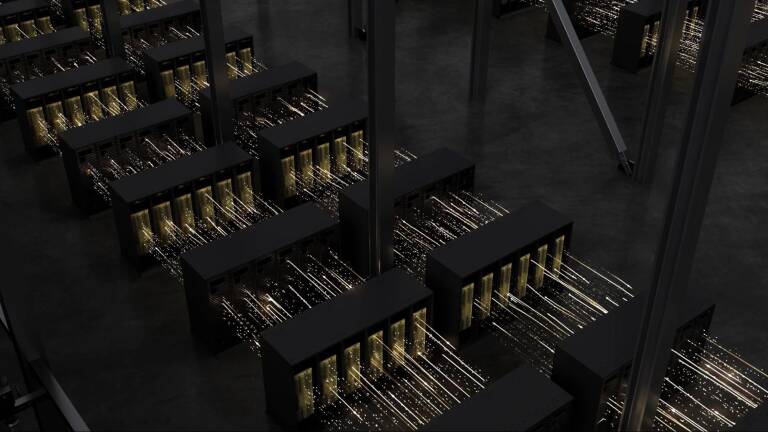
As GPU clusters scale, site reliability engineers (SREs) face the challenge of correlating performance drops across compute, network, and hardware layers. NVIDIA developed the AI Factory Operations Agent to streamline internal DGX SuperPOD operations by reducing manual effort. The system uses specialized agents that detect failures, correlate root causes, and provide recommendations via a chat interface. Engineers can interact with these agents using natural language, switch between investigations, and track actions for auditability, replacing the need to check multiple dashboards manually.Figure 1. AI Factory Operations Agent architecture: a NemoClaw agent coordinating domain-specific agents across the GPU cluster infrastructureThe developer example is built on the NVIDIA NemoClaw blueprint, featuring a user-facing agent runtime that routes queries to domain-specific agents. Connectivity is established through OpenClaw plugins and Model Context Protocol servers, which expose focused operational tools. The framework utilizes NVIDIA OpenShell and supports fully on-premises deployment to ensure data sovereignty. Inference relies on locally served NVIDIA Nemotron open models, running across DGX H100, B200, and GB300 production clusters. This modular design allows for the addition of new agents and infrastructure integrations without modifying existing components.Deployment occurs as a Kubernetes control-plane application, with Helm managing the UI, OpenClaw gateway, MCP servers, and inference endpoints. For shell execution, OpenShell creates per-session Kubernetes sandboxes to isolate commands from the main gateway pod, ensuring the runtime does not modify production workloads. Security is enforced through layered access controls. The server-side run_kubectl tool uses pinned binaries and read-only credentials, while Kubernetes RBAC defines inspectable resources. This setup allows agents to verify permissions, such as confirming they can get pods but not secrets or create new ones.The internal deployment utilizes a suite of domain-specific agents. The Job Recovery Agent analyzes training failures across scheduler and hardware layers. The Hardware Agent triages device-level faults like PCIe errors and thermal anomalies. The Observability Agent queries Prometheus and Grafana Loki to generate dynamic dashboards. The Research Agent searches preloaded documentation, while the Kubernetes Agent provides read-only awareness of cluster state. The Cluster Management Agent interfaces with Base Command Manager APIs. Cross-cutting tools include web search and code execution, and the framework supports custom MCP servers for specific operational needs.NVIDIA recommends a dedicated GPU-accelerated control plane isolated from the production cluster to handle agent orchestration without consuming training resources. In multi-tenant environments, OpenShell enforces boundaries by running agents in isolated sandboxes with kernel-level restrictions, ensuring that tenant SREs only access their specific namespaces and nodes. The framework is available as experimental open source software on GitHub, though APIs and configurations may change between releases. NVIDIA customers can contact their account managers to request access to the proprietary cluster operations agents developed for internal use.
- Public
- 04 Nov, 2026
Jetpack Compose 1.13 and Architecture Updates at Android Developer Summit
The Android ecosystem now spans phones, foldables, tablets, wearables, in-car displays, XR, and Googlebook, making adaptive development essential. Jetpack Compose serves as the unified standard for building UI across these diverse form factors, replacing the legacy View system. This shift eliminates the friction of maintaining fragmented codebases. However, traditional layout assumptions often break when screens fold or windows resize, leading to disjointed user experiences. Recent announcements focus on advancing app foundations by integrating Compose deeper into the data layer while providing robust adaptive building blocks to ensure consistency across every screen size.The upcoming Compose 1.13 stable release expands the toolkit with built-in support for adaptive layouts through Grid and Flexbox. It also introduces new functionality such as Progressive Blur and Formatted Text. Developers can leverage advanced graphics features like mesh gradients and progressive blurs without sacrificing battery life or frame rates. These enhancements allow for richer visual experiences while maintaining performance. The release addresses the need for flexible layout structures that can dynamically adjust to varying display conditions, ensuring that applications remain responsive and visually appealing regardless of the device configuration.Text editing in Compose has undergone a significant overhaul with a completely rewritten BasicTextField. This update features a buffer-driven architecture and TextFieldState, which eliminate IME race conditions. The new system supports rich text formatted editing mechanics, providing a more reliable and robust text input experience. This is crucial for applications that rely heavily on user input, ensuring that text handling remains stable and predictable. By addressing these underlying issues, the update enhances the overall quality of interactive elements within Compose-based applications, making them more resilient to edge cases and user interactions.Jetpack AppState, now in alpha, expands Compose into the architecture layer by bringing its snapshot system into the app's broader architecture. The Transform API allows developers to derive reactive state from State and Flow inputs using automatic read tracking and plain Kotlin control flow. StateStore provides a keyed container for sharing observable state across activities, background services, widgets, and App Functions. It also offers optional DataStore persistence. This integration simplifies complex state pipelines and ensures that every surface of the app remains in sync, reducing the complexity of managing state across different components and lifecycle stages.Jetpack Navigation 3, version 1.2, introduces built-in, type-safe deep linking to the developer-owned back stack. Using Kotlin Serialization, developers can map incoming URIs and intents directly to strongly typed navigation keys. This allows for customized parsing of complex arguments and the lazy construction of synthetic back stacks, ensuring that back navigation feels natural. Additionally, Compose's layered input system extends beyond touch to support trackpads, mice, and physical controls. This evolution in input handling supports multi-modal interactions across devices, enabling developers to manage pointer lifecycles, hover states, and hardware events effectively across various form factors.
- Public
- 04 Nov, 2026
SteamVR 2.19.1 Beta Improves Streaming Quality for Standalone Headsets
Valve has released the SteamVR 2.19.1 beta update, which noticeably improves streamed image quality on all supported standalone headsets. The update targets devices such as the Meta Quest, HTC Vive Focus, and PICO consumer headsets. They use Steam Link to wirelessly stream PC games over Wi-Fi. The improvements are the result of Valve's ongoing work on refining the wireless streaming capabilities of Steam Frame. Users can expect sharper text, clearer colors, and better overall detail in VR streaming.The improvements extend beyond game rendering to benefit all streaming VR applications, the SteamVR interface itself, desktop streaming, third-party overlays, and the theater screen. A key technical change is that Steam Link now defaults to a higher recommended render resolution for streamed PC VR, targeting 1.4 times the headset's native panel resolution. Color clarity has also been enhanced: a higher-quality filter is now used to downsample color before encoding, which helps preserve fine colored details.To access these upgrades, users must opt into the SteamVR beta branch. The update is available to those with compatible hardware and a VR-ready PC capable of handling the streaming load. This release is a meaningful step forward for wireless VR performance, ensuring that standalone headset users get a more refined and visually accurate experience from their PC libraries.