2026 AR Waveguide Trends: The Shift to Reflective Optics and Competitive Dynamics
 Public
- 06 Nov, 2026

The 2026 AR industry is defined by a clear pattern: Meta's product releases trigger a wave of similar innovations from competitors. In 2024, Meta introduced Orion with Silicon Carbide waveguides using a two-grating diffractive design, leading to a market surge in similar technologies the following year. In 2025, the launch of Meta Ray-Ban Display glasses featuring a Lumus 2-D pupil-expanding reflective waveguide set the stage for 2026, when multiple companies unveiled their own 2-D reflective waveguide prototypes. This trend indicates a significant pivot in the market: manufacturers are rapidly following the technical lead established by major players to capture market share and meet consumer expectations for superior optical performance in augmented reality devices.
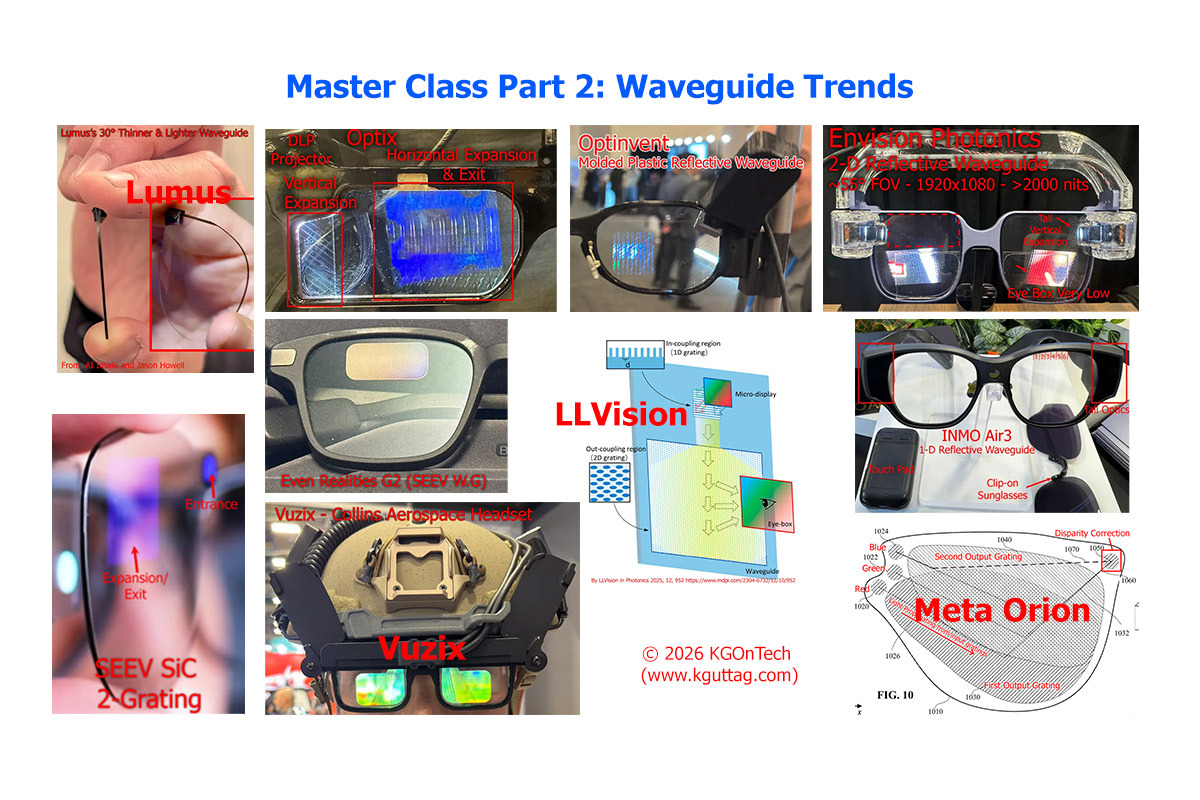
Reflective waveguides are gaining traction due to distinct technical advantages over the more common diffractive alternatives. They offer higher optical efficiency, typically by a factor of three to seven, and provide superior color uniformity. Additionally, reflective designs exhibit less inherent forward light projection, commonly known as "eye glow," and can achieve wider fields of view without requiring exotic materials like silicon carbide. While cost and yield have historically hindered their adoption, recent efforts by key players to reduce manufacturing expenses have accelerated their development. This shift is drawing significant competition to the sector, challenging the long-standing dominance of established players who have specialized in this technology for over two decades.
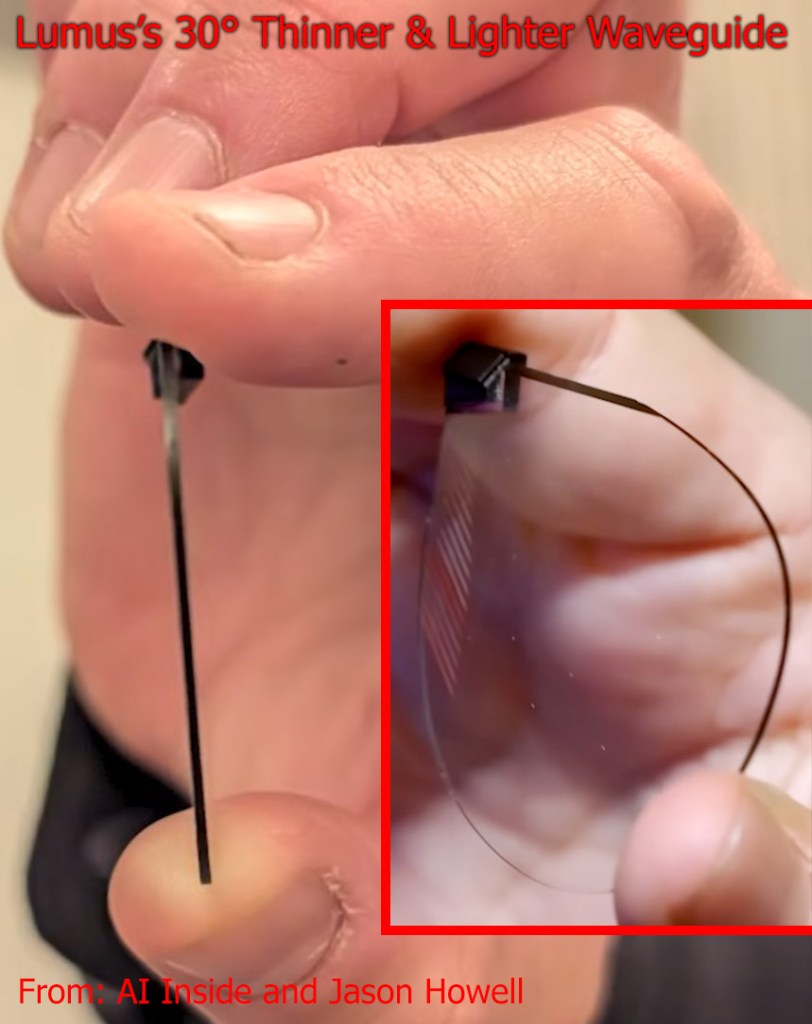
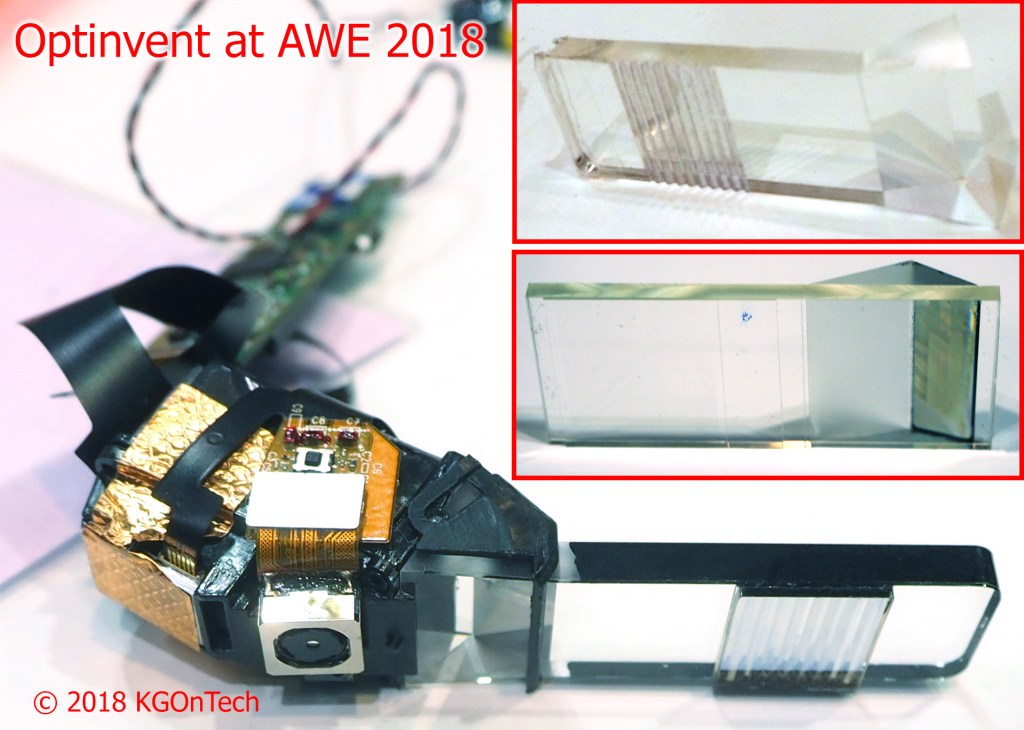
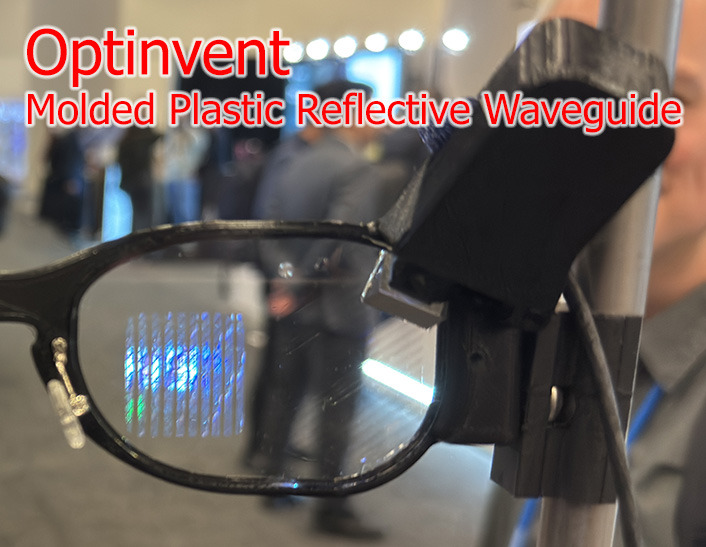
Lumus, a pioneer in this space, has expanded its portfolio with new 2-D pupil-expanding designs. After introducing its first 2-D design in 2021, the company showcased a 70-degree prototype in 2026 and discussed thinner, more affordable 30-degree variants. To support higher production volumes, Lumus announced a manufacturing agreement with Crystal-Optech, a China-based manufacturer, complementing its long-standing partnerships with Schott and Quanta. Simultaneously, Optinvent presented a plastic-molded 2-D reflective waveguide prototype at SPIE AR/VR/MR 2026. This all-molded process offers a potential cost advantage over precision glass stacks, although early prototypes show some variation in pupil replication and image consistency compared to glass-based solutions.
Other major players are also advancing their reflective optics capabilities. Optix demonstrated significant progress in waveguide size and image quality, achieving a 50-degree field of view with 6,000 nits brightness and less than 0.3% forward leakage. Canon displayed a 30-degree glass reflective waveguide driven by both MicroLED and Micro-OLED displays, though the OLED version suffered from low brightness. Envision Photonics showcased a hybrid waveguide combining diffractive and reflective elements, supporting a 30-degree field of view, alongside a 2-D reflective prototype with a vertical expansion area that is currently impractically tall. These developments highlight the diverse approaches companies are taking to balance optical performance, form factor, and manufacturing feasibility in the competitive AR landscape.
Diffractive waveguides remain a dominant technology, with companies like Vuzix designing and manufacturing them for both internal and external use. Vuzix recently acquired Google's waveguide R&D facility, strengthening its position in the market. However, diffractive designs face inherent trade-offs, such as the rainbow effect where external light is split into colors, and worsening color uniformity as the field of view increases. Applied Materials, a major semiconductor equipment supplier, has made a significant push into diffractive waveguide development, highlighting the complexity of grating layouts. As the industry moves forward, the choice between reflective and diffractive technologies will depend on specific application requirements, balancing optical efficiency, cost, and manufacturability.