Ares Interactive Live Ops Architecture: Running Baseball Hits 26 and The Walking Dead: Aftermath
 Public
- 05 Nov, 2026
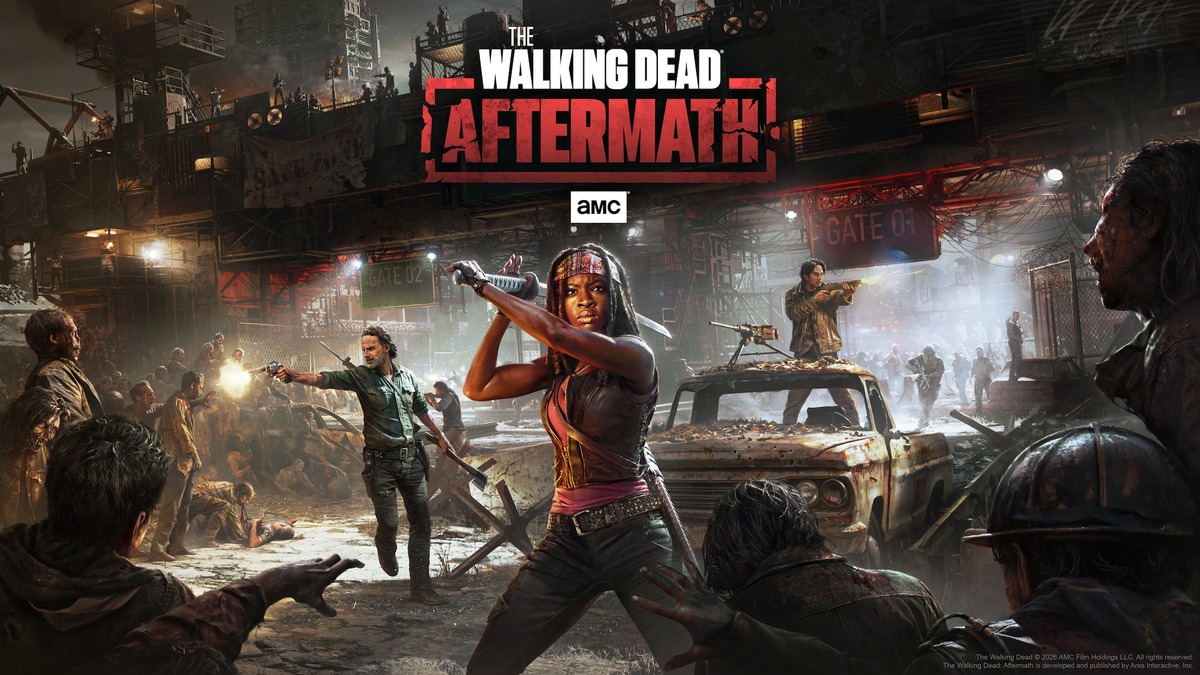
Ares Interactive operates two distinct live-service mobile titles with different architectural needs. Baseball Hits 26, developed by 7th Inning, is tightly coupled to the real-world MLB calendar, so it requires rapid updates to reflect player performance. The Walking Dead: Aftermath, from Swift Games, is an action RPG roguelite where the main challenge is expanding content without disrupting the core loop. Both teams prioritize systems that allow for constant change: they balance new events and offers while maintaining strict performance and stability standards on mobile devices.

The live ops infrastructure for Baseball Hits 26 is built on a custom backend and content-delivery system. It manages over 50 configuration domains: players, events, store items, and battle passes. Changes are validated through an admin panel and picked up by servers within seconds, with no restarts. All configurations are versioned and logged, which allows for easy rollbacks and testing against internal accounts before production. A segmentation engine powers A/B testing, allowing the team to trial new offers with a small audience first. This setup lets the team run up to four distinct events per week, such as Prime Club and Tower Club, each with its own bonus players and offers.
To handle asset delivery, Baseball Hits 26 uses Unity Addressables, specifically for stadium bundles. By default, one stadium is included in the initial app download so that new users don't run into unnecessary friction. All other stadiums are packaged as separate bundles, uploaded to the server, and downloaded on demand when the player selects them. Each bundle is stress-tested on low-end devices to ensure it meets strict size and memory limits. A shared common bundle holds assets reused across different stadiums, which prevents data duplication. This approach lets the client stay lightweight while still offering a wide variety of visual environments.
The Walking Dead: Aftermath takes a different strategy, reusing proven systems from a previous project, Heroes vs Hordes, for the store, economy, and authentication. The new roguelite core was prototyped separately and merged onto this foundation. Content expected to change weekly is authored in spreadsheets and published as remote bundles, each stamped with supported client versions. Save data uses a versioned migration chain so that long-time players aren't "lost," and time is sourced from the server to ensure accuracy for timed events. The architecture relies on scoped dependency injection with four nested contexts: root, save game, main screen, and gameplay. This guarantees that live events, structured as installers plus configuration files, are cleanly cleaned up when their context closes.
In The Walking Dead: Aftermath, Addressables are used for memory management and loading, with 29 groups corresponding to individual features. Live content, however, follows a separate pipeline built on the AssetBundles API. These bundles are built per platform and include hashes, checksums, and compatibility version data. The team adheres to a strict rule: if designers need to change it weekly, it goes in a bundle; if it is art or code, it ships in the build. This boundary keeps the live surface small and manageable. Visual variety is achieved through hand-built arenas modified via materials, lighting, and approximately 35 shader graphs, rather than procedural generation. This allows for precise measurement and optimization of every visual element.