Blog
 Public
- 22 Oct, 2026
NVIDIA Minerva: Launch of a Platform for Observing AI Factories
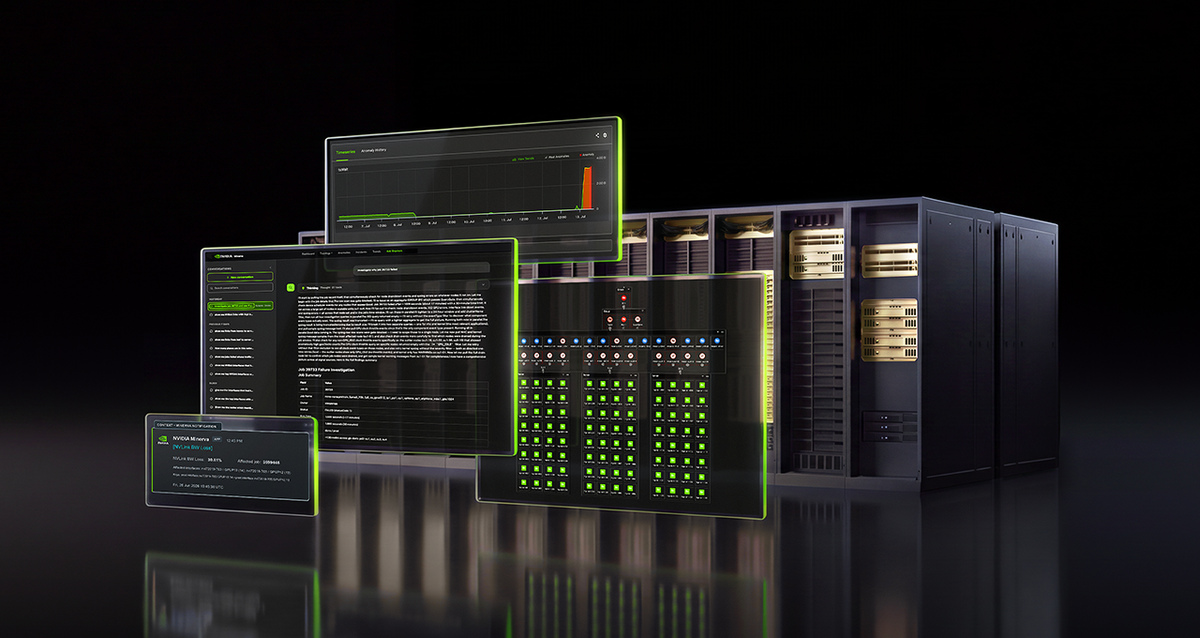
NVIDIA has officially launched Minerva, a specialized AIOps platform engineered to maintain productivity within large-scale AI factories. The system aggregates telemetry data from both underlying infrastructure and active AI workloads, applying purpose-built artificial intelligence models to transform raw data into actionable insights. AI factories represent some of the most complex operational environments globally, where vast arrays of GPUs operate across high-speed networks to train models and serve applications. In such settings, a single degraded component can significantly slow down entire jobs, making early detection of issues critical for maintaining efficiency and output.Traditional monitoring tools often fragment data center visibility, presenting separate views for networking, compute, site reliability, and machine learning teams. Minerva addresses this fragmentation by connecting signals across NVIDIA GPUs, networking hardware, storage systems, schedulers, and workloads. The platform constructs a dynamic knowledge graph that logically maps the physical infrastructure, including GPUs, SuperNICs, switches, and cables, alongside the jobs executing on them. This contextual mapping allows operators to trace performance bottlenecks to specific components, even in facilities containing hundreds of thousands of GPUs, ensuring that root causes of slow training jobs are identified accurately and quickly.The platform processes billions of data points per hour using both supervised and unsupervised machine learning algorithms. It learns normal operational behavior, detects previously unseen anomalies, predicts emerging failures, and correlates related events based on the factory's specific topology. Rather than flooding operators with every individual symptom, Minerva groups event storms into focused incidents with likely root causes. The system includes a native AI assistant and connects to external agentic AI tools, providing a natural-language interface grounded in live telemetry. Operators can investigate cluster health and receive recommended remediation steps through conversation, while retaining the ability to manually implement fixes or connect to automation via infrastructure APIs.Minerva is designed to simplify operations by aggregating related problems into single actionable items, enabling AIOps teams to shift from reactive troubleshooting to proactive maintenance. This approach helps maximize GPU uptime and improves key metrics such as yield, goodput, cluster uptime, and token production. Several major partners, including IREN, Aolani, Bitdeer AI, IBM, Jio, Lambda, Quake AI, and Tesla, plan to deploy the platform. Additionally, hardware vendors Dell Technologies, Lenovo, and Supermicro will offer Minerva as part of their AI factory operations portfolios, integrating it into broader infrastructure solutions.
- Public
- 22 Oct, 2026
Owlchemy Labs Releases Hyper Visor Arcade Blaster for XREAL AURA
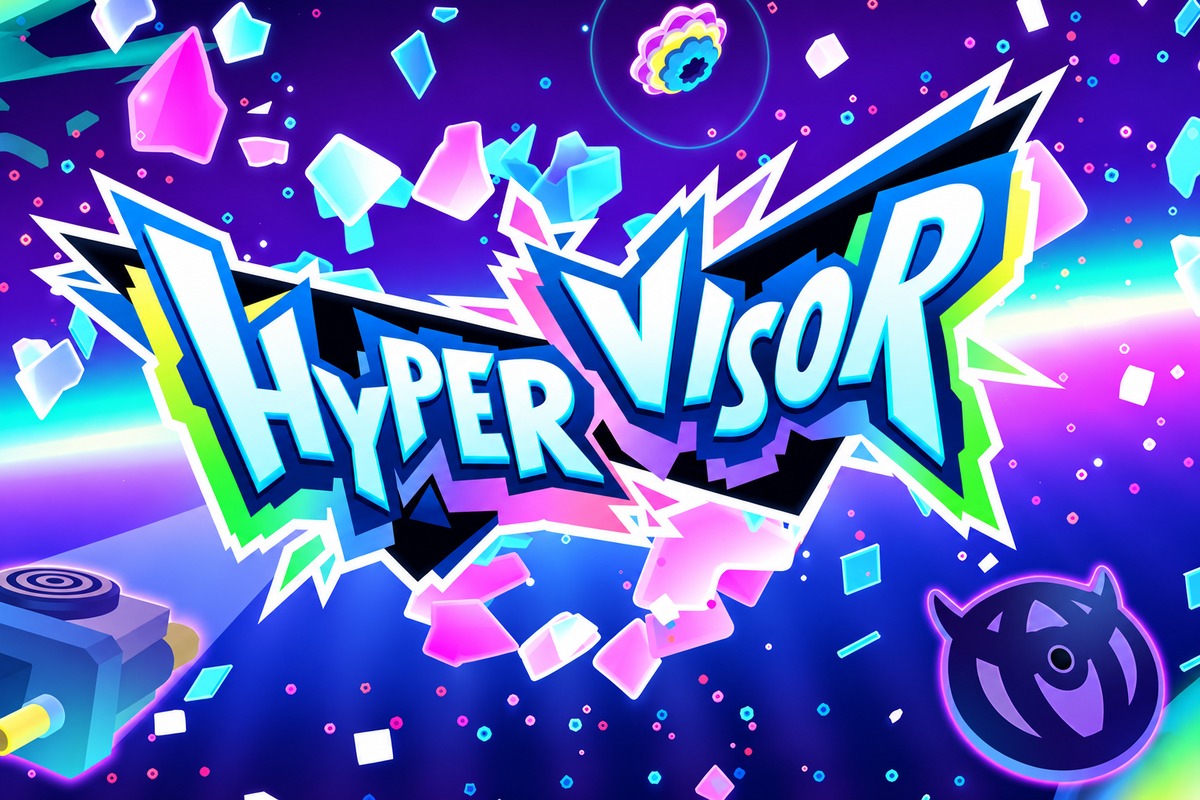
Owlchemy Labs, the Google-owned XR studio behind hit titles like Job Simulator and Vacation Simulator, has officially revealed Hyper Visor. This new arcade blaster is set to arrive as a launch title for the XREAL AURA, marking a significant addition to the initial software lineup for the hardware. The game is designed specifically for the unique form factor of the glasses, offering a streamlined experience that fits the device's capabilities. It serves as a key entry point for users exploring the new ecosystem, providing immediate entertainment upon device setup.Courtesy Owlchemy LabsThe XREAL AURA hardware, developed in partnership with Google, represents the first pair of see-through AR glasses to run the Android XR operating system. The device is currently available for pre-order, though a specific shipping date has not yet been announced. Pricing for the hardware starts at $1,279 for the 256GB model equipped with 12GB of RAM. A higher-tier configuration featuring 512GB of storage and 16GB of RAM is available for $1,499. These specifications aim to provide a robust foundation for running immersive applications directly on the device.Hyper Visor is priced at just $1.99, making it an affordable entry point for new users. The gameplay concept involves a mysterious pair of living shades that reveal vibrant fractures in reality hidden within the player's everyday surroundings. Players must use an energy stream to shatter targets, defeat bosses, and seal eight distinct levels to restore reality. Each level presents unique challenges and a final boss, with victories restoring power for the ultimate showdown. The design is intentionally more 2D-based than fully immersive titles to ensure accessibility.The studio has also committed to bringing several of its previous XR games to the XREAL AURA at launch. This list includes Job Simulator, Vacation Simulator, Dimensional Double Shift, and Inside [JOB]. These titles, along with Hyper Visor, will be available on the Google Play Store. The games are compatible across the ecosystem, including the Samsung Galaxy XR, which is the first VR headset to support Android XR. This cross-device compatibility ensures a consistent library for users transitioning between different form factors.

- Public
- 22 Oct, 2026
Blender Add-ons for Realistic Vintage Poster Walls
Blender artist G_ni has released two new add-ons, Poster Pin and Poster Print, designed to streamline the creation of dressed poster walls for atmospheric 3D scenes. The Poster Print tool takes an image sheet containing various pictures and automatically cuts them into single posters. Users can customize the paper color, apply specific paper effects for a lifelike appearance, and add damage around the edges. Once the visual style is finalized, the add-on generates a 4K texture atlas from the selected posters, ensuring high-resolution output for detailed rendering.The companion tool, Poster Pin, handles the placement and scattering of these images within the scene. It supports posters, notes, polaroids, and doodles, placing them onto surfaces using tape, pins, or strings. Artists can adjust the size of each image, control how flat they lay against the wall, and fine-tune shadow behavior for realism. To create a busier look, smaller notes and photos can be scattered between larger focal points. If a photo string is used, the add-on provides precise control over the positioning of the thread itself and the pictures hanging from it, allowing for complex and organic arrangements.
- Public
- 22 Oct, 2026
Update 2.5 for Cyberpunk 2077: Dual-Wielding, Cross-Platform Mods, and Graphics Improvements
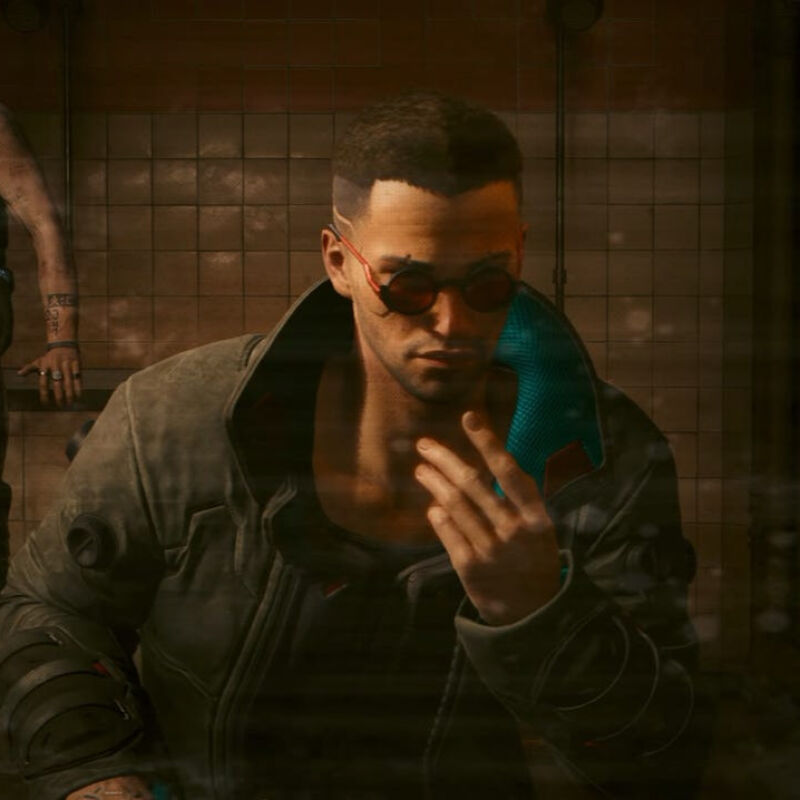
CD Projekt Red has released Update 2.5 for Cyberpunk 2077. It is a substantial free patch that accompanies the launch of Cyberpunk: Edgerunners 2. The update introduces significant gameplay changes. The most notable is the Double Trouble perk in the Cool tree, which allows the protagonist V to dual-wield Power pistols and revolvers. This mechanic, long associated with the character Jackie Welles, is now available to players. It is supported by four auxiliary perks and new Photo Mode poses.The update also enables customization of arm cyberware, including Mantis Blades, Gorilla Arms, Monowire, and the Projectile Launch System. Players can visit five new Glamdocs on the map. Each has its own animations and unique color palettes for cyberware skins.Direct connections to the Edgerunners 2 narrative are established through the new side quest Clampdown. It unlocks after completing The Heist and specific gigs for Wakako. The quest leads to the acquisition of a five-piece equipment set based on the character King. Additionally, the radio station HKGN 102.0 FM joins the lineup, featuring music from the Edgerunners series. Another new quest, Welcome to Paradise, offers a guided tour narrated by Richard Night. It unlocks at Street Cred level 15. The update also expands the Tarot card system with 12 new Minor Arcana cards. There are now separate menu sections for Major and Minor Arcana, and completing the set earns a special reward.Post on X: https://twitter.com/SynthPotato/status/2112933280198889661A critical long-term addition is cross-platform mod support powered by Mod.io. This feature allows players on PC, Mac, PlayStation 5, Xbox Series X|S, and Nintendo Switch 2 to browse and install community-made content via an in-game menu. This initial rollout does not grant unrestricted access to all PC mods, with more compatible creations expected over time. Using mods on consoles disables achievements and trophies. Smaller quality-of-life improvements include five clothing collections, previously NPC-exclusive hairstyles, item filters for stashes, and playthrough-specific save grouping.The technical enhancements are broad, targeting both performance and visual fidelity. Consoles finally receive an FOV slider, while PC support expands to include DLSS 4.5 with up to 6X Multi Frame Generation and a second-generation transformer model. Compatible Samsung Odyssey 3D monitors can display glasses-free stereoscopic effects, and Apple devices benefit from MetalFX Frame Interpolation. The update also improves HDR and ray tracing performance, and includes specific optimizations for the PS5 Pro. Update 2.5 launches on October 22 for PC, Mac, PlayStation 5, and Xbox Series X|S. The Nintendo Switch 2 and Mac App Store versions will follow in the subsequent days.
- Public
- 22 Oct, 2026
The MicroLED Industry Shifts Its Focus to Co-Packaged Optics for AI Data Centers
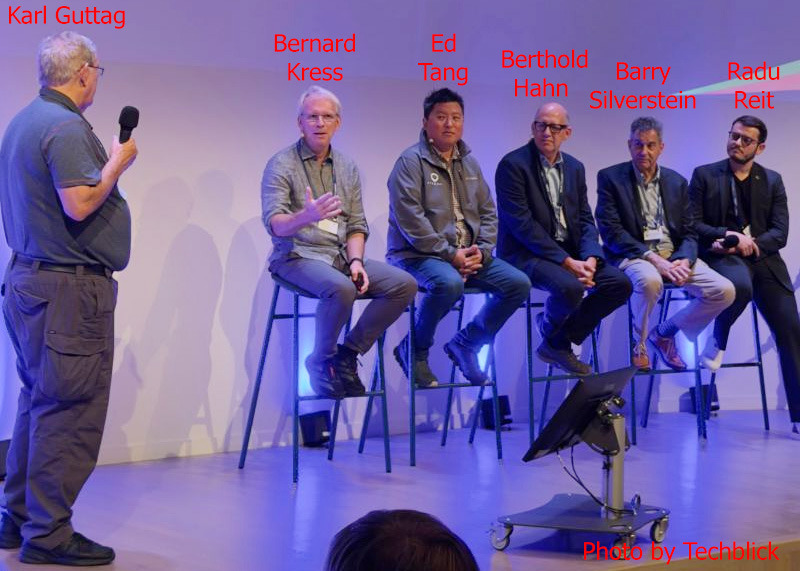
The recent MicroLED and AR/VR Connect conference in Eindhoven highlighted a critical strategic pivot within the display industry. While the event continues to serve as a vital networking hub for augmented reality professionals, the dominant narrative shifted away from consumer AR hardware toward optical interconnects. A substantial portion of the agenda, including keynote addresses, focused on Co-Packaged Optics (CPO), specifically for application in AI data centers. This shift indicates that the immediate commercial viability of MicroLED technology is being driven by high-performance computing infrastructure rather than consumer wearable devices. This alters the landscape for developers who expected rapid advancements in AR display capabilities.The economic drivers behind this transition are starkly illustrated by the current market dynamics of AR glasses. Reports suggest that between 1.6 and 2 million AR glasses with monochrome green MicroLED displays may be shipped in 2026. This volume, while promising, is insufficient to support a robust component ecosystem. For context: if a binocular device like the Ray-Neo model costs $499, the display and optics budget per eye is likely under $100. With suppliers like Jade Bird Display reportedly earning around $40 per monochrome green display unit, the total market value remains low. At a standard 20% gross margin, the resulting revenue is modest and must be shared among multiple manufacturers. This contrasts sharply with the massive capital expenditure in AI data centers, making CPO a far more attractive investment target for companies seeking sustainable growth.Technical requirements for CPO differ fundamentally from those of AR displays, creating a divergence in R&D priorities. For AR applications, MicroLEDs must deliver full-color reproduction and generate a spread-out light pattern to create an eye box within a waveguide. In contrast, CPO applications do not require full color, and the wavelengths used are different. The primary goal for waveguides in CPO is to maintain a tight light pattern rather than spread it. This difference means that engineering efforts directed toward optimizing MicroLEDs for data center interconnects may not directly translate into improvements in AR display quality. As a result, developers relying on MicroLED for next-generation AR glasses may face delays in achieving cost-effective full-color solutions, as industry resources are being redirected to the more lucrative CPO sector.The current CPO market is dominated by established laser technologies, including External Laser Sources and Vertical-Cavity Surface-Emitting Lasers (VCSELs), with MicroLEDs making only minor inroads. Companies like Avicena Tech are developing optical transceivers that integrate MicroLEDs and sensor arrays on a single chip, targeting on-board and near-board-to-board communication. In short-distance scenarios, MicroLEDs offer a "wide and slow" approach, using many parallel channels and paths, which can be more efficient than serializing data for laser transmission. While this technology is promising for reducing power consumption and latency in data centers, its speculative nature with regard to MicroLED adoption remains a concern. The industry is betting that the sheer scale of AI infrastructure will provide the necessary volume to make MicroLED-based CPO viable, a trajectory that may outpace the development of consumer AR hardware.This strategic focus on CPO has tangible implications for the AR ecosystem, particularly regarding the availability of full-color MicroLEDs. As manufacturers prioritize R&D for data center applications, the development of cost-effective full-color MicroLEDs for AR may slow down. The "positive spin" often cited is that CPO investment will generally advance MicroLED technology, but there is a risk that the specific needs of AR are neglected in favor of the dominant market driver. Waveguide companies are also adapting to this trend, with firms like Vuzix dedicating significant portions of their presentations to CPO requirements and seeking partners in the data center space. For developers, this means that while the underlying MicroLED technology will improve, the specific optimizations needed for high-fidelity AR displays may not be the primary focus of industry innovation in the near term.The broader challenge for AR adoption remains the complex interplay of technical constraints, often summarized by the "18 key issues" facing optical see-through designs. Solving one problem, such as increasing the field of view, typically exacerbates others, such as power consumption, battery size, and weight. For instance, a larger field of view requires more light and more pixels, leading to higher data processing demands and increased power draw. Additionally, the integration of prescription lenses introduces manufacturing friction and sub-optimal vision correction compared to traditional eyewear. These physical and economic barriers, combined with the industry's pivot toward CPO, suggest that mass-market AR glasses will continue to face significant hurdles. Developers must navigate a landscape where component costs and technical limitations are heavily influenced by the priorities of the AI data center market.

- Public
- 21 Oct, 2026
Android removes direct writes to contacts: app developers are required to use standard intents
Starting with the upcoming Android release, applications that target this new version will lose the ability to write directly to the device contact list using the WRITE_CONTACTS permission. Any attempt to perform direct writes via ContentProvider operations or similar mechanisms will result in a SecurityException or permission denial. To ensure privacy and consistency, developers are required to migrate to standard contact intents: ACTION_INSERT, ACTION_EDIT, and ACTION_INSERT_OR_EDIT. These intents do not require any special permissions and are designed to handle the creation and modification of contacts through a system-managed interface, ensuring that user data is handled securely and transparently.Previously, the behavior of these contact intents varied significantly across different device manufacturers, leading to inconsistent user experiences such as lost data or unexpected saving behaviors. The upcoming Android version standardizes this experience, requiring all devices to follow strict guidelines. When an app triggers these intents, the system presents a clean, half-sheet form for new entries or allows users to search and update existing contacts. Users can expand this into a full-page editor for detailed information. This standardized approach eliminates the need for broad permissions for most apps, as the system handles the data entry directly, reducing the attack surface and improving user trust in contact management.For the small subset of applications whose core functionality involves managing contacts, a new special app access permission called MANAGE_CONTACTS will be introduced in Android 17 QPR2, scheduled for Q4 2026. This permission grants broad access to read, add, edit, and delete contacts, accounts, and People Directory data, effectively replacing the need for both WRITE_CONTACTS and READ_CONTACTS in qualifying scenarios. Apps seeking this permission must submit a declaration in the Play Console explaining why standard intents are insufficient for their core functionality. This measure ensures that only applications with a genuine need for broad contact access can bypass the standardized intent-based workflow.Developers should also consider the new People Directory feature, arriving in the same release, which allows apps to publish contact reachability information without directly editing user contacts. This is particularly relevant for apps that previously added "Call with" or "Message with" actions by writing extra entries to the contact database. By using People Directory, apps can maintain these features without violating the new restrictions on direct contact modifications. This shift encourages a more modular approach to contact integration, where apps contribute to the directory rather than altering the user's personal contact list, thereby preserving the integrity of the user's data while still providing useful connectivity options.The migration process involves identifying all direct contact writes in the codebase, such as those using ContactsContract.RawContacts.CONTENT_URI or applyBatch methods, and replacing them with the appropriate intents. Developers should use ACTION_INSERT for new contacts and ACTION_EDIT or ACTION_INSERT_OR_EDIT for updates, passing optional data payloads like names, phone numbers, and photos via Intent Extras. For reading contacts, the Contact Picker, available since Android 17, remains the recommended solution, requiring no permissions. Apps targeting older Android versions will retain their current behavior, but the new standardized editor will be available to all apps on the new OS, ensuring a consistent experience for users regardless of the app's target SDK.

- Public
- 21 Oct, 2026
Snap Appoints Robert Downey Jr. as Honorary Chief Customer Experience Officer for SPECS
Snap has officially announced that actor and producer Robert Downey Jr. will join the company's augmented reality team to develop original content, Lens experiences, and hardware collaborations for its SPECS AR glasses. Downey Jr. has been appointed as the honorary Chief Customer Experience Officer, a role designed to help customers understand and imagine the possibilities offered by the new device. The collaboration is expected to span various parts of the SPECS organization: the team will explore new capabilities, shape new Lens experiences, and develop original content that highlights the potential of augmented reality for everyday use.In a public statement, Downey Jr. expressed his enthusiasm for the technology. He noted that over the last two decades he had tested nearly every wearable device on the market with little success, until he tried SPECS. He claimed to be sold on the device within forty seconds, citing its potential to allow families to share experiences without hunching over screens and to streamline development for large businesses. Downey emphasized that the device delivers on the promise of AR glasses, referencing his iconic role as a techno-optimist superhero. He also praised the creative atmosphere at SPECS, suggesting that the partnership will lead to innovative and enjoyable creations for consumers.This announcement followed a major event held last month, where Snap unveiled a comprehensive suite of software updates and partnerships for the SPECS platform. The centerpiece of the presentation was Specs Intelligence, an anticipatory AI service designed to surface contextual information to the user. In addition, the company demonstrated immersive entertainment streaming, integration with Spotify, interactive Harry Potter experiences, and training tools for the NBA and WNBA. Other features included multiplayer games, navigation, translation services, and 3D shopping capabilities. All of this is aimed at establishing SPECS as a versatile platform for both entertainment and productivity.The first consumer-oriented pair of AR glasses from Snap is expected to ship in the US, UK, and France this fall. The base unit is priced at $2,195, while an optional bundle that includes a cellular charging case costs $2,395. Although unverified reports have suggested that Downey Jr. may have received a significant stock offer to promote the device, his official role focuses on his influence as a brand ambassador. His background as Tony Stark for nearly two decades positions him uniquely to relate to consumers and help them understand the practical applications of augmented reality technology in their daily lives.To further promote the device, Downey Jr. launched a collection of short videos showcasing SPECS in action. These advertisements debuted during the New York Knicks vs. Philadelphia 76ers game on October 20, with plans to release additional content during Game 1 of the World Series on October 23. The videos depict the actor using the glasses as a private screen, a golf tutor, and a tracing guide for portraits, targeting a broad audience interested in practical applications. While the device is positioned as a significant step forward in AR, it remains a first-generation consumer product that aims to define the future of wearable technology.
- Public
- 21 Oct, 2026
Real-time GPU smoke and fire simulation for Blender with the Fumaris extension
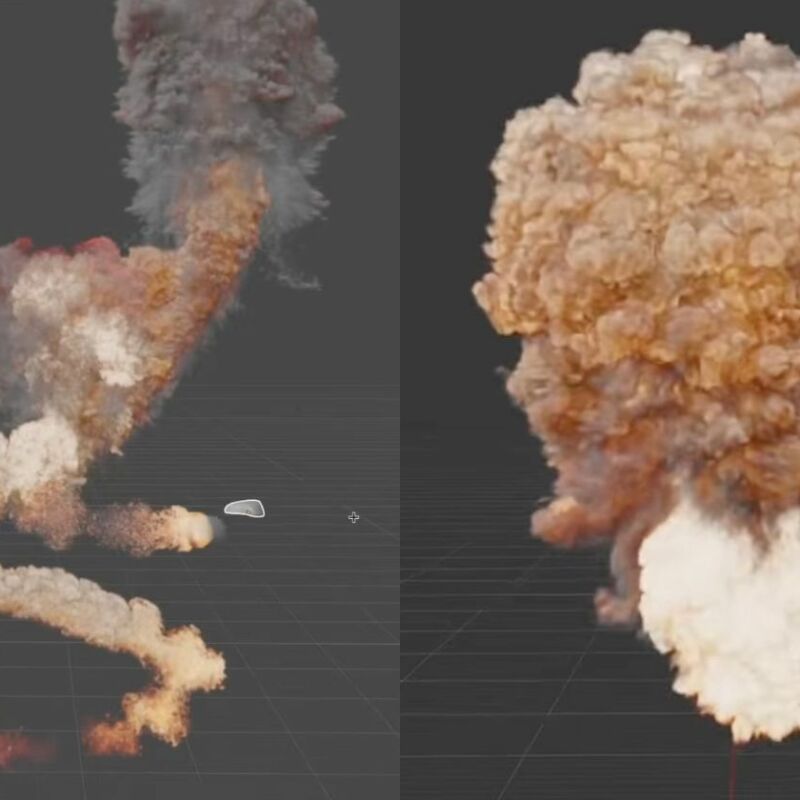
Fumaris by Venous FX solves the bottleneck of Blender's Mantaflow framework, which requires waiting for CPU bakes after every setting change. Developed by Michael Venous to speed up car animation workflows, this extension prioritizes real-time creation. It allows artists to tweak simulation parameters while the preview is actively running, removing the iterative delay that traditionally slows down the creative process.The tool operates as a two-part system: a Python add-on for the user interface and scene export, plus a native runtime handling GPU simulation. It leverages NVIDIA's Flow GPU solver via Vulkan on Windows and Linux, and via Metal with bundled MoltenVK on Apple Silicon. The architecture uses a sparse grid around active smoke, meaning object dimensions are not fixed. Live previews are raymarched on the GPU, returning only a viewport-sized image to Blender to maintain interactivity.Users can preview smoke and fire as volumes, pausing or resuming simulations at will. Emitters can be meshes, particles, Geometry Nodes points, or OpenVDB sources. Emission is controlled via attributes like velocity, temperature, and divergence. Crucially, appearance parameters such as smoke color, density, and flame brightness can be adjusted without rebaking. Multiple cache slots allow saving different bake versions for later comparison.Since Fumaris uses a different solver, its parameters do not match Mantaflow's, so identical values will not produce the same simulation results. However, the OpenVDB output integrates seamlessly with Blender's standard volume rendering workflow in both Cycles and EEVEE. The extension is compatible with Windows, Linux, and macOS, requiring Blender version 5.2 or higher to function correctly.
- Public
- 21 Oct, 2026
Launching NVIDIA Confidential Bare Metal for Secure Deployment of Frontier Models
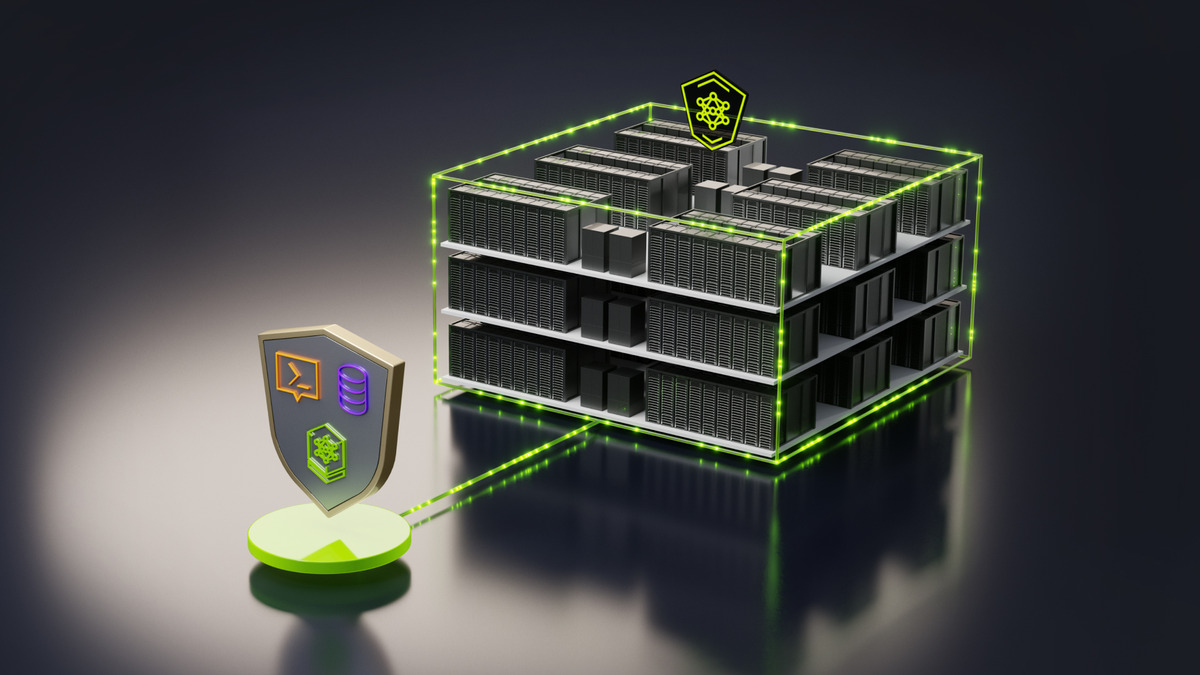
NVIDIA has announced the expansion of its Confidential Computing portfolio with the introduction of Confidential Bare Metal, a new deployment option designed for frontier model builders. This feature allows organizations to execute sensitive workloads on dedicated third-party infrastructure while retaining strict control over their proprietary models and data. As part of the broader NVIDIA OpenShell Reference Architecture, this initiative supports the safe deployment of agents at scale. Confidential Computing serves as the critical infrastructure layer that safeguards the models and data these agents depend on during execution, ensuring that sensitive operations remain protected within a secure environment across diverse hardware configurations.The new platform introduces advanced security controls that protect data in transit, measure platform integrity, and enforce hardware-level access restrictions. These capabilities allow model builders to own and operate their bespoke software stacks, including host and platform infrastructure software, when using NVIDIA accelerated computing infrastructure. This flexibility is available across third-party cloud, neocloud, and enterprise infrastructure providers. By offering a converged security architecture with three distinct deployment options, NVIDIA enables organizations to match the appropriate security model to their specific trust boundaries and operational requirements. This ensures that high-value workloads receive the necessary privacy protections without compromising performance or operational autonomy.Hardware support for this expanded ecosystem now includes NVIDIA Grace Blackwell NVL72 rack-scale systems, as well as x86-based NVIDIA HGX Rubin NVL8 and NVIDIA DGX Rubin NVL8 systems. The technology will also integrate with NVIDIA DSX OS, providing a reference architecture for cloud providers building AI factories. This integration ensures that cloud providers have a robust software foundation for operating confidential workloads. The expansion brings Confidential Computing to larger scale systems, allowing for more robust protection of training data and model intellectual property. This move significantly broadens the hardware landscape where secure, hardware-rooted isolation and cryptographic attestation can be applied to modern AI workloads.Major industry partners are already integrating these new capabilities into their offerings. Cohere plans to integrate Confidential Bare Metal into its Model Vault, using trusted execution environments to extend hardware-rooted security directly to the GPU. This protects models and data in memory and across interconnects during execution. Google Cloud is extending support to A4X Max instances powered by NVIDIA GB300 NVL72 systems, combining non-virtualized accelerated computing with cryptographic protection. A wide range of providers, including CoreWeave, Microsoft Azure, and Vultr, support these deployments, while systems partners like Cisco, Dell, and HPE will offer NVIDIA-Certified Systems. This creates a comprehensive global ecosystem for scaling training and inference with strong privacy guarantees.
- Public
- 21 Oct, 2026
Meta unveils new SDKs for spatial interfaces in standard Android apps at Connect 2026
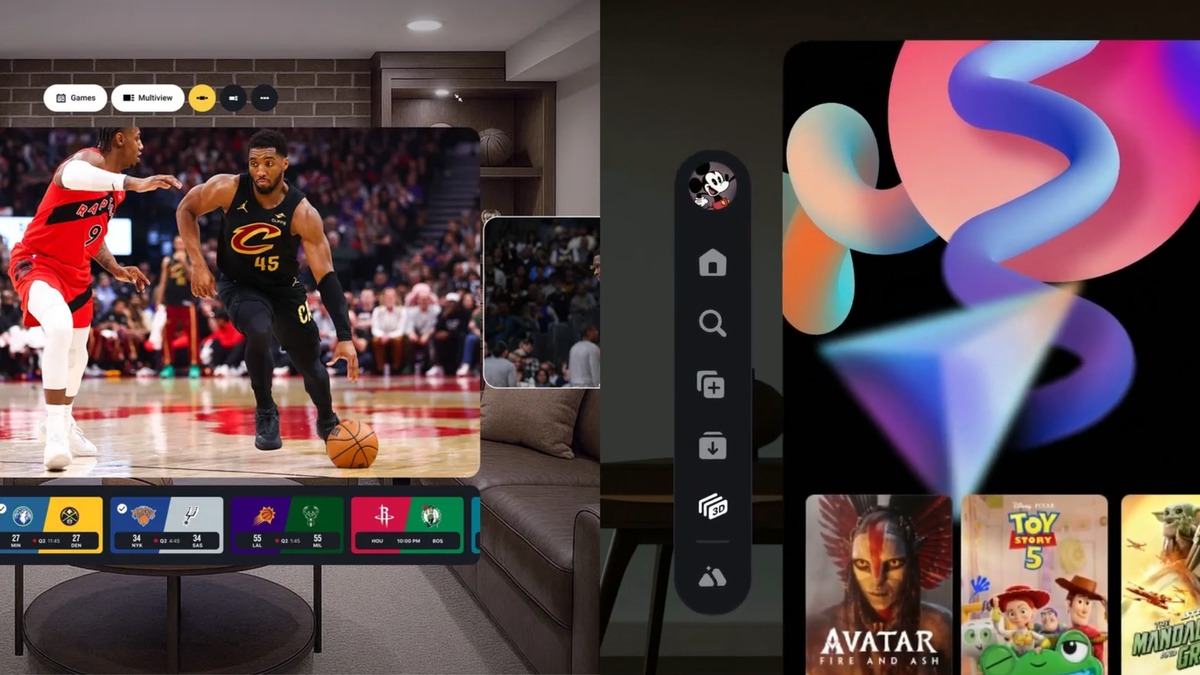
During Meta Connect 2026, the company announced a suite of new Software Development Kits (SDKs) designed to integrate spatial elements into standard, non-immersive applications on Horizon OS. Historically, 2D apps on the platform were confined to tablet-style interfaces, forcing developers to use the full Spatial SDK if they wanted to add floating windows or spatial UI components. The new approach allows developers to keep their existing activity and UI architecture while adding spatial capabilities. This significantly lowers the barrier to entry for spatial design in traditional Android apps.The centerpiece of the announcement is the Meta VR Layout SDK. It lets developers add spatial components and windows around the main window of a standard Android app built with Jetpack Compose or React Native. Unlike the Spatial SDK, which creates fully immersive experiences, the Layout SDK allows apps to remain non-immersive and coexist with other open applications. It supports window layouts similar to those in visionOS, but it does not allow spawning 3D objects or controlling the environment: those capabilities still require the full Spatial SDK. The NBA app is highlighted as one of the first examples of using this technology to improve multi-view UIs.Compatibility is a key constraint for these new tools. The Meta VR Layout SDK is fully supported only on Horizon OS 2.7 and later. On earlier versions, the SDK automatically falls back to non-spatial behavior, keeping the main window functional, while spatial window components use developer-configured fallbacks. Alongside this, Meta is shipping a new Gaze SDK for Jetpack Compose, React Native, and Android Views. This SDK addresses input challenges in Meta VR Glasses, which use a "Look and Pinch" scheme based on eye and hand tracking. The Gaze SDK allows developers to give the system hints to prevent misclassification of customized components and to customize hover behavior, though it is currently in early access.To address the lack of a cohesive visual identity for 2D apps, Meta is introducing the Meta VR UI Set SDK, a Jetpack Compose design system that serves as the successor to the previous Horizon OS UI Set. This SDK provides dark and light color schemes, semantic colors, typography, icons, and interaction feedback specifically optimized for VR devices. Unlike the previous UI Set, which was impractical for standard 2D Android apps, the new SDK is designed for easy adoption by 2D developers and is noted to be optimized for implementation by AI coding agents. This move aims to ensure that 2D apps on the platform adopt consistent visual styles and interaction patterns that match the broader system.The practical impact of these tools is already visible in major third-party applications. Disney+ on Quest, which previously lacked the 3D content and custom environments available on Apple Vision Pro, will receive a major update in November. The update will overhaul the UI to be more spatial, add support for 3D media, and introduce several 3D environments from the visionOS version. The launch coincides with Meta's plan to add hundreds of rentable movies in the US later this year, with a catalog expected to expand to thousands of titles internationally by the time Meta VR Glasses launch in 2027.
- Public
- 21 Oct, 2026
Alibaba Qwen N1 Pro: Precise Eye Tracking and Health Sensors in Smartglasses
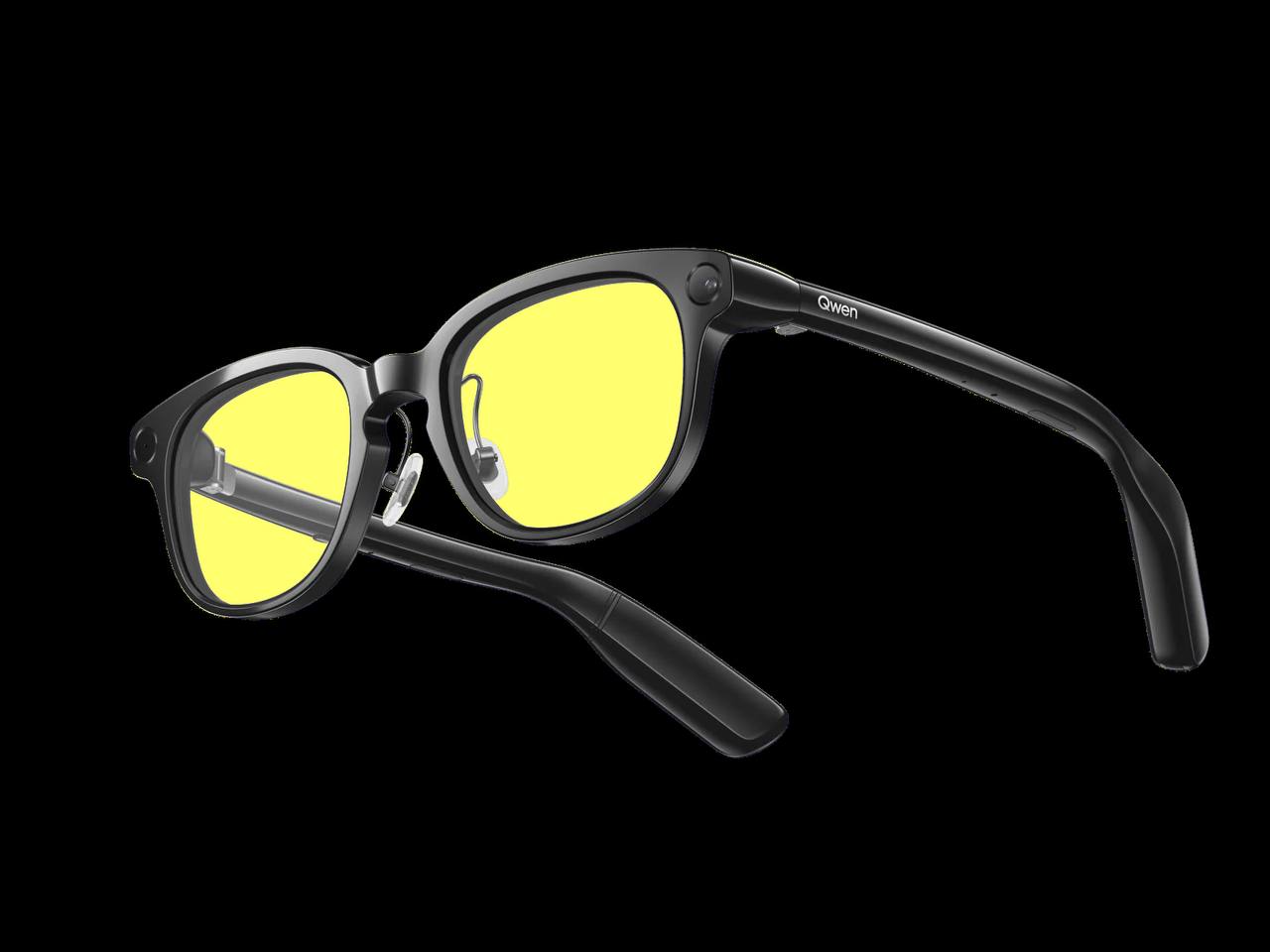
Alibaba has expanded its hardware portfolio by launching the N1 series of smartglasses in Hangzhou. While the standard N1 model lacks a display and competes directly with the Ray-Ban Meta for use cases like phone calls, live translation, music streaming, and AI assistance, the hardware specifications are significantly higher. The device features a 50-megapixel camera capable of recording 4K video, a substantial upgrade from the 12-megapixel sensor found in the Ray-Ban Meta. Battery life is also extended, offering up to nine hours of continuous music streaming or 25 hours in standby mode, compared to the six hours provided by its main competitor. Early hands-on reports indicate that the camera performance is robust, producing clear images even in low-light conditions.The standout innovation in the lineup is the Qwen N1 Pro, which integrates a dedicated eye-tracking module. This system uses a tiny 1.7mm camera per eye to track gaze with an error of less than one degree. Unlike previous devices that infer attention from head pose, this hardware allows the glasses to determine exactly what the user is looking at. This capability provides precise context for the built-in AI assistant, enabling it to answer questions about specific objects in the user's field of view. The technology also supports iris authentication, allowing users to securely authorize Alipay payments without manual input, which adds a layer of protection against theft.Beyond visual tracking, the Qwen N1 Pro is equipped with health monitoring sensors located in the nose bridge. These components measure body temperature, heart rate, and other physiological data, effectively turning the smartglasses into a wellness device. This feature addresses a common criticism of smartglasses, which lack the health sensor capabilities found in smartwatches. For professional users, this data could be used to monitor stress levels during work or to ensure safety protocols are followed in industrial training environments by verifying that operators are looking at the correct machine indicators.The N1 series is deeply integrated with Alibaba's ecosystem, including Alipay and Taobao, which play a central role in daily life in China. Users can make payments by scanning QR codes with the glasses or request purchases on Taobao via voice commands. The Qwen N1 Pro is priced at 3,499 yuan, with a launch discount bringing it down to approximately 2,600 yuan. The standard N1 model costs 2,999 yuan. While the hardware offers more features than the Ray-Ban Meta, it costs more. Availability outside of China remains uncertain, largely due to the tight coupling with domestic services that have limited utility in Western markets.