The MicroLED Industry Shifts Its Focus to Co-Packaged Optics for AI Data Centers
 Public
- 22 Oct, 2026
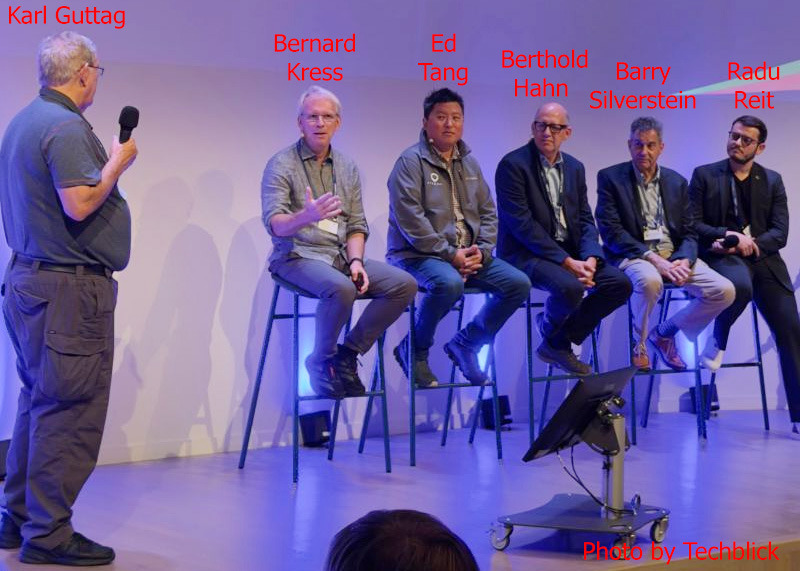
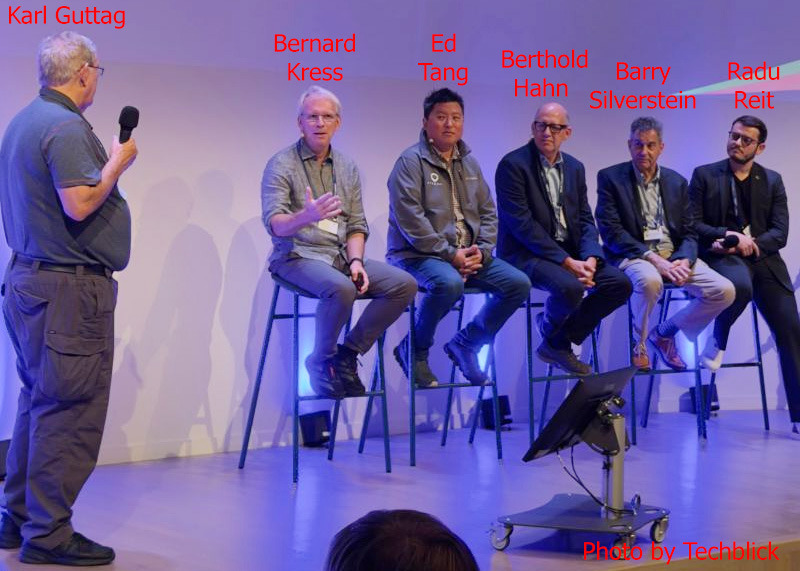
The recent MicroLED and AR/VR Connect conference in Eindhoven highlighted a critical strategic pivot within the display industry. While the event continues to serve as a vital networking hub for augmented reality professionals, the dominant narrative shifted away from consumer AR hardware toward optical interconnects. A substantial portion of the agenda, including keynote addresses, focused on Co-Packaged Optics (CPO), specifically for application in AI data centers. This shift indicates that the immediate commercial viability of MicroLED technology is being driven by high-performance computing infrastructure rather than consumer wearable devices. This alters the landscape for developers who expected rapid advancements in AR display capabilities.
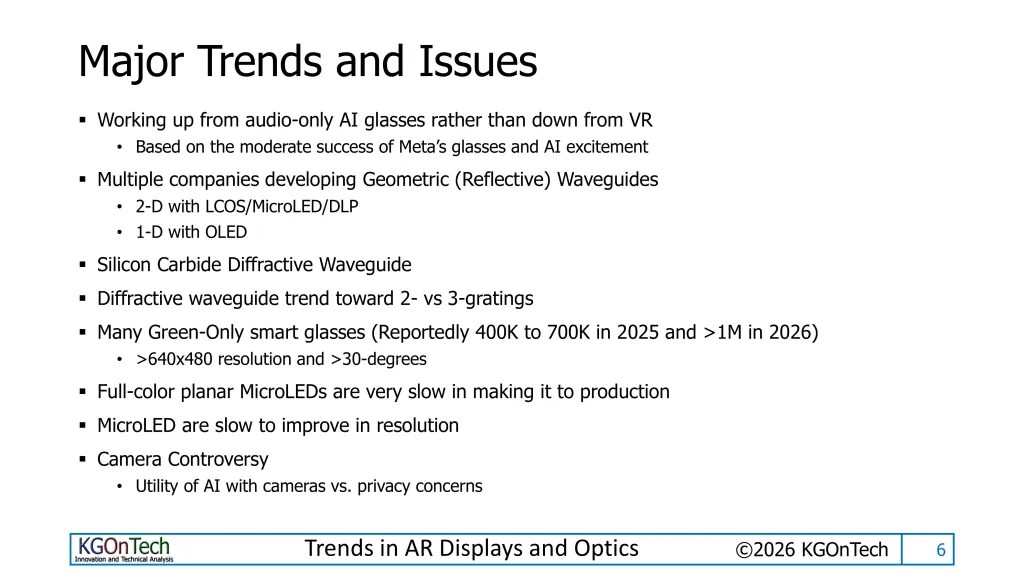
The economic drivers behind this transition are starkly illustrated by the current market dynamics of AR glasses. Reports suggest that between 1.6 and 2 million AR glasses with monochrome green MicroLED displays may be shipped in 2026. This volume, while promising, is insufficient to support a robust component ecosystem. For context: if a binocular device like the Ray-Neo model costs $499, the display and optics budget per eye is likely under $100. With suppliers like Jade Bird Display reportedly earning around $40 per monochrome green display unit, the total market value remains low. At a standard 20% gross margin, the resulting revenue is modest and must be shared among multiple manufacturers. This contrasts sharply with the massive capital expenditure in AI data centers, making CPO a far more attractive investment target for companies seeking sustainable growth.
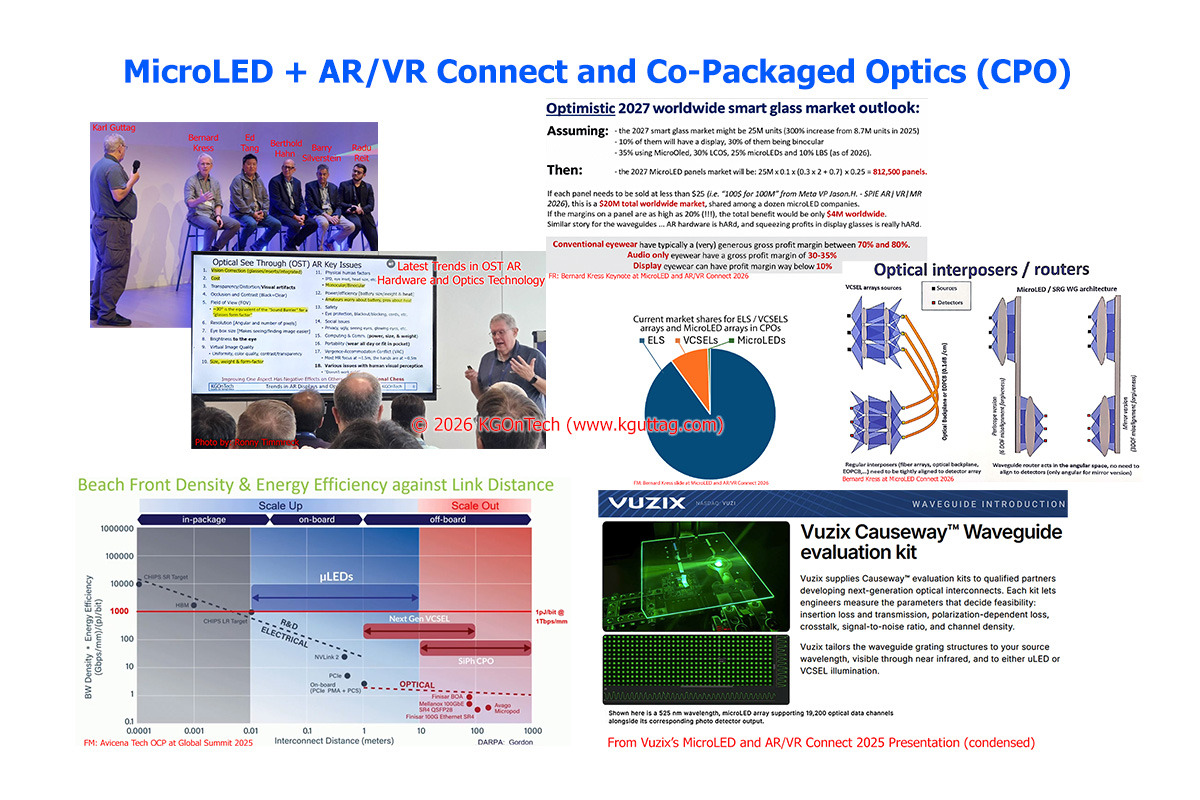
Technical requirements for CPO differ fundamentally from those of AR displays, creating a divergence in R&D priorities. For AR applications, MicroLEDs must deliver full-color reproduction and generate a spread-out light pattern to create an eye box within a waveguide. In contrast, CPO applications do not require full color, and the wavelengths used are different. The primary goal for waveguides in CPO is to maintain a tight light pattern rather than spread it. This difference means that engineering efforts directed toward optimizing MicroLEDs for data center interconnects may not directly translate into improvements in AR display quality. As a result, developers relying on MicroLED for next-generation AR glasses may face delays in achieving cost-effective full-color solutions, as industry resources are being redirected to the more lucrative CPO sector.
The current CPO market is dominated by established laser technologies, including External Laser Sources and Vertical-Cavity Surface-Emitting Lasers (VCSELs), with MicroLEDs making only minor inroads. Companies like Avicena Tech are developing optical transceivers that integrate MicroLEDs and sensor arrays on a single chip, targeting on-board and near-board-to-board communication. In short-distance scenarios, MicroLEDs offer a "wide and slow" approach, using many parallel channels and paths, which can be more efficient than serializing data for laser transmission. While this technology is promising for reducing power consumption and latency in data centers, its speculative nature with regard to MicroLED adoption remains a concern. The industry is betting that the sheer scale of AI infrastructure will provide the necessary volume to make MicroLED-based CPO viable, a trajectory that may outpace the development of consumer AR hardware.
This strategic focus on CPO has tangible implications for the AR ecosystem, particularly regarding the availability of full-color MicroLEDs. As manufacturers prioritize R&D for data center applications, the development of cost-effective full-color MicroLEDs for AR may slow down. The "positive spin" often cited is that CPO investment will generally advance MicroLED technology, but there is a risk that the specific needs of AR are neglected in favor of the dominant market driver. Waveguide companies are also adapting to this trend, with firms like Vuzix dedicating significant portions of their presentations to CPO requirements and seeking partners in the data center space. For developers, this means that while the underlying MicroLED technology will improve, the specific optimizations needed for high-fidelity AR displays may not be the primary focus of industry innovation in the near term.
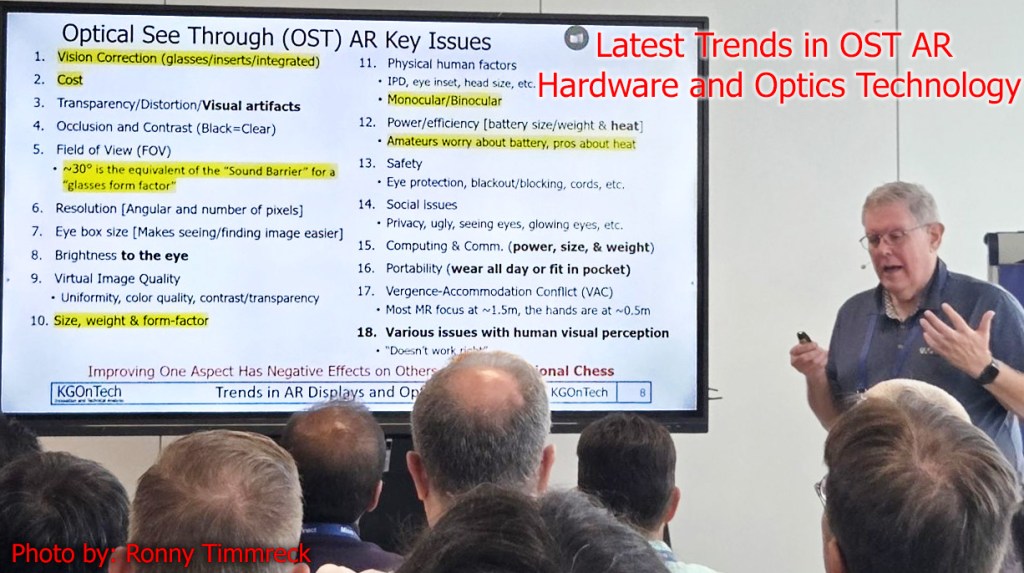
The broader challenge for AR adoption remains the complex interplay of technical constraints, often summarized by the "18 key issues" facing optical see-through designs. Solving one problem, such as increasing the field of view, typically exacerbates others, such as power consumption, battery size, and weight. For instance, a larger field of view requires more light and more pixels, leading to higher data processing demands and increased power draw. Additionally, the integration of prescription lenses introduces manufacturing friction and sub-optimal vision correction compared to traditional eyewear. These physical and economic barriers, combined with the industry's pivot toward CPO, suggest that mass-market AR glasses will continue to face significant hurdles. Developers must navigate a landscape where component costs and technical limitations are heavily influenced by the priorities of the AI data center market.