Blog

 Public
- 02 Sep, 2026
Optimizing a CUDA Image-Processing Pipeline: From Bugs to Benchmarks
This practical CUDA example processes a stream of red, green, and blue images: data is first copied from the CPU to the GPU, converted from RGB to grayscale, then each 32-by-32-pixel tile is sorted so its median can be computed, and finally the medians are copied back to the host. The starting implementation defines two kernels: computeRGBToGray for the color conversion and computeMedian<TILE_WIDTH, HISTO_SIZE> for the per-tile median, while main `main` allocates memory, launches the kernels, and frees resources inside an OpenMP parallel loop over three images.The median kernel has a subtle but serious flaw. Its shared-memory store tile[index] = d_image_gray[index] incorrectly uses a global index to write into shared memory, which is scoped to a single thread block. Running the binary produces an "illegal memory access" error, and compute-sanitizer pinpoints the exact cause: an out-of-bounds __shared__ write of one byte at line 55, reported for thread (0,3,0) in block (20,0,0).Figure 1. The first part of the image-processing pipeline. First, copy the RGB images from the host to the device, then convert them from RGB to grayscaleTo prevent such indexing mistakes, NVIDIA introduced a new launch API in CCCL. Kernels are launched with cuda::make_config, cuda::block_dims, cuda::grid_dims and cuda::launch, then the kernel accepts the configuration as its first parameter and uses cuda::gpu_thread.index(cuda::grid, config) and cuda::gpu_thread.index(cuda::block, config), to retrieve global and block indices separately. Raw pointers can also be replaced with cuda::std::span, cuda::std::mdspan and cuda::shared_memory_mdspan, which trigger assertions in debug mode when an out-of-bounds access occurs.Fig. 2. The second part of the image-processing pipeline: split each grayscale image into 32x32-pixel tiles, sort the pixels in each tile to select its median, then copy the median values from dOnce the code is bug-free, it is benchmarked with Nsight Systems. Instrumenting the code with NVTX ranges, such as nvtx3::scoped_range and nvtxRangePushA/nvtxRangePop - makes the timeline easier to read and shows that the median-computing kernel dominates the profile: it takes about 2.1 seconds per image and accounts for 98.5% of GPU time, while memory operations account for only 1.5%.Figure 3. The initial Nsight Systems timeline with NVTX annotations. The median-computing kernels dominate the profile, making up almost all GPU activity and most of the 6.8-second image processingFrom the CPU side, the whole image-computation phase takes 6.8 seconds, with nearly all of that time going to the median kernels. This timeline gives developers a clear target for the next optimization steps: the median computation is by far the most expensive part of the pipeline, and the subsequent stages of the walkthrough focus on improving it.

- Public
- 02 Sep, 2026
Android Studio Quail 4 stable release: the IDE now comes preloaded with Google-curated Android skills
Android Studio Quail 4 is now stable and ready for production use. It is the final stable release for Android Studio Quail, focused on building premium apps with AI more efficiently. Several new features across the last four releases are aimed at speeding up day-to-day development workflows.A key addition is that Android Studio now bundles curated Android skills directly into the IDE. While generic LLMs often write incorrect or outdated code when faced with rapidly changing Android APIs, platform migrations, and complex configuration structures, these skills counter that problem. Built by the team behind Android and following the open-standard agent skills specification, they are modular, AI-optimized instructions designed to guide LLMs through complex Android workflows. Because they are pre-loaded, developers can start using them without downloading extra files. When you prompt the built-in agent, the IDE analyzes the prompt and searches metadata for installed skills, automatically invoking the most relevant ones. This gives the agent instant domain expertise aligned with Google's best practices while reducing manual setup prompts.Android Studio ships preloaded with 23 curated skills, including ones targeting common Android development tasks.
- Public
- 01 Sep, 2026
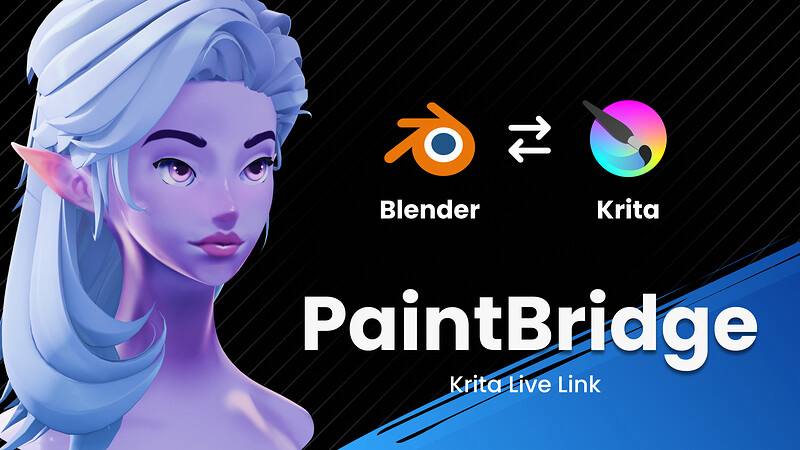
PaintBridge links Blender and Krita for painting textures directly on a model
PaintBridge is a new plug-in from MadCanvas that creates a live link between Blender and Krita. It is aimed at open-source artists who want to paint textures directly on a 3D model. From Krita you can control the Blender viewport, paint over the model, and then project your artwork back onto the mesh. It works like Blender's Quick Edit, but with more control and a proper live connection that removes the need to shuffle files back and forth between the two applications. Watch PaintBridge in action here: https://youtu.be/8oq_qyIMMQQ?si=32u1EVZMSSeSF2JOPaintBridge runs locally, so both Krita and Blender must be installed and running on the same machine. It works with layer-based add-ons such as Ucupaint, adding flexibility for texturing. It requires Blender 4.0 or later and Krita 5.0 or later.

- Public
- 31 Aug, 2026
Quest 3 Update Unlocks Refresh Rates Up to 240Hz
Meta has pushed the Horizon OS 2.7 update to Quest 3, which noticeably boosts the headset's refresh rate: the display now reaches 207Hz for regular users and 240Hz in developer mode. This comes from a new "Extended Refresh Rates" feature that unlocks higher panel output. The update applies only to Quest 3, not Quest 3S or Quest 2. Quest 3S uses a different panel that tops out at 120Hz, so it does not get the same headroom.The practical impact is limited for most native apps. Since Quest 2 received experimental refresh rate support in April 2021, 120Hz has been available, yet even now very few apps actually use that headroom. Native Quest titles are rarely optimized for such high framerates, so the extra hertz will not benefit everything equally. In addition, 240Hz requires developer mode and display scaling: the resolution sent to the panel is reduced and then upscaled back. The ceiling at full resolution is 207Hz.Maker tooling has its own constraints. Application Spacewarp, which lets developers double FPS using synthetically generated frames, does not work well with the Quest 3 SoC at higher framerates. It typically cannot handle extrapolation beyond 120 FPS, let alone 207, so this common path to higher framerates is effectively cut off for now.PC VR streaming, on the other hand, is where progress is already visible. Virtual Desktop developer Guy Godin has added 144 FPS support to the app, which streams a computer screen or plays PC VR games wirelessly. However, video decoders struggle beyond 144 FPS, and Godin notes that higher framerates are probably unlikely for Quest 3 as a result.The wider context suggests the hardware was always capable but had been left locked. With Valve's Steam Frame standalone headset nearing a price and release date announcement, Meta appears motivated to show what its $600 device can do against a competitor expected to cost north of $1,000 and support only up to 144Hz in experimental mode.
- Public
- 31 Aug, 2026
Godot Tutorial: Realistic Water with Dynamic Foam
Emil J has published a Godot tutorial that walks through building a realistic water shader from scratch using Gerstner waves. While implementing them, he explains how the waves work: direction, phase, vertical and horizontal displacement, and how to combine multiple waves to get a natural-looking surface. He also adds noise to break up the repetitive pattern and calculates normals for better lighting and reflections, so the surface responds correctly to light and reflections rather than looking flat.A follow-up video extends the same shader with dynamic ocean foam: the Jacobian determinant, together with Gerstner wave displacement, generates foam where the water churns. The first tutorial is designed to leave you with a fully animated water shader that can be built on further with the foam pass. The article also notes that Godot 4.8 is now in development, with new features including Trail3D, VisualShader node groups, multi-bounce ambient occlusion, and directional lightmap specular light.

- Public
- 17 Jul, 2026
Game of Thrones: War for Westeros Delayed to 2027 to Improve Quality
Developers Game of Thrones: War for Westeros announced that the project's release has been postponed to 2027. According to the team, the extra time is needed to polish the game, optimize the technical side, and improve the overall quality of the product. This decision is becoming increasingly common in the modern gaming industry, where studios prefer to release the most complete projects possible, even if that means changing the original timeline.For fans of the Game of Thrones universe, the delay means a longer wait, but the developers emphasize that the additional production phase will allow many ideas to be realized at a higher level.Why Studios Delay ReleasesCreating modern games is a complex, multi-stage process that brings together the work of designers, programmers, artists, animators, AI specialists, and testers.Additional development time makes it possible to:improve the stability of the project;fix critical bugs;improve performance;refine the game mechanics;improve the quality of graphics and animation;conduct larger-scale testing.All of this helps significantly reduce the number of technical issues after a game's release and makes the user experience more comfortable.Quality Matters More Than SpeedIn recent years, players have increasingly expected a high level of polish from major releases on day one. That is why many studios are willing to postpone release dates if it allows them to improve the quality of the product.The history of the gaming industry shows that extra months of development often have a positive effect on the final result, especially for large-scale open-world projects with complex game systems and a great deal of content.Modern development takes timeCreating next-generation games involves a large number of technologies: realistic 3D graphics, complex physics, artificial intelligence, procedural animation, network services, and cinematic staging.Each of these systems goes through lengthy stages of testing and optimization to ensure that the project runs reliably on a variety of hardware configurations.In addition, developers pay close attention to gameplay balance, the user interface, and performance, since these elements directly affect the player experience.Delays Have Become Part of the Modern IndustryToday, delaying a release date is increasingly seen as a sign of a responsible approach to development. Instead of shipping a raw product, many studios prefer to invest extra time in improving quality, even if it means pushing the launch back by several months or a year.This approach helps strengthen audience trust and increases the likelihood of a successful project launch.The Cyborgs.pro PerspectiveThe Team Cyborgs.pro team supports an approach in which product quality becomes the top priority. Developing modern digital solutions, whether video games or VR, AR, or XR projects, requires careful attention to every detail: from software architecture to the user interface and visual execution.Using modern game engines, 3D modeling technologies, analytics, testing, and optimization makes it possible to create reliable and scalable products. It is attention to quality at every stage of development that becomes the key success factor, both in the game industry and in building enterprise digital solutions, interactive applications, and immersive virtual spaces.

- Public
- 16 Jul, 2026
GTA Online players criticize Rockstar after payouts for more than 20 heists are cut
The latest changes to the economy GTA Online sparked an active discussion in the gaming community. After the new update was released, many players noticed reduced payouts in more than twenty heists and missions. According to some of the audience, such changes make certain activities less appealing and increase the time needed to earn in-game currency.Economic balance is always one of the most sensitive elements of multiplayer games, so any adjustments quickly become a subject of discussion among millions of users.Why developers change the game economyIn multiplayer projects, the economy is constantly evolving. Developers analyze playthrough statistics, the speed of resource accumulation, the popularity of different missions, and the influence of game mechanics on overall balance.Reward adjustments make it possible to:maintain long-term economic stability;encourage players to explore new activities;reduce the imbalance between different ways of earning;extend the content lifecycle;adapt the game to new updates.However, such changes are not always received positively, especially if they affect already popular ways of earning in-game currency.Reaction of the gaming communityAfter news of the payout reduction emerged, many players expressed their dissatisfaction on dedicated forums and social media. The main criticism is that completing complex heists requires a significant investment of time, preparation, and team coordination, and reduced rewards lower the motivation to replay familiar scenarios.At the same time, some of the community considers such changes a natural part of an online game's evolution, where balance is regularly reassessed to keep players interested in the various modes.Economy as an Important Element of GameDevCreating an in-game economy is one of the most difficult tasks in developing multiplayer projects. Developers have to account for a huge number of factors: the rate at which resources are obtained, player progression, the motivation to replay content, the impact of updates, and the overall state of the game ecosystem.Modern studios actively use analytics, telemetry, and large-scale data processing to make decisions based on player behavior, rather than relying solely on internal assumptions.Balancing Player Interest and Project GrowthFor an online game to succeed, it is important to find a compromise between keeping the audience engaged and maintaining a healthy in-game economy. Rewards that are too high can speed up progression so much that users lose interest in the content faster, while payouts that are too low can provoke a negative reaction from the community.That is why developers regularly test changes, analyze player feedback, and, when necessary, adjust the balance in subsequent updates.The Cyborgs.pro PerspectiveThe Team Cyborgs.pro team closely follows how leading game studios develop multiplayer projects and manage their economies. Modern GameDev is not only about high-quality graphics and engaging gameplay mechanics, but also about in-depth analytics, working with user data, balancing progression, and continuously improving the gameplay experience.These principles also apply when developing projects in VR, AR, and XR. Using analytics tools, modern game engines, and data processing technologies makes it possible to create digital products that stay interesting to users over the long term and deliver a high level of engagement thanks to well-designed game mechanics.
- Public
- 16 Jul, 2026
The Mound: Omen of Cthulhu Reaches 800,000 Wishlist Adds Before Release
The upcoming co-op horror game The Mound: Omen of Cthulhu continues to gain popularity at a rapid pace. Even before its official release, the project has passed an impressive milestone of 800,000 Steam wishlist additions, which shows the high level of interest from the gaming community. For an independent project, such figures are a serious achievement and demonstrate the effectiveness of the chosen concept, marketing strategy, and audience engagement.A high number of users who have added a game to their wishlist is traditionally considered one of the most important indicators of the potential commercial success of an upcoming release.The Atmosphere of Lovecraftian HorrorThe Mound: Omen of Cthulhu is inspired by the works of Howard Phillips Lovecraft and transports players into a world of ancient mysteries, inexplicable phenomena, and creatures lurking beyond the limits of human understanding.Players will have to explore dangerous territories, search for ancient artifacts, face unknown threats, and make decisions under constant psychological pressure. Instead of the usual jump scares, the developers rely on a tense atmosphere, a sense of the unknown, and a gradual buildup of anxiety.Co-op Raises the TensionOne of the key features of the project will be cooperative play. Players will need to work as a team, coordinate their actions, distribute resources, and overcome the dangers that arise along the way together.Among the main gameplay features:cooperative exploration of the world;interaction between team members;searching for rare artifacts and resources;confronting ancient creatures;a major role for team tactics;dynamic development of events during each game session.This approach makes every playthrough unique and significantly boosts the project's replayability.Why the wishlist matters so muchFor modern digital storefronts, the number of wishlist additions is one of the main indicators of audience interest. High numbers allow developers to better gauge potential demand, increase the project's visibility on the platform, and attract the attention of publishers, investors, and gaming media.In addition, user activity before release helps plan marketing campaigns more effectively and forecast initial sales after the game launches.Modern Technologies for Creating Atmospheric Horror GamesDeveloping psychological horror games requires a comprehensive approach. In addition to high-quality graphics, the lighting system, spatial audio, realistic animation, environmental physics, and intelligent enemy behavior are all very important.Modern game engines make it possible to create detailed worlds with dynamic weather effects, complex visual scenarios, and a high degree of interactivity, which helps players become more deeply immersed in what is happening.The Cyborgs.pro PerspectiveThe Team Cyborgs.pro team closely follows projects that successfully combine modern technology, a strong artistic concept, and effective engagement with the gaming community. The story of The Mound: Omen of Cthulhu shows how important a high-quality project presentation, a well-thought-out marketing strategy, and attention to user experience are even before the official release.When developing projects in GameDev, VR, AR, and XR, specialists Cyborgs.pro also pay special attention to creating an immersive atmosphere, realistic 3D graphics, multiplayer interaction, and modern visualization technologies. It is the combination of innovative solutions and a deep understanding of audience needs that makes it possible to create digital products capable of attracting users' attention as early as the initial stages of development.

- Public
- 16 Jul, 2026
Analyst: Artificial Intelligence Is Turning Steam Into a Marketplace for Thousands of Game Clones
The rapid development of generative artificial intelligence continues to reshape the gaming industry. According to one industry analyst, digital storefronts, including Steam, are facing a new problem: a rapid increase in the number of similar projects created with heavy use of AI. This makes it harder to find truly high-quality games and intensifies the competition for users' attention.Although artificial intelligence significantly speeds up content development, experts note that the industry will have to find a balance between the accessibility of tools and maintaining a high quality of published projects.AI speeds up game developmentModern artificial intelligence models can help developers at different stages of game creation. They are used to generate concept art, write draft dialogues, create textures, program code, and sound effects, and even to prototype gameplay mechanics.As a result, small studios and independent developers can bring their ideas to life faster and reduce production costs. However, the availability of such tools also leads to a growing number of projects that differ only minimally from existing games.What the main problem isAccording to the analyst, the key risk is not the use of artificial intelligence itself, but the mass appearance of homogeneous products created from similar templates.This may lead to several consequences:an increase in the number of projects with similar mechanics;greater difficulty in finding original games;growing competition for users' attention;reduced visibility of high-quality indie projects;an increased load on the moderation systems of digital storefronts.At the same time, many experts stress that generative AI remains merely a tool, and the final result still depends on the experience, creativity, and professionalism of the developers.The Future of Digital Gaming PlatformsThe growing number of projects is forcing digital storefronts to look for new approaches to content recommendations and search. Personalization algorithms, user reviews, curated collections, and automated quality analysis systems are becoming increasingly important.In the future, such mechanisms may become an important tool for helping players find truly interesting projects among an ever-growing selection.Artificial Intelligence as a Tool, Not a Replacement for the DeveloperDespite the active adoption of AI, most professional studios view it as a means of improving efficiency rather than as a full replacement for a creative team. Generative models help automate routine tasks, but developing unique game mechanics, creating a memorable world, and refining the user experience still require the involvement of specialists.It is precisely the combination of human expertise and intelligent tools that is considered the most promising direction for the industry's development today.The Cyborgs.pro PerspectiveThe Team Cyborgs.pro team views artificial intelligence as a powerful tool that can speed up the development of games and VR, AR, and XR projects. AI helps automate the creation of individual content elements, analyze data, optimize workflows, and accelerate prototyping.At the same time, a professional team of developers, designers, artists, and technical specialists still plays the key role. It is a creative approach, careful work on user experience, and smart use of modern technologies that make it possible to create truly high-quality digital products that stand out from similar-looking solutions and meet users' high expectations.

- Public
- 16 Jul, 2026
UNFROST Announced: A Co-op Horror Game with Ice Monsters and a Survival Atmosphere
The developers unveiled UNFROST A new co-op horror game set among the vast glaciers of Antarctica. Players head out on a dangerous expedition to explore mysterious territories, face ancient creatures, and survive in one of the harshest places on the planet.The project combines survival, exploration, cooperative play, and tense horror, where the danger comes not only from mysterious creatures but also from the environment itself.An Expedition to the Edge of the WorldEvents UNFROST unfold amid extreme cold, limited visibility, and complete isolation. Players will explore ice caves, abandoned research stations, and ancient ruins hidden beneath layers of permafrost.Each new location holds its own secrets, and the gradually unfolding story heightens the atmosphere of the unknown. A constant sense of danger makes exploring the world just as tense as encountering enemies.Co-op as the Foundation of GameplayThe project's main feature will be cooperative play. Team members will need to coordinate their actions, distribute resources, and help one another in the most dangerous situations.Players can look forward to:exploring locations together;hunting ancient creatures;searching for supplies and equipment;completing team tasks;interacting with the environment;coping with extreme weather conditions.Effective cooperation will be the key to survival, since acting alone can significantly increase the risk of mission failure.Atmosphere and Modern TechnologyThe developers pay special attention to visual execution. Snowy expanses, realistic lighting, dense fog, snowstorms, and high-quality sound design create a sense of complete isolation and heighten the psychological tension.The use of modern graphics technologies makes it possible to achieve highly detailed environments, realistic weather effects, and smooth character animation, which makes the game world look as convincing as possible.Why Projects Like This Are Becoming More PopularCo-op horror games continue to thrive thanks to their combination of tense atmosphere and teamwork. Playing together makes every session unique, because success depends not only on individual skill but also on the players' ability to communicate effectively and make decisions under constant danger.That is why projects that combine horror, open-world exploration, and cooperative mechanics attract strong interest from a wide audience.The Cyborgs.pro PerspectiveThe Team Cyborgs.pro closely follows the development of modern game projects that use cutting-edge technologies for creating interactive worlds. Cooperative mechanics, realistic 3D graphics, dynamic lighting, environmental physics, and team interaction systems are becoming important elements not only of video games, but also of solutions in VR, AR, and XR.Such technologies are used in training simulators, corporate training programs, virtual expeditions, and interactive presentations. Modern game engines make it possible to create next-generation digital projects with a high level of realism, deep immersion, and the ability for users to interact together in a single virtual space. https://www.youtube.com/watch?v=lNNF5XxWaV4

- Public
- 15 Jul, 2026
Enthusiast creates a transparent case for the PS5 Slim in the spirit of iconic retro consoles
The gaming community has once again proven that the creativity of tech fans knows no bounds. One enthusiast has unveiled an unusual modification PlayStation 5 Slim, creating a fully transparent case for the console, inspired by the design of popular gaming devices from the late 1990s and early 2000s.The project quickly attracted the attention of social media users and modding enthusiasts, combining modern technology with the aesthetics of retro consoles that many gamers remember from childhood.The Return of the Iconic Transparent DesignTransparent cases became a true symbol of gaming electronics at the end of the last century. They let you see the console's inner workings, emphasizing the technological feel and originality of the design.Using this idea in the modern PS5 Slim shows that classic design solutions remain relevant today. Through the transparent panels you can see the cooling system, circuit boards, chassis elements, and the internal architecture of the device, which makes the console not only a gaming platform but also an eye-catching interior piece.Why modding remains popularModding gaming devices has long since become a separate area of technical creativity. Users strive to make their consoles unique by experimenting with appearance, lighting, materials, and case design.The most popular modding directions include:replacing the standard case panels;installing transparent elements;integration of RGB lighting;custom paint and engraving;creation of game-inspired themed designs;improved cooling and internal layout.Projects like these combine engineering skills, industrial design, and a love of gaming culture.Design as Part of the User ExperienceModern gaming devices have long ceased to be purely technical solutions. Manufacturers pay close attention to the appearance of their products, since design has become an important part of how users interact with a device.Custom modifications allow owners to highlight their personal style and turn a console into a unique object that reflects their interests and passions.The Role of 3D Technologies in CustomizationToday, creating custom enclosures and accessories has become much more accessible thanks to advances in digital modeling, CAD systems, and 3D printing. Developers and enthusiasts can design parts with high precision, test designs in a virtual environment, and produce prototypes without having to launch costly manufacturing.This approach speeds up development and opens up broad possibilities for creating exclusive designer solutions.The Cyborgs.pro PerspectiveThe Team Cyborgs.pro is following with interest projects that combine industrial design, engineering solutions, and modern digital technologies. Developing 3D models, visualizing products, creating prototypes, and using augmented and virtual reality technologies make it possible to significantly speed up the process of designing and presenting new products.Such ideas are used not only in the gaming industry. The use of 3D graphics, interactive configurators, AR visualization, and VR prototyping helps companies create innovative products, demonstrate them to potential customers before production even begins, and significantly reduce the time it takes to bring new solutions to market.