Quest 3 Update Unlocks Refresh Rates Up to 240Hz
 Public
- 31 Aug, 2026
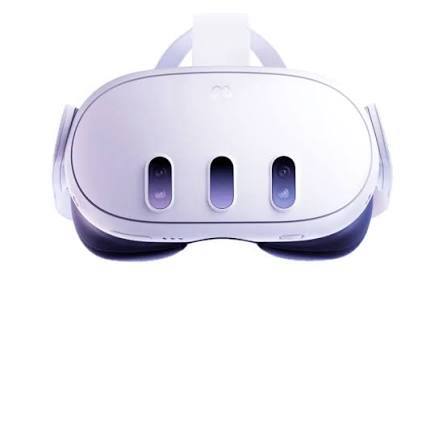
Meta has pushed the Horizon OS 2.7 update to Quest 3, which noticeably boosts the headset's refresh rate: the display now reaches 207Hz for regular users and 240Hz in developer mode. This comes from a new "Extended Refresh Rates" feature that unlocks higher panel output. The update applies only to Quest 3, not Quest 3S or Quest 2. Quest 3S uses a different panel that tops out at 120Hz, so it does not get the same headroom.
The practical impact is limited for most native apps. Since Quest 2 received experimental refresh rate support in April 2021, 120Hz has been available, yet even now very few apps actually use that headroom. Native Quest titles are rarely optimized for such high framerates, so the extra hertz will not benefit everything equally. In addition, 240Hz requires developer mode and display scaling: the resolution sent to the panel is reduced and then upscaled back. The ceiling at full resolution is 207Hz.
Maker tooling has its own constraints. Application Spacewarp, which lets developers double FPS using synthetically generated frames, does not work well with the Quest 3 SoC at higher framerates. It typically cannot handle extrapolation beyond 120 FPS, let alone 207, so this common path to higher framerates is effectively cut off for now.
PC VR streaming, on the other hand, is where progress is already visible. Virtual Desktop developer Guy Godin has added 144 FPS support to the app, which streams a computer screen or plays PC VR games wirelessly. However, video decoders struggle beyond 144 FPS, and Godin notes that higher framerates are probably unlikely for Quest 3 as a result.
The wider context suggests the hardware was always capable but had been left locked. With Valve's Steam Frame standalone headset nearing a price and release date announcement, Meta appears motivated to show what its $600 device can do against a competitor expected to cost north of $1,000 and support only up to 144Hz in experimental mode.