Structural Barriers to Mass Adoption of Optical See-Through AR Glasses
 Public
- 23 Oct, 2026

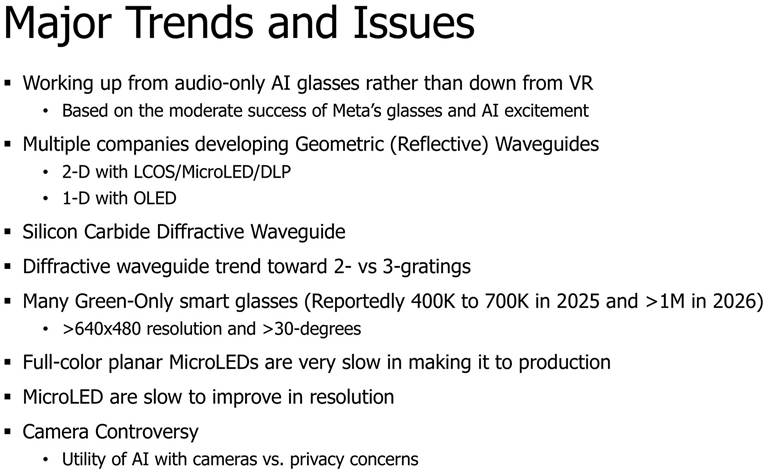
The optical see-through augmented reality sector is currently undergoing a significant strategic pivot. For years, the industry attempted to derive AR capabilities from high-end virtual reality headsets, aiming for wide fields of view and complex features that resulted in bulky, expensive devices. This approach has largely stalled. The modern trajectory involves building up from audio-only AI glasses, such as the Meta Ray-Ban Wayfarers, which have reached a critical inflection point of approximately ten million units in annual shipments. This volume is a key benchmark for mass market adoption. In contrast, VR headset shipments have declined from the ten-million-unit peak in 2021 to between 3.5 and 6 million units in 2026, indicating that moving beyond enthusiast segments remains a formidable hurdle for immersive hardware.
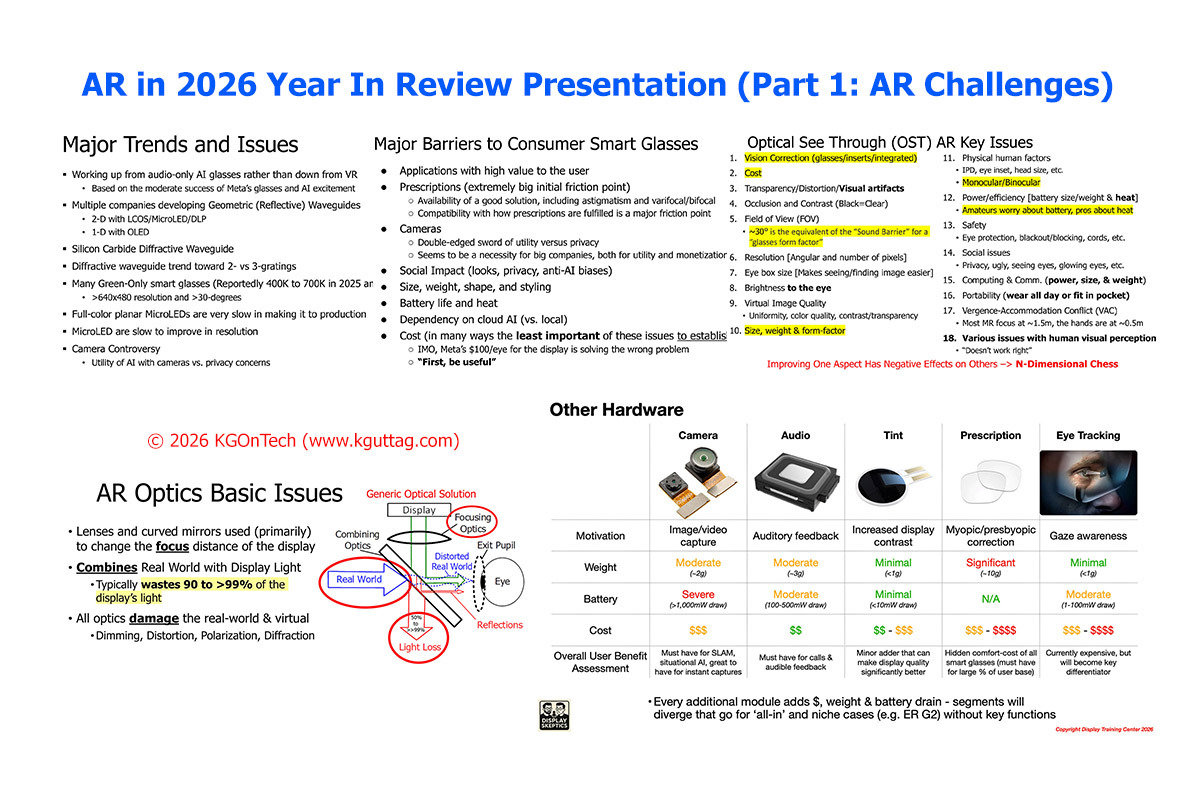
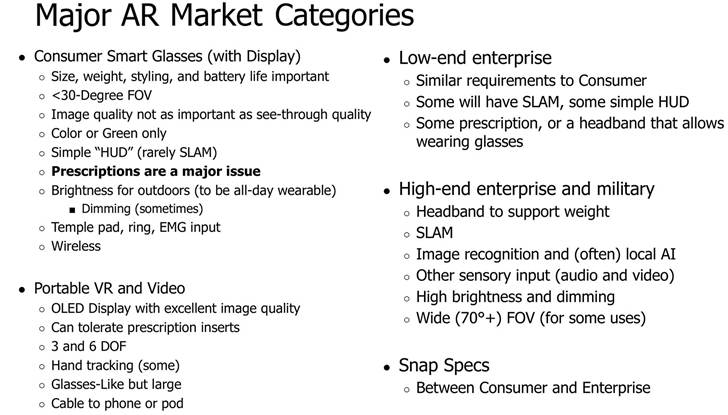
A major, often underappreciated barrier to consumer adoption is the integration of prescription lenses. For users who require vision correction, current AR glasses present a logistical and ergonomic nightmare. Unlike non-display AI glasses, which can accommodate standard prescription lenses cut locally to fit the frame, display-based AR devices typically require factory-glued prescription lenses onto waveguides. This process creates a unique SKU for every customer, leading to long lead times measured in weeks. Furthermore, these integrated prescriptions often fail to adequately correct astigmatism or bifocal vision. Aftermarket clip-in solutions exist but are too bulky to function as normal eyewear, limiting their utility to enterprise or VR contexts rather than everyday consumer use.

The display technology required for viable AR glasses faces significant stagnation. Full-color MicroLED displays, which are essential for high-quality outdoor readability, are slow to reach mass production. Current rumors suggest that while some manufacturers may begin production in the near term, the resolution remains low, typically hovering around 640 by 480 pixels. This VGA-class resolution is comparable to personal computer standards from the 1980s and is insufficient for high-fidelity text or media consumption. The lack of high-resolution, full-color microdisplays means that current AR devices cannot compete with the visual clarity users expect from modern smartphones or tablets, further limiting their appeal to the general public.
Component supply chains are under increasing pressure due to the explosive demand for AI infrastructure. The massive consumption of semiconductors by AI data centers has absorbed spare manufacturing capacity, leaving fewer resources for consumer electronics manufacturers. This scarcity affects the availability of processors, memory, and other critical components needed for AR glasses. Additionally, the inclusion of cameras introduces a complex trade-off. While cameras enable advanced features like simultaneous localization and mapping (SLAM), they significantly increase power consumption, size, and weight. A camera module can consume as much power as the display itself, making it difficult to maintain the form factor of normal eyeglasses while providing all-day battery life.
The industry must avoid the trap of focusing on a single metric, such as cost, to drive adoption. While price is a factor, it is secondary to functionality and usability. Historical examples, such as the Apple II and the original Macintosh, show that high initial prices are acceptable if the product offers unique value. Attempting to build a low-cost device with limited functionality is a misallocation of resources. The challenge is systemic: solving one technical issue, such as display brightness, often exacerbates others, such as power consumption or heat generation. There are roughly seventeen to twenty major barriers that must be solved simultaneously, including transparency, eye glow, grating artifacts, and outdoor dimming.
For all-day wearability, the device must function as normal glasses when powered off. If the device causes distortion or poor vision correction when inactive, it fails the basic requirement of being eyewear. Users are unwilling to remove their glasses and store them in a protective case, which defeats the purpose of a wearable device. Furthermore, the integration of the display with the real world inherently degrades the quality of both images. The physical presence of optics between the eye and the world introduces reflections and artifacts. Therefore, the development of AR glasses requires a holistic approach that addresses optical fidelity, ergonomic comfort, prescription compatibility, and component availability as a single, interconnected system rather than a series of isolated problems.