NVIDIA TensorRT 11.1: Global Performance Tuner for Automatic Accuracy-Aware Engine Optimization
 Public
- 24 Oct, 2026

Deploying neural networks is fundamentally a compilation challenge where a single optimal strategy does not exist for all models. When NVIDIA TensorRT builds an inference engine, it makes interdependent decisions regarding graph transformations, kernel fusion, memory placement, and quantization. This process, known as scheduling, significantly impacts final inference performance. Different scheduling choices can preserve model semantics while yielding vastly different speed results. Because these effects are coupled and model-dependent, they often only become apparent after the complete engine is built and measured. This makes predicting the best strategy increasingly difficult as models and deployment environments diversify.
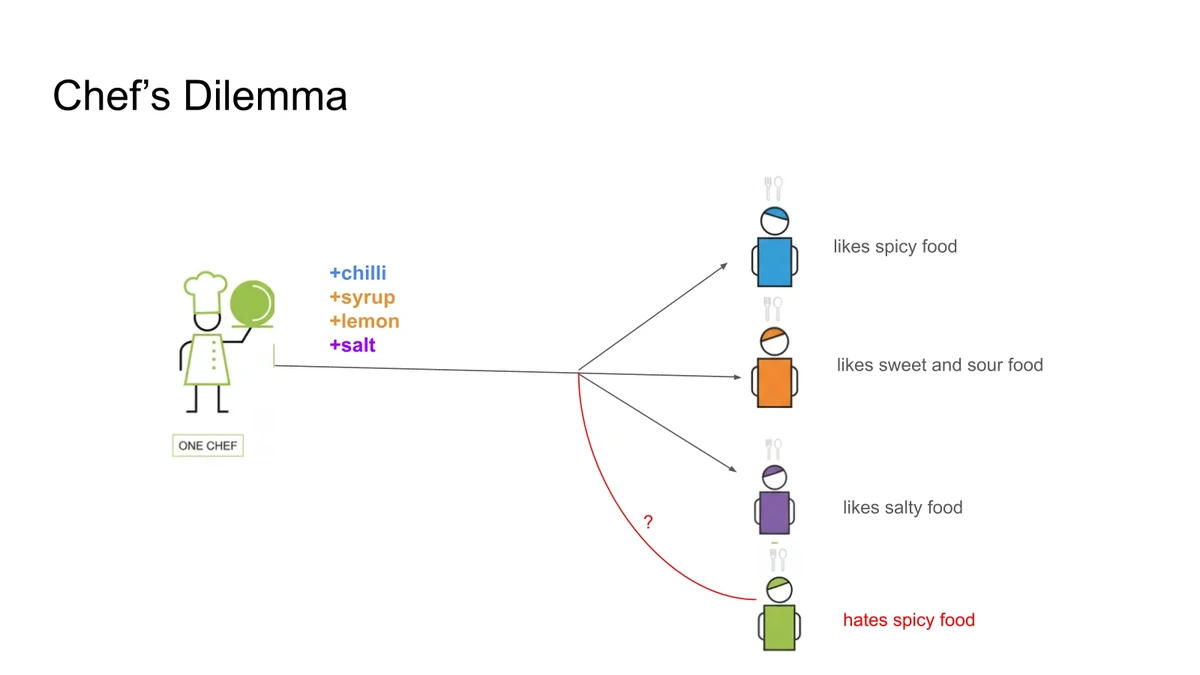
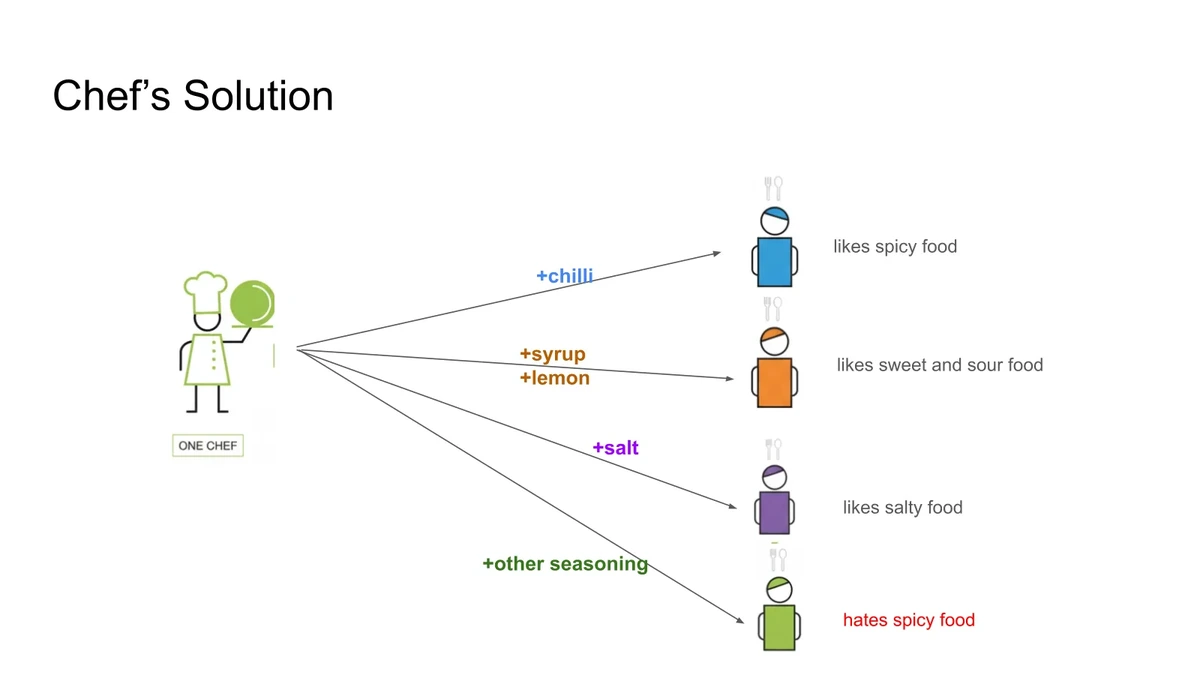
Historically, TensorRT relied on internal Key Performance Indicator (KPI) models to identify optimizable patterns, which were then encoded as heuristics in the default scheduling strategy. While this allowed users to automatically benefit from expert knowledge, it created a scaling problem. A heuristic designed for one type of model could cause performance regressions in another, requiring additional exceptions. This made the scheduling logic complex and hard to extend. The Global Performance Tuner, released in TensorRT 11.1, solves this problem by moving away from a single fixed recipe. Instead, it treats the compiler pipeline as a base recipe with configurable "seasonings", allowing the system to adapt its optimization path to the specific characteristics of each input model, such as an ONNX graph or a network created via the TensorRT API.
To formalize this approach, the system uses a mathematical framework that separates the generation of candidate solutions from their selection. The model space consists of all possible inputs, while the solution space contains all executable outputs, such as TensorRT engines or serialized GPU kernel sequences. A builder algorithm maps a model to a set of candidate solutions, constrained by an accuracy tolerance threshold. This threshold ensures that the input-output pairs remain within acceptable limits, preventing aggressive optimizations that violate application requirements. The builder's goal is to generate a rich set of candidates that includes the optimal solution, defined as the fastest feasible execution that meets the accuracy criteria. This abstraction allows for rigorous analysis of how different build routes affect the final runtime.

A searching algorithm then operates on this candidate set to select the best solution. Ideally, this algorithm would perform a brute-force evaluation of every candidate to find the one with the minimum runtime. However, in practice, build time budgets often limit the depth of this search. The overall compiler is thus represented as a tuple of a builder and a searcher. The challenge lies in constructing an optimal builder that makes the globally optimal solution reachable. Since no single universal build route works for all models, the system must support customizable build routes. This means the sequence of compiler passes, which transform intermediate representations into final executables, can vary. Different models may achieve their best performance through different sequences of transformations, even on the same target GPU.

The Global Performance Tuner leverages these customizable build routes to perform automatic performance tuning. For each candidate solution generated by different build routes, the tuner validates the outputs against the specified accuracy criterion. It then measures the end-to-end inference performance of the feasible solutions. Among all candidates that satisfy the accuracy requirements, the system selects the one with the lowest runtime. This approach ensures that performance gains do not come at the cost of model fidelity. By treating the compilation process as a search over multiple possible build routes rather than a single fixed path, TensorRT 11.1 provides a scalable method for optimizing deep learning workloads across diverse models and hardware configurations.

This methodology addresses the core limitation of previous approaches where a change for one model could degrade performance for another. By keeping the base pipeline stable but making the scheduling decisions configurable, the system can handle new models with unknown preferences effectively. It offers different optimization variations, rejects those that fail accuracy checks, and retains the best-performing configuration. This is analogous to a chef offering free samples to a new customer to find the preferred seasoning combination, rather than forcing a single standard recipe. The result is a more robust compilation process that adapts to the specific needs of each neural network, ensuring that developers receive the highest possible inference speed without compromising the required precision of their applications.