Stormland Turns Seven: Design Lessons in Weapons, Locomotion, and Open Worlds for VR
 Public
- 26 Nov, 2026
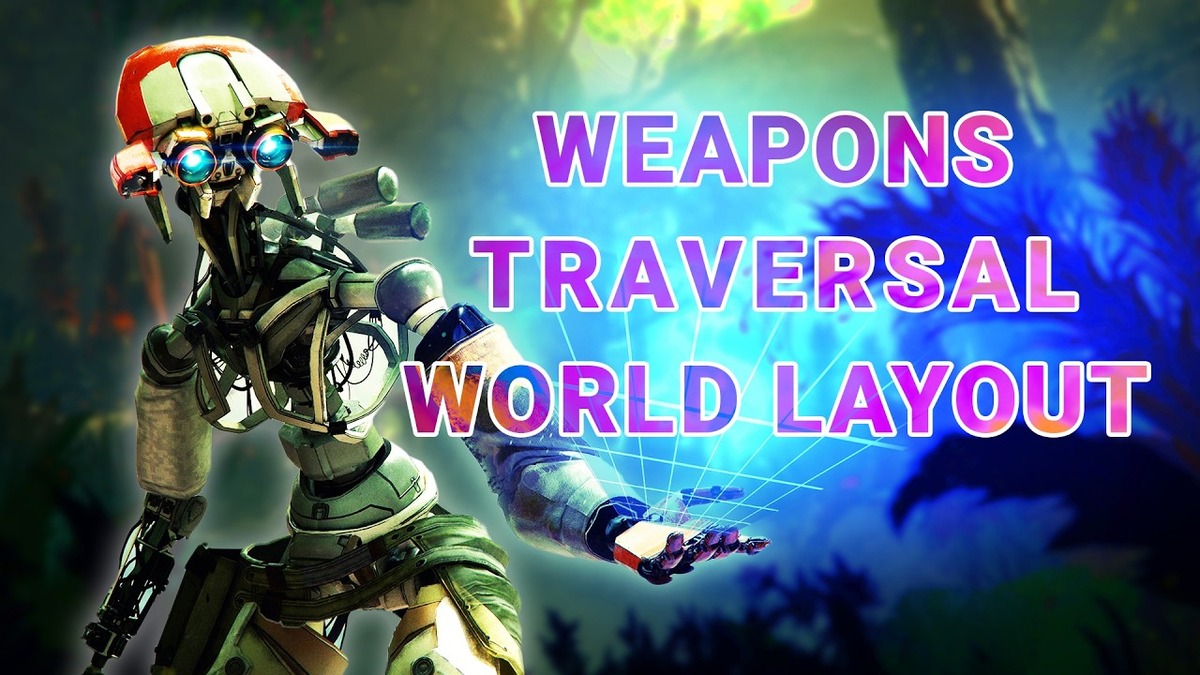
Stormland, the open-world action-adventure game from Insomniac Games, turns seven this month, and its design still holds up as a reference for open-world VR games. The game supports co-op and is available on Oculus PC, and it can be played on SteamVR headsets through Revive. Insomniac had already shipped three VR titles before starting Stormland, and that experience is visible across the game's systems. Three areas stand out: weapon reloading and inventory, a mix of different locomotion modes, and an unusually structured open world.
Weapons behave mostly as expected. Guns are drawn from holsters, held with one or two hands, and fired with the trigger. The difference comes when a gun runs out of ammo: instead of swapping magazines, the player rips it in half. In return, the player gets ammo for that weapon type plus crafting materials used to upgrade weapons and abilities. So one gesture covers both resupplying ammo and collecting loot after a fight. Magazine reloads can feel realistic, but they are complex and error-prone in a tense moment. Bending down for a dropped magazine suits slower simulations better than a run-and-gun pace. Any weapon can be ripped apart in the same way, and visual and sound effects keep it satisfying. Lead Designer Mike Daly was initially unconvinced of the idea, but a designer and a programmer built a prototype and won the team over. Later, the same action was reused for health and energy canisters.
Weapon handling gets another deliberate convenience. A dropped gun floats in place for a few seconds, so it can be grabbed again without reaching to the floor, and if left alone it returns to its holster on its own. Physical interaction stays intact, but players don't lose weapons mid-combat or forget to holster them. Floating also helps with inventory management: when all holsters are full and guns need to be shuffled, the hovering weapon acts like a spare third hand.
An open world demands covering long distances both horizontally and vertically. Stormland combines several modes of movement and encourages switching between them on the fly: on solid ground the player moves with the thumbstick, climbs tall structures, and glides across the map. Climbing has a key tweak: the hand doesn't need to touch the surface, since walls can be grabbed from several feet away. This means the hand position doesn't have to be precisely matched with the timing of the grip, climbing is faster, the player's face stays away from the wall, and the neck gets less tired when looking up for the next handhold. Together the three modes give a sense of being able to move anywhere, anytime.
The open world itself addresses a familiar problem: filling a huge map with content is very expensive, and walking long distances in VR is rarely fun. In Stormland, points of interest are literal islands spread far apart, and players can travel quickly between them over the clouds. Upgrades make traveling even more enjoyable: for example, you can conjure a ramp in the clouds and launch from it onto an island. The feeling of exploration remains, without minutes of empty walking.
Gliding over the clouds is faster than movement in most VR games, yet it remains comfortable because the developers keep vection under control. Vection is the sense of motion created by the visual field. When it conflicts with the body being still, dizziness follows. High speed is only available on clouds, so mainly the lower part of the visual field moves quickly. In addition, the flat, low-contrast cloud texture reduces vection even further, unlike trees that would stream past the player's head. Gliding is steered with the arms rather than the thumbstick, and according to Daly, this is intentional: when the body is involved in controlling movement, it consistently proves more comfortable. Speed depends on how far the arms are outstretched, and direction on where they point.