The OpenXR Spatial Containers standard unifies volumetric multitasking
 Public
- 26 Oct, 2026
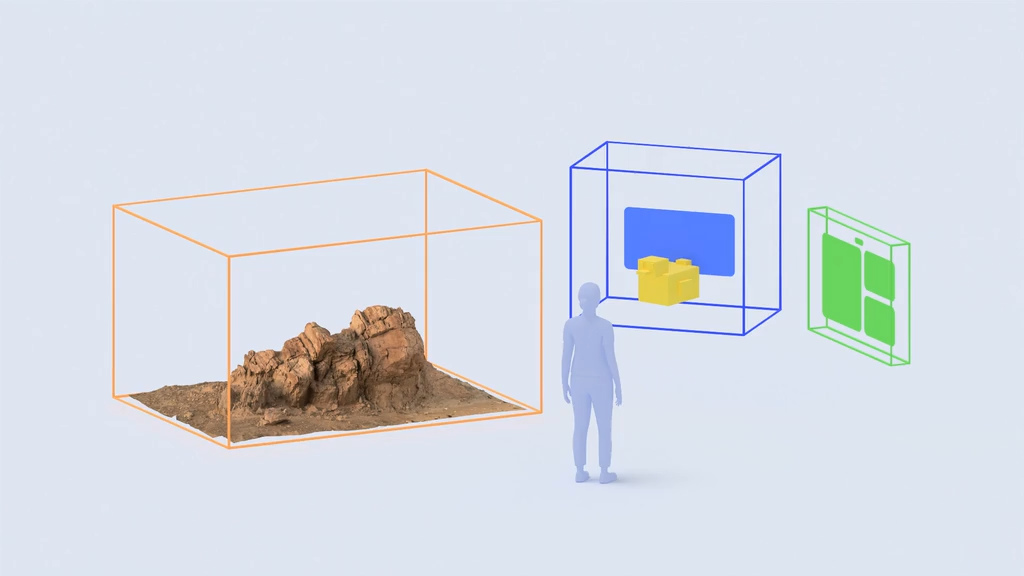
Khronos has released new OpenXR Spatial Container extensions that standardize system-managed spaces for displaying volumetric 3D content. This approach mirrors how traditional desktop operating systems manage 2D applications within windows, but applies the concept to immersive 3D environments. OpenXR remains the dominant open API for AR, VR, and MR development, managed by the consortium behind OpenGL and Vulkan. Its core goal is to let developers build applications that run across different headsets without relying on proprietary APIs. Currently, nearly all major headsets, engines, and runtimes support OpenXR, with the exceptions of Apple Vision Pro and PlayStation VR2 on the PS5.
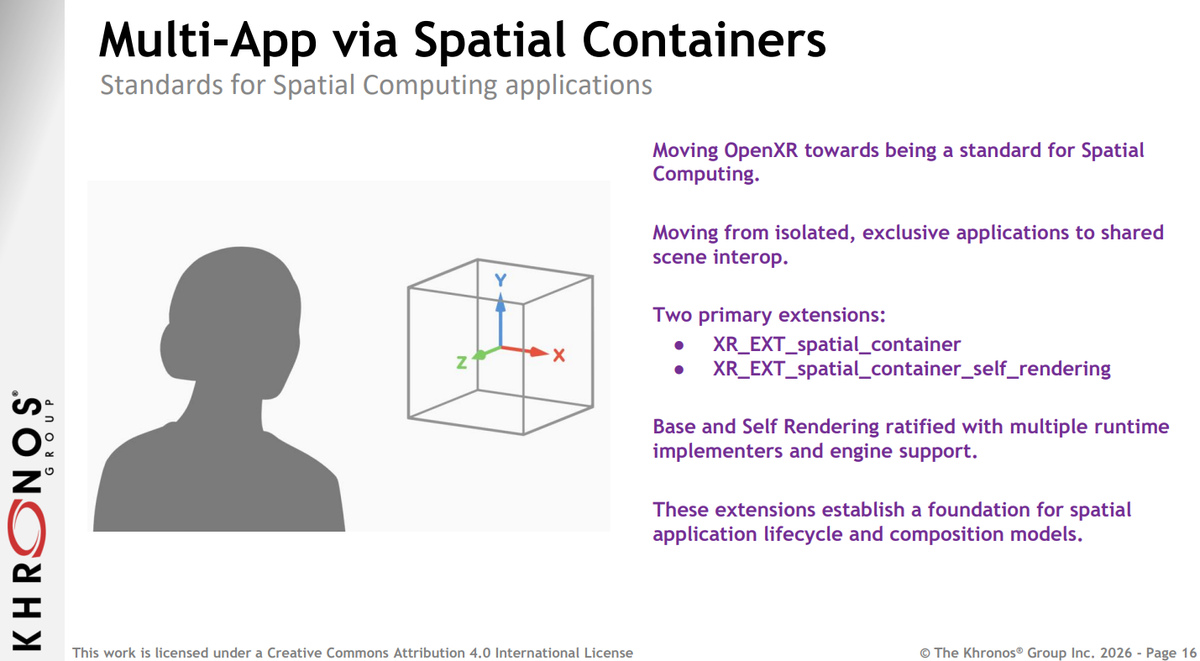
The new extensions enable developers to create applications that switch between multitasking modes and full immersion. A single application can host multiple Spatial Containers, whose positioning is controlled by the system. A developer can specify a preferred location for the containers or leave their placement to the system, for example, so that they follow the user during movement. Architecturally, this is similar to the Shared Space model on Apple Vision Pro, where windowed and volumetric apps coexist in a system-managed environment before transitioning to full immersion. It also aligns with the design of Pico OS 6 for the upcoming Pico Space Pro, which uses a unified rendering architecture called the Pico Spatial Engine to run 2D and 3D apps side by side over virtual or passthrough backgrounds.
This standardization addresses a significant limitation of current market leaders such as Google's Android XR and Meta's Horizon OS. While these platforms support multitasking of 2D apps, they currently restrict users to running only a single 3D app at a time. The introduction of Spatial Containers offers a path to lifting this restriction. Jared Finder, the XR platform and SDK lead at Google, confirmed in the official Khronos announcement that the company is excited to bring Spatial Container support to Android XR. For Meta, these extensions present an opportunity to revive the concept of Augments, a category of system-managed 3D apps announced for Quest 3 in 2023 but later effectively cancelled.
Meta had previously announced that the Augments feature was being rebuilt from scratch after the initial approach proved insufficient. Recent updates to Horizon OS and its developer tooling have focused on overhauling spatial window management and improving 3D apps, suggesting that the company may use the new OpenXR extensions to deliver on the original vision of Augments. Originally, the plan was to build these extensions using Meta Spark Studio, a now-defunct tool for creating AR experiences, which supported importing 3D assets and implementing advanced functionality via JavaScript. Although Meta has not explicitly committed to supporting the extensions in its official statement, the technical alignment with its ongoing development priorities makes this a plausible direction for its ecosystem.
The specifications and sample code for OpenXR Spatial Containers are now available to developers. The Khronos OpenXR Working Group is also actively working on additional extensions that will allow applications to use a system-provided renderer optimized for specific hardware, ranging from high-performance headsets to low-power devices. The group expects implementations of these extensions to begin rolling out across the OpenXR ecosystem within the current year. This is a significant step toward a unified standard for volumetric multitasking, one that could reduce fragmentation and enable more complex, multi-app spatial experiences across diverse hardware.