Meta VR Glasses, Quest 3, and Steam Frame: A Comparison of Specs and Use Cases
 Public
- 29 Sep, 2026
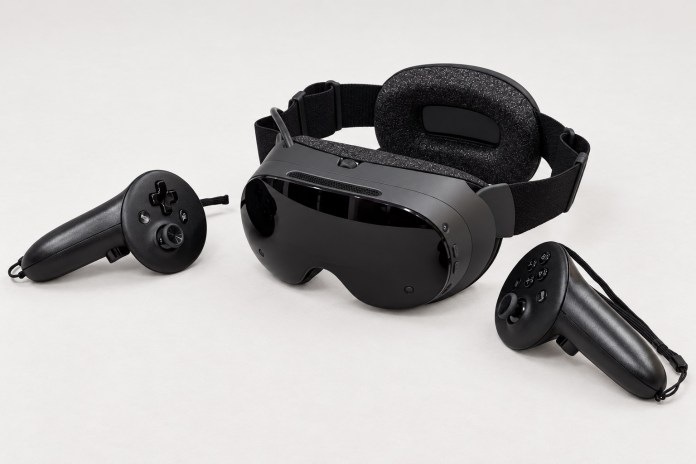
Steam Frame is Valve's second-ever VR headset, and it's a radically different product from the first, the Valve Index. It stands out as one of the first headsets to combine strong standalone capabilities with an easy-to-use PC streaming experience out of the box, and Valve leans hard into its role as a PC streaming headset. In standalone mode, demanding or poorly optimized games can be basically unplayable, so Valve introduced a "Frame-certified" program that helps consumers figure out which games actually work well on the device, both in VR and flatscreen. Critically, Valve didn't build any big-budget games for Frame, though Half-Life: Alyx (2020) did receive a standalone mode.
The headset still doesn't stop you from trying anything, which is a breath of fresh air compared to competitors that largely ship locked-down bootloaders. It's extremely capable and expandable, but less easy to use than more console-like rivals, making it a strong choice for power users willing to tinker with settings. As a mixed reality device it's lacking, though: there's no color passthrough camera, which is a bummer in 2026, although an upgrade can be tacked on from Arcturus. There's also a large overlap in base gaming functionality, which makes Frame's $460 premium ($1,060 total) over the Quest 3's $600 price point harder to justify.
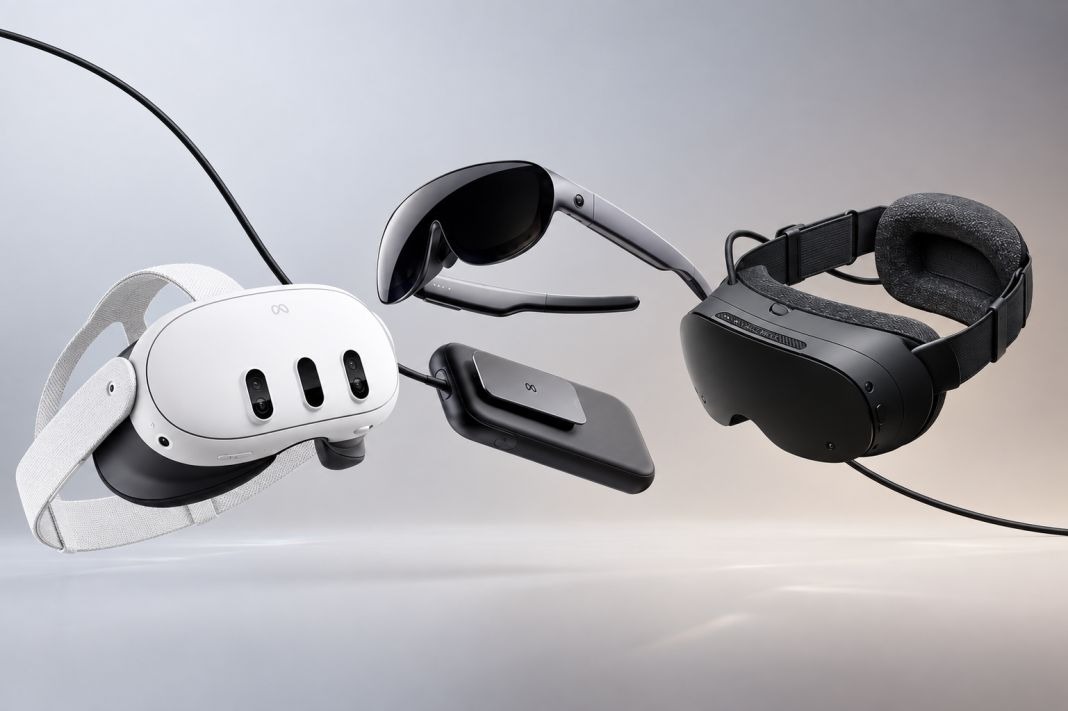
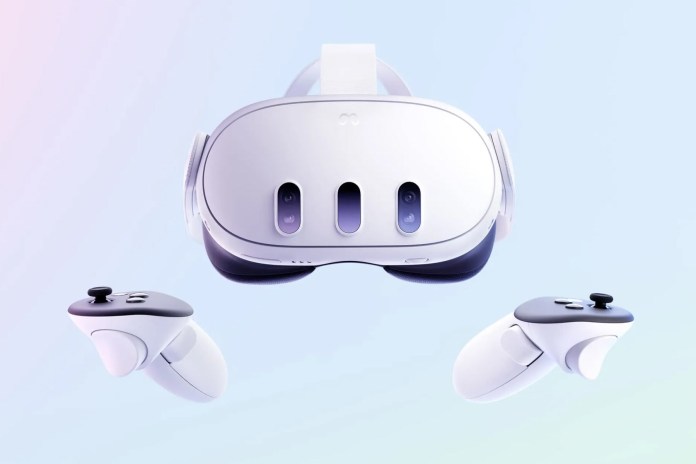
Quest 3 launched in October 2023 not as a cheap-and-cheerful option, but as cheaper hardware that capitalized on the Quest Pro's failures as a mixed reality platform. It brought bigger, more graphically intensive games and mixed reality modes, including Asgard's Wrath 2 (2023), Arizona Sunshine 2 (2023), and graphical upgrades to The Walking Dead: Saints & Sinners (2020) and Red Matter 2 (2022). It also signaled Meta's push to turn its flagship VR gaming console into more of a general computing device, largely driven by the arrival of Apple Vision Pro in February 2024. Quest 3 remains a VR gaming headset through and through, with a massive back catalogue of titles, and it's less bulky than the cheaper Quest 3S, which reuses Quest 2's Fresnel lenses for a visually worse experience.
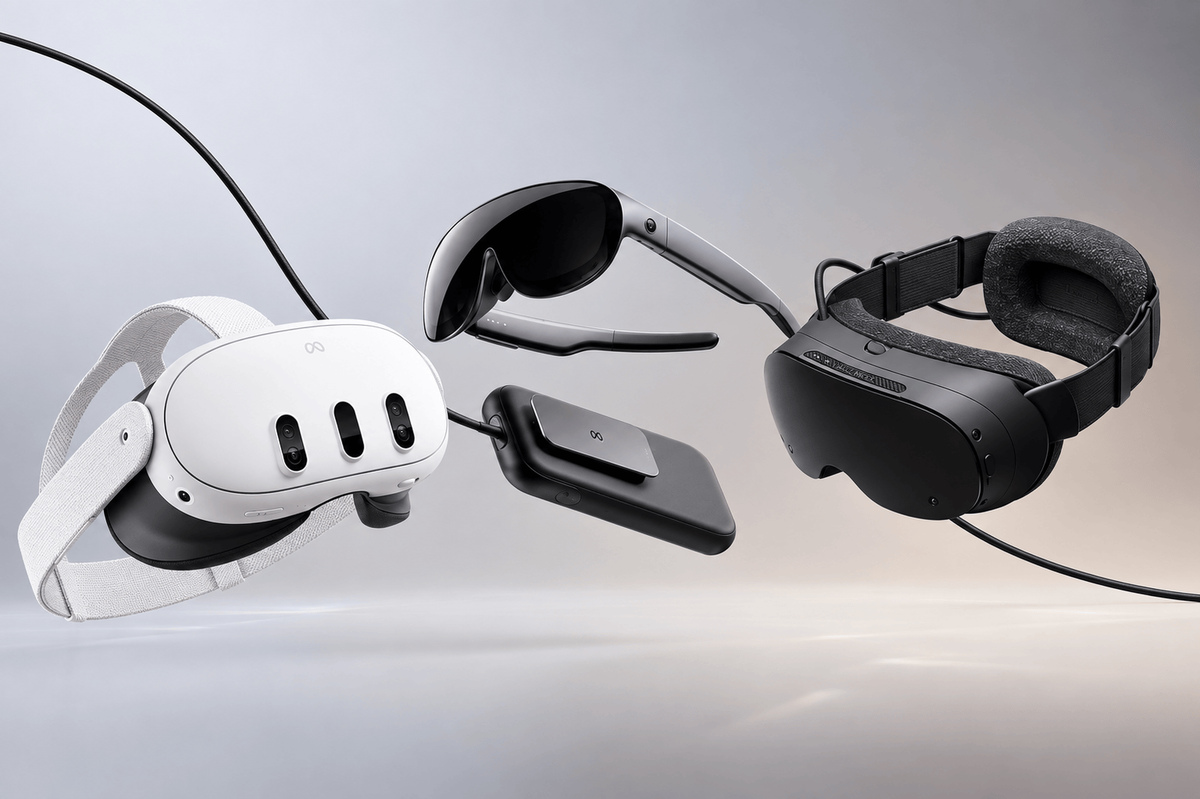
Meta officially unveiled VR Glasses at Connect 2026 in late September, its next big flagship VR device. This time the company isn't really pushing gaming: when VR Glasses arrive in Spring 2027, the focus is on productivity and casual content consumption. It shares Quest's Horizon OS, so it can play the same games and content as Quest 3 and 3S, but at a less immersive 70-degree horizontal field of view versus Quest 3's roughly 110 degrees. It also supports Quest Touch Plus controllers, though its main focus is hand and eye tracking and it ships without any controller in the box.
The biggest upgrade in VR Glasses is the new form factor: it's only about 100 grams of on-head weight, since it offloads both battery and compute to a roughly 300-gram pocketable puck tethered to the headset via an optical cable ending in a proprietary port. That means it isn't exactly the upgrade path for dyed-in-the-wool Quest fans, because it sacrifices visual immersion for better ergonomics. Whether that's worth the $700 premium over Quest 3 is what Meta is betting on.