Maxon Unveils Redshift 2027.0: Native Fur, ACES 2, and a Significant Performance Boost
 Public
- 18 Oct, 2026
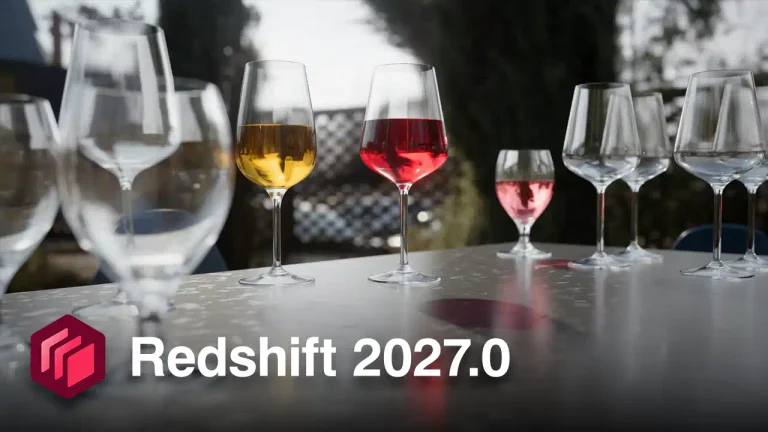
Maxon has released Redshift 2027.0, the latest version of its GPU-accelerated renderer designed for VFX, motion graphics, and visualization. The update brings significant technical improvements: a new native fur procedural, support for the ACES 2 color management standard, and optimized memory management that reduces render times by up to 15%. The release also makes Redshift compatible with NVIDIA RTX Spark, a new superchip for laptops and mobile workstations, joining other major DCC applications that support this hardware.
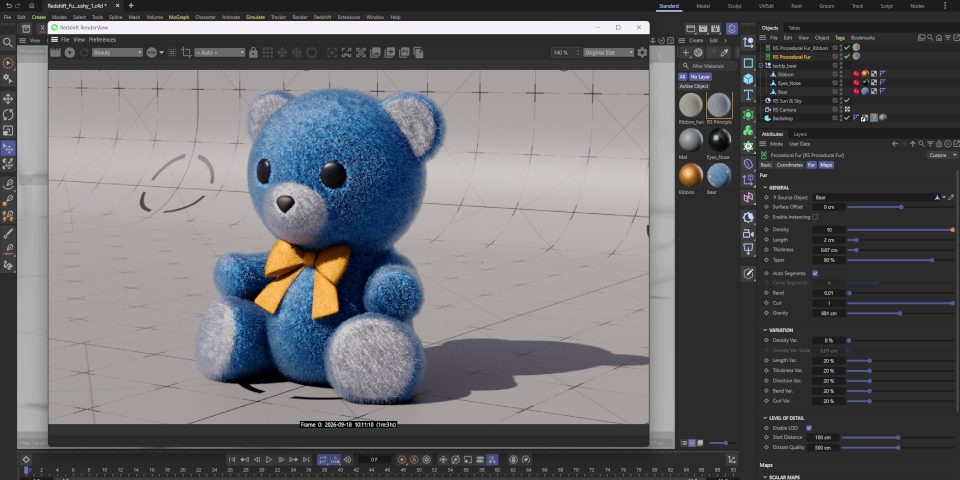
The core renderer now features the Fur Object, a render-time solution for hair, fur, and grass that prioritizes speed. It offers standard controls such as Density, Gravity, Curl, and Taper, along with options to randomize hair properties. This feature is currently available for users of 3ds Max, Cinema 4D, Houdini, and Maya. Additionally, Redshift now supports ACES 2, the current industry standard for color management. In Cinema 4D, the ACES 2 OCIO config is used by default, while users in Houdini and Maya can configure it manually. Under the hood, a reworked memory-management system has significantly reduced the time to first pixel, with architectural scenes showing a 15% decrease in render duration.
Redshift Live, the real-time render engine that replaced Redshift RT in version 2026.4, has also been updated. It now supports true ray-traced depth of field and light spread. While it includes ray-bending refraction for transmission through transparent materials, it does not yet support dispersion. These updates bring the real-time engine closer to feature parity with the final-quality renderer, although key limitations remain for volumetrics, hair, and point clouds. The integration updates also include native support for tyFlow volumetric simulations in 3ds Max, allowing for fire and smoke effects from the popular particle add-on.

Specific enhancements for individual host applications further refine the user experience. Cinema 4D users gain a new Auto Focus Distance setting for Depth of Field, which automatically sets the focal distance to the center object, along with overhauled shader balls and new Material Tag options for hex and triplanar tiling. Houdini users receive a new shelf icon for the Redshift Object Lister, while Maya now utilizes the same optical camera and backplate system as other hosts, plus support for the native Maya Light Lister. ArchiCAD also joins the list of officially supported CAD applications, following earlier integrations for Vectorworks and Revit.
System requirements for Redshift 2027.0 include Windows 10+, glibc 2.28+ Linux, and macOS 15.0+. Plugin compatibility spans 3ds Max 2018+, Cinema 4D 2023+, Houdini 19.0+, Katana 5.0+, Maya 2018+ (2022+ on Linux), Revit 2024+, Vectorworks 2026.4+, and ZBrush 2023+. The software remains rental-only, with subscription costs set at $49 per month or $289 per year. This release, also referred to as 2026.10 in release notes, continues Maxon's strategy of integrating cutting-edge hardware support and industry-standard color pipelines into its rendering ecosystem.