Horizon OS 2.9 PTC: Overhauled Window Management and the Return of Classic Environments
 Public
- 08 Oct, 2026
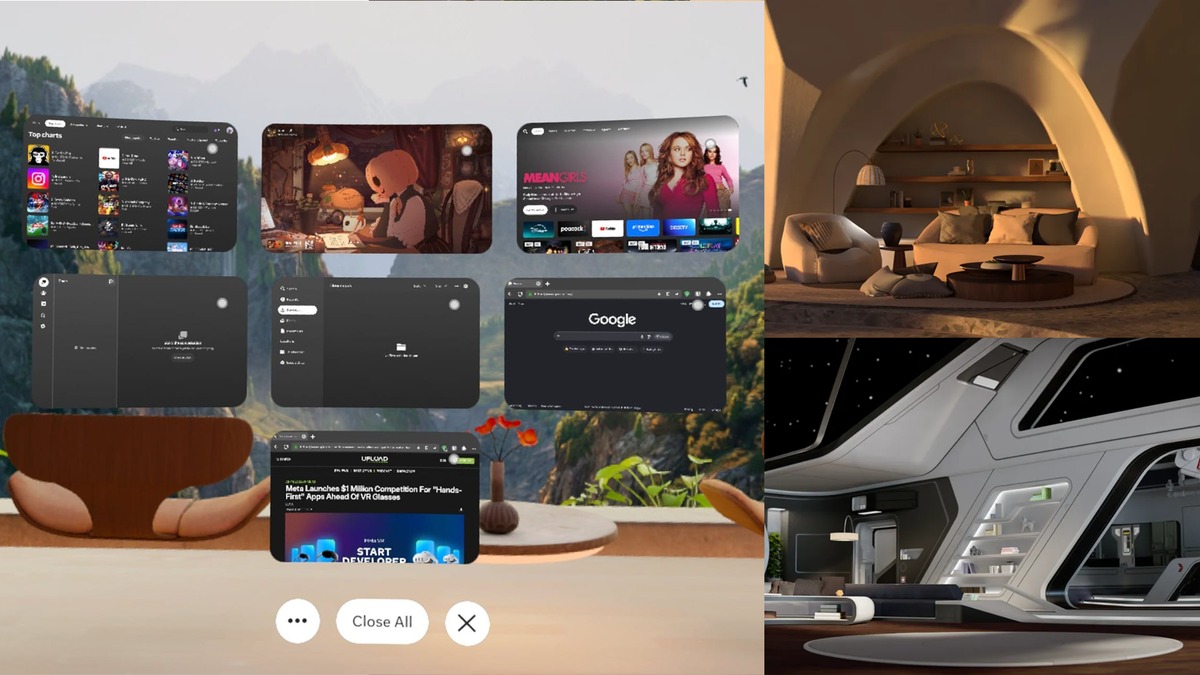
Meta has begun rolling out Horizon OS 2.9 (v209) in the Public Test Channel. The update includes a significant overhaul of the 2D window management system, internally codenamed Display Evo. It moves away from the restrictive triple-monitor layout that persisted since the Navigator launch, allowing 2D windows to open spatially around the user. Developers and power users can now group windows by moving their edges together, or arrange them into a Stack, which works like a deck of cards. This shift aims to provide a more flexible and modern interface for managing multiple applications simultaneously within the virtual space.
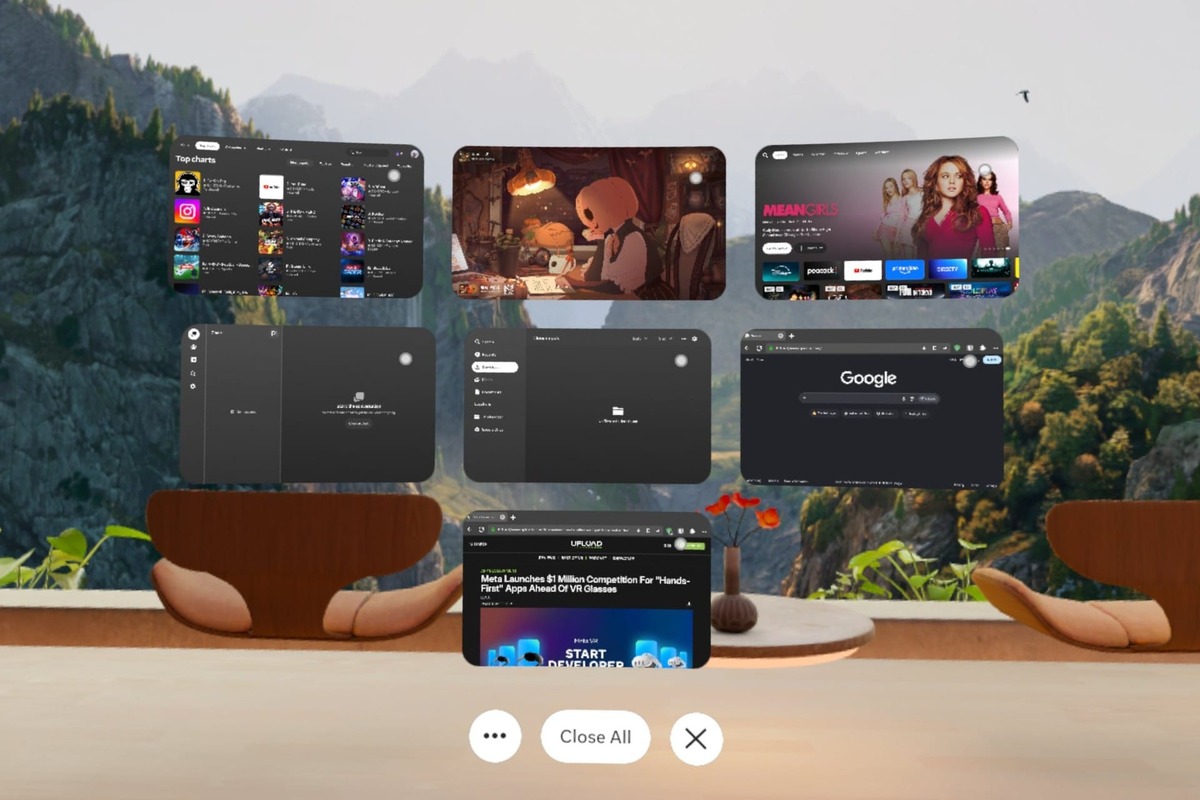
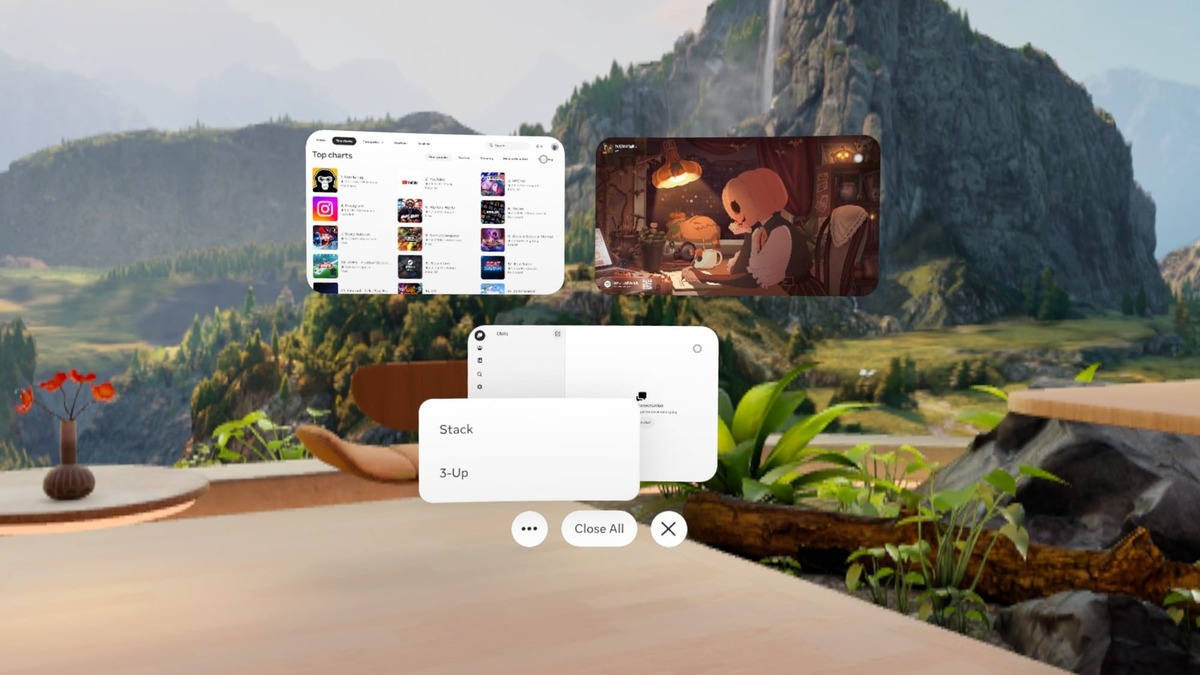
A new component called the Window Manager is accessible via Quick Settings. It allows users to view, bring forward, or close all open 2D windows at once. This interface is broadly similar to app management in Android XR, presenting spatial windows in a single view for quick selection. In the Horizon OS 2.7 pre-release version, the Window Manager included presets for "Stack" and "3-Up" layouts to automatically organize windows. Additionally, the update introduces redesigned window Control Bars with a dedicated grab handle and separate function buttons. This design appears to be tailored for the gaze input system shipping with Meta VR Glasses.
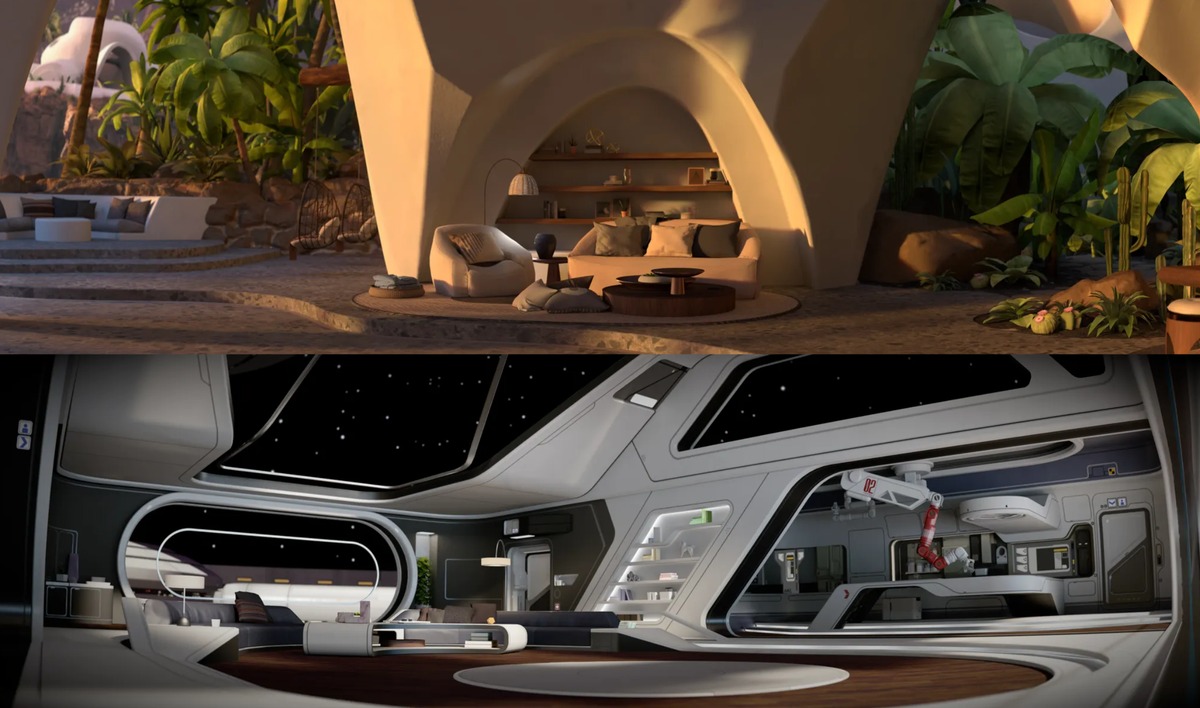
Addressing user feedback regarding the removal of legacy spaces, the update introduces a Classic Environments submenu within the Home Editor. It is accessed via the left Touch controller menu button or a palm-facing pinch gesture. This section contains pre-v81 Virtual Environments ported to the Horizon Engine with optimized performance and free locomotion. Currently available are Desert Terrace (the Quest 2 default) and Space Station (released for the original Quest in April 2020). Dataminer Nori has displayed many other environments in active development channels, suggesting a rolling release of additional classic spaces to the general user base.
The update also adds a system-level QR code scanner for Quest 3 and 3S. It is accessible via the Camera app, Quick Controls, or Navigator's Global Search. However, a major limitation is that it operates as an immersive app, preventing its use alongside 2D windows in Passthrough or for scanning codes inside other immersive apps. Furthermore, Surface Keyboard and Touchpad, introduced in v85 PTC, receive UI simplifications to match the Meta VR Glasses reveal. While Meta claims they now work in fully virtual environments, testing suggests this may be a separate rollout. The update also improves scene capture by reverting to previous boundaries if setup is interrupted, and moves the "Use apps while lying down" feature from Experimental to general availability in Accessibility settings.