Core Design Principles for Beginning Video Game Developers
 Public
- 28 Oct, 2026
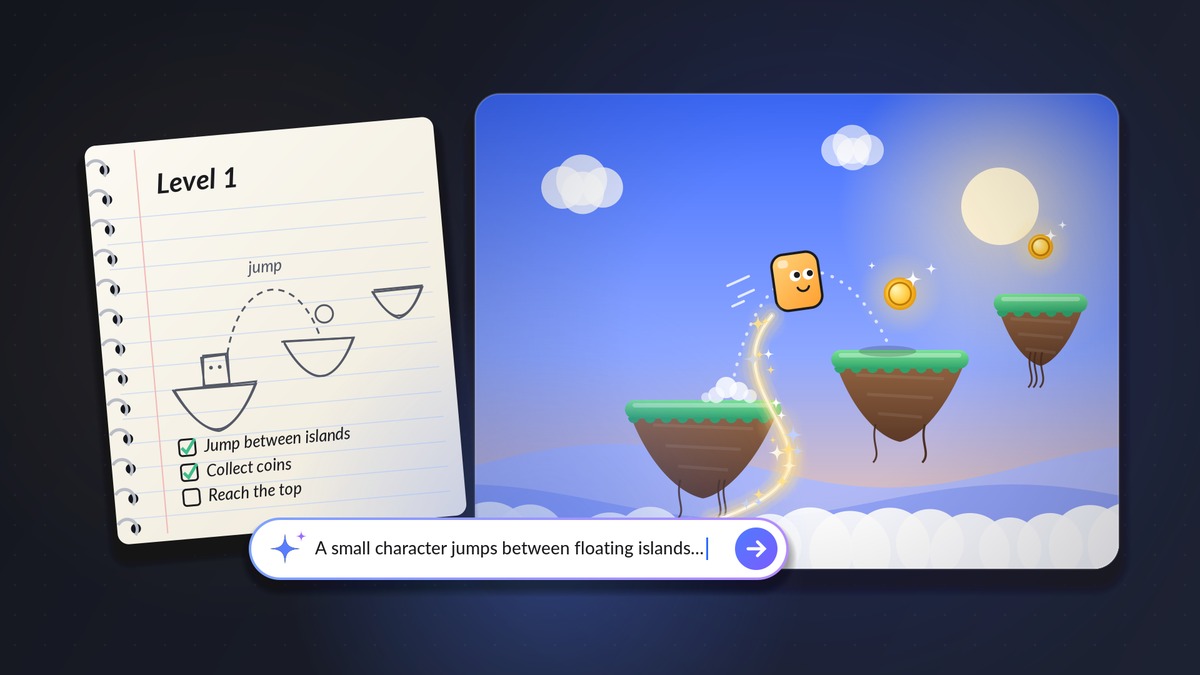
Developing a video game does not require a background in programming, but it demands rigorous design thinking. Even when using tools that eliminate the need for writing code, creators must make dozens of critical decisions regarding movement, visual presentation, and input handling. The primary task shifts from coding to describing desired outcomes, acting as a designer who defines the rules and behaviors of the game world. Success depends on navigating these design choices effectively before any significant production work begins, ensuring that the underlying structure supports the intended player experience.
The foundation of any successful game is its core loop, a repeatable sequence of actions typically structured as challenge, action, and reward. Before adding levels, characters, or upgrades, developers must ensure this loop is inherently fun. Adding polish to a fundamentally unengaging core mechanic only masks the underlying problem. A useful exercise is to describe the player's primary activity in a single sentence. Additionally, understanding genre expectations is crucial. Players have specific assumptions about mechanics, such as jumping in platformers. While familiarity helps players ramp up quickly, standing out often involves changing just one element, making a control easier or harder, or altering a specific rule to create a unique identity.
Scope management is vital for finishing a project. Ambition is less important than completion, so developers should be ruthless in limiting their feature set. When facing choices, prioritize options that take the least amount of time to implement. Prototyping is an essential tool for answering specific design questions quickly, but prototypes must remain small and focused. Getting stuck in a cycle of endless prototyping prevents the creation of a finished game. Visual style is equally flexible; there is no single best art style. It depends on the concept, resources, and audience. Start by defining the desired emotional impact through mood pieces and sketches, then maintain consistency. For example, a limited color palette can help unify pixel art visuals, ensuring a cohesive aesthetic throughout the game.
Camera perspective and physics rules significantly impact gameplay feel. First-person views offer immersion but hide the character, while top-down views provide clarity but reduce the sense of height. Isometric views simulate 3D space but can make depth judgment difficult. The field of view also shapes mood, with narrow angles creating claustrophobia and wide angles enhancing peripheral vision. Physics in games are arbitrary rules rather than real-world simulations. Developers must decide on jump heights, fall speeds, and collision behaviors. Consistency is key; if the rules change unpredictably, players become frustrated. Many games intentionally bend physics, such as allowing a jump shortly after running off a ledge, to improve playability rather than adhere to realistic simulation.
Responsive controls are critical for player satisfaction. Delays between input and response significantly increase frustration and decrease immersion. Studies indicate that added delays of even half a second negatively impact the experience. A target response time of under 100 milliseconds is ideal. For touchscreens, controls should be designed for fluidity and forgiveness rather than precision, given the lack of physical feedback. Feedback, often called "juice," is essential for making actions feel satisfying. This includes visual effects like flashes and shakes, as well as audio cues. Research shows that exaggerated feedback, such as comic-style sound words like "POW," is as effective as complex particle effects in enhancing the perceived quality of gameplay.
Sound design and on-screen displays are as important as visuals. Muting a game quickly reveals how much feedback is lost without audio. The heads-up display, including health bars and scores, requires careful planning and should not be treated as an afterthought. Game structure must include clear win and lose conditions, with difficulty balanced to keep players engaged. Players must understand why they fail in order to improve. Offering difficulty presets, ideally four or more, allows players to adjust the challenge without losing progress. When in doubt, err on the side of easier difficulty. Playtesting with friends and strangers is essential to identify where players hesitate. Finally, accessibility must be planned from the start, offering flexibility in controls, such as toggles instead of holds, to accommodate the nearly 450 million players with disabilities.