XREAL AURA launches with seven Unity-powered XR titles and improved tools for Android XR
 Public
- 28 Oct, 2026
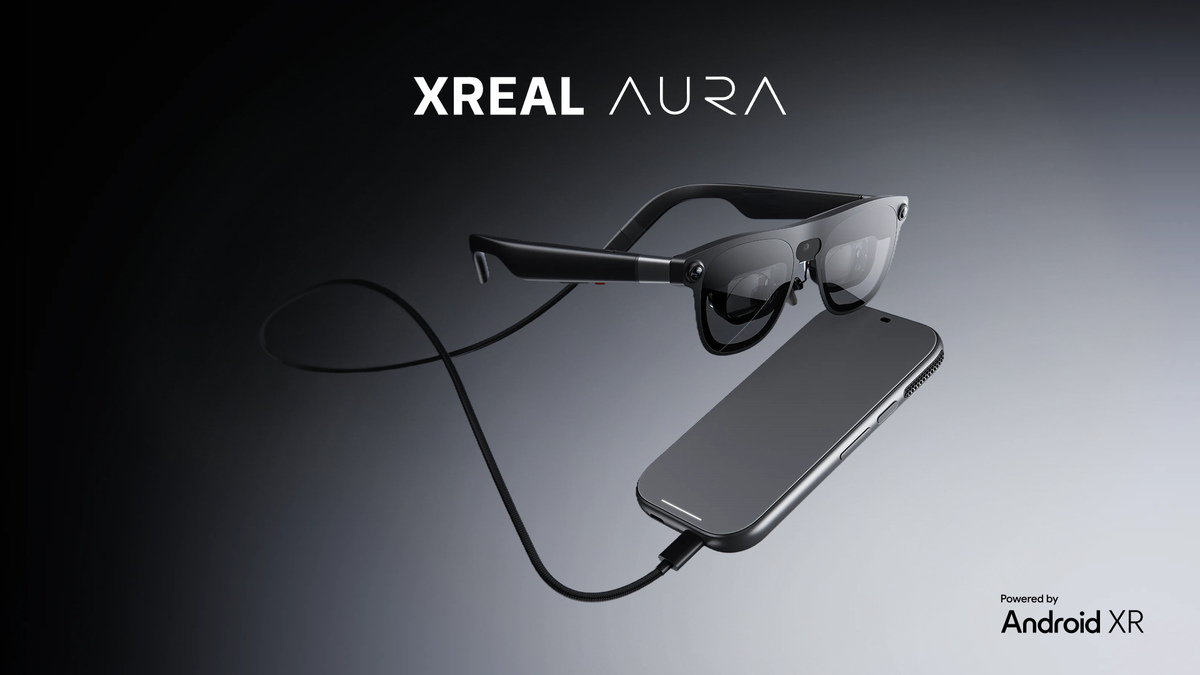
XREAL AURA has officially launched as the first pair of wired XR glasses powered by Android XR. They bring immersive gaming, mixed reality, and everyday utility together in a lightweight, portable form factor. This release is a significant milestone for the ecosystem, giving developers a new hardware target that supports a wide range of applications, from tabletop AR to fully immersive games. Unity's support for this device, first announced in June, has now materialized, with seven titles built or ported using the engine available on day one. The platform is designed to be accessible for both new projects and existing XR applications. Unity continues to invest in tools that streamline development for Android XR, including in upcoming versions such as Unity 6.7 and Unity 7.
Among the launch titles is Hyper Visor from Owlchemy Labs, an XR arcade experience that transforms everyday surroundings into a reality-bending playground. Players use intuitive hand interactions to blast targets, battle bosses, and repair fractured realities. The development team highlighted that Unity's multiple physics scenes, URP, and OpenXR support were instrumental in creating the experience. A major time-saver was the prefab workflow, which, combined with a custom level-scripting system, allowed for rapid gameplay iteration without lengthy recompilation cycles. This efficiency is critical for studios aiming to quickly deliver polished, interactive experiences on new hardware.
Demeo, a cooperative tabletop dungeon-crawling RPG by Resolution Games, is now available on XREAL AURA, demonstrating the power of Unity's cross-platform capabilities. The team noted that the port was surprisingly smooth thanks to the maturity of Unity's cross-platform XR foundation built on OpenXR. Reusable components managed through UPM carried across headsets without problems, and moving the project to URP provided the necessary mixed reality support. Devs United Games, who released Real VR Fishing, described a similar experience. They credited Unity's OpenXR support for making the port efficient: they were able to reuse existing gameplay and XR systems with minimal modifications. This significantly reduced platform-specific work and allowed them to focus on optimization and polish for the new device.
VIRTUAL BEINGS introduced Forever Pets: Zen Cats, a title where players bond with virtual feline companions. The studio used Unity CLI to integrate AI coding agents, such as Claude Code and OpenAI Codex, directly into their Unity workflow. This integration allows the agents to make changes and check their work in the Editor, accelerating the testing of new ideas. Additionally, the team is enthusiastic about using Unity's Inference Engine to create unique, personalized pet interactions. These tools signal a shift toward more automated and AI-assisted development pipelines, enabling smaller teams to achieve a high level of complexity and interactivity in their XR applications.
Foretell Games is bringing multiple titles to the platform, including the already available Enigmo and the upcoming real-time strategy wargame SwarmFleet. The studio's cross-platform pipeline lets them work from a single codebase for current and future VR platforms. Accessible tooling helps their small team move fast without fighting the engine. Meanwhile, Mirrorscape developed Fallout: Factions, a fast-paced two-player miniatures skirmish game set in Nuka-World. Players command raider crews, using gestures for ranged or melee combat. The studio noted that AR Foundation and the XR Interaction Toolkit made it easy to implement input gestures and bring their foundational AR architecture from mobile platforms to the new XR environment.