Scaling Scritchy Scratchy: One Unity Project, Four Platforms
 Public
- 29 Sep, 2026
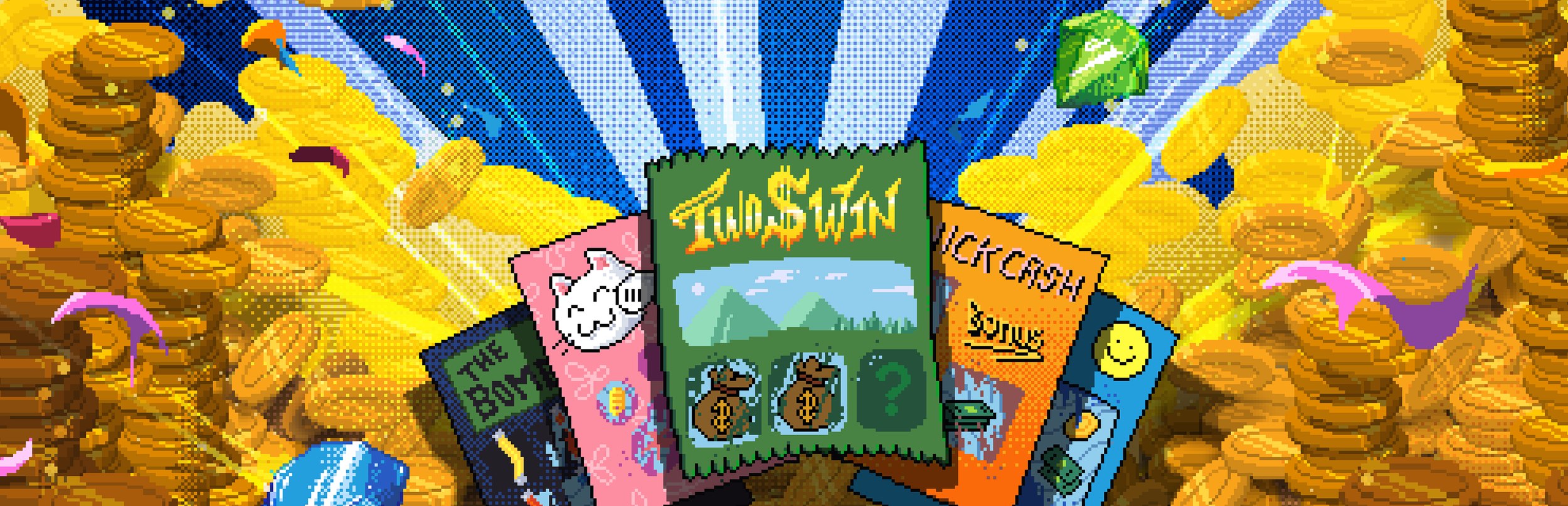
Scritchy Scratchy built its entire identity around a tactile scratch-off mechanic that maps almost perfectly to a finger dragging across glass. That design decision paid off fast on mobile, where touch input worked nearly out of the box and the scratching felt right with almost no iteration. The real test came when the team at Lunch Money Games and Funday Games set out to bring the game to PC, phones, tablets, and both current and upcoming Nintendo hardware from a single shared foundation.
The biggest source of friction was the very thing that made the game satisfying: input. The game was designed around mouse and touch, so the team had to decide from scratch how a scratch should feel on a gamepad rather than simply mapping a cursor one-to-one. They tore the interaction apart in a workshop and rebuilt it as a wireframe for other platforms, with input snapping toward the ticket area when a player starts scratching. For Nintendo Switch 2 they also leaned on the hardware's mouse capability, while mobile added haptic feedback, which required significant tuning, especially on Android where some devices vibrated far too hard.
Instead of maintaining separate branches per platform, the team chose a single Unity project and codebase. Separate branches tend to drift apart, and every fix has to be merged across each target, which is tedious once you are supporting four or more platforms. This approach has a cost: conditional compilation and platform-specific checks are scattered through the code, but the team kept them manageable for a project of this size. The payoff is that every optimization and bug fix carries across all builds automatically, and a developer fixing PC bugs can move straight onto mobile issues without learning a separate codebase.
Performance was the primary technical goal, with a target of a seamless, native-feeling experience at around 60 fps. One heavy bottleneck was the scratch particles, which sample texture color as a player scratches; the original approach ran fine on PC but was too heavy on mobile. Replacing it with GPU instancing became the single most important optimization in the port. The Unity Profiler drove the whole workflow: profile first, find what is actually slow, and only then fix that instead of guessing.
Resolution and layout rounded out the challenges. The original game was designed for a widescreen display, and while most landscape phones translated naturally, the iPad aspect ratio was harder, requiring presentation adjustments and some zooming. The team set minimum OS and API levels on mobile and tested on lower-end hardware, including the iPhone X and XS, to confirm the game stayed smooth. The result launched to more than 1.25 million units on Steam and 250,000 copies on mobile, with a 94% positive Steam rating.