Enthusiast runs Half-Life on a 19-year-old Nokia N95 and achieves a stable 30 FPS
 Public
- 10 Jun, 2026
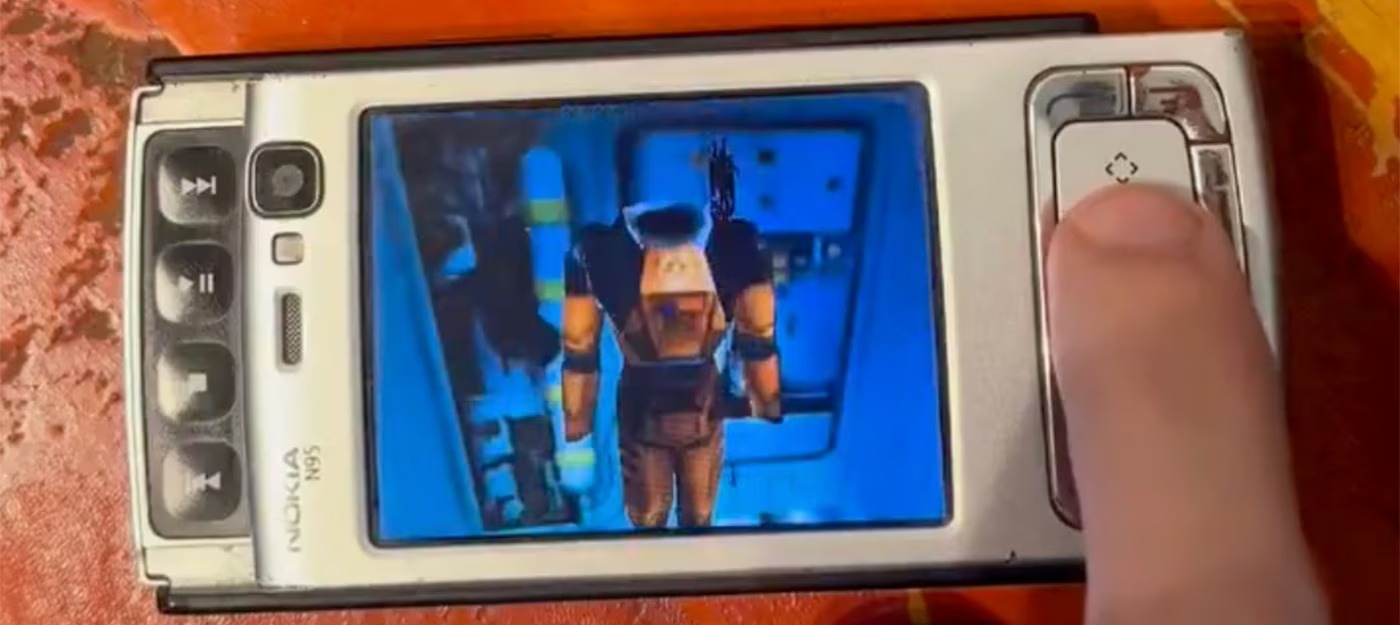
Sometimes the most amazing technological achievements are born not in large corporations, but thanks to enthusiasts and devoted fans of classic devices. One such case recently caught the attention of the gaming community: a hobbyist developer managed to run the iconic Half-Life on the legendary Nokia N95, released almost two decades ago, and achieve a stable performance of 30 frames per second.
For many people, the Nokia N95 remains one of the most iconic mobile devices of its time. In the mid-2000s, the smartphone was considered a true technological flagship, offering users advanced multimedia capabilities, support for third-generation networks, and hardware that was powerful for its day. However, few could have imagined that 19 years later the device would be able to handle one of the most famous games in the history of the industry.
The project became possible thanks to deep optimization and adaptation of the game engine to the architecture of an old mobile device. Despite serious hardware limitations, the enthusiast managed to achieve smooth gameplay, which impressed retro technology fans and software developers alike.
Experiments like this once again demonstrate how important optimization is. Even relatively old hardware can handle tasks that seem impossible at first glance, provided the software is properly adapted to the specific platform. That is why many specialists consider optimization one of the most important aspects of modern development.
Interest in such projects also highlights the growing popularity of retro gaming. Players around the world keep returning to classic devices and cult games, giving them a new life thanks to modern software solutions and the efforts of the community.
For the AR, VR, and interactive technology industry, such examples are especially significant. Building efficient, high-performance software makes it possible to expand the audience and support a wide range of devices, while smart resource management becomes one of the key factors in the success of digital products.
The Cyborgs.pro team closely follows technological experiments like this, because they clearly demonstrate the power of engineering ingenuity and the importance of optimization. The story of running Half-Life on the Nokia N95 shows that even decades later, legendary devices can still surprise us, and the limits of what hardware can do are often defined not only by its specifications, but also by the talent of the developers.
This unusual project is yet another reminder that real innovation is often born at the intersection of nostalgia, enthusiasm, and the desire to explore the possibilities of technologies that seemingly belong to the distant past.